How to Remove Hard Water Stains from Auto Paint 2026
Hard water stains left on vehicle paint can permanently etch the clear coat if left untreated. Acting quickly with a 50/50 white vinegar and water solution or a dedicated chemical water spot remover is the safest way to dissolve mineral deposits without causing paint damage.
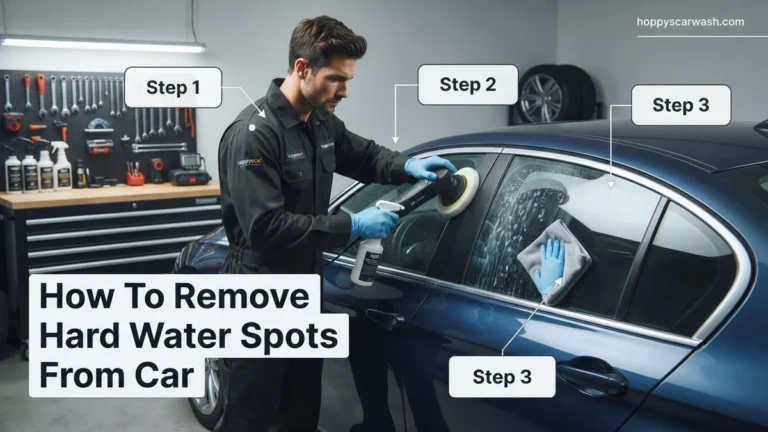
Safely removing hard water stains from auto paint requires moving progressively from mild chemical dissolution to mechanical correction based on how long the minerals have bonded to your clear coat. Fresh calcium and magnesium deposits yield easily to a diluted white vinegar wash or a specialized gel-based water spot remover, while deeply etched spots demand a fine-grade clay bar or a light dual-action polish to level the surrounding paint.
Tackling these mineral rings quickly prevents permanent etching that compromises your car’s clear coat finish. As we move through 2026, modern paint correction techniques prioritize non-abrasive chemical neutralization first, ensuring you never strip away more clear coat than necessary just to eliminate a stubborn crust of dried tap water.
Key Takeaways
- Address water spots quickly before minerals chemically etch into the clear coat.
- Always start with the mildest method, such as a 50/50 white vinegar and water mix.
- Never use abrasive pads or harsh scrubbing to remove mineral deposits.
- Use a clay bar to safely pull embedded surface minerals out of the paint.
- Apply a protective wax or sealant immediately after removal to prevent future staining.
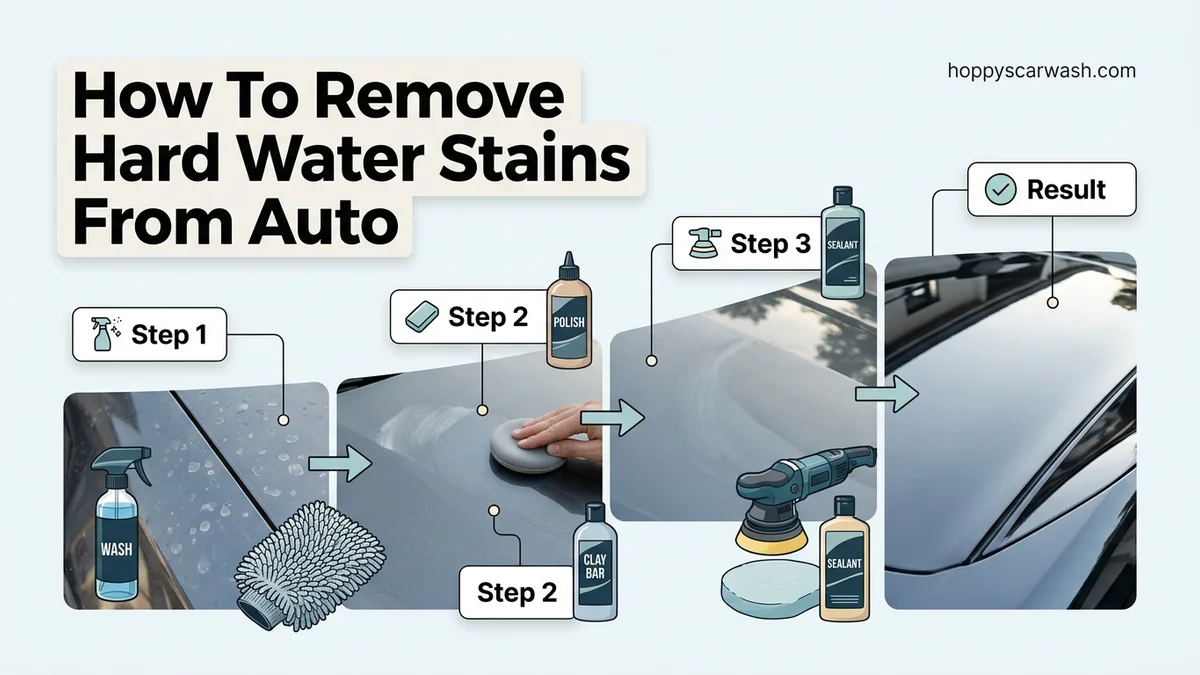
Diagnosing Hard Water Stains and Determining Paint Damage Severity
Visual and Tactile Inspection
Before applying any product to your car, you must evaluate whether the mineral deposits are sitting on top of the clear coat or have already eaten into it. Run a clean, washed fingertip or the baggie test across the affected area on your auto paint. If the surface feels rough, gritty, or raised, the minerals are resting on the exterior. If the spot feels completely smooth yet shows a visible crater or etched ring under direct LED lighting, the mineral has chemically burned into the clear coat.
- Surface-Level Deposits: Chalky white outlines, easily felt by hand, responsive to chemical breakdown.
- Etched Water Spots: Smooth to the touch, often showing a glossy crater edge, requiring mechanical abrasion to level.
The Severity Scale for Auto Paint
Categorizing your water spots dictates your removal strategy and saves you from performing unnecessary aggressive corrections. Mild spots usually form within days from automated car wash blowers or lawn sprinkler overspray, while severe etched spots happen when direct summer sunlight bakes mineral-heavy droplets into the paint for weeks.
- Level 1 (Mild): Fresh mineral crusts removable with acidic washes or specialized spot sprays.
- Level 2 (Moderate): Bonded rings that require a chemical gel dwell time or a gentle clay bar treatment.
- Level 3 (Severe): True etching that demands a machine compound and finishing polish to restore optical clarity.
Hard Water Stains on Auto Paint: What Causes It and How to Fix It
Mineral deposits left behind by evaporated water can severely damage your vehicle’s clear coat if left untreated. This comprehensive walkthrough explains the science of hard water etching and provides a meticulous, paint-safe methodology to restore your car’s showroom shine without causing swirl marks or clear coat failure.
Step 1: Thorough Maintenance Wash
What you need: Two-bucket wash method, pH-neutral automotive shampoo, grit guards, microfiber wash mitt, and a drying towel.
Instructions: Before tackling mineral deposits, you must remove all loose dirt, grit, and road grime to prevent scratching your paint during the correction process. Fill one bucket with soapy water and the second with clean rinse water. Wash the vehicle from top to bottom, rinsing your mitt in the clean water before dipping it back into the soap. Rinse the entire car thoroughly with a pressure washer or hose, and dry it completely using a plush waffle-weave microfiber towel.
Pro Tip: Never wash your car in direct sunlight or when the body panels are hot, as this causes soap and water to dry prematurely, creating even more water spots.
Step 2: Chemical Decontamination with Vinegar Solution
What you need: Distilled white vinegar, spray bottle, clean microfiber towels, and protective nitrile gloves.
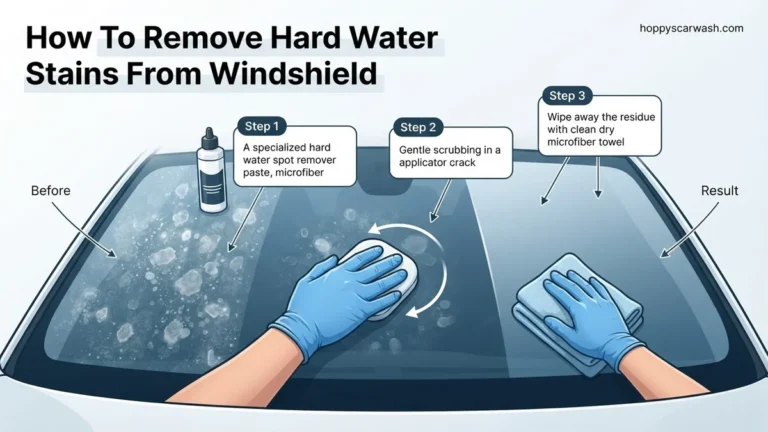
Instructions: Hard water stains are typically alkaline, making a mild acid like white vinegar an effective neutralizer. Mix a solution of equal parts distilled white vinegar and distilled water in a spray bottle. Mist the solution directly onto a small 2×2 foot section of the affected paintwork. Allow the mixture to dwell for 30 to 60 seconds to break down the calcium and magnesium bonds. Gently wipe the area with a clean microfiber towel, then immediately rinse the panel with clean water to halt the acidic reaction.
Pro Tip: Always use distilled water for your mixture to avoid introducing new minerals, and never let the vinegar dry on the paint surface.
Step 3: Automotive Clay Bar Treatment
What you need: Fine-grade automotive clay bar, quick detailer spray or dedicated clay lubricant, and clean microfiber towels.
Instructions: Even after washing and chemical neutralization, microscopic mineral crust may still anchor to the clear coat. Generously spray the clay lubricant onto a 2×2 foot section of paint. Flatten your clay bar into a comfortable patty and glide it back and forth across the lubricated surface with light pressure. You will feel drag initially; continue until the clay glides smoothly. Wipe the residue away with a microfiber towel and knead the clay frequently to expose a fresh, clean surface.
Pro Tip: If you drop your clay bar on the ground, throw it immediately. It will pick up tiny stones that will permanently scratch your car’s paint.
Step 4: Machine Polishing to Remove Etching
What you need: Dual-action (DA) polisher, medium-cut polishing pad, finishing polish, and isopropyl alcohol (IPA) wipe-down spray.
Instructions: If hard water drops have baked into the clear coat for too long, they leave physical craters or etching that vinegar cannot fix. Apply four pea-sized drops of finishing polish to your pad. Work in a 2×2 foot grid using overlapping passes with moderate pressure and a machine speed of 4 to 5. The abrasives in the polish will safely level the surrounding clear coat down to the depth of the mineral crater. Wipe the residue with an IPA spray to inspect your work.
Pro Tip: Keep the polisher moving constantly; pausing in one spot generates excessive heat and can burn through the thin automotive clear coat.
Step 5: Paint Protection Application
What you need: High-grade carnauba wax, synthetic paint sealant, or ceramic coating kit, along with foam applicator pads and buffing towels.
Instructions: Now that your paint is fully corrected and stripped of old protection, you must seal the pores of the clear coat to prevent future water spotting. Apply a thin, even layer of your chosen protection product to one panel at a time using a foam applicator in a cross-hatch motion. Allow the product to cure according to the manufacturer’s instructions—usually until it hazes white—then buff it off meticulously with a clean microfiber towel to reveal a deep, glossy finish.
Pro Tip: Apply a dedicated silica-based drying aid during future washes to add sacrificial layers of water repellency and prevent mineral bonding.
✅ Final Checklist
- The paint surface is completely smooth to the touch with zero remaining grit or texture.
- Water spots and mineral craters have been successfully leveled and removed from the clear coat.
- All polishing residue and chemical sprays have been thoroughly wiped clean from panels and trim.
- A durable coat of wax, sealant, or ceramic protection has been properly bonded to the paint.
- The vehicle exhibits strong hydrophobic water-beading properties across all treated exterior panels.
Important Notes:
- Always wear eye protection and gloves when handling acidic solutions or machine polishers.
- Seek professional paint correction services if your clear coat is extremely thin or showing signs of clear coat failure (peeling or oxidation).
- Estimated time: 2 to 4 hours. Estimated cost: $20 to $60 for DIY materials, or $150 to $350 for professional detailing.
Tools and Materials Needed for Safe Water Spot Removal
Chemical Solutions and Cleaners
Having the right formulation on hand prevents you from scrubbing aggressively and scratching your vehicle. Household white vinegar offers a budget-friendly acidic option for fresh spots, but dedicated 2026 water spot removers use advanced buffered acids (like acetic or citric acid blends) that neutralize minerals instantly without harming automotive clear coats or existing sealants.
- Distilled White Vinegar: A 50/50 mix with distilled water for safe, mild neutralization.
- Dedicated Water Spot Removers: Gel formulas like CarPro Spotless 2.0 or Gyeon WaterSpot that cling to vertical panels.
- Paint Prep Wipe or Isopropyl Alcohol (IPA): To strip residual oils and check your true progress.
Mechanical Tools and Protection
When chemicals alone cannot break the bond, you need safe physical extraction tools. Always work in a shaded area on cool paint panels to prevent chemicals from drying too fast. Keep plenty of plush, lint-free microfiber towels and fresh lubricants nearby to avoid introducing secondary swirl marks during the wipe-down process.
- Fine-Grade Clay Bar or Clay Mitt: Safely shears bonded minerals off the clear coat surface.
- Quick Detailer or Clay Lube: Ensures slick gliding to prevent marring during claying.
- Microfiber Towels: Premium 350+ GSM towels for buffing away residues safely.
Step-by-Step Guide to Removing Hard Water Stains from Auto Paint
Safely eliminating mineral deposits requires a methodical approach to prevent scratching the clear coat. According to professional detailing standards for 2026, using the right sequence of chemical neutralization and gentle abrasion ensures paint integrity.
Phase 1: Preparation and Chemical Neutralization
- Wash and dry the vehicle thoroughly in a shaded area to remove loose dirt and surface contaminants that could cause swirl marks during treatment.
- Mix a 50:50 solution of distilled white vinegar and distilled water in a spray bottle, or apply a dedicated water spot remover like CarPro Spotless 2.0 according to manufacturer instructions.
- Spray the affected panel generously and allow the acidic solution to dwell for 60 to 90 seconds, breaking down the alkaline mineral bonds without drying out.
- Wipe the area clean with a plush microfiber towel using light pressure, then immediately rinse the panel with clean water to neutralize the acid.
Phase 2: Mechanical Decontamination
- Inspect the paint under direct LED lighting to check if stubborn mineral rings remain after the initial chemical wipe.
- Lubricate the persistent spot with a specialized clay lube or quick detailer spray.
- Gently glide a fine-grade automotive detailing clay bar or synthetic clay mitt across the mineral deposit in straight back-and-forth motions for 15 to 30 seconds.
- Wipe the residue away with a clean microfiber towel and inspect the smoothness of the paint surface.
What to Do If Hard Water Stains Are Etched into the Clear Coat
When mineral deposits bake under intense sunlight, they can physically carve into the automotive clear coat, rendering chemical sprays and clay bars ineffective. Restoring these etched areas requires removing a microscopic layer of clear coat to level the surface.
Leveling Etched Clear Coat
- Assess the depth of the damage by running a fingernail across the mark; if the nail catches noticeably, professional intervention may be required.
- Prep a dual-action (DA) polisher fitted with a medium-cut foam pad and a dedicated compound such as Meguiar’s M105 or Sonax CutMax.
- Work in a controlled 2×2 foot section using moderate pressure and cross-hatch passes at a speed of 4,000 to 5,000 OPM for roughly two to three minutes.
- Refine the finish with a finishing polish on a soft pad to restore optical clarity and deep gloss to the paintwork.
What If It Still Doesn’t Work?
Persistent blemishes that resist both chemical dissolution and dual-action machine polishing indicate deep clear-coat penetration or compromised paint integrity. Consider these fallback steps for severe cases:
- Upgrade to a rotary polisher with a microfiber cutting pad for stronger abrasive action, exercising extreme caution to avoid burning through thin factory clear coats.
- Consult a certified professional detailer for paint thickness readings using an electronic gauge before attempting wet sanding with 3000-grit paper.
- Seek professional paint correction services, which typically range from $300 to $800 depending on vehicle size and severity of the mineral etching.
- Invest in professional-grade ceramic coatings rated for 2026 application standards to create a sacrificial, highly hydrophobic barrier against future mineral adhesion.
Conclusion
Hard water stains left unaddressed can permanently etch automotive paint, diminishing your vehicle’s overall value and appearance. Prompt intervention using targeted acidic cleaners and careful mechanical polishing successfully restores the smooth finish of your clear coat. According to verified research and expert detailing guidelines, applying a quality ceramic coating immediately after correction provides the ultimate defense against future mineral bonding. Take action today by washing your vehicle and applying a specialized water spot remover before minor mineral rings escalate into costly paint repairs.
❓ Frequently Asked Questions
What causes hard water stains on auto paint?
Hard water stains occur when water containing high levels of minerals like calcium and magnesium evaporates on a vehicle’s surface, leaving behind crusty mineral deposits.
How does a 50/50 white vinegar solution remove water spots?
The mild acetic acid in white vinegar breaks down the alkaline mineral deposits, dissolving them safely off the surface of the car’s clear coat.
What is the difference between topical water spots and etched spots?
Topical water spots sit entirely on top of the clear coat and are easy to wipe away, while etched spots have physically eaten away a microscopic indentation into the paint.
Can I use commercial water spot removers on ceramic-coated cars?
Many dedicated water spot removers are specifically formulated to be safe on ceramic coatings, but you should always check the manufacturer instructions before application.
How do I prevent hard water stains from forming in the future?
Avoid washing your car in direct sunlight, dry the vehicle completely with a clean microfiber towel after washing, and maintain a strong layer of paint protection.
When should I resort to machine polishing for hard water removal?
Machine polishing using a dual-action polisher and a finishing compound is required when mineral deposits have etched too deeply for chemical removal or clay bars to fix.