Can You Wash Your Car After Tinting the Windows? 2026
No, you should not wash your car immediately after getting window tint applied. The adhesive requires a strict curing period of 3 to 7 days to bond securely to the glass before any moisture or cleaning can take place.
You need to wait at least 3 to 5 days—and ideally up to a full week—before washing your car after getting new window tint. If you wash your vehicle or roll down your windows too soon, you risk ruining the fresh installation completely.
That waiting period in 2026 is critical for the adhesive to bond properly with the glass. Modern window films use a pressure-sensitive adhesive and a moisture-activated application solution that requires time to evaporate entirely. Understanding this curing window saves you from costly redo jobs and frustrating bubbles.
Key Takeaways
- Wait 3 to 7 days before washing your car after window tinting.
- Exterior washing is generally safe sooner than interior window cleaning.
- Never roll down your tinted windows during the curing phase.
- Use microfiber towels and ammonia-free cleaners after curing.
- Accidental moisture should be gently blotted, never rubbed.
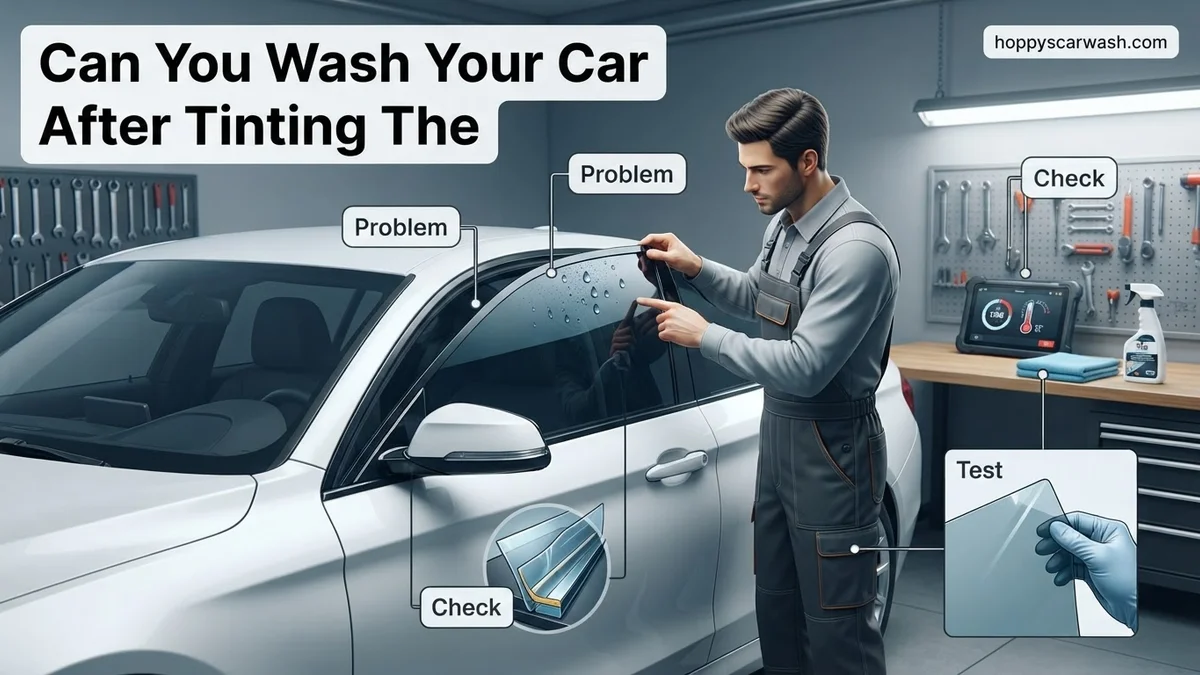
What Causes Window Tint Damage When Washing Too Early
Trapped Moisture and Evaporation Delays
During the professional installation process, technicians use a slip solution to position the film accurately on your vehicle glass. That liquid needs a clear path to escape through microscopic pores in the film. When you wash the exterior or wipe down the interior too quickly, you disrupt that delicate evaporation process. Water gets trapped under the surface, leading to permanent hazing, water spots, and unsightly bubbling that will not correct itself.
Adhesive Displacement and Peeling Edges
Fresh tint has practically zero structural grip right after it leaves the shop. The adhesive takes days to cross-link and cure completely under sunlight and ambient heat. During this vulnerable phase, several risks can ruin your investment:
- Applying pressure with a wash mitt can catch the raw edges of the film and cause it to peel away from the glass.
- Wiping the interior glass too aggressively shifts the film out of alignment before the glue sets.
- Rolling down the window catches the top edge of the film against the door seals, folding or tearing the material instantly.
How to Safely Wash Your Car After the Tint Curing Period
Exterior Washing Techniques for Tinted Windows
Once you pass the 5 to 7-day curing threshold, you can safely wash your car again, but you still need to change your habits to protect your window film. The exterior side of the window holds the film underneath, meaning it is more resilient, but harsh chemicals can still compromise the top coat. Follow these rules for a safe exterior wash:
- Keep high-pressure washer nozzles at least 12 inches away from window edges to prevent water blast from lifting the film.
- Use a dedicated automotive shampoo that is pH-balanced and free of harsh detergents.
- Dry the glass thoroughly with a clean, plush microfiber towel to prevent mineral-heavy water spots from baking onto the surface.
Interior Cleaning and Safe Chemical Choices
Cleaning the inside of your tinted windows requires the most caution because the actual film faces the cabin. Standard household glass cleaners like Windex contain ammonia, which breaks down window tint adhesives, turns the purple color, and causes bubbling within weeks. Protect your interior film with these guidelines:
- Always use an ammonia-free and alcohol-free glass cleaner specifically formulated for automotive window tint.
- Spray the cleaning solution directly onto your microfiber cloth, never directly onto the window surface, to prevent liquid from seeping into the bottom edges of the glass.
- Wipe gently in a single direction rather than scrubbing in aggressive circles to minimize stress on the curing adhesive.
What to Do If Your New Window Tint Gets Wet or Dirty
Accidents happen, and your freshly installed window tint might encounter moisture or smudges before the curing cycle finishes in 2026. According to automotive detailing experts, panicking and immediately wiping the film can permanently ruin the adhesive layer. Instead, immediate intervention requires a gentle, controlled approach to preserve the warranty and the structural integrity of the film.
If moisture or foreign debris compromises your windows during the critical curing window, follow these professional recovery steps:
- Resist the urge to scrub: Never use abrasive paper towels, rough sponges, or ammonia-based glass cleaners on uncured window tint.
- Blot away external moisture: Press a clean, dry microfiber cloth gently against the wet surface to absorb liquid without applying lateral friction.
- Address interior smudges carefully: Lightly mist a 50/50 mixture of distilled water and isopropyl alcohol onto a microfiber towel, then gently dab at the smudge rather than wiping.
- Park in direct sunlight: Accelerate the evaporation of trapped moisture pockets by positioning your vehicle facing the sun during peak daylight hours.
What If Bubbles Appear and the Tint Doesn’t Cure Properly
Small hazing patterns and micro-bubbles are entirely normal during the first few weeks of the window tint lifecycle. As residual installation moisture evaporates through the microscopic pores of the film, these optical imperfections typically vanish on their own. However, stubborn air pockets or large water bubbles remaining after 30 days indicate a failed installation or trapped contaminants.
When natural curing fails to eliminate visual defects, professional remediation becomes necessary to restore optimal visibility and aesthetics. Attempting to pierce or smooth out large bubbles manually usually tears the polyester film and ruins the adhesive.
What If It Still Doesn’t Work?
If your window tint exhibits persistent bubbling, peeling edges, or milky hazing well past the standard curing window, DIY fixes are no longer viable. Professional intervention is required to salvage or replace the compromised material. Consider these fallback steps if the installation fails:
- Verify your warranty coverage: Check your original installation receipt for manufacturer guarantees against bubbling, delamination, and fading, which often cover free labor and material replacement.
- Consult an authorized tint specialist: Take your vehicle back to the original shop or a certified competitor for a professional diagnostic evaluation of the adhesive bond.
- Request a targeted film re-application: Ask the technician if a single window can be stripped and re-tinted rather than overhauling the entire vehicle.
- Budget for professional correction: Expect to pay between $100 and $250 per window for professional removal and re-installation if the failure stems from poor initial prep work.
Conclusion
Washing your car too soon after window tint installation can permanently damage the adhesive and ruin your investment. Waiting the required 3 to 7 days—and up to 30 days for complete curing—ensures a smooth, bubble-free finish. According to verified research and leading automotive film manufacturers, patience during this initial curing phase prevents costly replacements. Your next actionable step is to check your installation date and mark your calendar with a safe car wash window for 2026.
❓ Frequently Asked Questions
Can you wash your car after tinting the windows if you only wash the body?
While exterior body washing poses less direct risk than cleaning the interior glass, you should still wait at least 3 days. High-pressure water sprays can easily force moisture under the fresh window edges and ruin the adhesive bond.
Does weather affect how long I have to wait to wash my car?
Yes, ambient temperature and humidity heavily impact the curing process. Sunny, hot weather speeds up moisture evaporation, while cool, damp weather extends the required waiting period closer to a full week.
What should I do if it rains on my car right after getting it tinted?
Rain on the exterior of the car is generally fine as long as the windows remain rolled up. If water gets on the interior film, gently blot it dry with a clean microfiber towel without pressing hard or sliding the film.
When is it safe to use window cleaner on tinted glass?
You should wait until the tint has fully cured for at least a week. Even then, you must exclusively use ammonia-free window cleaners to prevent purple discoloration and peeling.
Why do hazy spots appear under the tint during the first few days?
Hazy or milky spots are entirely normal during the curing process as trapped moisture slowly evaporates through the microscopic pores of the film. Do not attempt to push these out; they will disappear on their own.
What steps should I take if the window tint starts peeling after a wash?
If the film begins to peel due to premature washing or cleaning, stop touching it immediately. Take the vehicle back to the tint shop, as they may be able to repair or reapply the affected section under warranty.