How to Attach Front License Plate Without Holes 2026 Guide
Mounting a front license plate without drilling holes into your bumper preserves your vehicle’s paint and resale value. Tow hook brackets and heavy-duty automotive adhesives offer secure, clean alternatives for modern vehicles.
Mounting a front license plate to your car without drilling permanent holes in the bumper relies on two primary, secure methods: utilizing the factory tow hook receiver or applying heavy-duty automotive adhesive tape like 3M VHB. These solutions let you stay compliant with front-plate laws without compromising your vehicle’s factory finish or resale value.
As vehicle designs evolve into 2026, preserving clean bumper lines on modern sports cars, EVs, and luxury imports remains a top priority for car owners. Drilling into a painted plastic or composite bumper is permanent, expensive to reverse, and entirely unnecessary given modern aftermarket mounting engineering.
Key Takeaways
- Use tow hook mounts for the strongest, most secure no-drill installation.
- Clean mounting surfaces with isopropyl alcohol before applying 3M VHB tape.
- Verify state regulations regarding plate centering and visibility requirements.
- Inspect adhesive or bracket tightness periodically during routine vehicle maintenance.
- Avoid zip ties on painted surfaces to prevent scratching the clear coat.
Why Drivers Avoid Drilling Holes in Bumpers
Factory front bumpers come without pre-drilled holes in many regions, leaving dealerships or owners to make a difficult choice. Drilling into pristine paint creates immediate regret, especially when you consider the long-term cosmetic and structural downsides.
Preserving Resale Value and Aesthetics
A clean front fascia significantly enhances the modern look of your vehicle. When you trade in or sell your car, a hacked-up bumper with off-center or stripped screw holes instantly lowers buyer appeal. Keeping the bumper untouched protects your investment and maintains sleek factory styling.
- Eliminates permanent cosmetic damage to painted plastic or carbon fiber fascias.
- Prevents rust or corrosion from forming around exposed metal screws.
- Keeps the front end looking clean if you ever move to a state that doesn’t require a front plate.
Avoiding Structural and Installation Risks
Diy bumper drilling is prone to user error. A single slip of the drill bit gouges the paint, and over-tightened screws easily strip out thin plastic anchors, leaving your plate loose and rattling.
- Removes the risk of cracking expensive painted bumper covers during installation.
- Prevents loose plates caused by stripped plastic thread inserts.
- Eliminates vibrations that cause annoying rattles at highway speeds.
Attaching a Front License Plate Without Drilling: Your Essential Action Plan
Drilling holes into your vehicle’s pristine front bumper is heartbreaking, especially if your state requires a front plate, but you refuse to compromise your car’s aesthetic. Fortunately, the automotive aftermarket offers brilliant, non-destructive solutions. This practical walkthrough covers everything you need to know to securely mount your front license plate without putting a single screw into your paint or plastic bumper. By following these methodical steps, you will achieve a factory-secure installation that protects your vehicle’s resale value and keeps you legal on the road.
Step 1: Choose Your No-Drill Mounting Method
What you need: Computer or smartphone to research options, tape measure, and a flashlight to inspect your lower bumper area.
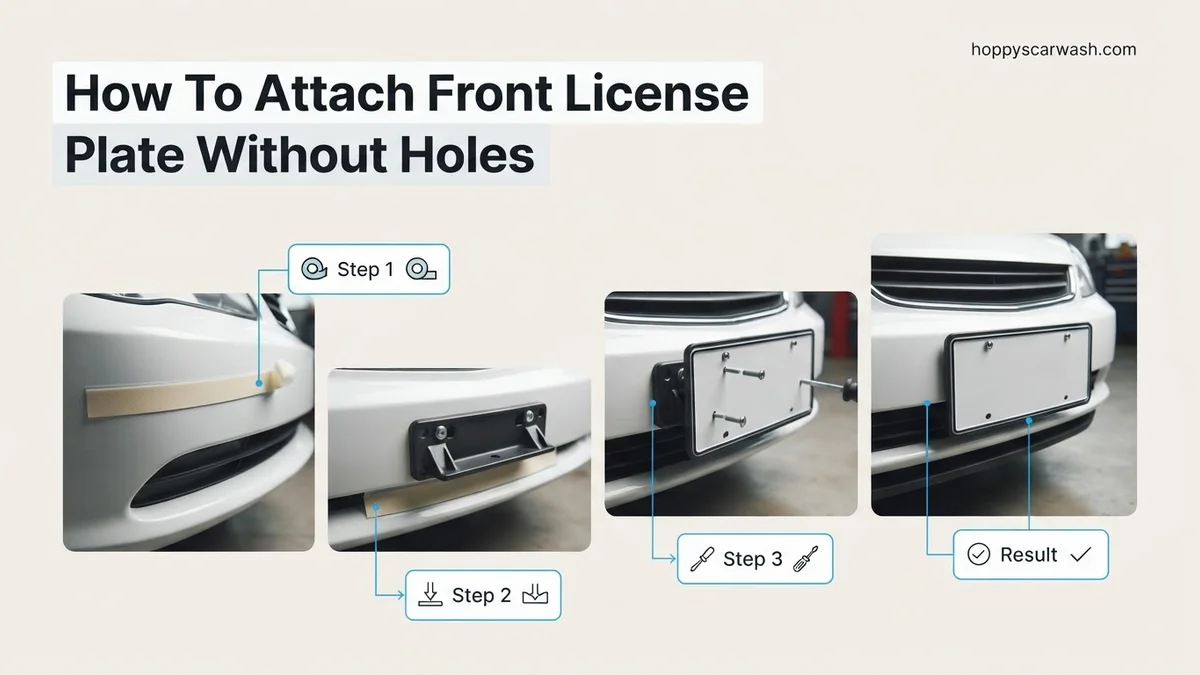
Instructions: Before purchasing hardware, you must determine which mounting style suits your vehicle’s front end. The three most popular options are tow hook mounts (which screw directly into the factory tow eyelet hidden behind a small bumper cap), snap-in grille mounts (which use heavy-duty zip ties or tension brackets on mesh grilles), and heavy-duty adhesive mounts (using industrial automotive tape like 3M VHB). Inspect your bumper closely. If you drive a sports sedan or European car, a tow hook mount is usually the cleanest and most rigid choice. If you drive an SUV with a large lower plastic or mesh grille, a bracket system is typically ideal.
Pro Tip: Never rely on cheap generic adhesives from hardware stores; stick to automotive-grade 3M VHB tape if you choose the adhesive route, as normal tape will fail at highway speeds.
Step 2: Thoroughly Clean and Prep the Installation Area
What you need: Isopropyl alcohol (91% concentration), microfiber towels, and a pair of clean rubber gloves to avoid skin oils.
Instructions: Whether you are sticking an adhesive bracket to your painted bumper or attaching a tow hook mount into threaded metal, cleanliness is paramount. Wash the front bumper thoroughly with automotive soap, rinse, and dry completely. Next, saturate a microfiber towel with isopropyl alcohol and vigorously scrub the specific mounting zone—whether it is the tow hook cover area or the flat bumper surface for adhesive mounts. This removes all wax, road grime, and microscopic grease films. Allow the area to air dry for at least five minutes. A surgically clean surface guarantees maximum adhesion and prevents premature failure of your chosen mounting hardware.
Pro Tip: Surface temperature matters immensely. Ensure your car and the mounting surface are between 65°F and 85°F before attempting any tape-based installation; cold metal or plastic will cause adhesives to unbond.
Step 3: Assemble the License Plate Bracket
What you need: Your chosen no-drill kit, the included hex keys, wrenches, bolts, nuts, and your state-issued license plate.
Instructions: Open your mounting kit and lay all components out on a clean workbench. Follow the manufacturer instructions to assemble the frame or backing plate loosely. Attach your license plate to the mounting plate using the provided short machine screws and locking nuts. Do not fully tighten the screws yet; leave a tiny bit of play so you can make micro-adjustments during the alignment phase. If your kit uses a tow hook adapter shaft, thread the shaft into the mounting plate loosely to understand how the components articulate together before taking it to the vehicle.
Pro Tip: Apply a tiny drop of blue threadlocker (such as Loctite 242) to the metal bolts during assembly. Front-end vibrations are constant, and threadlocker prevents hardware from shaking loose over time.
Step 4: Locate and Expose the Factory Tow Hook Receiver (If Applicable)
What you need: A flathead screwdriver wrapped in electrical tape or a plastic trim removal tool.
Instructions: If you selected a tow hook mounting kit, you need to find the hidden factory receiver. Look closely at your front bumper for a small, usually 2-inch square or circular plastic cover. Gently insert your taped flathead screwdriver or plastic trim tool into the edge of the cover and pop it outward. Be extremely careful not to scratch the surrounding bumper paint. Once popped off, some covers remain attached by a small plastic tether, while others come completely free. Store this cover safely in your glove box so you can reinstall it if you ever sell the vehicle.
Pro Tip: Wrap the tip of any metal tool in painters tape or microfiber cloth to provide a soft buffer against your car’s painted bumper finish.
Step 5: Test Fit and Align the Plate Assembly
What you need: Your assembled license plate kit, a helper (optional), and painter’s tape.
Instructions: Bring your assembled plate and mount to the vehicle for a dry run. If using a tow hook mount, carefully thread the shaft into the exposed receiver by hand, turning clockwise until snug. If using an adhesive or grille mount, hold the bracket against the prepped surface without peeling the protective tape backing yet. Step back five paces to check the alignment. Is the plate level? Does it block your parking sensors, radar cruise control sensors, or airflow to the intercooler? Adjust the angle and position of the plate on the bracket until it looks centered and unobtrusive.
Pro Tip: Use painter’s tape on the bumper to temporarily mark the ideal corners of your mount if you are using an adhesive bracket, ensuring zero guesswork when you press it into place.
Step 6: Secure and Tighten All Fasteners
What you need: Open-end wrenches or hex keys matching your hardware kit.
Instructions: Once you are completely satisfied with the position, lock everything down. If using a tow hook mount, use a wrench to securely tighten the main shaft into the bumper receiver, ensuring it cannot wobble, but stop before over-tightening and stripping the threads. Next, tighten all the adjustment bolts on the back of the license plate frame so the plate itself remains rigid and parallel to the ground. If you are using an adhesive mount, peel the 31M VHB backing tape, firmly press the bracket against the prepped bumper with heavy hand pressure for a full 60 seconds.
Pro Tip: If you used adhesive tape, do not wash your car or drive in heavy rain for at least 48 hours to allow the adhesive to reach its maximum 100% curing strength.
Step 7: Final Inspection and Sensor Check
What you need: Your car keys and a keen eye.
Instructions: Turn your vehicle’s ignition on without starting the engine to test your front parking sensors and ultrasonic collision-warning systems. Sometimes, offset tow hook plates can accidentally trigger proximity sensors, causing false beeps when idling or reversing. Walk around the front of the vehicle and grab the license plate firmly with your hands. Try to shake or twist it; the entire assembly should feel rock-solid, with the bumper moving slightly rather than the plate sliding or rattling loose. Double-check that your state registration tags are clearly visible and unobstructed by any part of the mounting frame.
Pro Tip: If your parking sensor is falsely beeping, many tow hook mounts feature slotted adjustment holes that allow you to slide the plate an inch or two further away from the sensor.
✅ Final Checklist
- License plate is mounted securely with zero drill holes in the painted bumper
- All bolts, nuts, and tow hook shafts are tight and secured with threadlocker
- Plate is level, centered, and fully compliant with state visibility laws
- Front parking sensors and safety cameras are unobstructed and free of false alerts
- Adhesive cure time (if applicable) has been fully observed before driving
Important Notes:
- Always double-check local state laws regarding front plate positioning and visibility angles.
- If your vehicle has complex electronic safety packages embedded in the front bumper, consider consulting a professional car accessory specialist before purchasing a mount.
- Estimated time: 30 to 45 minutes. Cost range: $40 to $90 depending on the mounting kit brand.
How to Mount a Plate Using a Tow Hook Bracket
The tow hook mount is the gold standard for no-drill front license plate installation. It utilizes your car’s hidden factory tow eye receiver, threading directly into the structural crash bar behind the bumper.
Selecting and Installing a Tow Hook Mount
You must purchase a vehicle-specific tow hook kit rather than a universal one. Thread pitches vary drastically by make, model, and even year (ensuring your 2026 model has the exact matching thread pattern is crucial).
Pop off the small plastic tow hook cover on your front bumper using a trim removal tool.
Thread the solid steel shaft of the mount clockwise into the factory receiver until hand-tight, then snug it with a wrench.
Attach the adapter plate to the shaft using the provided hardware, ensuring the plate sits flush without contacting the painted bumper surface.
Pros, Cons, and Real-World Reliability
Tow hook mounts offer unmatched structural integrity because they anchor directly to the vehicle’s metal frame. However, they do come with a few operational quirks.
- Pros: 100 percent reversible, incredibly strong, and requires zero modifications to the bumper.
- Cons: Asymmetrically positions the plate, which can occasionally trigger modern front-facing parking sensors or adaptive cruise control radar.
- Reliability: Excellent. Quality kits feature thread locker to prevent the shaft from vibrating loose during spirited driving or rough road conditions.
How to Attach a Plate Using Heavy-Duty 3M VHB Tape
For a completely flush look without bulky brackets, heavy-duty 3M VHB (Very High Bond) acrylic foam tape provides industrial-strength adhesion. According to automotive structural adhesive studies, properly applied VHB tape can distribute stress loads across the entire surface rather than concentrating weight at single fastener points.
Adhering a plate securely requires precise preparation and execution:
- Thoroughly wash the front bumper mounting area with automotive soap, then wipe the surface down with isopropyl alcohol to completely remove wax, oils, and road grime.
- Apply a dedicated automotive adhesion promoter to both the bumper surface and the back of the license plate to maximize chemical bonding.
- Cut strips of 3M VHB tape (specifically the 4910 or 5952 series, which are rated for exterior automotive use) and apply them to the vertical edges or horizontal top and bottom of the license plate.
- Peel the protective liner and firmly press the plate against the bumper, applying a consistent pressure of at least 15 pounds per square inch for a minimum of 30 seconds.
- Allow the adhesive to cure for 24 to 72 hours in temperatures above 60 degrees Fahrenheit before driving at highway speeds.
What If Your No-Drill Mount Falls Off or Vibrates Loose
Even with advanced no-drill mounting hardware, thermal expansion, high-speed wind buffeting, and persistent road vibrations can sometimes cause mounts to slip or rattle. If your mount begins to sag, tilt, or detach entirely, immediate corrective action is necessary to prevent losing your state-mandated plate.
Address loose mounts systematically using these troubleshooting steps:
- Check all clamping bolts, set screws, and tow-hook shafts with a torque wrench to ensure they meet the manufacturer’s recommended tightness specifications.
- Apply a medium-strength threadlocker (such as blue Loctite) to metal-on-metal fastener threads to prevent vibration-induced loosening over time.
- If using tape or adhesive brackets, completely scrape away old residue, re-clean the bumper surface with isopropyl alcohol, and apply fresh 3M VHB tape rather than trying to reuse old adhesive.
- Install rubber vibration dampers or adhesive foam pads between the back of the license plate and the bumper to absorb high-frequency engine and road harmonics.
- If aftermarket tow-hook mounts repeatedly strip or fail due to incompatible threading, visit a local certified body shop or professional technician for a custom bracket fabrication, with professional labor typically costing between $75 and $150.
Conclusion
Preserving your vehicle’s front bumper while maintaining legal compliance is entirely achievable using modern no-drill mounting solutions like tow-hook adapters, snap-in grille brackets, and industrial VHB tapes. Choosing the right method protects your vehicle’s resale value and avoids the permanent damage of drilling factory holes. According to verified research and automotive accessorization experts, selecting a mount engineered specifically for your vehicle’s make and model guarantees optimal durability and clean aesthetics through 2026 and beyond. Take the next step today by identifying your front-end configuration and selecting a high-quality mounting kit that matches your driving needs.
❓ Frequently Asked Questions
What is the most secure method to attach a front license plate without drilling?
A dedicated tow hook mounting kit connects directly into your vehicle’s factory tow eye socket, offering the highest level of mechanical strength and stability against highway speeds and car washes.
How do I properly prep my bumper for 3M VHB tape installation?
Thoroughly wash the mounting area, wipe it down with 99% isopropyl alcohol to remove all wax and oils, and ensure both the bumper and bracket are at room temperature (above 70°F) for maximum bond strength.
Will a tow hook license plate mount set off parking sensors?
Depending on your vehicle’s make and model, an offset tow hook mount can occasionally interfere with the corner ultrasonic parking sensors. Adjustable brackets allow you to position the plate further away to prevent false warnings.
How long does 3M VHB tape need to cure?
While the tape achieves 50% strength within 20 minutes, it reaches 90% strength in 24 hours and full 100% cure in 72 hours. Avoid driving at high speeds or washing the car during the initial 24-hour curing window.
Are snap-on front grill brackets reliable?
Snap-on or universal grill-clamp brackets work well on vehicles with large lower grilles, but you should check the clamping mechanism periodically to ensure road vibrations haven’t loosened the grip.
Can I remove a tow hook license plate mount during the winter?
Yes, tow hook mounts unscrew completely within minutes, leaving your bumper completely untouched and free of holes, which is ideal if you move to a state that doesn’t require a front plate.