Can You Use Throttle Body Cleaner on MAF Sensor? 2026
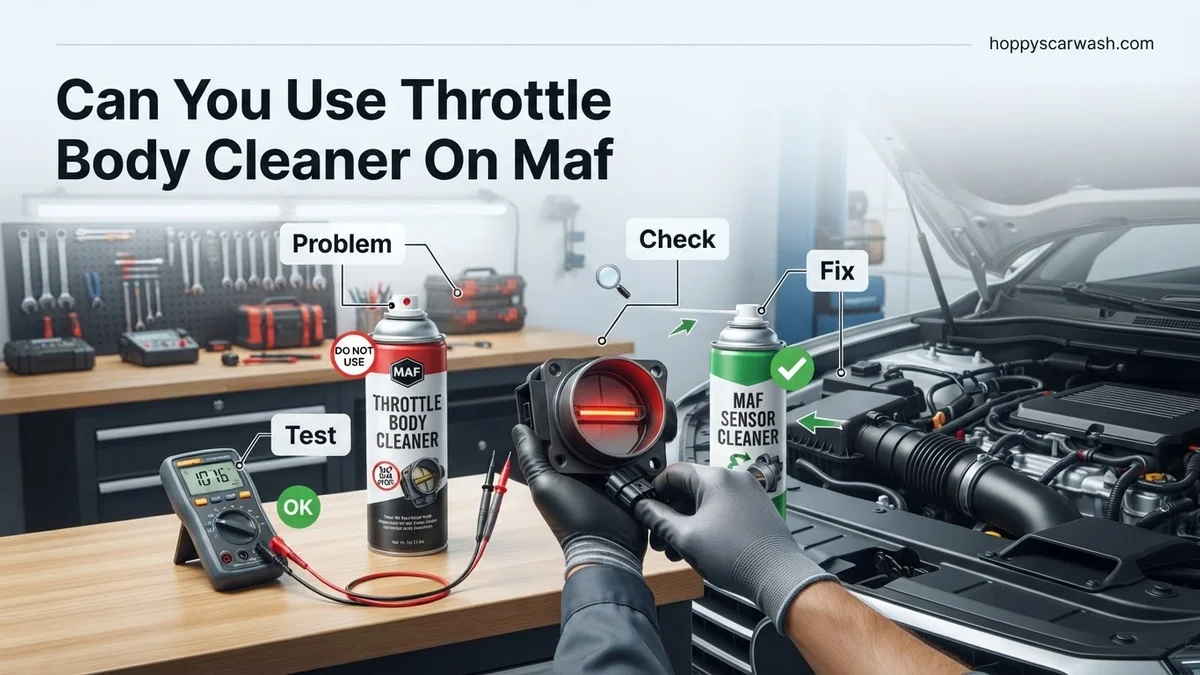
No, you should never use throttle body cleaner on a Mass Air Flow (MAF) sensor. Throttle body cleaner contains heavy lubricants and chemical residues that will coat the sensitive sensor wire, leading to engine performance issues, rough idling, and expensive replacement costs.
No, you cannot use throttle body cleaner on a Mass Air Flow (MAF) sensor. Doing so can permanently ruin a sensitive and expensive engine component. While both products come in aerosol cans and clean automotive parts, their chemical formulations are entirely different.
As vehicle electronics become more precise in 2026, using the wrong workshop chemical leads to costly repairs. A MAF sensor relies on an extremely delicate platinum wire or film to measure incoming airflow. Spraying it with the wrong solvent creates a chemical disaster under your hood.
Key Takeaways
- Never use throttle body cleaner on MAF sensors due to damaging chemical residues.
- MAF sensor cleaner is specially formulated to evaporate completely without leaving a film.
- Using the wrong cleaner can trigger Check Engine lights and ruin the sensor.
- If you already used it, immediately re-clean the sensor with dedicated MAF cleaner.
- Always disconnect the vehicle battery before servicing any electronic engine sensors.
Why Using Throttle Body Cleaner on a MAF Sensor Damages Your Car
Chemical Differences, Residues, and Lubricants
Throttle body cleaners are engineered to cut through heavy, baked-on carbon deposits, varnish, and oil sludge inside the throttle bore. To achieve this, manufacturers formulate them with heavy-duty solvents and lubricating agents. These lubricants prevent the throttle plate’s mechanical parts from binding.
However, your MAF sensor does not need lubrication. In fact, it hates it. When you spray throttle body cleaner onto a MAF sensor, those built-in lubricants and heavy chemicals leave behind a microscopic, sticky film. Even if the part looks clean, a chemical residue bakes onto the hot wire the moment you start your engine.
The Real-World Consequences of the Wrong Solvent
Using throttle body cleaner instead of dedicated MAF cleaner triggers a cascade of engine management problems. Because the residue insulates the sensing wire, the computer misreads the actual volume of entering air.
- Destroyed Sensor Filaments: The harsh chlorinated solvents found in many throttle body cleaners can physically warp or melt the fragile thermal resistors.
- Persistent Check Engine Lights: You will likely trigger diagnostic trouble codes like P0101 or P0102, signaling irrational airflow data.
- Severe Fuel Economy Drops: The Powertrain Control Module will miscalculate the air-fuel ratio, often dumping excess fuel into the cylinders and destroying your gas mileage.
- Expensive Replacement Costs: A specialized can of MAF cleaner costs about $8 to $10. Replacing a ruined OEM MAF sensor in 2026 can easily cost anywhere from $150 to $400 depending on your vehicle make.
Master Mass Air Flow Sensor Cleaning in 6 Simple Steps
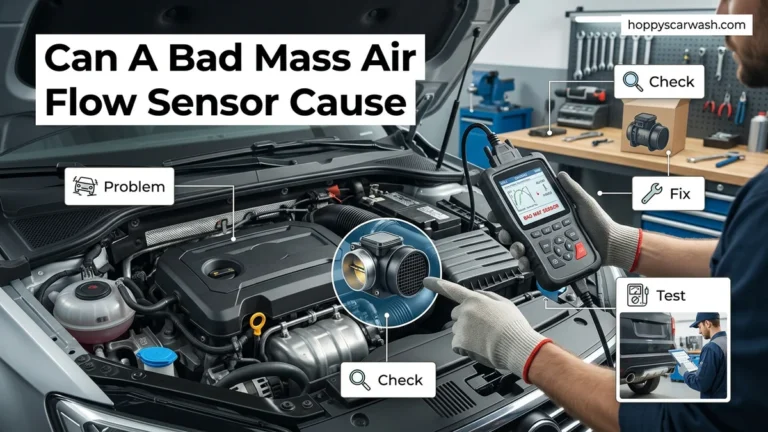
Can you use throttle body cleaner on a MAF sensor? The short answer is an absolute no. Doing so can permanently ruin your vehicle’s delicate electronics and cost you hundreds of dollars in unnecessary repairs. This comprehensive walkthrough explains why standard cleaners fail, and guides you through the safe, precise methodology required to properly clean your Mass Air Flow sensor using specialized products, restoring your engine’s fuel efficiency, idle stability, and overall performance.
Step 1: Understand Why Throttle Body Cleaner is Dangerous
What you need: Basic automotive knowledge and a clear understanding of your vehicle’s intake system components.
Instructions: Before touching any tools, you must understand the chemistry at play. Throttle body cleaners are formulated with heavy-duty solvents designed to dissolve stubborn, sticky carbon varnish baked onto metal butterfly valves. These aggressive chemicals contain lubricants and chlorinated solvents that leave behind a sticky or oily film. If you spray this onto your MAF sensor, it will coat the ultra-sensitive platinum wires or film. Once the engine starts, dust and debris will immediately stick to this residue, permanently insulating the sensor and throwing off your air-fuel ratio.
Pro Tip: Always invest in a dedicated, residue-free MAF sensor cleaner spray specifically formulated to evaporate instantly without leaving chemical traces.
Step 2: Gather Your Specialized Tools and Safety Gear
What you need: Dedicated MAF sensor cleaner, nitrile gloves, safety glasses, a socket set or screwdrivers for the intake ducting, and a clean microfiber towel.
Instructions: Proper preparation ensures a smooth and safe procedure. Park your vehicle on a flat surface, engage the parking brake, and pop the hood. Put on your safety glasses and nitrile gloves to protect your skin and eyes from chemical splashes. Lay out your socket set—typically requiring 8mm or 10mm sockets, or flathead screwdrivers—to loosen the hose clamps securing your air intake ductwork. Having everything within arm’s reach prevents you from walking away mid-job and keeps contaminants away from open engine components.
Pro Tip: Double-check that your aerosol can explicitly states “MAF Sensor Cleaner” on the label before proceeding any further.
Step 3: Disconnect the Battery and Locate the MAF Sensor
What you need: Wrench for the battery terminal and a flashlight.
Instructions: Safety always comes first when working with automotive electronics. Use your wrench to disconnect the negative (-) battery terminal, tucking the cable safely away to prevent accidental electrical arcs. Next, locate your Mass Air Flow sensor. It is universally positioned inside the plastic intake ducting, sitting directly between your air filter box and the throttle body. Follow the wiring harness from the engine bay to find it if your engine cover is large. Disconnect the electrical connector leading to the sensor by pressing down on the plastic locking tab and gently pulling outward.
Pro Tip: Never pull on the electrical wires themselves to disconnect the plug; always grip the plastic connector housing firmly to avoid breaking fragile wiring pins.
Step 4: Remove the Sensor Housing or Assembly
What you need: Screwdrivers, ratchet set, and a clean workbench surface.
Instructions: Depending on your vehicle make and model, you can either unscrew the sensor element directly from the housing using a security Torx bit, or remove the entire plastic intake section holding it. If space permits, removing just the two screws holding the sensor element is ideal. Carefully lift the sensor straight out of the housing, taking extreme care not to bend or touch the internal sensing wires or glass thermistor bulb. Inspect the rubber O-ring gasket for cracks or flattening while you have it out.
Pro Tip: Stuff a clean microfiber towel into the open intake ducting immediately after removing the sensor to prevent accidental entry of screws or debris into your engine.
Step 5: Apply the Specialized Cleaner Correctly
What you need: Dedicated MAF sensor cleaner spray and a well-ventilated outdoor workspace.
Instructions: Hold the MAF sensor cleaner can approximately 4 to 6 inches away from the sensor component. Generously spray the internal wires or flat film elements, letting the pressure wash away accumulated dust and microscopic road grime. Ensure you thoroughly flush both sides of the sensor element. You should visually notice the platinum wire transition from a dull, contaminated gray back to a shiny metallic finish. Do not use cotton swabs, brushes, or compressed air, as the physical contact or high pressure can snap the microscopic sensing wires.
Pro Tip: Let the sensor air-dry completely on a clean shop towel for at least 15 to 20 minutes. All chemical solvents must be 100% evaporated before reinstalling.
Step 6: Reinstall Components and Perform a Test Drive
What you need: Socket set, torque tools, and a properly dried MAF sensor.
Instructions: Once the sensor is completely dry and free of chemical moisture, carefully lower it back into its mounting position. Tightened retaining screws securely, but do not overtighten, as plastic housings crack easily. Reconnect the electrical wiring harness until you hear a distinct audible click. Remove the protective shop towel from the intake duct, reattach the intake tube, and tighten all hose clamps. Reconnect your negative battery terminal. Start the engine and let it idle for 5 to 10 minutes to allow the computer to recalibrate.
Pro Tip: If your check engine light remains illuminated after cleaning, you may need to clear the diagnostic trouble codes (DTCs) using an OBD2 scanner.
✅ Final Checklist
- Verified that only dedicated MAF sensor cleaner was used, avoiding throttle body cleaner entirely.
- Inspected the internal sensing wires to ensure they are clean, intact, and undamaged.
- Allowed the cleaning chemicals to completely air-dry for a minimum of 15 minutes before reassembly.
- Ensured the electrical connector clicked securely into place and the intake duct clamps are tightly fastened.
- Confirmed battery terminals are clean and securely reconnected.
Important Notes:
- Always work in a well-ventilated outdoor area when handling automotive chemical sprays and wear protective gear.
- If your vehicle continues to run rough or throws persistent error codes after cleaning, the MAF sensor may be internally fried and require professional replacement.
- Estimated time for this maintenance procedure is 30 to 45 minutes, with a total cost of around $10 to $15 for a can of specialized cleaner.
How to Safely Clean Your Mass Air Flow Sensor Step-by-Step
Choosing the Right Product
Always purchase a dedicated Mass Air Flow Sensor Cleaner. These formulas use a specialized blend of fast-evaporating solvents—typically hexane or heptane mixtures—that dissolve oil and pollen without leaving a single trace of residue behind. They are completely safe for plastic housings and delicate thermistors.
The Proper Cleaning Procedure
Cleaning your MAF sensor takes less than fifteen minutes if you follow the correct procedure. Precision matters just as much as using the right chemical.
- Disconnect the negative battery terminal to prevent electrical short circuits and clear stored trouble codes.
- Locate the MAF sensor housing between your air filter box and the intake manifold, then unplug its electrical wiring harness.
- Remove the sensor using a screwdriver or Torx bit, taking care not to drop the housing or touch the internal wires.
- Hold the aerosol can about 4 to 6 inches away and spray the internal sensor wires or glass film thoroughly. Apply 10 to 15 quick bursts to flush away microscopic debris.
- Allow the sensor to air dry completely for at least 15 to 20 minutes. Never wipe the wire with a cotton swab, shop towel, or your finger, as the physical contact will snap the delicate filament.
- Reinstall the completely dry sensor, reconnect the wiring harness and battery, and start your engine.
What to Do If You Already Used Throttle Body Cleaner
Accidentally spraying throttle body cleaner onto a mass airflow sensor happens frequently during routine DIY maintenance. If this mistake just occurred, the immediate priority is stopping chemical degradation before it permanently destroys the delicate platinum hot-wire element. According to automotive chemical safety data from major manufacturers, leaving solvent residue on the sensor causes localized overheating and circuit board failure.
Immediate Remediation Steps
- Disconnect the negative vehicle battery terminal immediately to cut power and prevent electrical short circuits.
- Remove the sensor housing completely from the vehicle intake tract to prevent further chemical migration into the engine.
- Flush the sensor element thoroughly using a dedicated, residue-free aerosol MAF sensor cleaner.
- Allow the component to air-dry completely in a shaded, dust-free environment for a minimum of 30 to 45 minutes before reinstallation.
- Inspect the wire element under a bright light to ensure zero film, residue, or discoloration remains on the platinum filament.
When Cleaning Fails and Your MAF Sensor Needs a Permanent Fix
Sometimes cleaning a contaminated or damaged mass airflow sensor fails to resolve underlying engine performance issues. If the chemical residue from improper cleaners or long-term heat cycles has burned out the delicate platinum wire, chemical intervention will no longer restore proper voltage signals to the powertrain control module. Automotive diagnostic standards note that a persistently malfunctioning sensor will continue triggering diagnostic trouble codes like P0101 through P0104.
Fallback Diagnostic and Repair Options
- Verify sensor functionality using an advanced OBD2 diagnostic scanner to read live gram-per-second (g/s) data at idle against factory specifications.
- Inspect the sensor wiring harness and electrical connector pins for signs of melted plastic, corrosion, or chemical pitting caused by aggressive solvents.
- Replace the damaged component with a high-quality OEM or tier-one aftermarket replacement sensor, typically ranging from $75 to $250 for parts depending on the vehicle make and model.
- Budget an additional $100 to $200 for professional labor if diagnostic testing requires advanced oscilloscope waveform analysis at a certified repair shop.
Conclusion
Using throttle body cleaner on a mass airflow sensor risks severe damage due to heavy solvents and leaving behind a conductive residue. Proper maintenance requires sticking exclusively to specialized, quick-evaporating electronic cleaners designed for delicate electronic components. According to verified research and expert automotive technician sources, replacing a ruined sensor costs significantly more than buying the correct spray initially. Take a preventative approach today by checking your current maintenance supplies and purchasing a dedicated cleaner before your next tune-up.
❓ Frequently Asked Questions
Can you use throttle body cleaner on a MAF sensor if it dries completely first?
No. Even after drying, throttle body cleaner leaves behind a chemical residue and lubrication film designed to keep throttle plates moving. This film coats the hot-wire element of the MAF sensor, insulating it and preventing accurate airflow readings.
Why is the MAF sensor wire so sensitive to chemicals?
The MAF sensor relies on a microscopic platinum wire or film that measures air temperature and mass by monitoring how much electrical current is required to keep it hot. Any coating acts as insulation, completely skewing the engine computer’s air-fuel calculations.
What is the exact chemical difference between MAF cleaner and throttle body cleaner?
MAF cleaner uses high-purity solvents like hexane or heptane that evaporate 100% cleanly without additives. Throttle body cleaner contains stronger varnish-cutting solvents combined with lubricating oils to prevent the throttle butterfly valve from sticking.
Can I use rubbing alcohol (isopropyl alcohol) instead of MAF sensor cleaner?
While high-percentage isopropyl alcohol (99%) can work in a pinch if applied with extreme care using a cotton swab, it may still leave a slight residue. Dedicated aerosol MAF cleaner remains the only safe, recommended option.
How much does a replacement MAF sensor cost if I ruin it with the wrong cleaner?
Depending on the make and model of your vehicle, an OEM replacement mass air flow sensor typically costs anywhere from $75 to $350, making it much cheaper to buy a $7 can of correct cleaner beforehand.
What are the common symptoms of a contaminated MAF sensor?
Common symptoms include engine hesitation upon acceleration, sluggish throttle response, engine stalling when coming to a stop, reduced fuel economy, and a persistent check engine light.