Can a Bad Mass Air Flow Sensor Cause Rough Idle? 2026
Yes, a bad or dirty mass air flow (MAF) sensor is a primary cause of a rough idle. When the sensor fails to measure incoming air accurately, the engine computer delivers an incorrect air-fuel mixture, resulting in engine stuttering and fluctuating RPMs.
Yes, a bad or dirty mass air flow (MAF) sensor can directly cause a rough, fluctuating, or unstable engine idle. Your vehicle relies on this critical sensor to measure the exact amount of air entering the engine so the computer can calculate the correct fuel injection amount.
By 2026, modern vehicle engine management systems have grown increasingly sensitive to air-fuel ratio imbalances. When your MAF sensor fails to report accurate data, your car will struggle to maintain a smooth, steady idle at stoplights or startup, impacting your daily commute and overall vehicle reliability.
Key Takeaways
- A malfunctioning MAF sensor directly disrupts the engine’s crucial air-fuel ratio.
- Rough idling, engine stalling, and hesitation during acceleration are common warning signs.
- Cleaning a dirty MAF sensor with specialized spray often restores proper function.
- A persistent check engine light usually accompanies MAF sensor failure codes.
- Always disconnect the vehicle battery before servicing or replacing the sensor.
How a Bad Mass Air Flow Sensor Causes Rough Idle
Disrupting the Air-Fuel Mixture
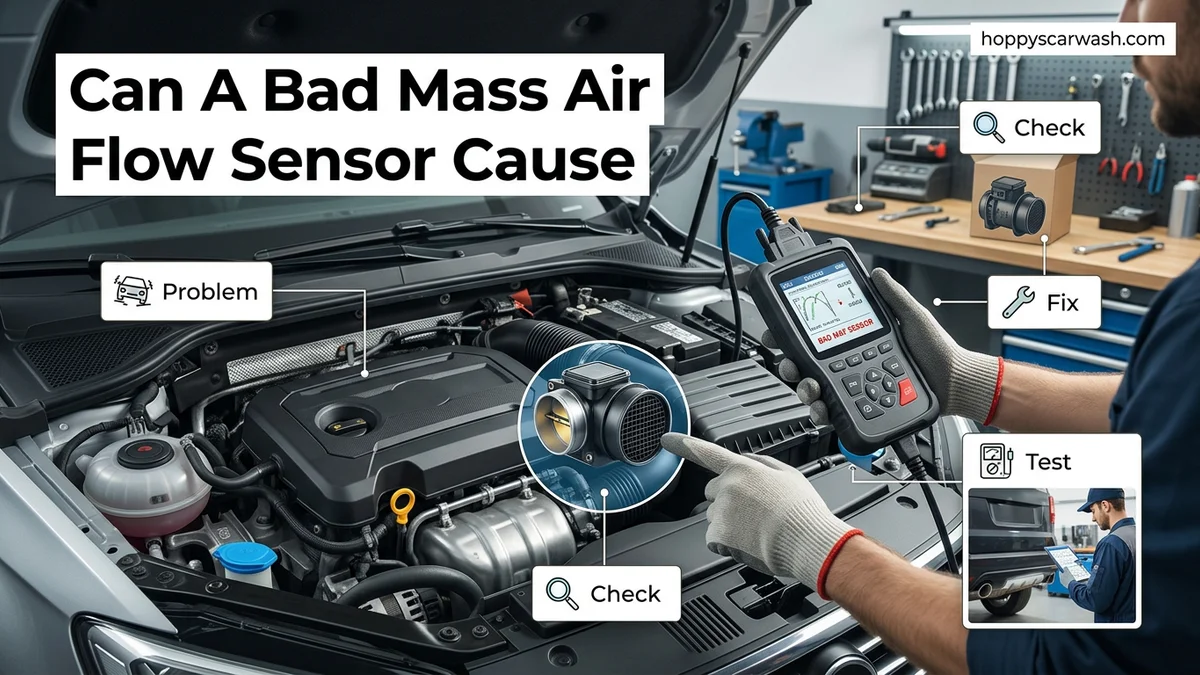
Your engine requires a precise balance of air and fuel to run smoothly, typically a ratio of 14.7 parts air to 1 part fuel. The MAF sensor measures incoming airflow using a heated wire that cools down as air passes over it. When a layer of dust, oil, or debris coats this wire, it cannot accurately calculate the volume of air entering the engine. Consequently, the Powertrain Control Module (PCM) injects the wrong amount of fuel. If your engine receives too little fuel or too much air, it will stumble, shake, and create that frustrating rough idle you feel through the steering wheel.
Erratic Computer Readings and Hunting Idle
A failing sensor often sends fluctuating voltage signals to your car computer. As the engine computer constantly tries to correct this flawed data, it rapidly increases and decreases fuel delivery. This causes a phenomenon known as hunting idle, where your tachometer needle bounces up and down between 500 and 1,000 RPM while you are parked. You might notice the car constantly shifting between nearly stalling and surging forward slightly, all because the computer is chasing a ghost reading from a dirty or failing sensor.
Can a Bad Mass Air Flow Sensor Cause Rough Idle: What Causes It and How to Fix It
If your engine shakes violently at red lights or struggles to maintain a steady RPM when starting up, you might be dealing with a frustrating automotive mystery. This comprehensive walkthrough explores whether a failing mass air flow sensor is truly the culprit behind your rough idle, guiding you through the exact diagnostic and repair process to restore your vehicle’s smooth performance.
Step 1: Understand the Symptoms of a Faulty MAF Sensor
What you need: No physical tools required; just your vehicle, a notebook, and a keen sense of observation regarding your engine’s current behavior.
Instructions: Begin by observing your engine during a cold start and after it reaches normal operating temperature. A failing mass air flow (MAF) sensor miscalculates the amount of air entering the engine, leading to an incorrect air-fuel ratio. This imbalance frequently manifests as a rough, fluctuating idle, engine stalling when coming to a stop, sluggish acceleration, and occasionally a glowing Check Engine Light on your dashboard. Document whether these symptoms worsen when the air conditioner is turned on or when shifting gears, as an incorrect airflow reading heavily disrupts the computer’s idle control calculations.
Pro Tip: Do not immediately assume the MAF is dead just because of a rough idle; vacuum leaks and dirty throttle bodies can mimic these exact symptoms.
Step 2: Locate the Mass Air Flow Sensor Under the Hood
What you need: A flashlight, safety glasses, and your vehicle’s owner manual if you are unsure about under-hood component layouts.
Instructions: Pop your vehicle’s hood and secure it with the prop rod or hydraulic struts. Locate the large black plastic air intake duct that runs directly from your engine’s air filter box toward the throttle body. The MAF sensor is typically housed in a short plastic segment of this ducting, situated immediately after the air filter box. Look for an electrical wiring harness plugged directly into the top or side of the sensor housing, held in place by a small locking tab.
Pro Tip: Always ensure the engine is completely turned off and the ignition key is removed before poking around near electrical connectors under the hood.
Step 3: Perform a Visual and Physical Inspection
What you need: A flathead screwdriver and a bright LED flashlight for closely inspecting interior sensor components.
Instructions: Carefully unplug the electrical connector from the MAF sensor by depressing the plastic release tab and gently pulling. Loosen the metal hose clamps on either side of the sensor housing using your screwdriver, then remove the sensor assembly if necessary. Inspect the internal measuring wires or thin film elements using your flashlight. Look for accumulated dust, oil residue from aftermarket oiled air filters, or physical breakage. Even a microscopic layer of grime acts as an insulating blanket, severely throwing off the sensor’s temperature and airflow calculations.
Pro Tip: Never touch the delicate internal wires of the MAF sensor with your fingers, cotton swabs, or tools, as human oils and physical pressure will destroy them instantly.
Step 4: Clean the MAF Sensor Correctly
What you need: A specialized aerosol can of Mass Air Flow Sensor Cleaner (do not use brake cleaner or carburetor cleaner), and a clean microfiber towel.
Instructions: Take your removed or exposed MAF sensor and hold it over a catch rag. Spray the internal thermistor wires and sensing elements generously with the specialized MAF cleaner, making sure the solvent flushes away all trapped microscopic debris and oily films. Spray the components 10 to 15 times to ensure complete saturation and thorough washing. Once cleaned, place the sensor in a safe, dust-free area and allow it to air dry completely for at least 15 to 20 minutes. Reinstalling a wet sensor can cause permanent electrical damage or trigger harsh engine misfires.
Pro Tip: Always use specifically formulated MAF cleaner because standard chemical cleaners leave a residue that permanently ruins the sensitive electronic components.
Step 5: Inspect and Clear Related Vacuum Leaks
What you need: A can of unlit propane, brake cleaner, or water in a spray bottle, plus your visual inspection checklist.
Instructions: While your MAF sensor is drying, thoroughly inspect all rubber vacuum hoses, PCV lines, and the large accordion intake boot connected to the throttle body. A cracked hose lets unmeasured air slip past your freshly cleaned MAF sensor, causing a persistent rough idle. Start the engine after putting everything back together and lightly mist water around suspected connection points; if the idle suddenly changes or smooths out, you have successfully located a vacuum leak that was compounding your MAF sensor issues.
Pro Tip: Replacing brittle, cracked rubber vacuum hoses is inexpensive and prevents future air-fuel ratio faults from recurring shortly after a sensor service.
Step 6: Test the MAF Sensor with a Multimeter or OBD2 Scanner
What you need: A digital multimeter with back-probe pins or a bidirectional OBD2 diagnostic scanner capable of reading live data streams.
Instructions: Reconnect the MAF sensor and plug the electrical harness back in securely. Turn your ignition key to the ON position without starting the engine. If using an OBD2 scanner, navigate to the live data menu and look for the ‘MAF’ or ‘Gram/Second’ (g/s) reading. At a normal idle, a healthy four-cylinder engine typically reads between 2.0 to 6.0 g/s, while larger V6 or V8 engines will show higher baseline numbers. If the readings remain flatlined at zero or fluctuate wildly despite steady engine speeds, the sensor internal circuitry has failed and must be replaced.
Pro Tip: Back-probing multimeter signals requires careful precision; consult your specific vehicle repair manual for exact voltage pinout references (usually 0.5V at idle to 4.5V at wide-open throttle).
Step 7: Perform an Idle Relearn Procedure
What you need: Your vehicle keys, patience, and knowledge of your specific car brand’s computer reset protocol.
Instructions: After cleaning or replacing a MAF sensor, the engine control module (ECM) must relearn the correct idle parameters since it spent weeks compensating for a failing sensor. Disconnect the negative vehicle battery terminal for 10 minutes to wipe old fuel trim adaptations. Reconnect the battery, turn the ignition to ON for 5 seconds, turn it off, and then start the engine without touching the gas pedal. Let the engine idle in “Park” or “Neutral” with the air conditioning and accessories turned off for precisely 10 minutes, allowing the computer to recalibrate.
Pro Tip: Driving immediately after a MAF replacement without letting the vehicle idle-relearn can result in temporary surging, erratic shifting, or a stalled engine at the first stop sign.
✅ Final Checklist
- MAF sensor housing is securely tightened with zero air leaks in the intake tract
- Electrical connector is firmly clicked into place with its locking tab engaged
- Sensor internal wires are completely dry and free from chemical residues or oil film
- Live data scan confirms stable gram-per-second airflow readings at normal idle
- Engine idle relearn procedure executed successfully without lingering RPM surges
Important Notes:
- Always wear safety glasses and gloves when working with automotive cleaning solvents and under-hood components.
- Seek professional mechanic assistance if replacing the MAF sensor and performing an idle relearn does not resolve the rough idle, as internal engine mechanical issues or faulty fuel injectors could be present.
- Estimated time: 30 to 45 minutes. Estimated cost: $10 to $15 for MAF cleaner spray, or $75 to $250 if a complete sensor replacement is required.
Other Warning Signs of a Failing MAF Sensor
Engine Stalling and Hesitation
Beyond a shaky idle, a bad MAF sensor often triggers sudden engine stalls when you shift into drive or come to a complete stop. Because the sensor cannot react quickly enough to sudden changes in throttle position, stepping on the gas pedal can result in a dangerous lag or hesitation before the vehicle accelerates. In modern 2026 driving conditions, this lack of immediate response can make merging into fast-moving traffic risky.
Poor Fuel Economy and Check Engine Light
When the computer receives false readings from the MAF sensor, it often defaults to a rich fuel mixture to protect the engine from running too lean. This means your car burns significantly more gasoline than necessary, leading to a noticeable drop in your fuel economy. Fortunately, your dashboard will usually alert you to these issues. Common diagnostic trouble codes like P0100 through P0104 will trigger the check engine light, telling you it is time to inspect, clean, or replace your mass air flow sensor.
Step-by-Step Guide to Testing and Cleaning Your MAF Sensor
Diagnosing and resolving a faulty Mass Air Flow sensor requires precision and the right chemicals. Industry-standard guidelines from automotive diagnostic groups recommend specific techniques to avoid permanently damaging the delicate platinum sensing wires inside the housing.
Preparation and Safety Checks
Always disconnect the negative vehicle battery terminal before beginning any electrical work under the hood. Locate the MAF sensor typically situated in the air intake ducting between the air filter box and the throttle body. Unplug the main electrical harness connector carefully, inspecting the pins for oil contamination or corrosion.
Cleaning Procedure
- Remove the security screws or clips holding the MAF sensor assembly to the intake housing, or extract the sensor element if your specific vehicle allows separate removal.
- Purchase a specialized, residue-free aerosol cleaner marketed strictly as Mass Air Flow Sensor Cleaner. Never use brake cleaner, carburetor cleaner, or compressed shop air, as these aggressive solvents and high-pressure streams can shatter the microscopic thermal wires.
- Hold the can approximately 8 to 10 inches away from the sensor element and spray generously to flush away carbon buildup, road dust, and microscopic oil film.
- Allow the sensor to air dry completely for at least 15 to 20 minutes in a well-ventilated area before reinstalling it. Reinstalling a damp sensor can cause immediate thermal shock and permanent circuit failure.
What If It Still Doesn’t Work?
If you have thoroughly cleaned or replaced the MAF sensor and your engine still suffers from a persistent rough idle, the underlying issue likely stems from another component in the air-fuel delivery matrix. Diagnostic data compiled by automotive repair databases in 2026 indicates that rough idling frequently overlaps with several other common mechanical failures.
- Inspect for Vacuum Leaks: Split PCV hoses, degraded rubber intake boots, or cracked vacuum lines allow unmetered air to bypass the MAF sensor entirely, causing a lean idle condition.
- Check the Idle Air Control (IAC) Valve: On vehicles equipped with a separate IAC valve, carbon fouling can prevent the pintle from regulating bypass air properly during idle phases.
- Test Fuel Delivery Pressure: A failing fuel pump or clogged fuel filter restricts proper atomization at low RPMs, mimicking air metering symptoms.
- Scan for Secondary Diagnostic Codes: Plug an OBD-II scanner back into the port to check for pending misfire codes (P0300 series) or oxygen sensor faults that require professional multiimeter or oscilloscope testing.
- Seek Professional Repair: If advanced electronic diagnosis or smoke machine testing is required, consult a certified technician. Professional diagnostic labor rates typically range from $100 to $175 per hour, with total diagnostic and repair bills varying based on the root cause.
Conclusion
A failing Mass Air Flow sensor directly disrupts your engine’s air-fuel ratio, resulting in noticeable rough idling, sluggish acceleration, and reduced fuel efficiency. Fortunately, targeted cleaning or a straightforward part replacement can quickly restore smooth engine performance. According to verified research and expert automotive studies, preventative maintenance like changing your air filter every 15,000 miles remains the most effective way to protect sensitive sensor components from premature failure. Take the next actionable step today by scanning your engine codes and inspecting your air intake system for contamination.
❓ Frequently Asked Questions
How does the mass air flow sensor affect engine idle speed?
The MAF sensor measures the volume and density of air entering the engine so the computer can inject the correct amount of fuel. When it malfunctions, the computer guesses the fuel amount, leading to an unbalanced mixture that makes the engine stumble or idle erratically.
What happens if I unplug the MAF sensor while the engine is running?
If you unplug the MAF sensor and the rough idle improves, it strongly indicates that the sensor is sending faulty data and needs to be cleaned or replaced. The engine computer will switch to a default backup map to keep the car running.
Can a dirty air filter cause the MAF sensor to fail?
A dirty air filter itself does not ruin the sensor, but a low-quality or poorly sealed filter allows microscopic debris and dirt to accumulate on the MAF sensor’s heated wires, skewing its readings.
Is it safe to drive with a bad mass air flow sensor?
Driving with a failing MAF sensor is possible for short distances, but it is not recommended. It can cause severe hesitation, dangerous stalling in traffic, unburned fuel damage to the catalytic converter, and very poor fuel economy.
What is the difference between cleaning and replacing a MAF sensor?
Cleaning resolves issues caused by surface contamination, dust, or oil film using a fast-drying solvent. Replacement is required when the internal electronics or heated sensing element suffer permanent physical failure.
What other engine components mimic a bad mass air flow sensor?
Vacuum leaks, a faulty oxygen sensor, a clogged fuel filter, or a dirty throttle body can all produce symptoms very similar to a failing MAF sensor, including a rough idle and engine hesitation.