How Much Does It Cost to Change the Spark Plugs in 2026
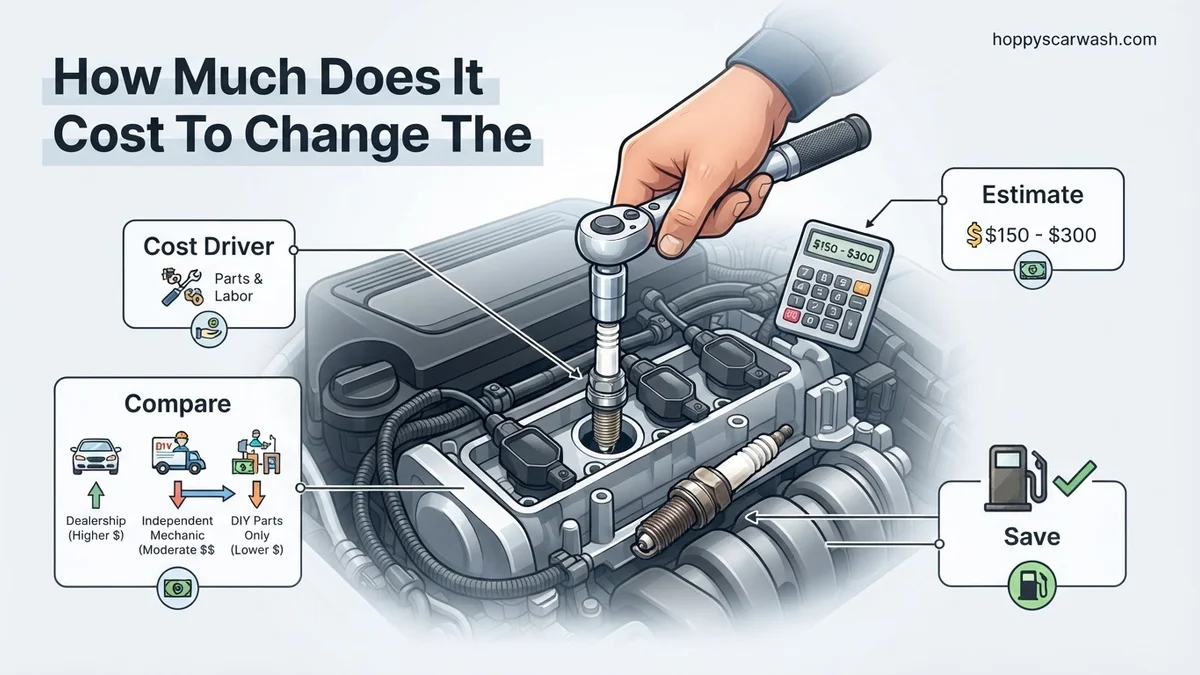
Replacing spark plugs typically costs between $100 and $300 when utilizing a professional mechanic, though luxury vehicles or complex V8 engines can push prices past $500. Conversely, a DIY approach drops the total cost down to just $15 to $100 for parts alone. Understanding the breakdown of parts versus labor helps vehicle owners budget accurately and choose the best repair route.
Replacing your vehicle’s spark plugs typically costs between $95 and $350 in 2026, depending on whether you take it to a professional shop or tackle the job yourself. When you break that price down, the physical parts usually run between $15 and $100 for a full set, while the labor charges account for $80 to $250. Luxury vehicles, sports cars, and trucks with complex engine bays sit on the higher end of that pricing spectrum.
Ignoring worn spark plugs will eventually lead to engine misfires, poor fuel economy, and potential catalytic converter damage. Understanding the cost breakdown between parts and labor helps you budget accurately and decide whether a DIY approach makes financial sense for your specific vehicle.
Key Takeaways
- Professional spark plug replacement generally ranges from $100 to $300 total.
- Parts cost between $15 and $100 depending on copper, platinum, or iridium materials.
- Labor accounts for $80 to $250 of the total mechanic bill.
- DIY spark plug replacement saves money, requiring only basic tools and inexpensive parts.
- Engine cylinder count and plug accessibility directly impact total repair pricing.
What Causes Spark Plug Wear and Drives Up Replacement Costs
Spark plugs endure intense heat and pressure inside your engine combustion chambers every single time you drive. Over tens of thousands of miles, the metal electrodes slowly erode, and carbon deposits build up on the firing tips. This natural degradation forces your ignition system to work much harder to generate a spark, which ultimately spikes your fuel consumption.
Engine Cylinder Count and Layout
The total cost of replacement scales directly with how many cylinders your engine has and how easily a mechanic can reach them. Consider these common configurations:
- Four-cylinder engines: Usually straightforward, requiring just four plugs and minimal labor time.
- V6 and V8 engines: Often require removing intake manifolds or other components just to access the rear cylinders, driving up labor costs.
- Boxer or rotary engines: Feature tightly packed engine bays that require specialized tools and extra hours of labor.
Material Quality and Accompanying Parts
Standard copper plugs cost as little as $2 to $4 each, while advanced platinum or iridium plugs cost $10 to $25 each. Furthermore, if your vehicle has high mileage in 2026, you may discover that your rubber ignition boots or ignition coils have degraded alongside the plugs. Replacing a set of failed coil packs can easily add $150 to $400 to your total repair bill.
Master Spark Plug Replacement Costs in 7 Simple Steps
Welcome to your definitive walkthrough on understanding and budgeting for spark plug replacements. Knowing the true cost breakdown—from parts to labor—empowers you to make smart financial decisions, whether you are tackling the job in your driveway or dropping your keys off at a reputable mechanic’s shop. This guide will walk you through evaluating your expenses, sourcing the right components, and avoiding hidden fees.
Step 1: Determine Your Vehicle Make and Engine Cylinder Count
What you need: Your vehicle owner manual, registration card, or a quick look under the hood.
Instructions: Before you can calculate costs, you must know how many spark plugs your engine requires. A standard four-cylinder engine uses four plugs, while a V6 engine requires six, and a V8 requires eight. Luxury vehicles or high-performance sports cars may even use dual-plug systems, doubling the count. Locate your engine configuration by checking your vehicle’s VIN or specification sticker under the hood. Knowing this count is the foundational math for estimating total parts cost.
Pro Tip: Never guess your engine type. Buying parts for a V6 when you drive a V8 leads to wasted time and delayed repairs.
Step 2: Price Out the Spark Plug Parts
What you need: Internet access, a local auto parts store website, and your vehicle’s exact year, make, and model.
Instructions: Spark plugs vary wildly in price depending on the material. Standard copper plugs typically cost between $2 and $4 each. Platinum plugs generally run from $5 to $10 each, while Iridium plugs—known for their exceptional longevity—cost anywhere from $10 to $25 per plug. Multiply your cylinder count by the individual price of the plug you choose. For a four-cylinder car using Iridium plugs, expect your raw parts cost to sit around $40 to $100.
Pro Tip: Always buy reputable brands like NGK, Denso, or Bosch. Cheap off-brand plugs can fail prematurely and damage your engine.
Step 3: Factor in Supporting Hardware and Gaskets
What you need: Access to your engine bay layout or mechanic advice regarding intake manifolds.
Instructions: Depending on your car’s design, changing spark plugs might require removing the upper intake plenum. If your vehicle has a transverse V6 engine, for example, you will likely need a new intake plenum gasket, which costs between $15 and $40. Additionally, inspect your ignition coils; if a boot is cracked or oil-soaked from a leaking valve cover gasket, you may need to budget an extra $30 to $80 per coil or replace the valve cover gasket set, which adds $50 to $150 to your total budget.
Pro Tip: Always inspect your old spark plug tubes for engine oil pooling. Replacing spark plugs without fixing an oil leak will ruin the new plugs instantly.
Step 4: Assess Specialty Tool Costs for DIYers
What you need: A basic socket set, spark plug socket with a rubber insert, and a torque wrench.
Instructions: If you plan to do the job yourself, you need to calculate the cost of tools if you do not already own them. A proper spark plug socket (usually 5/8-inch or 13/16-inch with a rubber retainer) costs about $7 to $15. A socket extension bar costs $5 to $10, and a reliable torque wrench runs between $40 and $80. If you already own a basic mechanic tool set, your additional tool overhead will be minimal, making the DIY route remarkably cost-effective.
Pro Tip: Do not use a standard deep socket without a rubber insert; you risk cracking the ceramic insulator on the new spark plug during installation.
Step 5: Calculate Professional Labor Rates
What you need: Quotes from local independent mechanics and franchise dealerships.
Instructions: If you choose to let a professional handle the job, labor will make up the bulk of your invoice. Mechanics typically charge between 1 to 3 hours of labor for a spark plug replacement. With average shop labor rates ranging from $100 to $200 per hour, expect to pay anywhere from $100 to $600 just in labor fees. Dealerships will lean toward the higher end of this spectrum, while independent neighborhood shops will usually offer more competitive pricing.
Pro Tip: Always ask for an all-inclusive quote that clearly separates parts costs from labor costs so you can spot unnecessary markups.
Step 6: Total Up the Final Cost Estimate
What you need: Your parts pricing, tool costs (if DIY), and labor quotes (if professional).
Instructions: Combine all your gathered figures to see the complete financial picture. If you do it yourself using high-end Iridium plugs on a four-cylinder car, your total cost will be roughly $50 to $110. If you take that same car to a mechanic, the total bill will likely land between $150 and $300. For complex V6 or V8 engines where the intake manifold must be removed, professional costs can easily soar to $400 to $800 total.
Pro Tip: Keep your receipts and service records. Replacing spark plugs on schedule improves fuel economy, saving you money at the gas pump over time.
Step 7: Choose Your Path: DIY vs. Professional
What you need: Self-assessment of your mechanical skill, available free time, and weekend weather.
Instructions: Weigh the financial savings of a DIY project against the time, physical effort, and potential risks involved. If you have a straightforward inline-four engine, changing spark plugs is a fantastic beginner project that takes under an hour and saves you over $150 in labor. However, if your engine requires disassembling half the engine bay just to reach the rear cylinders, paying a professional may be worth every penny to avoid frustration and broken components.
Pro Tip: Never force a spark plug into the cylinder head cross-threading can destroy the engine block and result in a devastating repair bill.
✅ Final Checklist
- Verified the exact number of spark plugs needed for your specific engine configuration.
- Selected high-quality plug materials (Copper, Platinum, or Iridium) suited for your driving habits.
- Accounted for hidden costs like intake gaskets, valve cover seals, or specialty tools.
- Obtained and compared multiple quotes if hiring a professional mechanic.
- Calculated the total estimated cost range for both DIY and shop options.
Important Notes:
- Always allow the engine to cool down completely before touching the spark plugs to avoid severe burns from hot metal components.
- Seek professional help immediately if a spark plug snaps off inside the cylinder head or if you encounter stripped threads.
- Estimated total DIY cost: $30 to $150. Estimated total professional shop cost: $150 to $800+ depending on engine layout and vehicle luxury tier. Time required: 1 to 3 hours.
How to Fix Worn Spark Plugs Through DIY Replacement
Tackling spark plug replacement yourself is one of the most effective ways to slash your maintenance bills. By eliminating shop labor fees entirely, you pay strictly for the hardware and tools. For a standard four-cylinder car, a DIY plug change might cost you less than $40 total.
Essential Tools and Part Selection
Before you begin any work on your vehicle, you need to gather the correct supplies to avoid damaging your engine block. Having the right equipment makes the process safe and straightforward:
- A ratchet set with a spark plug socket (usually 5/8-inch or 13/16-inch with a rubber insert).
- A socket extension bar to reach deep into the cylinder head wells.
- A gap gauge and a small amount of anti-seize lubricant for the threads (if recommended by the plug manufacturer).
- A torque wrench to ensure you do not strip the aluminum cylinder head threads.
Assessing the Labor Savings of DIY
Professional shops typically bill between 1 and 2.5 hours of labor for a spark plug service, with hourly rates in 2026 ranging from $100 to $200 per hour. On a complex V6 vehicle where the intake manifold must be removed, shop labor alone can easily exceed $300. Doing the job in your garage lets you pocket those labor savings, though you should factor in 1 to 3 hours of your own time depending on your vehicle’s layout.
What If It Still Doesn’t Work After Installing New Plugs
Replacing your spark plugs should immediately resolve engine misfires and rough idling. However, if your vehicle still runs poorly after a fresh installation in 2026, the underlying problem extends beyond the ignition system. Automotive diagnostic data from the Society of Automotive Engineers indicates that several other components mimic worn-out spark plug symptoms.
Work through these diagnostic steps methodically to isolate the remaining root cause:
- Inspect the ignition coils and wires: A failing coil pack or cracked spark plug wire will quickly ruin new plugs. Test each coil for proper resistance using a digital multimeter or swap coils between cylinders to see if the misfire code follows the coil.
- Check for fuel delivery issues: Clogged fuel injectors or a failing fuel pump restrict necessary combustion chamber supply. Listen for the fuel pump prime when turning the key, and scan for low fuel rail pressure codes.
- Examine the intake and vacuum systems: Unmetered air entering through a cracked vacuum hose or a failing intake manifold gasket disrupts the air-fuel ratio. Perform a smoke test to locate hidden vacuum leaks.
- Evaluate internal engine compression: Severely worn piston rings or burnt valves cause persistent misfires that no ignition component can fix. Conduct a dry and wet compression test on the affected cylinders.
When to Seek Professional Help
If DIY troubleshooting fails to resolve the rough running condition, professional diagnostic services become necessary. Automotive repair shops typically charge between $100 and $200 for an advanced diagnostic scan that pinpoints complex electronic or mechanical failures. Bringing your vehicle to a certified technician prevents throwing unnecessary parts at an unresolved problem.
Conclusion
Changing your spark plugs is a manageable and cost-effective maintenance task that drastically improves fuel efficiency and engine performance. Whether you pay a professional shop up to $300 or invest under $100 for a DIY project, fresh plugs restore peak combustion efficiency. According to verified research and expert sources from the Automotive Service Association, adhering to your specific manufacturer replacement interval prevents long-term catalytic converter damage. Take the next step today by checking your owner’s manual to confirm your vehicle’s specific plug gap and mileage interval.
❓ Frequently Asked Questions
How much does it cost to change spark plugs on a luxury or foreign vehicle?
Luxury, European, or high-performance vehicles often cost between $300 and $600 to service. These engines frequently require specialized tools, premium iridium plugs, and extensive labor to access deeply buried cylinder heads.
How often should spark plugs be replaced?
Standard copper plugs typically require replacement every 30,000 miles. Modern platinum and iridium spark plugs last much longer, generally between 60,000 and 100,000 miles before needing a swap.
Should I replace ignition coils at the same time as spark plugs?
Not necessarily, but if a vehicle has high mileage or an ignition coil is failing, replacing them simultaneously is recommended. Bundling the job saves on future labor costs since the mechanic already has the engine components disassembled.
Can I replace just one spark plug if only one misfires?
While it is technically possible to replace a single spark plug, mechanics strongly recommend replacing the entire set at once. Spark plugs wear down evenly, so old plugs will degrade quickly and cause future performance issues.
What are the common signs that my spark plugs need replacement?
Common symptoms include engine misfires, rough idling, trouble starting the vehicle, decreased fuel economy, and sluggish acceleration. An illuminated check engine light is also a frequent indicator of fouled spark plugs.
How long does a professional spark plug replacement take?
For a standard 4-cylinder engine, a professional mechanic can usually complete the job in 30 to 45 minutes. Complex V6 or V8 engines with obstructed intake manifolds can take anywhere from 1.5 to 3 hours of labor.