Should The Better Tires Be On The Front Or Back 2026 Guide
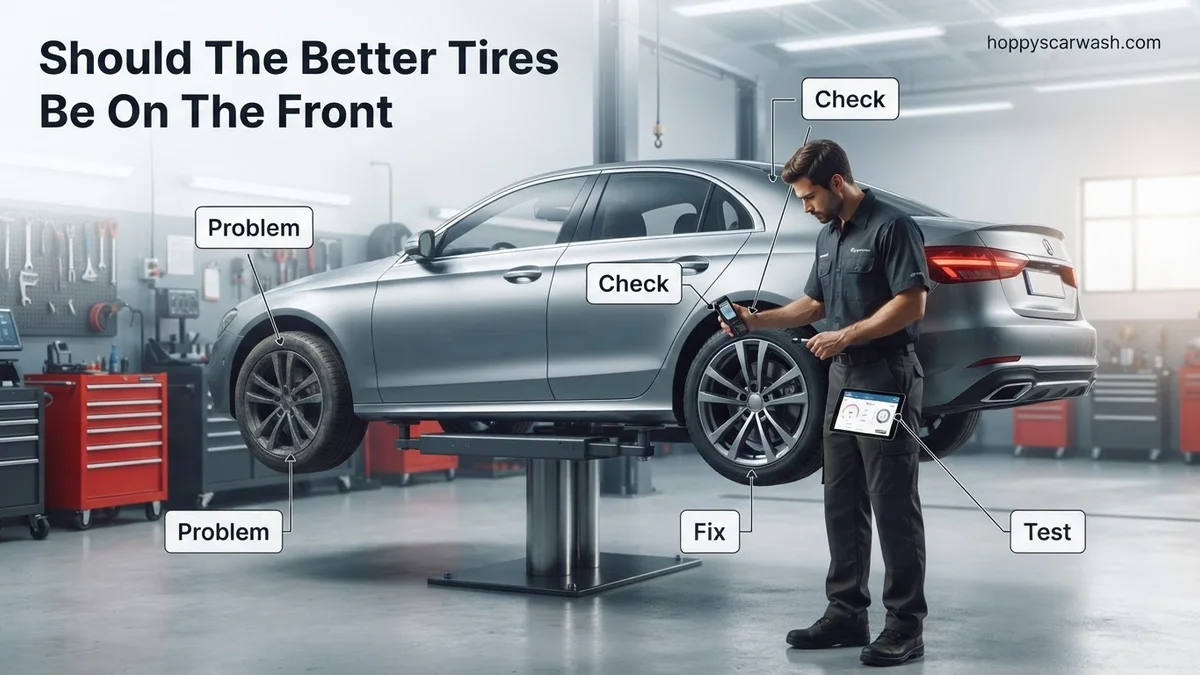
The better tires should always be installed on the rear wheels, regardless of whether your vehicle is front-wheel, rear-wheel, or all-wheel drive. Placing new tires in the back prevents dangerous oversteer and loss of vehicle control on wet or slippery roads.
When you are replacing only two tires on your car, the better tires must always go on the rear wheels. This rule applies whether your vehicle is front-wheel drive, rear-wheel drive, or all-wheel drive.
Many drivers mistakenly put new tires on the front because that is where steering and most braking happen. However, tire safety experts, automotive engineers, and major tire manufacturers agree that rear tire grip is essential for maintaining vehicle stability on the road in 2026.
Key Takeaways
- Always install your two newest or best tires on the rear axle.
- Rear tire loss of traction causes dangerous oversteer and spin-outs.
- Drive train type does not change the rule for mounting better tires.
- Front tire loss causes understeer, which is easier for drivers to manage.
- Regular tire rotations help maintain even tread depth across all four wheels.
What Causes Loss of Control When Mixing Worn and New Tires
Mixing tires with different levels of tread depth creates an imbalance in how your vehicle handles wet or slippery roads. When you accelerate, brake, or corner, your tires are doing the heavy lifting to keep you planted on the pavement.
The Danger of Hydroplaning on Wet Roads
New tires feature deep tread grooves designed to channel water away from the contact patch. Worn tires have shallow grooves and struggle to displace standing water.
- If your worn tires are on the rear, they will lose grip in standing water long before your front tires do.
- This causes a sudden loss of traction at the back axle, leading to a dangerous hydroplaning event.
- Water depth as shallow as 1/16 of an inch can trigger this hydroplaning effect at highway speeds.
The Physics of Oversteer Versus Understeer
Understanding how vehicles react to traction loss explains why rear tire placement is so critical. Drivers instinctively know how to handle front-wheel slip, but rear-wheel slip is entirely different.
- Understeer (Front Slip): When front tires lose grip, the car tends to plow straight ahead. Drivers naturally lift off the gas and steer into the turn, making it easier to correct.
- Oversteer (Rear Slip): When rear tires lose grip, the back end of the car slides out sideways. This creates a spinout condition that requires lightning-fast counter-steering, which panics most average drivers.
How to Fix Tire Placement by Installing Better Tires on the Rear
Correcting your tire setup is simple once you understand the mechanics of vehicle stability. Whenever you buy a pair of new tires, insist that the tire shop mounts them on the rear axle.
Ensuring Maximum Stability in Emergencies
Emergency maneuvers require predictable vehicle behavior. If you have to swerve suddenly around an obstacle at 60 mph, the rear of your car must follow the front smoothly.
- Better rear tires maintain grip during sudden lane changes.
- The vehicle stays balanced, preventing the rear end from fishtailing or spinning out.
- Even in front-wheel-drive vehicles, the rear tires act as the anchor that keeps the car tracking straight.
Standard Tire Rotation and Replacement Practices
To avoid having drastically different tread depths, proactive maintenance is your best defense. Rotating your tires every 5,000 to 7,000 miles ensures even wear across all four corners.
- If your front tires wear out much faster than your rear tires, a rotation schedule helps balance the lifespan.
- When tread depth drops below 4/32 of an inch, start budgeting for a new set.
- Never pair a brand-new tire with a heavily worn, bald tire on the same axle.
Step-by-Step Guide to Inspecting Tread Depth and Arranging Wheels
Proper tire maintenance requires accurate measurement and a systematic approach to wheel placement. According to the Rubber Manufacturers Association (RMA) and Michelin safety guidelines, drivers should check their tread depth monthly using a reliable gauge rather than relying on visual approximations. Ensuring your car is ready for 2026 road conditions starts with a physical inspection.
Measuring Your Tread Depth
Before deciding which tires go where, you must measure the remaining tread on all four positions. Even wear can be deceptive if the overall depth is dangerously low.
- Locate the tread wear indicators, which are the small rubber bars molded across the bottom of the main tread grooves.
- Insert a tread depth gauge into the shallowest groove of the tire, pressing the probe down until it rests firmly against the base.
- Record the measurement in thirty-seconds of an inch or millimeters for each individual tire.
- Identify which two tires have the deepest tread remaining, as these will be designated for the rear axle per industry safety standards.
Executing the Rear Installation Strategy
Once you identify the tires with superior tread, physically moving them to the correct position demands attention to detail. If you are rotating your current set or installing a brand-new pair, follow a safe mechanical process.
- Park your vehicle on a flat, stable surface, engage the parking brake, and loosen the lug nuts on the target wheels before lifting the car.
- Raise the vehicle securely using a hydraulic floor jack and rated jack stands, adhering to the manufacturer’s designated lift points.
- Remove the wheels and thoroughly inspect the inner sidewalls and brake components for any signs of damage or unusual wear.
- Mount the two tires with the deepest tread onto the rear axle hub, hand-tightening the lug nuts in a star pattern.
- Lower the vehicle and torque the lug nuts to the exact specifications outlined in your owner’s manual, typically ranging between 80 to 100 foot-pounds.
What If It Still Doesn’t Work and You Need All Four Replaced
Sometimes inspecting and rearranging your tires reveals that the entire set is compromised, meaning putting new tires on just the rear axle is no longer a viable solution. If uneven wear persists or structural degradation affects all four tires, partial replacements will not restore safe handling. Consider these fallback steps:
- Consult a Certified Tire Professional: Take your vehicle to a licensed service center to evaluate alignment geometry, suspension components, and wheel balancing issues that caused premature wear. Professional inspection costs typically range from $50 to $150.
- Invest in a Full Set of Four: If your tread depth falls below the critical 2/32-inch legal limit across all positions, purchasing a complete set of four new tires is the only safe option for 2026 driving standards. Complete replacements cost between $400 and $1,200 depending on your vehicle class.
- Perform a Professional Four-Wheel Alignment: Eliminate underlying mechanical misalignment by investing in a comprehensive laser alignment service, which generally costs between $100 and $200 and protects your new investment.
- Establish a Strict Maintenance Schedule: Commit to rotating your new set of four tires every 5,000 to 7,500 miles to ensure even wear and maximize long-term tread life.
Conclusion
Determining whether the better tires belong on the front or back is a critical safety choice that directly impacts vehicle stability on wet roads. According to verified research and expert sources from the National Highway Traffic Safety Administration and major tire manufacturers, placing the deepest tread on the rear axle consistently prevents dangerous oversteer and loss of control. Your immediate actionable next step is to measure your tread depth today and install your best tires on the rear.
❓ Frequently Asked Questions
Should the better tires be on the front or back for a front-wheel drive vehicle?
Even on front-wheel drive vehicles, the better tires must go on the rear. Drivers often mistakenly think front tires need more grip for steering and braking, but rear tire grip is essential to prevent dangerous oversteer and hydroplaning on slick roads.
Why is oversteer considered more dangerous than understeer?
Understeer causes the car to plow straight ahead, which is a natural motion most drivers instinctively correct by braking. Oversteer causes the rear end to swing out, leading to a sudden spin that is extremely difficult for an average driver to recover from.
How do tire rotation schedules prevent this safety issue?
Regularly rotating your tires every 5,000 to 7,500 miles ensures that all four tires wear down at a uniform rate. This eliminates the need to mix mismatched or heavily worn tires with brand-new ones.
What does the Tire Industry Association recommend regarding tire replacement?
The Tire Industry Association (TIA) and major manufacturers universally recommend that when only two new tires are purchased, they must be installed on the rear axle to ensure optimal vehicle handling and safety.
Does all-wheel drive change where the better tires should go?
No, even with all-wheel drive, the rule remains the same. Furthermore, AWD systems can be damaged by significant differences in tire tread depth, often requiring all four tires to be replaced at the same time.
How can I check which of my tires has better tread?
You can measure tread depth using a tread depth gauge or by performing the classic penny test. Insert a penny into the tread with Lincoln’s head pointing down; if you can see the top of his head, your tires need to be replaced.