When Does the Prius Battery Need to Be Replaced in 2026
A Toyota Prius hybrid battery typically lasts between 10 to 15 years or 150,000 to 200,000 miles before requiring replacement. Knowing the early warning signs of degradation helps drivers plan ahead and avoid unexpected roadside failures.
Your Toyota Prius hybrid battery typically needs replacement between 10 to 15 years of age, or once you cross the 150,000 to 200,000-mile threshold. While Toyota famously engineered these nickel-metal hydride and lithium-ion packs to last the lifetime of the vehicle, chemistry degrades over time. By 2026, even second-generation and third-generation Prius models from past decades are finally hitting the wall where their original power packs can no longer hold an efficient charge.
Knowing when your battery is truly failing saves you from misdiagnosing minor electrical issues or getting stranded on the highway. Let’s look at the exact degradation timelines, the core causes of battery failure, and how to accurately test your system before you drop money on a replacement.
Key Takeaways
- Hybrid batteries typically last 10 to 15 years or 150,000 to 200,000 miles.
- Sudden drops in fuel economy often indicate failing battery cells.
- The red triangle of death and Check Hybrid System warnings require immediate diagnostic scans.
- Replacement costs range from $1,500 to $4,000 depending on new, OEM, or refurbished choices.
- Federal and state warranties may cover hybrid battery replacement up to 150,000 miles.
What Causes Prius Hybrid Battery Degradation and Failure
Hybrid batteries do not usually fail overnight. Instead, they suffer from cumulative chemical and thermal wear that eventually renders individual cells unable to balance their voltage under load.
Thermal Stress and Climate Extremes
Heat is the absolute number one enemy of hybrid batteries. If you live in an exceptionally hot climate like Arizona or Texas, your Prius battery will degrade faster than one driven in the Pacific Northwest. Extreme temperatures force the vehicle’s cooling fan to work overtime. When cooling fails or vents get blocked by pet hair and dust, the internal cells overheat, accelerating permanent capacity loss.
Calendar Aging Versus Mileage Wear
You might wonder why a low-mileage 2012 Prius with only 80,000 miles still experiences battery failure. The answer is calendar aging. The internal chemical reactions inside the battery cells degrade continuously over time, regardless of whether the car is being driven across the country or sitting parked in a driveway. Key factors that dictate this decline include:
- Chemical breakdown of the electrolyte solution inside individual modules.
- Corrosion accumulating on the copper bus bars connecting the cells.
- Repeated micro-cycles of shallow charging and discharging.
- Extended periods of non-use, which allow the battery to self-discharge into a damaging low-voltage state.
From Start to Finish: Prius Hybrid Battery Lifespan and Replacement Explained
Determining when your Toyota Prius hybrid battery needs replacement can save you from unexpected breakdowns and costly dealership diagnostic fees. This comprehensive guide walks you through the exact symptoms, testing methods, and decision-making processes required to accurately assess your hybrid battery health. By following this systematic approach, you will learn to distinguish between minor 12V auxiliary battery issues and true high-voltage hybrid battery failure, ensuring you only replace what is necessary.
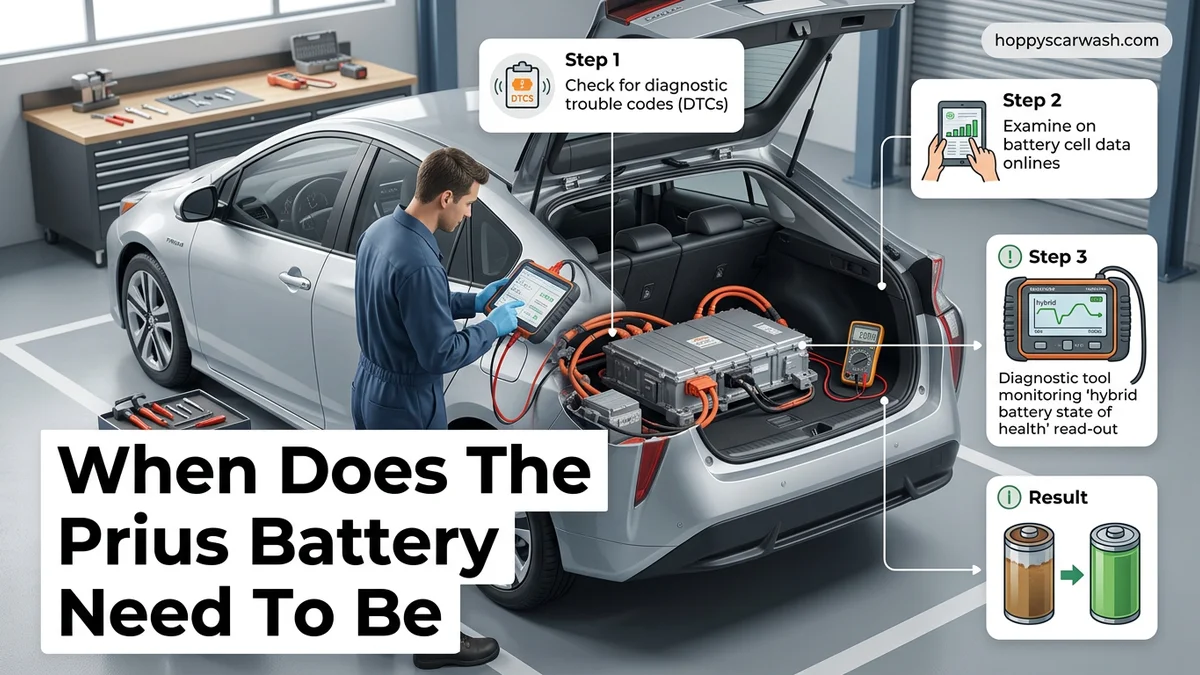
Step 1: Identify Dashboard Warning Lights and Error Codes
What you need: An OBD-II scanner compatible with Toyota hybrid systems, a notebook, and a pen.
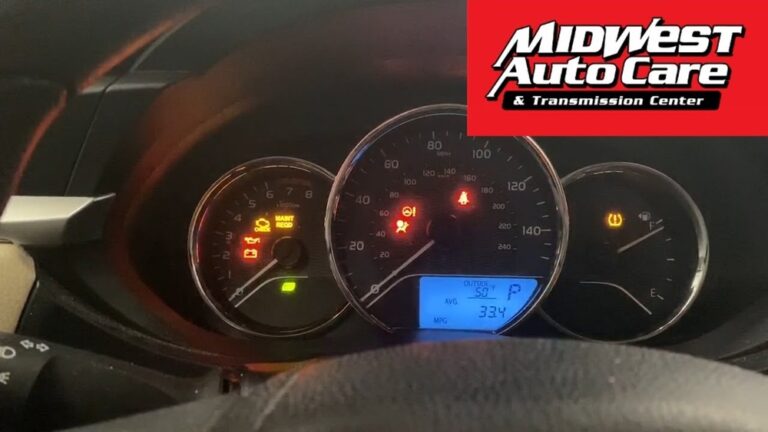
Instructions: Pay close attention to your Prius dashboard. A failing hybrid battery will typically trigger the “Check Hybrid System” message, accompanied by the master warning light (red triangle with an exclamation point) and the car icon with an exclamation point. Do not ignore these warnings. Plug your OBD-II scanner into the port located underneath the driver’s side dashboard. Retrieve all stored diagnostic trouble codes (DTCs). Common hybrid battery failure codes include P0A80 (Replace Hybrid Battery Pack), P0A7F (Hybrid Battery Pack Deterioration), and various P3011 through P3028 codes indicating specific weak battery block modules.
Pro Tip: Never clear the codes before writing them down, as resetting the computer temporarily masks the problem while the underlying degradation remains.
Step 2: Monitor Fuel Economy and Engine Behavior
What you need: Your vehicle’s multi-information display and daily commuting records.
Instructions: Track your miles per gallon (MPG) over a two-week period. A healthy Prius should consistently deliver between 40 to 50+ MPG depending on the generation and driving conditions. When the hybrid battery begins to degrade, its capacity to hold a charge diminishes drastically. To compensate, the internal combustion engine will run much more frequently and for longer periods to supply electrical load and propel the vehicle. You may notice the engine roaring loudly even at low speeds or while idling, simply because the hybrid battery can no longer assist.
Pro Tip: Sudden drops in fuel efficiency are often the earliest indicator of battery aging, usually appearing months before a dashboard warning light triggers.
Step 3: Observe Battery State of Charge (SoC) Fluctuations
What you need: Access to the Prius energy monitor screen on the dashboard touch display.
Instructions: Switch your display to the real-time energy flow screen while driving. Watch the battery graphic, which typically displays up to eight green or purple bars. A failing battery will exhibit erratic behavior, often called “up-and-down charging.” You might see the battery rapidly charge to maximum (all green bars) under mild braking, only to plummet to nearly empty (one or two purple bars) within seconds of accelerating from a stop. This rapid state of charge fluctuation proves the battery has lost its internal resistance balance and can no longer store energy efficiently.
Pro Tip: Test this on a flat road to avoid skewed readings caused by steep uphill or downhill terrain.
Step 4: Perform a Voltage Delta Test Using Advanced Diagnostics
What you need: A smartphone or tablet, a Bluetooth OBD-II adapter, and a specialized hybrid monitoring app like Dr. Prius.
Instructions: Download the Dr. Prius app or equivalent diagnostic software to your device. Pair the Bluetooth OBD-II adapter with your car and run the app’s battery life expectancy and block voltage tests. The Prius hybrid battery consists of 28 individual modules (or 14 blocks in newer generations). The diagnostic software measures the voltage of each block under load. Calculate the voltage difference (delta V) between the highest and lowest block. A voltage difference greater than 0.3 to 0.4 volts under load strongly indicates a failing battery pack that requires imminent replacement.
Pro Tip: Conduct this test when the battery is charged between 50% and 70% for the most accurate and reliable results.
Step 5: Check the 12-Volt Auxiliary Battery Separately
What you need: A digital multimeter and standard safety glasses.
Instructions: Before condemning the expensive high-voltage hybrid battery, rule out the conventional 12-volt auxiliary battery located in the trunk or under the hood. A weak 12V battery causes bizarre electrical glitches, false hybrid system codes, and failure to “Ready” the vehicle. Open the trunk, access the battery terminals, and use your multimeter to check the DC voltage. A healthy 12V battery should read approximately 12.6 volts when the car is off and between 13.5 to 14.4 volts when the Prius is in the “Ready” state.
Pro Tip: Many owners mistakenly replace a $200 12V battery when they actually needed a hybrid battery, or vice versa—always test both.
Step 6: Evaluate Vehicle Age and Mileage Milestones
What you need: Your vehicle’s maintenance records and odometer reading.
Instructions: Consider the calendar age and total mileage of your Prius. Toyota hybrid batteries typically last between 10 to 15 years and roughly 150,000 to 200,000 miles. If your vehicle falls within or exceeds this threshold and you are experiencing the aforementioned symptoms, the battery has simply reached the end of its chemical lifespan. Environmental factors also matter: Priuses driven extensively in hot desert climates (like Arizona or Nevada) tend to experience thermal degradation much faster than those in temperate regions due to battery heat stress.
Pro Tip: Check if your vehicle is covered under a state-specific CARB emissions warranty, which extends hybrid component coverage to 10 years/150,000 miles in certain states.
Step 7: Inspect Cooling Fan and Intake Filters for False Positives
What you need: A flashlight, a trim removal tool, and compressed air.
Instructions: Sometimes a hybrid battery appears dead simply because it is overheating. Locate the hybrid battery cooling fan intake vent, typically situated on the passenger side rear seat bolster. Inspect the plastic grate for dust, pet hair, or lint buildup. Remove the interior trim panels to access and inspect the cooling fan itself. If the fan blades are caked in dust and debris, the battery cannot dissipate heat properly, triggering thermal protection modes and false failure codes. Clean the fan thoroughly and clear the codes before deciding to purchase a new battery.
Pro Tip: Cleaning the hybrid battery cooling fan once a year significantly extends the overall operational lifespan of the battery pack.
✅ Final Checklist
- OBD-II scanner successfully read and recorded all hybrid system trouble codes.
- Fuel economy and engine run-time patterns have been monitored and documented.
- Dashboard energy monitor observed for erratic charging and discharging behavior.
- Advanced app diagnostic confirmed high block voltage differences (delta V over 0.3V).
- Auxiliary 12V battery tested and verified to hold proper voltage.
Important Notes:
- Always wear insulated, high-voltage safety gloves if touching any orange high-voltage cables or components.
- Seek professional mechanic assistance if you lack experience with automotive electrical diagnostic systems.
- Estimated replacement cost ranges from $1,500 to $3,500 depending on whether you choose refurbished or brand-new OEM modules, taking approximately 2 to 4 hours to complete.
How to Test and Diagnose a Failing Prius Battery Step-by-Step
Before you assume the worst when a dashboard light flickers on, you need concrete data. Guessing wastes money, but proper diagnostics reveal the exact health of your hybrid pack.
Recognizing the Early Warning Signs
Your Prius will usually give you subtle hints weeks before the battery completely gives out. Paying attention to these symptoms prevents unexpected breakdowns:
- The state of charge indicator on your dashboard drops or spikes wildly within seconds.
- Your internal combustion engine runs constantly because the battery cannot hold enough juice to assist.
- Fuel economy plummets noticeably below your historical baseline.
- The cooling fan behind the rear passenger seat screams loudly even during short drives.
Using Advanced Diagnostics and OBD2 Apps
Don’t rely solely on a generic OBD2 code reader from a local auto parts store. To truly evaluate a Prius battery in 2026, you need specialized software paired with a reliable Bluetooth adapter.
- Download an application like Dr. Prius or hybrid-specific OBD Fusion diagnostics on your smartphone.
- Plug your OBD2 scanner into the port beneath your steering wheel and connect via Bluetooth.
- Run a battery life expectancy test while driving to measure internal resistance and block voltage differences.
- Look for a block voltage delta greater than 0.3 volts, which strongly indicates failing cells that require replacement or reconditioning.
How to Fix or Replace Your Prius Battery Using OEM or Refurbished Options
When your 2026 diagnostic data confirms a failing hybrid battery, vehicle owners must weigh OEM versus aftermarket choices. Automotive research from Consumer Reports and independent hybrid specialists highlights distinct financial and operational trade-offs for each replacement path.
Choosing Between OEM and Remanufactured Packs
Brand new OEM (Original Equipment Manufacturer) traction batteries sourced directly from Toyota dealerships offer maximum longevity. These factory packs typically cost between $2,000 and $4,500 for the parts alone, excluding labor. Conversely, remanufactured or refurbished aftermarket batteries from reputable builders range from $1,000 to $2,500. While budget-friendly, remanufactured modules vary in quality based on whether the supplier replaces all internal cells or merely swaps out the severely degraded ones.
Step-by-Step Replacement Procedure
Professional installation is heavily recommended due to high-voltage safety risks, but certified technicians generally follow a standardized workflow:
- Disconnect the 12-volt auxiliary battery located in the trunk to disable the vehicle’s computer systems.
- Remove the rear interior cargo trim, seating components, and safety service plug access panels.
- Extract the high-voltage orange service plug and wait a mandatory 10 minutes for residual capacitor voltage to dissipate completely.
- Unbolt the ventilation ducting, wiring harnesses, and securing brackets holding the heavy hybrid assembly.
- Lift the old battery pack out, install the replacement unit, and torque all high-voltage connections to exact manufacturer specifications.
What If It Still Doesn’t Work?
If a newly installed hybrid battery fails to resolve dashboard warning lights or prevents the Prius from entering ‘Ready’ mode, deeper underlying issues are likely present. Advanced diagnostic scanning is required to uncover secondary system failures that mimic a dead battery. Drivers facing persistent hybrid system malfunctions should evaluate the following troubleshooting steps:
- Verify that the high-voltage safety plug was fully clicked and locked back into position, as an unseated plug trips immediate safety interlocks.
- Inspect the inverter cooling pump operation and coolant levels; overheating inverters frequently trigger identical dashboard error codes.
- Check the 12-volt auxiliary battery health, because a weak auxiliary battery prevents the main computer from closing the high-voltage contactor relays.
- Consult a certified hybrid specialist or Toyota dealership for a professional module re-flash or deep system reset using Techstream software.
Professional diagnostic labor for persistent electrical faults typically ranges from $150 to $250 per hour, with total troubleshooting costs varying based on local shop rates.
Conclusion
Recognizing the early warning signs of Prius battery degradation prevents unexpected roadside breakdowns and expensive secondary damage. According to verified research and automotive engineering sources, proactive maintenance and timely module replacements extend the operational lifespan of any modern hybrid powertrain. For your next practical step, schedule a professional diagnostic scan at a certified hybrid service center to evaluate your current battery health accurately in 2026.
❓ Frequently Asked Questions
What are the exact warning signs that indicate when does the prius battery need to be replaced?
Key signs include the Check Hybrid System warning light, the red triangle of death, drastic drops in fuel economy, and the battery charge meter dropping or spiking rapidly within seconds.
Does hot weather affect Prius battery lifespan?
Extreme heat accelerates hybrid battery degradation because high temperatures cause chemical breakdown and stress the cooling system. Keeping the rear intake vents clean helps mitigate this risk.
Should I choose an OEM, aftermarket, or refurbished Prius battery?
New OEM batteries offer the longest lifespan and reliability but carry the highest price tag. Refurbished or aftermarket modules provide a budget-friendly alternative, though warranties are typically shorter.
Can I replace just a single failed cell in my Prius battery pack?
Yes, individual modules can be replaced, but this is often a temporary fix. Because surrounding cells have experienced similar wear, other modules frequently fail shortly after.
How long does a professional Prius battery replacement take?
A certified mechanic or specialized hybrid shop typically completes a full hybrid battery swap in one to two hours.
What happens if I ignore a failing Prius battery?
Ignoring the warning signs will eventually lead to complete hybrid system failure, leaving the vehicle unable to start or causing it to stall unexpectedly while driving.