How Much Does It Cost to Repair a Wheel Bearing in 2026
Replacing a faulty wheel bearing typically costs between $150 and $350 per wheel, with labor usually making up the larger portion of the bill. Costs can spike significantly higher for luxury vehicles, all-wheel-drive systems, or complex press-in bearing designs.
If you are wondering how much it costs to fix a bad wheel bearing, you can generally expect to pay between $150 and $350+ per wheel for a standard repair in 2026. Labor usually makes up the bulk of that bill, often running anywhere from $100 to $250 depending on your local mechanic’s hourly rate and the design of your vehicle.
Ignoring a failing wheel bearing is not an option because it creates a serious safety hazard. When a bearing fails completely, the wheel can seize or even separate from the vehicle while you are driving. Knowing the average costs and what drives the price up will help you budget accurately and avoid overpaying at the repair shop.
Key Takeaways
- Expect to pay between $150 and $350 per wheel for standard bearing replacements.
- Labor costs generally range from $100 to $250 depending on local shop rates.
- Luxury and AWD vehicles often feature expensive integrated hub assemblies exceeding $500.
- A humming or roaring noise that intensifies with speed is the primary symptom.
- Mechanics usually recommend replacing wheel bearings in pairs across the same axle.
What Causes Wheel Bearing Failure and How to Diagnose It
Wheel bearings endure massive amounts of friction, weight, and stress every time you drive. Understanding why they fail and how to spot the symptoms early can save your suspension from secondary damage.
Common Causes of Bearing Failure
- Hitting deep potholes, curb strikes, or rough off-road terrain
- Normal wear and tear from high mileage
- Contamination from water or dirt bypassing worn-out seals
- Improper installation of a previous replacement part
Key Symptoms to Watch For
- A persistent humming, growling, or roaring noise that gets louder as you speed up
- A rhythmic clicking or snapping sound that increases with tire rotation
- Vibration in your steering wheel or a loose steering feel
- Your ABS warning light turning on due to integrated sensor damage
Wheel Bearing Repair Costs: What Causes It and How to Fix It
Understanding the true cost of a wheel bearing repair can save you hundreds of dollars and prevent dangerous driving conditions. This comprehensive walkthrough breaks down part prices, labor estimates, and diagnostic methods so you can accurately budget for this vital suspension repair without getting overcharged by mechanics.
Step 1: Identify the Warning Signs
What you need: A quiet stretch of road, a jack (optional), and your ears.
Instructions: Before calculating costs, you must confirm the noise actually stems from a failing wheel bearing. Listen for a distinct, low-pitched humming, growling, or roaring sound that intensifies as your vehicle accelerates, usually starting around 30 to 45 mph. Pay attention when gently weaving the steering wheel left and right on an empty highway; if the sound gets louder when turning right, your left wheel bearing is typically under increased load and failing. Alternatively, jack up the affected corner of the vehicle, grab the tire at the 12 o’clock and 6 o’clock positions, and rock it back and forth to check for loose play.
Pro Tip: Do not confuse a bad wheel bearing with cupped tires, which produce a very similar humming noise. Run your hand across the tread surface to feel for high and low spots.
Step 2: Research Part Costs
What you need: Your vehicle’s make, model, year, drivetrain type (FWD, AWD, RWD), and an auto parts website.
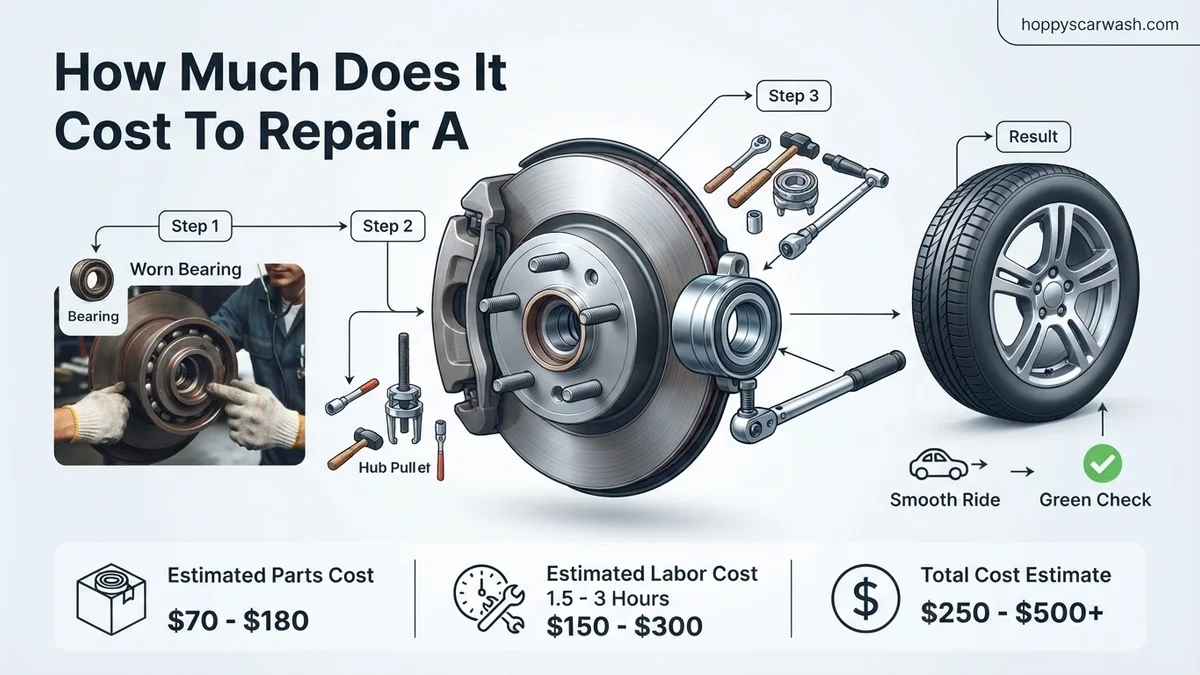
Instructions: Wheel bearing prices vary dramatically depending on your vehicle type and whether it uses a simple press-in bearing or a sealed hub assembly. For modern cars utilizing a bolt-on hub assembly, expect to pay between $75 and $250 for a quality aftermarket part (like Moog or SKF) or up to $400 for an OEM part from a dealership. If your car requires a press-in bearing, the physical bearing itself is cheaper—typically $30 to $80—but it requires specialized hydraulic press tools and significantly more labor to remove and install.
Pro Tip: Always replace wheel bearings in axle pairs (both front wheels or both rear wheels), as they experience similar wear and tear.
Step 3: Estimate Professional Labor Charges
What you need: Basic understanding of flat-rate labor times and local mechanic hourly rates.
Instructions: Professional mechanics typically charge between $100 and $200 per hour depending on your geographical location and shop type. Replacing a bolt-on wheel hub assembly usually takes about 1.0 to 1.5 hours per side. However, press-in bearings require removing the entire steering knuckle and using a shop press, which extends labor times to 2.0 to 3.0 hours per side. Therefore, total labor costs generally range from $150 to $450 just for the technician’s time, making labor often the most expensive component of the overall bill.
Pro Tip: Independent repair shops usually charge 20% to 40% less for labor than official franchise dealerships while offering identical or comparable aftermarket warranties.
Step 4: Factor in Additional Required Services
What you need: A quote review checklist and knowledge of related suspension components.
Instructions: When a mechanic takes apart your suspension to replace a wheel bearing, they often have to disconnect tie rods, control arms, or brake calipers. Furthermore, removing the front steering knuckle inevitably alters your wheel alignment angles. Always ask your mechanic if a wheel alignment is included in the repair estimate; a proper four-wheel alignment typically adds $80 to $150 to the final bill. Additionally, heavily rusted vehicles may require replacing seized axle nuts or damaged ABS speed sensors, which can add $50 to $150 in unexpected incidental parts.
Pro Tip: If your vehicle has over 100,000 miles, inspect the CV joints and brake pads while the mechanic has the wheel assembly disassembled to save on duplicate labor later.
Step 5: Compare DIY vs. Shop Total Costs
What you need: Calculator, honesty about your mechanical skill level, and tool inventory.
Instructions: Now compile your total estimated costs. If you take your car to a professional shop, the total cost for parts, labor, and tax usually lands between $250 and $650 per wheel for bolt-on assemblies, and up to $900 for complex press-in setups or rear axle assemblies. If you choose the DIY route, your expenses are strictly limited to the cost of the parts plus any necessary rental tools, keeping your total out-of-pocket expenditure under $250. However, factor in the time investment (typically 2 to 4 hours of hard labor) and the safety risks involved.
Pro Tip: Many auto parts stores offer free tool rental programs where you can borrow a blind hole bearing puller or hydraulic press kit by leaving a refundable deposit.
Step 6: Make Your Final Repair Decision
What you need: Your budget, timeline, and safety assessment.
Instructions: Review your financial situation against the urgency of the repair. A failing wheel bearing is not a maintenance item you can safely postpone; a completely seized or failed bearing can cause the wheel to lock up at high speeds, detach from the vehicle, or destroy your axle shaft and brake rotor. If you have the garage space, heavy-duty jack stands, and torque wrenches, tackling a bolt-on assembly on a Saturday morning is a great way to save roughly $300 in labor. If you lack the tools or drive a luxury European vehicle with integrated electronic sensors, scheduling an appointment with a trusted professional is the safest and most efficient path forward.
Pro Tip: Never use cheap, unbranded online marketplace parts for critical safety components like wheel bearings; premature failure rates on budget bearings are exceptionally high.
✅ Final Checklist
- Verified the exact source of the humming noise by inspecting play in the tire.
- Obtained accurate parts pricing for either a hub assembly or individual bearing.
- Calculated local mechanic labor hours and hourly rates.
- Accounted for hidden costs such as wheel alignments and rusted hardware replacement.
- Weighed the financial savings of DIY against the safety risks and required tools.
Important Notes:
- Safety considerations: Never work underneath a vehicle supported only by a hydraulic floor jack; always use certified jack stands and wheel chocks.
- When to seek professional help: Seek professional assistance immediately if you lack a high-torque impact wrench, a torque wrench capable of reaching 150+ ft-lbs, or if the vehicle suffers from severe rust corrosion.
- Estimated total cost range: Total professional repair costs range from $250 to $900 per wheel depending on vehicle make, model, and bearing design. Estimated DIY time is 2 to 4 hours.
How Much Do Wheel Bearing Parts and Labor Cost
Breaking down the bill helps you see where your money is actually going. Labor costs fluctuate based on how difficult the assembly is to reach, while part prices depend heavily on your vehicle make and model.
Part Costs Breakdown
- Standard press-in bearings: Usually cost between $30 and $80 for the component itself.
- Integrated hub assemblies: Range from $75 to $250+ because the bearing comes pre-pressed into a housing unit.
- Luxury or heavy-duty trucks: Specialty parts for European imports or heavy 4×4 trucks can easily exceed $300 to $500 for the part alone.
Labor Costs and Time Estimates
- Mechanics typically charge between 1.5 to 3 hours of labor per wheel.
- At average 2026 shop rates of $100 to $175 per hour, labor totals $150 to $525.
- Press-in bearings require extra shop time to safely remove and press the new unit, raising labor fees compared to bolt-on hub assemblies.
How to Fix a Bad Wheel Bearing at a Shop or DIY
Replacing a wheel bearing requires specific tools and mechanical proficiency. Drivers can choose between professional mechanic installation or a driveway repair in 2026.
Professional Repair at a Shop
Certified automotive technicians use specialized equipment to press old bearings out and press new ones in. Dealerships and independent shops typically complete this service in two to four hours. Professional repairs include labor warranties, which protect against premature failure and ensure proper torque specifications.
DIY Replacement Process
Experienced DIY mechanics with the right tools can save significantly on labor costs. Completing this project safely at home requires strict adherence to manufacturer procedures.
- Secure the vehicle on sturdy jack stands and remove the wheel and tire assembly.
- Disassemble the brake caliper, rotor, and axle nut using a high-torque breaker bar.
- Unbolt the steering knuckle or wheel hub assembly from the suspension struts and control arms.
- Use a specialized wheel bearing press kit or take the removed knuckle to a machine shop to press out the failed bearing.
- Press the new bearing and snap ring into place, reassemble all components, and torque the axle nut to exact factory specifications.
What If It Still Doesn’t Work?
Sometimes a persistent humming or grinding noise remains even after installing a brand-new wheel bearing. If troubleshooting does not resolve the issue, consider these fallback steps:
- Check the opposite side: Wheel bearings wear at similar rates, and a failing passenger-side bearing often mimics the sound of a driver-side failure.
- Inspect tire wear: Cupped, feathering, or choppy tire treads create identical rotational frequencies and noises that mimic bad bearings. Rotate or replace the tires.
- Examine the CV axle: A worn Constant Velocity joint or damaged axle shaft can produce clicking and humming sounds during acceleration and turns.
- Check the differential or transmission: Internal drivetrain component wear generates low-pitched humming sounds that increase with vehicle speed rather than steering angle.
- Seek professional diagnostics: If the noise persists, take the vehicle to a certified shop for a chassis ears diagnostic test. Professional diagnostics typically cost between $100 and $150, which is often credited toward the final repair.
Conclusion
Addressing a failing wheel bearing promptly prevents dangerous wheel separation and costly secondary suspension damage. Whether investing in a professional shop repair or tackling the project at home, budgeting between $250 and $700 ensures the job gets done safely. According to verified research and automotive safety experts, ignoring early warning signs like grinding or humming drastically increases the risk of sudden mechanical failure on the road. Schedule a professional inspection today if you notice unusual noises coming from your vehicle wheels.
❓ Frequently Asked Questions
How long does a wheel bearing replacement take a mechanic?
A standard wheel bearing replacement typically takes a professional mechanic between one and two hours per wheel. If the vehicle uses a press-in bearing that requires specialized removal tools or an entire steering knuckle removal, the job can take longer.
Why do front wheel bearings usually cost more than rear ones?
Front wheel bearings often cost more because they handle steering mechanics and drive-axle loads, especially on front-wheel-drive or all-wheel-drive vehicles. They frequently require more labor hours to disassemble the steering components.
What is the difference between an integrated hub assembly and a press-in bearing?
An integrated hub assembly comes as a single sealed unit that bolts directly onto the vehicle, making replacement faster and cheaper. A press-in bearing requires a hydraulic press to remove the old bearing from the metal knuckle and press the new one in.
Will a bad wheel bearing cause my car to vibrate?
Yes, as a wheel bearing wears out and develops excessive play, it can cause steering wheel vibrations and a shaky ride, particularly at highway speeds. This vibration often worsens when you gently steer from side to side.
Does wheel alignment need to be checked after a bearing replacement?
An alignment is frequently recommended after replacing front wheel bearings or any suspension-adjacent components. Disassembling the steering knuckle and suspension parts can slightly alter your vehicle’s wheel alignment angles.
Can a bad tire sound like a bad wheel bearing?
Cupped, worn, or unevenly inflated tires can produce a loud humming or roaring noise that closely mimics a failing wheel bearing. A professional mechanic can spin the wheel on a lift to accurately isolate the source of the noise.