Does Lacquer Thinner Clean Catalytic Converters? 2026
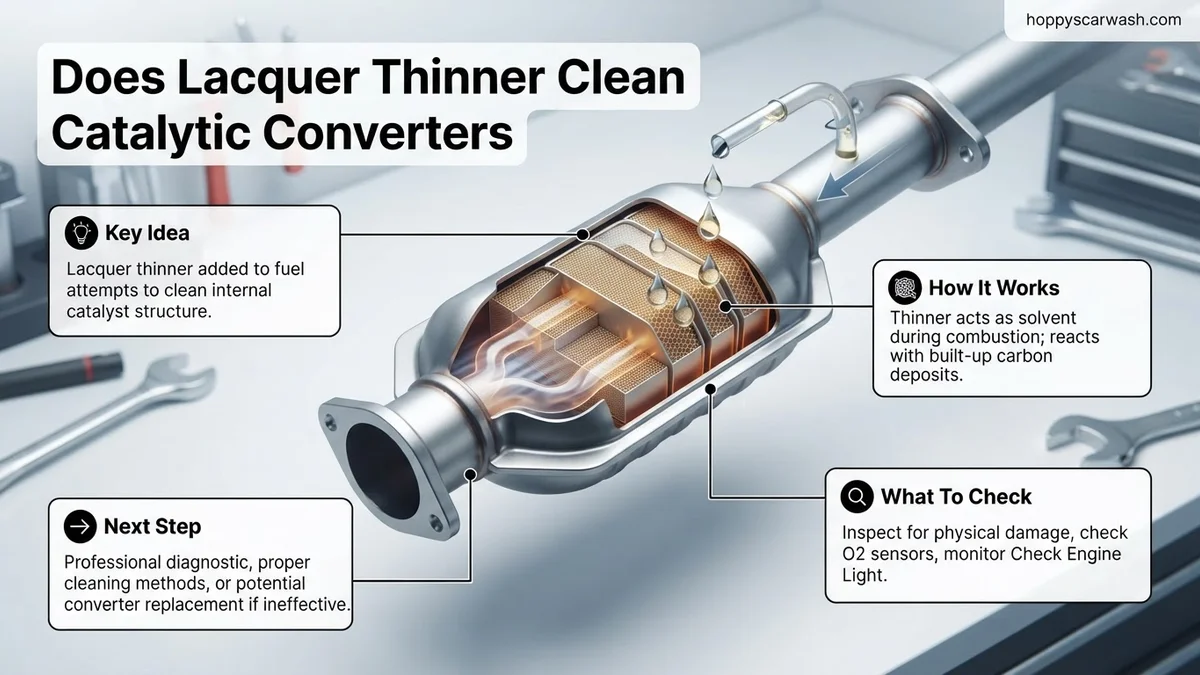
Pouring lacquer thinner into your gas tank is a popular automotive myth that fails to safely clean clogged catalytic converters. This dangerous practice risks severe damage to fuel injectors, seals, and oxygen sensors while rarely fixing the root cause. Proper diagnostics and certified emissions additives provide the only safe path forward.
Pouring lacquer thinner into your gas tank to clean a clogged catalytic converter is a popular internet mechanic trick, but the short answer is no, it is not a safe or reliable fix. While lacquer thinner is a powerful solvent capable of dissolving heavy carbon deposits on metal parts outside an engine, using it as a fuel additive creates severe risks for your modern 2026 vehicle’s fuel system and emissions equipment.
Drivers facing a failing emissions test or an annoying check engine light often search for budget-friendly shortcuts like solvent flushes. However, understanding the chemical reality of how lacquer thinner interacts with modern powertrain components will save you from a catastrophic repair bill that far exceeds the cost of a proper part replacement.
Key Takeaways
- Lacquer thinner does not safely clear heavy carbon blockages inside catalytic converters.
- Industrial solvents can rapidly melt rubber fuel lines and degrade fuel injectors.
- Harsh chemicals will permanently ruin expensive oxygen sensors and spark plugs.
- Professional diagnostics help identify whether the converter is actually failing or clogged.
- Certified catalytic converter cleaners offer a safer chemical alternative for minor deposits.
What Causes Clogged Catalytic Converters and Exhaust Failures
Catalytic converters rarely fail on their own. They usually plug up because another underlying mechanical problem dumps unburned fuel, oil, or coolant into the exhaust stream. In 2026, with stringent environmental standards and complex onboard diagnostics, catching these root causes early is critical to protecting your exhaust system.
Common Root Causes of Converter Failure
- Excessive Oil Consumption: Worn piston rings or valve stem seals force engine oil past the combustion chambers, coating the ceramic honeycomb core in sticky carbon ash.
- Rich Fuel Conditions: Failing fuel injectors, leaking pressure regulators, or fouled spark plugs send raw gasoline into the hot exhaust, where it melts the internal precious metals.
- Coolant Contamination: A blown head gasket leaks antifreeze into the cylinders, creating a thick, white, silica-based residue that permanently chokes off exhaust flow.
- Short Trip Driving Habits: Frequent, very short drives prevent the exhaust system from reaching its optimal self-cleaning temperature of around 800 degrees Fahrenheit, causing gradual soot buildup.
The Myth of the Quick Solvent Flush
The theory behind using lacquer thinner suggests that dumping a quart into a quarter-tank of gas will burn through the system and blast away carbon blockages. In practice, lacquer thinner burns unpredictably in the combustion chamber. Instead of magically cleaning the catalytic converter’s honeycomb matrix, it often causes localized overheating, thermal shock, and structural melting of the internal catalyst substrate.
Master Catalytic Converter Cleaning in 8 Simple Steps
If your vehicle is throwing a dreaded P0420 error code or failing emissions testing, you might be wondering if lacquer thinner can rescue your clogged catalytic converter. This comprehensive guide walks you through the chemical cleaning method—often using lacquer thinner or specialized fuel system cleaners mixed directly into your gas tank—to dissolve carbon deposits and restore exhaust flow without immediately buying an expensive OEM replacement part.
Step 1: Assess the Converter Condition
What you need: OBD2 scanner, flashlight, and an infrared thermometer.
Instructions: Before applying any chemical treatment, verify that your catalytic converter is actually salvageable and not physically damaged, melted, or rattling internally. Connect your OBD2 scanner to check for active codes like P0420 or P0430. Start the engine and use an infrared thermometer to measure the exhaust pipe temperature immediately before and after the catalytic converter. A healthy, working converter should have an outlet temperature that is roughly 100 to 300 degrees Fahrenheit hotter than the inlet temperature due to the ongoing chemical reaction. If the outlet is cooler, the core is dead.
Pro Tip: Never attempt to chemically clean a physically broken, cracked, or completely melted catalytic converter, as harsh solvents will not repair structural damage.
Step 2: Prepare the Fuel Tank Level
What you need: Vehicle dashboard fuel gauge and a gas station.
Instructions: Timing is critical when introducing potent solvents like lacquer thinner into your fuel system. Drive your vehicle until the fuel level is extremely low, ideally between one-quarter and one-eighth of a tank remaining (roughly 3 to 4 gallons of gas). This ensures that the chemical concentration remains high enough to effectively target carbon buildup inside the exhaust system. Do not run the car completely empty, as you do not want to risk sucking sediment from the bottom of the fuel tank into your fuel pump.
Pro Tip: Calculate your exact remaining fuel volume so you can properly proportion the solvent ratio without making the mixture overly volatile.
Step 3: Measure and Mix Lacquer Thinner Safely
What you need: High-grade lacquer thinner, a clean plastic measuring funnel, and heavy-duty nitrile gloves.
Instructions: Pour exactly one quart (32 ounces) of pure lacquer thinner into your low fuel tank for a standard 12-to-15 gallon tank capacity. Never exceed a 10 to 15 percent solvent-to-fuel ratio, as excessive concentrations of aggressive industrial solvents can damage rubber fuel lines, degrade fuel pump seals, and overheat the exhaust system. Use a long-necked plastic funnel to prevent spilling the corrosive solvent onto your car’s painted exterior body panels, which will instantly strip the clear coat.
Pro Tip: Always pour the lacquer thinner into the tank before adding gasoline to ensure the solvent thoroughly mixes and dilutes with the fuel.
Step 4: Top Off with High-Octane Gasoline
What you need: Premium unleaded gasoline (91 octane or higher).
Instructions: Immediately after pouring the lacquer thinner, drive to the nearest gas station and fill your tank completely with premium gasoline. The incoming rush of fuel creates a turbulent mixing action inside the tank, ensuring the lacquer thinner is safely diluted. Premium fuel burns slightly slower and cleaner, which helps sustain higher combustion temperatures inside the cylinders to push unburned solvent and loosened soot particles down through the exhaust stream.
Pro Tip: Avoid regular 87-octane fuel for this specific procedure; higher octane helps prevent pre-ignition caused by the volatile chemical additives.
Step 5: Perform the High-RPM Italian Tune-Up
What you need: An open highway or long stretch of safe, unobstructed roadway.
Instructions: Once the tank is filled and mixed, drive your vehicle onto a highway where you can safely maintain elevated engine speeds. Drive continuously for at least 30 to 45 minutes while keeping your RPMs between 3,000 and 4,000. This sustained high exhaust flow and elevated thermal energy force the vaporized lacquer thinner and superheated gases to burn away stubborn carbon, sulfur, and oil ash deposits coating the precious metal honeycomb matrix inside the catalytic converter.
Pro Tip: Avoid excessive idling during this phase. City stop-and-go driving will not generate enough sustained heat to burn off the carbon deposits effectively.
Step 6: Clear Diagnostic Trouble Codes
What you need: OBD2 diagnostic scanner tool.
Instructions: After completing your extended highway drive, pull over safely, turn off the engine, and plug your OBD2 scanner back into the port beneath the dashboard. Clear the stored P0420 or related efficiency codes from the engine control unit (ECU) memory. Clearing the code forces the computer to re-run its internal readiness monitors and test the catalytic converter’s operational efficiency using data from the downstream oxygen sensor.
Pro Tip: Do not expect the check engine light to turn off on its own immediately; you must manually clear the code to trigger a fresh diagnostic cycle.
Step 7: Complete the Drive Cycle
What you need: Vehicle owner’s manual or standard drive cycle protocol.
Instructions: To verify if the cleaning process worked, you must complete a proper OBD2 drive cycle. This typically involves driving for 15 to 20 minutes across a mix of city streets and highway speeds, ensuring you perform at least one steady cruise at 55 MPH without touching the brake pedal for several minutes. This allows the car’s computer to thoroughly test the catalyst monitor readiness status and confirm whether exhaust cleaning successfully restored efficiency.
Pro Tip: Check your scanner’s “Monitors” menu to ensure the Catalyst readiness flag changes from “Incomplete” to “Ready” before heading to an emissions testing center.
Step 8: Inspect the Results and Post-Treatment Maintenance
What you need: OBD2 scanner and a notebook to track fuel economy.
Instructions: Check your scanner one final time. If the P0420 code remains cleared and does not return after driving for a week, the lacquer thinner successfully cleaned your catalytic converter. If the light returns within 50 miles, the internal catalyst degradation is too severe for chemical remediation. In this scenario, investigate root causes such as worn piston rings, leaking valve seals, or failing fuel injectors that caused excessive oil or unburned fuel to foul the converter in the first place.
Pro Tip: Address any underlying engine misfires or oil consumption issues immediately to prevent your newly cleaned catalytic converter from clogging up again.
✅ Final Checklist
- Verified the catalytic converter structure is not physically melted or rattling.
- Added no more than 1 quart of lacquer thinner to a nearly empty gas tank.
- Topped off the tank completely with high-octane gasoline for proper dilution.
- Drove the vehicle on the highway at 3,000+ RPM for at least 30 minutes.
- Cleared OBD2 codes and successfully completed a standard drive cycle without the P0420 code returning.
Important Notes:
- Lacquer thinner is extremely flammable and contains toxic chemicals; always wear gloves and eye protection, and work in a well-ventilated outdoor area away from open flames.
- Overuse of harsh solvents can permanently ruin rubber fuel system components and oxygen sensors. Limit this procedure to a one-time emergency fix.
- Estimated time: 1 hour of active work and driving. Estimated cost: $15 to $25 for chemicals and fuel. Seek professional mechanic assistance if engine performance degrades or heavy smoke persists.
How to Fix a Clogged Catalytic Converter Safely and Effectively
If your vehicle is suffering from sluggish acceleration, a sulfur rotten-egg smell, or diagnostic trouble code P0420, chemical shortcuts will not restore a damaged core. When a catalytic converter is physically melted or severely contaminated, the only permanent repair is proper mechanical intervention.
Safe Diagnostics and Proven Solutions
- Backpressure Testing: Have a technician measure exhaust backpressure before and after the converter using a pressure gauge hooked into the oxygen sensor port.
- Fix the Upstream Problem First: Replace worn spark plugs, fix oil leaks, and service failing fuel injectors so a new converter will not immediately suffer the same fate.
- Professional Catalyst Replacement: Install a high-grade OEM or EPA-compliant aftermarket catalytic converter designed to meet strict 2026 emissions standards.
- Reputable Fuel System Cleaners: If you want to use a bottled additive, choose professional, polyetheramine-based (PEA) tank cleaners specifically formulated for fuel systems rather than harsh industrial lacquer thinners.
The Dangers of Chemical DILs and Harsh Solvents
Introducing industrial thinners into your fuel tank threatens vital components long before the liquid ever reaches the exhaust. Modern high-pressure fuel pumps, delicate plastic internal seals, rubber fuel lines, and expensive oxygen sensors can dissolve or degrade rapidly when exposed to aggressive lacquer solvents. Furthermore, ruining your downstream oxygen sensors with chemical residue will immediately trigger a new wave of check engine lights.
Step-by-Step Guide to Using Certified Emissions Additives
When dealing with a sluggish or mildly restricted catalytic converter, pouring harsh industrial solvents like lacquer thinner into your fuel tank is entirely unnecessary. Automotive engineers recommend using EPA-compliant catalytic converter cleaners available on the market in 2026. These specialized formulations use heavy-duty detergent packages and cleaning agents designed to safely strip carbon deposits without compromising fuel system components.
Preparation and Dosing Procedure
To achieve the best possible results from a professional cleaner, proper execution is essential. Follow this step-by-step procedure:
- Verify Fuel Level: Run your vehicle until the fuel tank is down to approximately one quarter (1/4) full. This ensures a high concentration of the chemical additive relative to the gasoline.
- Add the Solution: Carefully pour the entire bottle of certified catalytic converter cleaner directly into the gas tank before refueling.
- Dilute with Fuel: Immediately fill your tank with fresh gasoline (at least 10 gallons). This thoroughly mixes the active cleaning agents with the fuel.
- Drive Under Load: Drive the vehicle continuously for 20 to 30 minutes at highway speeds (above 55 MPH). Maintaining an elevated engine load increases exhaust gas temperature, which activates the cleaning chemistry.
- Repeat if Necessary: For stubborn Check Engine lights related to code P0420, run a second fuel cycle using a fresh bottle of cleaner during your next fill-up.
What If It Still Doesn’t Work?
If chemical cleaning fails to clear the P0420 or P0430 diagnostic trouble codes, the catalytic converter has likely suffered permanent internal damage, such as a melted substrate or completely poisoned catalyst material. In 2026, certified technicians recommend the following fallback steps:
- Diagnose Upstream Issues: Check for faulty oxygen sensors, leaking fuel injectors, or worn spark plugs. These root causes must be fixed first to prevent destroying a brand-new converter.
- Inspect for Physical Damage: Raise the vehicle to inspect the exhaust system for deep physical dents, internal rattling, or massive exhaust leaks near the flanges.
- Seek Professional Testing: Take the vehicle to a certified emissions repair facility for a professional backpressure test or infrared temperature reading.
- Budget for Replacement: Expect a total replacement cost ranging from $1,000 to $2,500 for parts and labor, depending heavily on your vehicle make, model, and emissions tier.
Conclusion
Relying on lacquer thinner to clean a modern catalytic converter is an outdated, high-risk gamble that can easily destroy fuel pumps, rubber seals, and oxygen sensors. According to verified research and automotive engineering sources, safe and effective alternatives like EPA-compliant fuel additives offer a much better path for clearing minor carbon buildup. For your next actionable step, scan your vehicle for active diagnostic trouble codes and select a certified cleaner designed specifically for modern exhaust systems.
❓ Frequently Asked Questions
Why do people think lacquer thinner cleans catalytic converters?
The theory assumes that pouring a strong solvent into the gas tank will burn hotter during combustion and melt away carbon deposits. However, modern engines operate under tightly controlled air-fuel ratios, rendering this trick ineffective and destructive.
What specific damage can lacquer thinner cause to a car?
Industrial solvents attack elastomeric seals, degrade rubber fuel lines, destroy fuel injector O-rings, and pit intake valves. Furthermore, the extreme exhaust temperatures generated can melt the catalytic converter entirely.
Will putting lacquer thinner in my gas tank turn off the check engine light?
In rare cases where a minor carbon film temporarily burns off, the light might flicker off briefly. However, if the P0420 code is triggered by structural wear or a dead catalyst, no chemical will fix the underlying failure.
How do professional mechanics test a blocked catalytic converter?
Mechanics typically use backpressure gauges, infrared thermometers to measure temperature differentials before and after the catalyst, or live data scanners to monitor downstream oxygen sensor waveforms.
Can driving at high speeds clear out carbon deposits instead?
An Italian tune-up, which involves driving at sustained highway speeds for 20 minutes, can help burn off minor soot accumulation. This method is completely safe for the engine and fuel system unlike chemical solvents.
What is the average cost to replace a damaged catalytic converter?
Replacement costs vary widely based on vehicle make and model, typically ranging from $1,000 to $2,500 including parts and labor due to precious metal content like platinum and palladium.