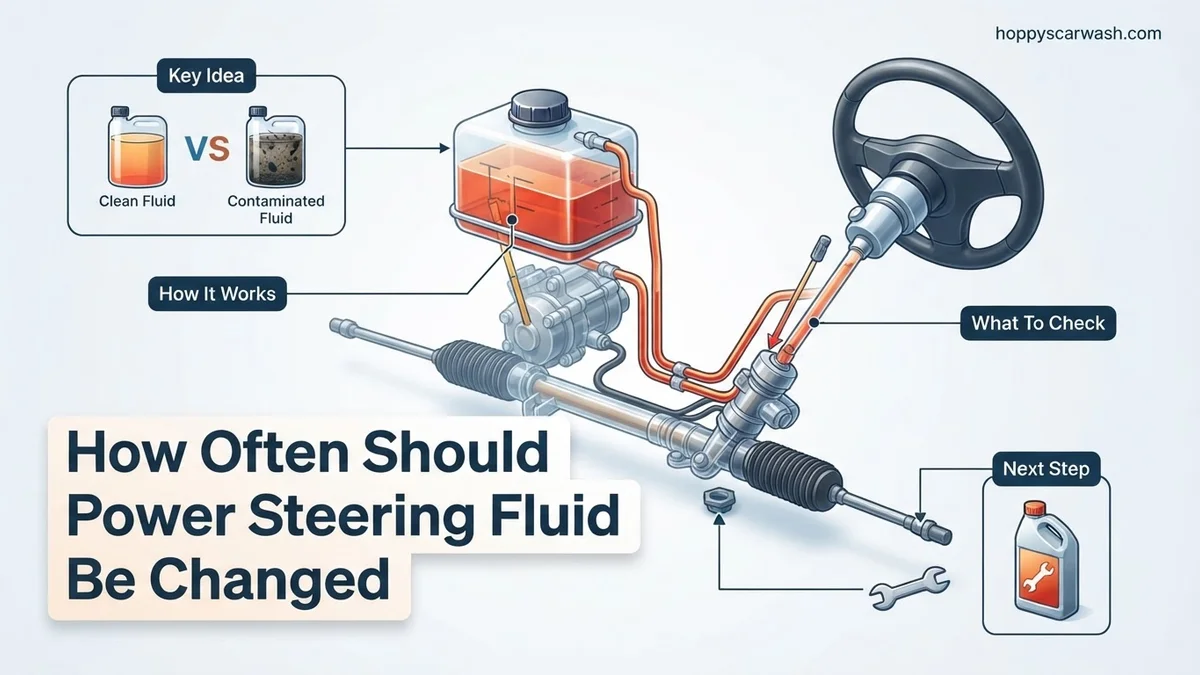
How Often Should Power Steering Fluid Be Changed in 2026
Most vehicles require a power steering fluid change every 50,000 to 100,000 miles or every 2 to 5 years. However, exact maintenance intervals vary by manufacturer, so always consult your owner’s manual for specific guidelines. Ignoring degraded fluid can lead to expensive pump and rack-and-pinion steering failures.
If you are driving a vehicle with a traditional hydraulic steering setup in 2026, you generally need to change your power steering fluid every 50,000 to 100,000 miles, or roughly every 5 years, whichever comes first. This maintenance interval ensures your steering pump operates smoothly and prevents premature component failure.
Ignoring this maintenance schedule can lead to catastrophic steering failure, expensive pump replacements, and unsafe driving conditions on the road. While modern automotive engineering leans heavily toward electronic power steering (EPS) systems—which require no fluid at all—millions of trucks, SUVs, and older passenger vehicles still rely on pressurized hydraulic fluid to make turning effortless.
Key Takeaways
- Change power steering fluid every 50,000 to 100,000 miles for optimal vehicle performance.
- Always check your specific vehicle owner’s manual for manufacturer-recommended maintenance schedules.
- A whining noise when turning the steering wheel often indicates contaminated or low fluid.
- Dark, discolored, or metallic-flecked fluid requires an immediate flush and replacement.
- Modern electric power steering (EPS) systems do not use hydraulic fluid and require no changes.
What Causes Power Steering Fluid Breakdown and Wear
Power steering fluid is a specialized hydraulic oil that undergoes severe stress every time you turn your steering wheel. Understanding what degrades this fluid helps you protect your steering system from costly damage.
Thermal Breakdown and Friction
Your power steering pump works under intense pressure, generating high operating temperatures. Over years of driving, this continuous heat cycle breaks down the chemical additives in the fluid. As the fluid loses its viscosity and lubricating properties, metal components inside the rack and pinion begin to grind against one another.
- Constant high temperatures thin out the fluid, reducing hydraulic pressure.
- Additive packages deplete, stopping the fluid from preventing internal corrosion.
- Friction increases wear on internal seals and O-rings, leading to leaks.
Contamination and Debris Accumulation
As internal metal parts, rubber hoses, and seals age, microscopic particles shed into the fluid loop. This debris turns the fluid abrasive, accelerating the wear of your entire steering assembly.
- Tiny rubber flecks from degrading hoses float through the hydraulic lines.
- Metal shavings from the pump gears contaminate the reservoir.
- Moisture absorption from the air causes oxidation and rust formation from the inside out.
Power Steering Fluid Intervals Made Easy: Your Essential Action Plan
Knowing how often power steering fluid should be changed is vital for maintaining smooth handling and preventing premature steering rack failure. This comprehensive guide walks you through the inspection, evaluation, and replacement timeline for your vehicle’s power steering system, ensuring you never drive on degraded fluid again.
Step 1: Consult Your Owner’s Manual for Manufacturer Baselines
What you need: Your vehicle owner’s manual, maintenance schedule booklet, or digital access to your car’s service records.
Instructions: Every vehicle manufacturer has specific recommendations for power steering fluid maintenance. While some brands like Honda or Toyota might not list a strict mileage interval for modern electric-hydraulic systems, traditional hydraulic systems generally require a fluid flush every 50,000 to 75,000 miles, or every 3 to 5 years. Locate the fluid service section in your manual to find the exact mileage and time thresholds established by the engineers who built your car. Take note of whether your car uses standard automatic transmission fluid (ATF) or specialized power steering fluid.
Pro Tip: Never rely on dealership advice blindly without checking the manual first, as service intervals can vary significantly between base models and performance trims.
Step 2: Locate and Inspect the Power Steering Reservoir
What you need: A clean shop rag or paper towel, and a flashlight if working in low-light conditions.
Instructions: Pop your car’s hood and locate the power steering fluid reservoir. It is typically a translucent plastic container labeled with a steering wheel icon or the words “Power Steering Fluid.” Park your car on a level surface, turn off the engine, and examine the fluid level against the “Minimum” and “Maximum” markings on the side of the tank. If your vehicle features a metal reservoir with a dipstick attached to the cap, unscrew the cap, wipe the dipstick clean with a rag, reinsert it completely, and pull it out again to read the fluid level accurately.
Pro Tip: Always check the fluid level when the engine is cold to get an accurate reading, as fluid expands when heated during operation.
Step 3: Evaluate the Color, Odor, and Consistency of the Fluid
What you need: A white paper towel or a clean white piece of cardboard.
Instructions: Dip a clean stick or the tip of your dipstick into the reservoir to extract a small droplet of power steering fluid, and place it onto your white paper towel. Fresh power steering fluid is typically clear, amber, or slightly pinkish-red, depending on the formulation. If the fluid on your towel appears dark brown, pitch black, or opaque, it is heavily contaminated with microscopic metal and rubber particles from the internal seals and pump. Additionally, smell the fluid; a distinct, pungent, or burnt odor strongly indicates that the fluid has broken down due to excessive heat.
Pro Tip: If the fluid smells heavily burnt or contains visible metallic flakes, you should change it immediately regardless of your current mileage interval.
Step 4: Assess Your Driving Habits and Operating Environment
What you need: Knowledge of your typical daily commute, towing frequency, and local climate.
Instructions: Severe driving conditions drastically accelerate fluid degradation. If you live in a climate with extreme sub-zero winters or suffocating desert summers, thermal stress breaks down the additives in the fluid much faster. Furthermore, if your daily commute involves heavy stop-and-go city traffic, frequent parallel parking maneuvers that require lock-to-lock steering turns, or if you regularly tow heavy loads, you should cut your standard power steering fluid change interval in half—typically servicing it every 30,000 to 40,000 miles.
Pro Tip: City drivers put significantly more wear on their power steering pumps than highway commuters because of low-speed turning friction.
Step 5: Watch for Warning Signs of Failing Fluid
What you need: A keen ear and sensitivity to steering wheel feedback while driving.
Instructions: Pay close attention to how your steering wheel feels during routine operation. If you hear a high-pitched whining, groaning, or squealing noise when turning the steering wheel, especially during cold morning startups, it is a primary indicator that the fluid is old, low, or aerated. You may also notice that the steering wheel feels unusually stiff, heavy, or jerky when initiating a turn. These physical symptoms mean the hydraulic pressure is compromised, and changing the fluid along with bleeding the system is urgently required to save the power steering pump.
Pro Tip: Ignoring a whining power steering pump for even a few weeks can cause permanent internal pump damage requiring a total unit replacement.
Step 6: Determine Whether to Flush or Top-Off
What you need: A notebook or digital maintenance log to track vehicle mileage.
Instructions: Based on your inspection, decide whether a simple top-off or a complete fluid flush is necessary. If your fluid is at the correct level, maintains a translucent amber or pinkish color, and your mileage is below 50,000 miles, simply topping it off with the manufacturer-specified fluid type is sufficient. However, if the fluid has surpassed the 60,000-mile mark, looks dark, or shows signs of contamination, plan a complete system flush. A complete flush involves extracting the old fluid from the reservoir, refilling it, bleeding the lines, and repeating until the fluid runs entirely clean.
Pro Tip: Never mix different types of power steering fluids (such as mineral-based and synthetic fluids), as incompatible chemical formulations can cause internal seals to swell and leak.
✅ Final Checklist
- Verified the specific power steering fluid type recommended by the manufacturer in the owner’s manual.
- Inspected the reservoir fluid level against the cold and hot minimum/maximum indicators.
- Checked the fluid color and aroma for signs of burning, darkness, or metallic contamination.
- Evaluated local driving conditions (heat, towing, stop-and-go traffic) to adjust the change interval accordingly.
- Listened for steering pump whining noises and evaluated steering wheel stiffness.
Important Notes:
- Always wear safety glasses and gloves when handling automotive fluids, as power steering fluid is a chemical irritant.
- Seek professional mechanic assistance if you suspect a hidden steering rack leak or if a complete flush results in persistent steering stiffness.
- Estimated time for a fluid inspection is 10-15 minutes; a complete fluid flush takes roughly 45-60 minutes and costs between $20 and $100 in materials if done at home, or $100 to $250 at a professional shop.
How to Check and Replace Your Power Steering Fluid Safely
Before planning a fluid service, you need to know how to inspect your fluid’s condition and determine whether you actually need a simple top-off or a complete fluid exchange.
Inspecting Fluid Color and Consistency
Locate the power steering fluid reservoir under your hood—usually marked with a steering wheel symbol. Pull the dipstick or shine a light into the translucent plastic tank to check the fluid.
- Healthy Fluid: Clear, amber, or light pink with a slight chemical scent.
- Degraded Fluid: Dark brown or black, indicating heavy contamination and burnt additives.
- Contaminated Fluid: Milky or foamy appearance, which points to air leaks or moisture intrusion in the system.
Determining the Right Service Interval
Always consult your vehicle owner manual for specific 2026 model guidelines, as manufacturer recommendations vary widely. Some performance vehicles require fresh fluid every 30,000 miles, while heavy-duty trucks might push past 90,000 miles.
- Check your manual for mileage versus time thresholds.
- Factor in heavy towing or frequent stop-and-go city driving as severe conditions requiring earlier replacement.
- If you notice whining noises or heavy steering, do not wait for the mileage milestone—inspect the fluid immediately.
What If It Still Doesn’t Work?
Replacing old fluid does not always resolve steering system complications. If stiffness, whining noises, or erratic feedback persist after a complete flush, underlying mechanical failures are often to blame. Drivers navigating steering issues in 2026 should follow a structured troubleshooting protocol when fresh fluid fails to correct the problem.
Here are the verified steps to take when a power steering fluid change does not resolve your vehicle symptoms:
- Inspect for active leaks: Check the hoses, seals, and rack-and-pinion boots for pooling fluid. Persistent leaks indicate a damaged component that fluid replacement cannot fix.
- Test the power steering pump: A failing pump often fails to generate adequate pressure despite clean fluid. Listen for a high-pitched whine that intensifies when turning the steering wheel.
- Evaluate the serpentine belt: A loose, worn, or slipping belt prevents the power steering pump from operating at peak efficiency. Inspect the belt tension and rubber condition.
- Seek professional diagnosis: Take your vehicle to a certified technician if steering remains heavy or unresponsive. Internal mechanical wear inside the steering gear box requires specialized diagnostic tools.
Professional repair costs vary depending on the faulty component. Replacing a power steering pump typically ranges from $400 to $800, while a complete rack-and-pinion replacement can cost between $600 and $1,200 including labor.
Conclusion
Maintaining clean power steering fluid prevents premature pump wear and ensures responsive vehicle handling. While modern electric systems reduce fluid dependency in many 2026 models, hydraulic systems still require routine flushing every 50,000 to 75,000 miles. According to verified research and automotive service experts, proactive fluid maintenance significantly extends the operational lifespan of expensive steering components. Check your owner manual today and schedule a fluid inspection if you have exceeded recommended mileage thresholds.
❓ Frequently Asked Questions
How often should power steering fluid be changed according to most manufacturers?
Most carmakers recommend changing power steering fluid every 50,000 to 100,000 miles. However, driving conditions such as heavy towing or extreme temperatures can shorten this interval significantly.
What happens if you never change your power steering fluid?
Over time, fluid breaks down, accumulates debris, and loses its lubricating properties. This causes excessive wear on the power steering pump, hoses, and rack-and-pinion assembly, eventually leading to complete system failure.
How can I tell if my car has hydraulic or electric power steering?
You can check under the hood for a power steering fluid reservoir with a dipstick cap. If your car has an electric power steering (EPS) system, there will be no fluid reservoir or hydraulic hoses connected to the steering column.
What color should healthy power steering fluid be?
Fresh power steering fluid is typically clear, amber, or slightly pinkish-red, depending on the manufacturer. If it appears dark brown, black, or contains metallic flakes, it is severely contaminated and needs replacement.
Is a power steering flush the same as a fluid change?
A basic fluid change usually involves removing and replacing the fluid currently sitting in the reservoir. A complete power steering flush removes old fluid from the entire system, including the pump, lines, and steering gear, using a specialized flushing machine.
Can I use automatic transmission fluid (ATF) in my power steering system?
Some older or specific vehicle models permit the use of ATF as power steering fluid, but many modern cars require specialized hydraulic fluids. Always check your owner’s manual before adding any fluid to avoid damaging internal seals.