Are Oil Leaks Covered Under Powertrain Warranty in 2026
It depends entirely on the root cause of the leak. Internal gaskets and seals directly required to lubricate the powertrain are usually covered, while external accessories and normal wear-and-tear items are typically excluded.
The short answer is yes, some oil leaks are covered under a standard manufacturer powertrain warranty, but it entirely depends on where the leak originates. If an internal seal or gasket fails due to a manufacturing defect, your automaker will typically foot the bill for the repair under your 2026 powertrain warranty. However, if the leak stems from a secondary external component, normal wear and tear, or missed maintenance, you will be paying out of pocket.
Navigating warranty claims for fluid leaks can quickly become frustrating because dealership service departments draw strict lines between what counts as “powertrain” and what counts as “accessory” or “maintenance.” Knowing the exact distinction between covered internal components and excluded external parts will save you from unexpected repair bills and help you advocate for your coverage effectively.
Key Takeaways
- Internal engine gaskets and seals are typically covered by standard powertrain warranties.
- External leaks caused by normal wear and tear are rarely covered.
- A manufacturing defect must be proven to secure free warranty repairs.
- Regular maintenance records are often required to prevent claim denials.
- Always request a formal diagnosis and consult your specific manufacturer manual.
What Causes Powertrain Oil Leaks and Warranty Eligibility
Understanding the root cause of your oil leak is the single most important factor in determining if your 2026 powertrain warranty will cover it. Dealership technicians do not just fix the leak; they investigate why it happened to decide who pays.
Internal Seals and Gaskets Versus External Components
Automakers separate engine seals into two categories when evaluating claims. Internal gaskets, such as the head gasket, rear main seal, and internal oil pan gaskets, are generally covered because they require major engine disassembly to reach. Conversely, external gaskets and components like oil filter housings, drain plug washers, and valve cover gaskets are frequently excluded or subjected to shorter bumper-to-bumper warranty limits.
- Covered typically: Head gaskets, internal timing cover seals, and rear main seals.
- Often excluded: Oil pressure switch threads, turbocharger oil supply lines, and external cooler lines.
- Manufacturer rules: Brands like Hyundai, Kia, and Mitsubishi offer extensive 10-year/100,000-mile powertrain warranties, but they enforce strict maintenance documentation rules for seal failures.
Manufacturing Defect Versus Normal Degradation
Your warranty only covers flaws in factory materials or workmanship. If a rubber seal dries out, cracks, and leaks after eight years of driving, the manufacturer considers that normal degradation. If that same seal fails at 25,000 miles due to a pinched installation or faulty material from the assembly plant, it qualifies as a defect. You must prove the component failed prematurely, which is why dealership inspection is mandatory.
Step-by-Step Guide to Filing a Powertrain Warranty Claim
When you spot an oil puddle in your driveway, you need a strategic approach to ensure the dealership honors your powertrain warranty. Approaching the service counter prepared prevents them from denying your claim under the guise of “normal wear.”
Gathering Your Documentation and Evidence
Before you hand over your keys in 2026, assemble your vehicle history files. Dealerships will immediately look for reasons to deny coverage due to neglect. Bring these items with you:
- Your original vehicle purchase paperwork or current warranty booklet outlining your active coverage terms.
- Complete service records proving you changed your oil at recommended factory intervals. Skipping oil changes allows sludge buildup, which voids seal warranties.
- Clear photos of the leak if you cleaned the area before driving to the dealership, in case the leak rate changes in transit.
Navigating the Dealership Inspection Process
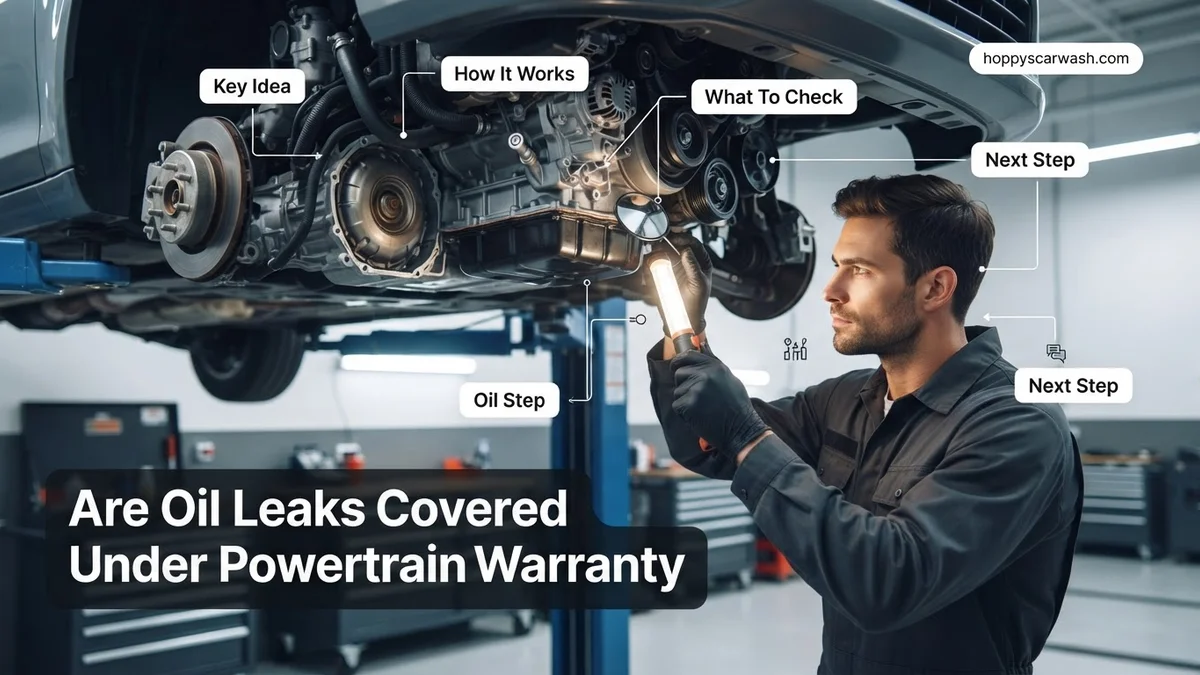
When you arrive, explicitly state that you suspect an internal powertrain leak covered under your active warranty. Ask the service advisor to perform a dye test if the source is not immediately obvious. If the initial technician claims the leak is external and not covered, do not accept a flat denial. Ask to speak with the service manager, request the specific labor code they plan to submit to the manufacturer, and reference your exact warranty contract terms.
How to Fix Denied Claims and Handle Dealership Pushback
Dealerships frequently deny warranty claims for oil leaks by classifying them as routine maintenance issues or normal wear and tear. If your initial claim is rejected, you must take immediate, structured action to challenge the decision and protect your financial interests under your 2026 powertrain warranty coverage.
Escalating to the Manufacturer
When a local service manager denies your claim, do not accept their decision as final. Dealership staff evaluate claims based on preliminary guidelines, but corporate manufacturer representatives have the final authority. You can request a district manager review to overturn the local verdict.
Steps to Appeal a Warranty Denial
- Request the complete, official denial in writing, including the exact diagnostic code and technician notes provided to the manufacturer.
- Contact the vehicle manufacturer’s customer assistance center directly to open a formal dispute case.
- Provide all chronological maintenance records that prove you adhered strictly to the factory-prescribed oil change intervals.
- Request an independent regional field inspector to assess the vehicle components in person at the dealership.
Key Considerations for Maintenance Records and Exclusions
Automotive manufacturers rely heavily on strict documentation standards to approve or deny claims. According to consumer protection data from the Federal Trade Commission, failing to prove proper vehicle maintenance gives manufacturers legal grounds to void coverage under the Magnuson-Moss Warranty Act.
Understanding Component Exclusions
Not all seals and gaskets are created equal under a 2026 powertrain policy. Internal engine gaskets, such as the head gasket, are almost universally covered because they require major engine disassembly to replace. Conversely, external gaskets, such as the valve cover gasket or oil pan gasket, are frequently excluded or subjected to much shorter time limitations.
Maintaining Compliance Standards
- Retain every single service receipt, detailing the exact oil viscosity and filter part numbers used during changes.
- Log digital maintenance entries into manufacturer companion apps immediately following any third-party service.
- Review the specific wording in your warranty booklet regarding auxiliary seals and fluid containment components.
What If It Still Doesn’t Work?
If dealership negotiations and manufacturer appeals fail to secure coverage for your oil leak, you must pursue alternative resolution paths. Resolving a major powertrain leak independently can incur significant out-of-pocket expenses, ranging from $800 for an oil pan reseal to over $3,500 for complex rear main seal replacements.
- File a formal consumer complaint with the Better Business Bureau Auto Line, a free arbitration service used by many major automakers.
- Submit a detailed safety and warranty violation report to the National Highway Traffic Safety Administration if the leak creates a fire hazard.
- Consult a certified automotive attorney specializing in lemon law and manufacturer warranty breaches for a formal case evaluation.
- Engage an independent ASE-certified master technician to perform a teardown diagnostic, creating definitive proof that internal component failure caused the leak.
Conclusion
Determining whether an oil leak is covered under your powertrain warranty in 2026 depends entirely on the failed component’s location and your adherence to scheduled maintenance. According to verified research and automotive industry experts, meticulous record-keeping remains your strongest defense against unwarranted claim denials. Take action today by gathering your service history files and reviewing your policy terms before visiting the service department.
❓ Frequently Asked Questions
Are oil leaks covered under a standard manufacturer powertrain warranty?
Coverage depends on the exact source of the leak. If the leak stems from a defective internal seal or gasket that keeps engine oil contained within the powertrain, it is usually covered. However, external leaks or those caused by physical damage are excluded.
What specific gaskets and seals are included in powertrain coverage?
Typically, head gaskets, intake manifold gaskets (in some configurations), and internal crankshaft or transmission seals are covered. Valve cover gaskets are sometimes a gray area depending on the specific automaker’s contract.
Why would a dealership deny an oil leak warranty claim?
Dealerships often deny claims if they determine the leak is due to normal wear and tear, lack of maintenance, or aftermarket modifications. Physical damage from road debris is also completely excluded from warranty terms.
What documentation do I need to bring when filing a claim?
Bring your vehicle’s service records showing consistent oil changes and maintenance. Having a detailed history proves you did not neglect the engine, which prevents the manufacturer from blaming user error.
How can I tell if my oil leak is considered internal or external?
An internal leak drips or consumes oil inside the combustion chamber or enclosed housings, while an external leak pools on the ground or coats the outside of the engine block. Mechanics must perform a formal dye test to confirm the exact origin.
What should I do if my warranty claim for an oil leak is unfairly rejected?
Request a written explanation for the denial, contact the manufacturer’s regional customer service representative, and consider getting a second opinion from an independent certified mechanic to dispute their finding.