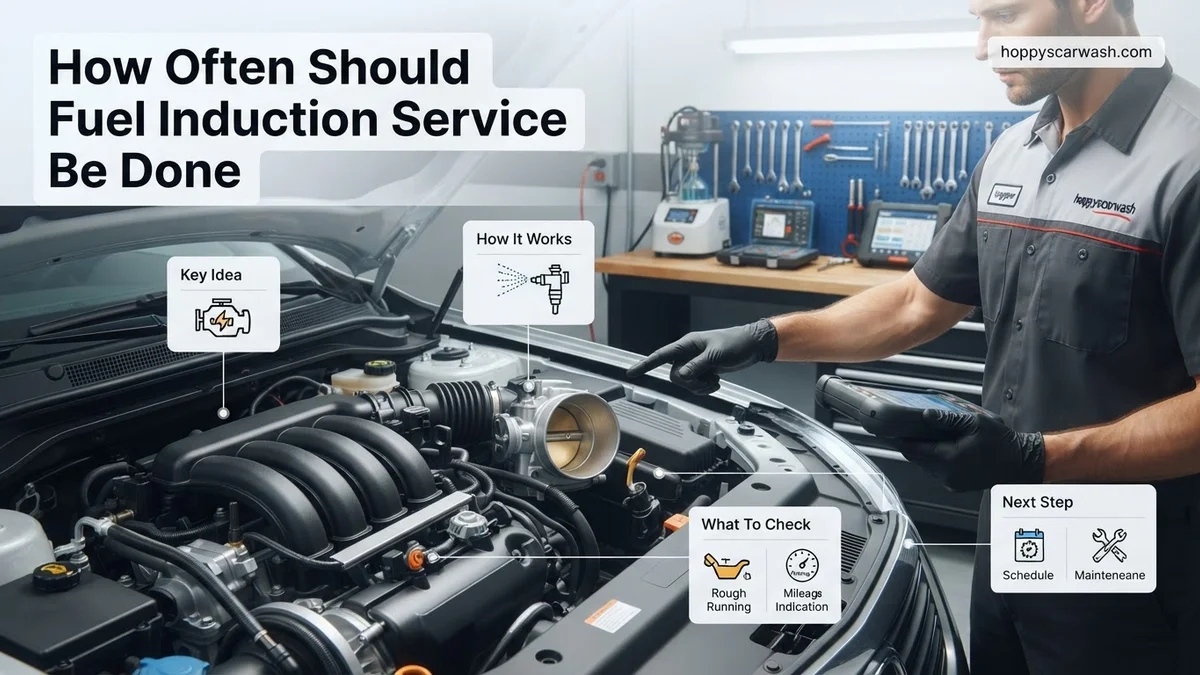
How Often Should Fuel Induction Service Be Done? 2026
Most vehicles require a professional fuel induction service every 30,000 to 50,000 miles to clear out harmful carbon deposits. Skipping this maintenance can lead to rough idling, decreased fuel economy, and sluggish acceleration.
Most modern vehicles require a professional fuel induction service every 45,000 to 60,000 miles to maintain peak engine efficiency and prevent carbon choke. If your car feels sluggish or your fuel economy has dropped noticeably in 2026, your intake valves are likely overdue for a thorough cleaning.
Skipping this vital maintenance leads to severe carbon buildup, rough idling, and costly repairs down the road. Understanding the right service intervals and recognizing the warning signs keeps your engine running smoothly and protects your investment.
Key Takeaways
- Schedule a fuel induction service every 30,000 to 50,000 miles.
- Direct-injection engines often require this service more frequently than port-injection models.
- Heavy city driving and short trips accelerate carbon buildup in the intake system.
- Watch for warning signs like rough idling, engine misfires, and reduced gas mileage.
- Regular cleaning restores proper airflow and improves overall engine efficiency and throttle response.
What Causes Carbon Buildup and Why Fuel Induction Service Is Needed
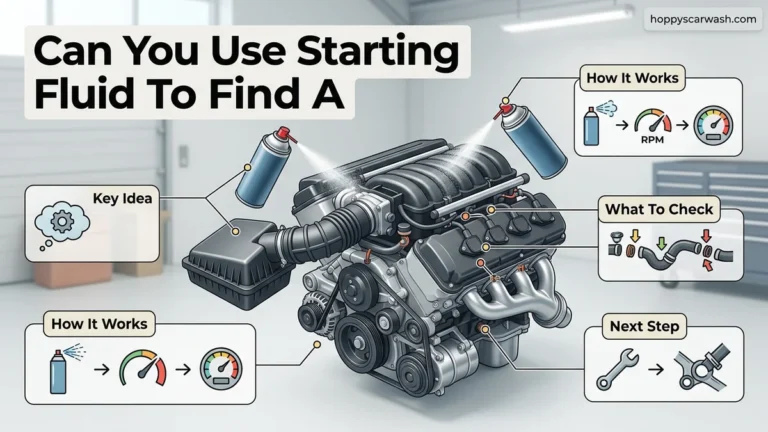
Modern direct-injection engines spray fuel straight into the combustion chamber rather than behind the intake valves. Without gasoline washing over them continuously, these valves accumulate hard carbon deposits over time. A professional fuel induction service uses specialized equipment to dissolve this hardened soot.
The Direct Injection Dilemma
- Fuel injectors in older port-injection setups naturally cleaned the intake valves constantly.
- Direct-injection engines bypass the valves completely, leaving them exposed to oil vapor and exhaust gases.
- Heat bakes these residues onto the metal surfaces, creating thick, restrictive crusts by 2026 standards.
How Carbon Chokes Your Engine
As deposits build up on your intake valves and throttle body, air restriction starves the engine of oxygen. You will notice immediate performance drops, hesitation during acceleration, and uneven idling at stoplights. A professional cleaning clears these pathways, restoring proper airflow and fuel atomization.
How to Determine the Best Mileage Interval for Your Specific Vehicle
While the general rule points to 45,000 to 60,000 miles, your specific driving habits and vehicle design dictate the exact schedule. City commuters and heavy haulers often need attention much sooner than highway drivers. Check your owner’s manual for manufacturer-specific guidance.
Standard Mileage Guidelines
- Standard interval: Every 45,000 to 60,000 miles for normal driving conditions.
- Aggressive driving: Every 30,000 miles if you frequently tow heavy loads or push your engine hard.
- Newer models: High-performance 2026 turbocharged engines may require preventative cleaning sooner due to higher operating temperatures.
Driving Conditions That Shorten the Interval
Short trips where the engine never fully reaches operating temperature accelerate carbon accumulation. If your daily commute consists of stop-and-go city traffic, your engine produces more blow-by gases that coat the intake tract. In these harsh environments, schedule your fuel induction service closer to the 30,000-mile mark to avoid permanent component degradation.
Step-by-Step Guide to Identifying Symptoms That Require Immediate Service
Waiting for the standard 45,000 to 60,000-mile interval is not always safe for modern direct-injection engines. Heavy carbon buildup can choke intake valves prematurely due to poor fuel washing. Recognizing early warning signs prevents catastrophic engine damage and expensive component replacements.
1. Observe Idle Quality and Engine Vibrations
Park the vehicle and let it idle while monitoring physical feedback through the steering wheel or seat. A rough, rolling, or fluctuating idle often points to uneven airflow caused by restricted intake ports. If the tachometer needle bounces erratically by more than 100 RPM, severe carbon coking is likely present.
2. Monitor Fuel Economy and Acceleration Response
Calculate fuel efficiency over several tankfuls during routine 2026 driving commutes. A sudden drop of 10% to 15% in miles per gallon indicates poor atomization at the fuel injectors. Furthermore, hesitation or flat spots during acceleration mean the combustion chamber is starved of proper fuel-air mixtures.
3. Check for Diagnostic Trouble Codes
Connect an OBD-II scanner to read active or pending fault codes from the engine control module. Persistent misfire codes, such as P0300 through P0304, frequently stem from fouled intake valves or clogged injector tips. When multiple cylinders register misfires simultaneously, an immediate induction service is required.
What If the Engine Still Runs Rough After a Professional Induction Cleaning?
Sometimes a standard chemical fuel induction service fails to resolve persistent engine performance issues. When carbon buildup is exceptionally hard or underlying mechanical faults exist, extra diagnostic steps are necessary. Professional intervention and advanced diagnostics become mandatory at this stage.
- Inspect Ignition System Components: Test spark plugs and ignition coils for wear, as failing components mimic the exact symptoms of a dirty fuel system.
- Perform a Manual Walnut Blasting: For severe direct-injection valve coking that chemicals cannot dissolve, mechanical walnut shell media blasting is required.
- Test Fuel Pump Pressure: Verify that the high-pressure fuel pump and rail are delivering exact manufacturer-specified pressure levels under load.
- Check Compression and Leak-Down Rates: Perform a physical cylinder check to rule out burnt valves, worn piston rings, or head gasket failures.
- Seek Certified Professional Help: Take the vehicle to an authorized dealership or master-certified technician for advanced oscilloscope and scope camera diagnostics.
Professional diagnostic fees generally range from $150 to $250. Advanced mechanical walnut blasting services cost between $400 and $800 depending on engine design.
Conclusion
Neglecting fuel induction services leads to permanent power loss, severe fuel economy drops, and expensive internal engine component failures. Proactive maintenance every 45,000 to 60,000 miles keeps direct-injection and port-injection engines operating at peak factory efficiency. According to verified research and automotive engineering sources from organizations like SAE International, routine intake valve decarbonization extends engine longevity by restoring optimal volumetric efficiency. The most important next step is checking your vehicle odometer and service records today to schedule professional maintenance before carbon deposits harden beyond chemical removal.
❓ Frequently Asked Questions
What is included in a professional fuel induction service?
A professional service uses specialized equipment to introduce a potent cleaning solvent directly into the air intake system. This process dissolves carbon deposits accumulated on the throttle body, intake manifold, and intake valves.
Why do direct-injection engines need more frequent fuel induction services?
In port-injection engines, gasoline sprays over the back of the intake valves, naturally washing away some deposits. Direct-injection engines spray fuel straight into the combustion chamber, leaving the intake valves dry and vulnerable to heavy carbon buildup.
Can using top-tier gasoline eliminate the need for fuel induction service?
While top-tier gasoline contains detergents that keep fuel injectors and combustion chambers relatively clean, it does not prevent carbon from forming on the intake valves of direct-injection engines because the fuel never touches them.
What happens if I skip a fuel induction service?
Neglecting this service allows thick carbon deposits to restrict airflow and prevent valves from sealing properly. This leads to rough idling, engine misfires, reduced fuel economy, and potential check engine lights.
How long does a professional fuel induction service take?
A standard fuel induction cleaning performed at a mechanic shop or dealership typically takes between one to two hours to complete.
Are DIY fuel induction spray cans as effective as professional machine cleaning?
DIY aerosol sprays can help with minor maintenance on port-injection engines, but severe carbon buildup on modern direct-injection vehicles usually requires pressurized professional equipment for a thorough cleaning.