How Many Miles Before Transmission Fluid Change 2026 Guide
Most vehicles require a transmission fluid change every 30,000 to 60,000 miles, though some modern vehicles can stretch up to 100,000 miles. Driving conditions, transmission type, and manufacturer guidelines heavily influence this timeline. Ignoring this maintenance risks costly transmission failure down the road.
As a general rule for most modern vehicles in 2026, you should change your automatic transmission fluid every 30,000 to 60,000 miles for traditional setups, or up to 100,000 miles for specific synthetic fluids. However, the exact mileage varies significantly depending on whether you drive a standard automatic, a Continuously Variable Transmission (CVT), or a heavy-duty truck.
Ignoring this maintenance interval leads to catastrophic transmission failure, resulting in repair bills that easily exceed $4,000. Fresh fluid keeps your gears lubricated, manages internal hydraulic pressure, and prevents overheating during your daily commute or long road trips.
Key Takeaways
- Standard automatic transmissions typically need fluid changes every 30,000 to 60,000 miles.
- Manual transmissions usually require fresh fluid every 30,000 to 60,000 miles.
- CVTs often demand strict fluid changes every 30,000 to 50,000 miles to prevent failure.
- Severe driving habits like towing require cutting recommended mileage intervals in half.
- Dark color, a burnt smell, or slipping gears indicate an urgent need for new fluid.
What Causes Transmission Fluid Breakdown and Wear
Transmission fluid does not last forever because it faces extreme heat and constant friction inside the gearbox. Over time, the chemical properties of the fluid degrade, rendering it unable to properly protect the intricate metal components.
Thermal Breakdown and Friction
Stop-and-go city traffic generates immense heat, which literally cooks the transmission fluid. As temperatures rise above 200 degrees Fahrenheit consistently, the fluid loses its viscosity and resistance to oxidation.
- Constant shifting in heavy traffic accelerates fluid aging.
- Towing heavy loads pushes fluid temperatures past normal operating limits.
- Extreme weather conditions in both summer and winter stress the fluid chemistry.
Contamination from Mechanical Wear
As gears mesh and clutches engage, microscopic metal shavings and clutch material wear off into the fluid. While magnets capture large particles, the remaining debris circulates through the system and acts like liquid sandpaper.
- Clutch friction material breaks down into the fluid over time.
- External moisture and dirt can seep through worn seals and vents.
- Oxidized fluid forms a sludge-like varnish that clogs tiny valve body passages.
Transmission Fluid Maintenance Made Easy: Your Essential Action Plan
Figuring out how many miles before a transmission fluid change is essential for keeping your vehicle shifting smoothly and preventing catastrophic transmission failure. While older cars strictly adhered to the traditional 30,000-mile rule, modern automotive engineering has vastly expanded fluid lifespans. However, driving habits, climate, and towing can drastically alter these numbers. This comprehensive walkthrough provides a clear, actionable roadmap to determine your specific vehicle’s transmission fluid change interval, inspect its current condition, and execute a flawless maintenance schedule.
Step 1: Consult Your Vehicle’s Owner Manual
What you need: Your vehicle’s physical owner’s manual or access to the manufacturer’s digital service portal.
Instructions: Open the maintenance schedule section of your owner manual and look specifically for automatic or manual transmission service intervals. Manufacturers typically provide two schedules: “Normal Service” and “Severe Service.” Most everyday drivers actually fall under the severe service category due to frequent short trips under 5 miles, heavy city stop-and-go traffic, extreme temperatures, or mountain driving. Identify the mileage threshold for your specific driving conditions, which usually ranges from 30,000 to 100,000 miles depending on the make and model.
Pro Tip: Never rely on generic internet advice; always verify the exact transmission type (CVT, traditional automatic, or dual-clutch) specified in your manual, as they have vastly different fluid requirements.
Step 2: Inspect the Transmission Fluid Dipstick
What you need: A clean white shop towel or paper towel, and a flashlight if visibility under the hood is low.
Instructions: Park your car on a level surface, leave the engine running at normal operating temperature (unless your manual states otherwise), and engage the parking brake. Pop the hood and locate the transmission fluid dipstick, which often has a yellow or red loop handle. Pull the dipstick out, wipe it clean with your towel, reinsert it fully, and pull it out again. Examine the fluid level against the hot/cold markers and smudge a drop onto your white towel to inspect its color and smell.
Pro Tip: Healthy transmission fluid should be translucent cherry-red with a slightly sweet or distinct petroleum smell. If it is dark brown, black, or smells intensely burnt, you are past due for a fluid change regardless of the mileage.
Step 3: Evaluate Your Driving Habits and Environment
What you need: An honest assessment of your daily commute, weather conditions, and vehicle usage.
Instructions: Analyze how you use your vehicle on a weekly basis. Do you frequently tow a trailer, haul heavy loads, or use a roof rack? Do you commute in heavy bumper-to-bumper city traffic where the transmission constantly shifts between gears? Do you live in a region with extreme summer heat or freezing winters? If you answered yes to any of these, you should automatically subtract 30 to 50 percent from the manufacturer’s “normal” recommended mileage interval to protect your transmission gears and valve body.
Pro Tip: Commercial delivery vehicles, police cruisers, and ride-share cars operating in dense urban areas should always follow the severe service schedule, changing fluid every 30,000 to 45,000 miles.
Step 4: Check for Sealed Transmissions and Lifetime Fluids
What you need: A flashlight, a mirror on a telescoping pole, and basic knowledge of your vehicle’s undercarriage layout.
Instructions: Look under your hood or crawl beneath the vehicle to determine if you have a “sealed” transmission, which lacks a traditional dipstick. Many modern luxury and economy vehicles feature sealed transmissions advertised by dealerships as having “lifetime fluid.” Understand that “lifetime” usually refers to the expected warranty period of the vehicle (typically 100,000 miles). If your vehicle has a sealed unit and has crossed the 80,000-mile mark, you should plan to have a professional service shop perform a fluid exchange, as these systems require precise fluid pumping procedures at specific operating temperatures.
Pro Tip: Do not attempt a DIY fluid change on a sealed transmission unless you have a specialized fluid transfer pump and an OBD-II scanner capable of monitoring transmission fluid temperature.
Step 5: Identify Early Warning Signs of Fluid Degradation
What you need: Your senses of hearing, touch, and smell while operating the vehicle.
Instructions: Pay close attention to how your car behaves during acceleration and gear shifts. Common symptoms of old or low transmission fluid include delayed engagement when shifting into Drive or Reverse, slipping gears where the engine revs without a corresponding increase in speed, rough or jerky shifting, and an unusual whining or buzzing noise coming from underneath the vehicle. If you notice any of these performance issues, check your mileage log immediately; your transmission is crying out for fresh fluid long before the scheduled mileage marker.
Pro Tip: Ignoring slipping gears or delayed engagement can quickly burn out the clutch packs, turning a simple $200 fluid change into a $4,000 transmission rebuild.
Step 6: Choose Between a Drain-and-Fill or a Fluid Flush
What you need: Information regarding your vehicle’s service history and current mileage.
Instructions: Once you determine it is time for a change, decide on the service method. A standard drain-and-fill replaces only the fluid sitting in the pan (roughly 40 to 60 percent of the total volume), mixing the new fluid with the old. A mechanical fluid flush uses a specialized machine to pump out nearly 100 percent of the old fluid and replace it with fresh fluid. If your car has high mileage (over 120,000 miles) and has never had its fluid changed, a flush can dislodge sludge and ruin the transmission; in this scenario, stick to a gentle drain-and-fill or sequential drain-and-fills.
Pro Tip: Always replace the transmission filter whenever you perform a drain-and-fill, as a clogged filter restricts fluid flow and starves the transmission of vital hydraulic pressure.
Step 7: Schedule the Service or Gather DIY Supplies
What you need: Fresh manufacturer-approved transmission fluid, a new filter gasket kit, a drain pan, wrenches, and a funnel.
Instructions: If you are hiring a professional mechanic or dealership, schedule the appointment and confirm they will use OEM-spec (Original Equipment Manufacturer) fluid rather than a generic universal fluid, which can damage sensitive modern solenoids. If you are tackling the job yourself, purchase the exact fluid type listed in your manual (e.g., ATF+4, Dexron VI, or specific CVT fluid), jack up the vehicle securely on jack stands, place your drain pan underneath, remove the drain plug or pan bolts, and carefully drain the old fluid.
Pro Tip: Always measure the exact amount of old fluid you drain out into a graduated container, and refill the transmission with the exact same volume before running the engine to check the final level.
✅ Final Checklist
- Verified the specific mileage interval in the owner’s manual for your driving style.
- Inspected transmission fluid color, smell, and level via the dipstick or service port.
- Determined whether your vehicle has a traditional dipstick or a sealed transmission system.
- Checked for mechanical warning signs like slipping, delayed shifting, or unusual burning odors.
- Confirmed the correct fluid specification (OEM grade) and service type (drain-and-fill vs. flush).
Important Notes:
- Always use heavy-duty jack stands and wheel chocks if you are crawling under the vehicle; never rely solely on a hydraulic floor jack.
- Seek professional help immediately if you find metal shavings or heavy metallic sludge on the transmission drain plug magnet.
- Estimated time for a professional service is 1 to 2 hours, costing between $150 and $400 depending on fluid type and whether a filter change is included.
How to Determine Your Exact Transmission Fluid Mileage Interval
Relying on generic estimates can be risky for your specific vehicle make and model. You need a precise strategy to figure out the exact mileage threshold for your transmission type in 2026.
Consulting the Manufacturer Manual
Your glove box owner manual remains the ultimate authority for your vehicle’s specific maintenance schedule. Look specifically for the “severe service” schedule versus the “normal service” schedule.
- Most drivers actually fall under the severe service category due to short trips or city driving.
- Manufacturers often list lifetime fluid for sealed transmissions, but mechanics recommend changing it anyway at 75,000 miles.
- Check the manufacturer website digital portal if you bought your car used and lack the physical manual.
Evaluating Your Transmission and Drivetrain Type
Different transmission designs have vastly different fluid requirements and wear rates. Knowing your specific drivetrain dictates how often you should schedule service.
- CVTs: Require strict fluid changes every 30,000 to 50,000 miles to prevent belt slip.
- Manual Transmissions: Usually need gear oil changes every 30,000 to 60,000 miles.
- Traditional Automatics: Generally safe between 60,000 and 100,000 miles with modern synthetic formulations.
How to Fix Old Fluid with a Drain-and-Fill or Flush
When you reach the recommended mileage interval for your vehicle, you must choose between a standard drain-and-fill procedure or a complete fluid flush. Automotive engineers and certified technicians recommend understanding how each service works before visiting a service center in 2026.
Step-by-Step Drain-and-Fill Procedure
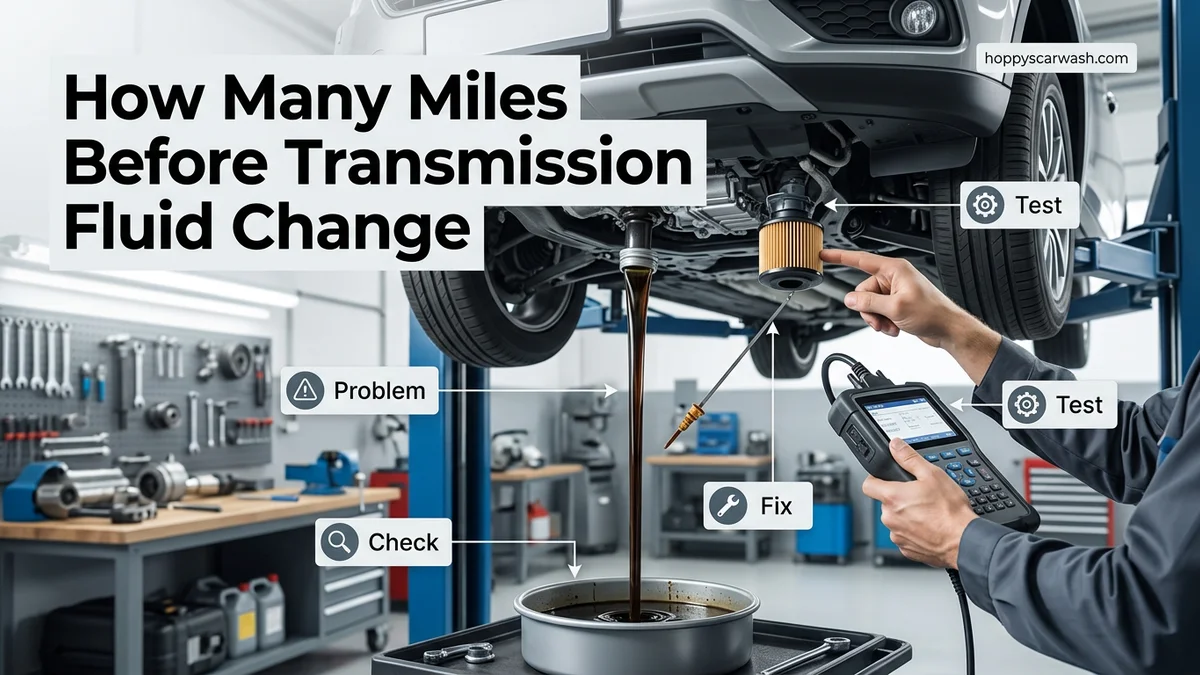
- Raise the vehicle securely on jack stands or a lift, ensuring the car is completely level.
- Locate the transmission pan drain plug, place a catch pan underneath, and remove the plug to drain the old fluid.
- Clean the magnetic drain plug thoroughly to remove any metallic debris, then reinstall it with a new washer and torque to manufacturer specifications.
- Refill the transmission through the dipstick tube or fill plug using the exact type and quantity of fluid specified in your owner manual.
- Start the engine, cycle through the gears, check the fluid level with the engine running, and inspect for leaks.
Understanding the Power Flush Option
A complete transmission flush uses a specialized machine to pump pressurized new fluid through the entire system while simultaneously forcing out the old, degraded fluid and contaminants. According to service data from the Automotive Maintenance and Repair Association, a flush replaces nearly 100 percent of the fluid, whereas a standard drain-and-fill only replaces about 40 to 60 percent. However, technicians advise caution with high-mileage vehicles that have never received service, as the high pressure of a flush can dislodge accumulated debris and cause internal component blockages.
What If Changing the Fluid Does Not Solve Transmission Slipping
If you recently completed a fluid service and your vehicle still exhibits severe gear slipping, harsh shifting, or complete engagement failure, the underlying issue extends beyond degraded fluid. At this stage, mechanical wear or electronic failure requires advanced diagnostics. Follow these steps when fluid maintenance fails to resolve your transmission problems:
- Scan for Diagnostic Trouble Codes: Connect an OBD-II scanner capable of reading manufacturer-specific transmission codes to check for failing shift solenoids, pressure control faults, or internal speed sensor errors.
- Inspect Electronic Components: Have a qualified technician test the transmission control module (TCM) and internal wiring harness, as electrical faults frequently mimic mechanical clutch failure.
- Evaluate Mechanical Wear: If electronic diagnostics show no faults, internal components such as worn clutch packs, damaged bands, or a failing torque converter require mechanical overhaul.
- Seek Professional Diagnostics: Take your vehicle to a certified transmission specialist for a comprehensive pressure test and road evaluation to determine if a rebuild or replacement is necessary.
Professional transmission diagnostics generally cost between $150 and $250. If a complete rebuild or replacement becomes necessary, expect repair costs to range from $2,500 to $5,000 depending on your vehicle make and model.
Conclusion
Neglecting your transmission fluid leads to premature component wear, sluggish shifting, and eventual transmission failure that can cost thousands of dollars to repair. Proactive maintenance through timely drain-and-fill or flush procedures protects your investment and ensures optimal vehicle performance. According to verified research and expert sources from the automotive service industry, adhering strictly to manufacturer mileage guidelines is the single most effective way to extend the lifespan of modern automatic transmissions. Schedule your next transmission fluid service today to prevent costly mechanical breakdowns.
❓ Frequently Asked Questions
How many miles before transmission fluid change for a CVT?
Continuously Variable Transmissions (CVTs) operate under extreme stress and generally require a fluid change every 30,000 to 50,000 miles without exception.
What happens if you never change your transmission fluid?
Over time, friction material and metal shavings contaminate the fluid, causing valve body clogs, overheating, gear slipping, and eventual total transmission failure.
How often should you check your transmission fluid level and condition?
It is best practice to check your transmission fluid level and visual condition every time you perform an oil change, or at least twice a year.
What is the difference between a transmission drain-and-fill and a flush?
A drain-and-fill removes roughly 40 to 50 percent of the old fluid residing in the pan, whereas a flush machine pumps out nearly 100 percent of the old fluid and cleans the system.
Can I mix different types of transmission fluid?
Never mix different fluid types, as using incorrect formulations can damage seals, ruin friction properties, and destroy internal transmission components.
Does time matter more than mileage for transmission fluid?
Yes, fluid degrades from heat cycles and oxidation over time. If you drive fewer miles than average, you should still change the fluid every 5 to 7 years.