What Is the Function of the Thermostat in a Car 2026 Guide
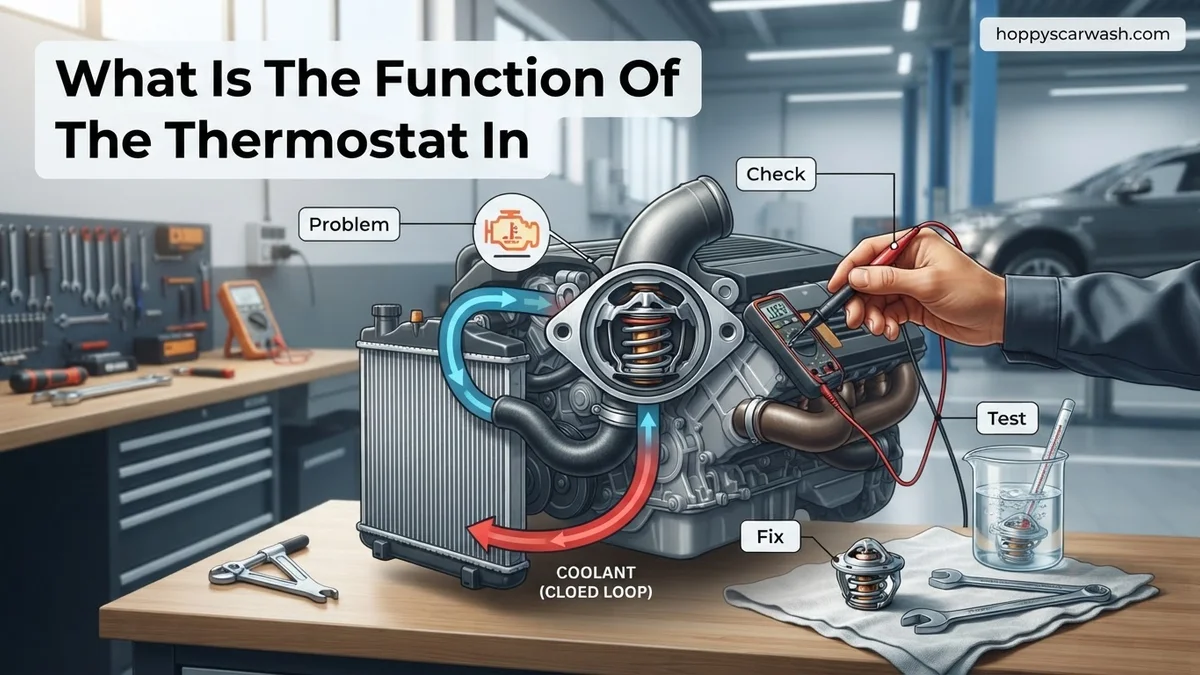
The primary function of the thermostat in a car is to regulate the engine’s coolant flow to maintain an optimal operating temperature. It acts as a temperature-sensitive valve that remains closed when the engine is cold to speed up warm-up, and opens as the engine heats up to allow coolant to pass through the radiator. A failing thermostat can cause severe engine overheating or prevent your cabin heater from working correctly.
Your car thermostat is a critical gatekeeper that regulates coolant flow between your engine and the radiator, keeping your engine at its optimal operating temperature of roughly 195°F to 220°F. When you start your car in 2026, the thermostat remains tightly closed, trapping coolant inside the engine block so it warms up as quickly as possible to reduce emissions and wear.
Once the engine reaches its ideal temperature, a sealed wax pellet inside the thermostat expands and pushes a valve open. This allows hot coolant to flow toward the radiator where excess heat escapes into the air. Without this continuous balancing act, your modern internal combustion or hybrid engine would rapidly overheat or run too cold, destroying fuel efficiency and accelerating internal component degradation.
Key Takeaways
- Regulates coolant flow between the engine block and the radiator.
- Helps the engine reach its ideal operating temperature quickly.
- Uses a heat-sensitive wax pellet mechanism to open and close.
- Stuck-closed thermostats cause immediate engine overheating risks.
- Stuck-open thermostats prevent proper cabin heating and reduce fuel efficiency.
What Causes Temperature Fluctuations and Thermostat Failure
The Mechanical Wear of the Wax Pellet
Modern car thermostats endure thousands of thermal cycles every year. The primary failure mechanism involves the internal wax pellet losing its calibration or leaking past its brass seal. When the wax degrades, it can no longer expand properly in response to coolant temperature changes. Driving in extreme 2026 climate conditions with heavy stop-and-go traffic accelerates this physical breakdown.
Debris and Coolant Contamination
Neglected cooling systems build up rust, scale, and degraded inhibitor acids. This sludge interferes with the movement of the thermostat spring and valve. If foreign debris wedges between the valve seat and housing, the thermostat cannot seal completely. You will notice slow engine warm-up times or sudden drops in cabin heater performance during winter months.
- Stuck open: Coolant flows constantly, causing the engine to run too cold and throwing efficiency codes.
- Stuck closed: Coolant is blocked from the radiator, causing rapid overheating and potential head gasket failure.
- Corrosion pitting: Weakens the structural integrity of the brass frame and bypass valve.
How to Test and Diagnose a Stuck Thermostat
The Infrared Thermometer Method
You can quickly diagnose a faulty thermostat without removing it by using a non-contact infrared thermometer. Start your cold engine and monitor the temperature of the upper radiator hose. A healthy thermostat keeps this hose cool until the engine reaches operating temperature, at which point the hose will suddenly turn hot as the valve opens.
Physical Inspection and the Boiling Water Test
If your OBD2 scanner points to cooling system inefficiency codes (such as P0128), removing the thermostat for a bench test provides a definitive answer. Suspend the unit in a pot of water using a piece of wire or tongs alongside a kitchen thermometer. Heat the water and observe the exact temperature when the valve begins to open and reaches its fully extended position, typically specified at 195°F for most passenger vehicles.
- Check the stamped temperature rating on the flange against factory service manuals.
- Verify that the valve retracts completely as the water cools down.
- Replace the unit immediately if it binds or fails to close entirely at room temperature.
How to Replace a Faulty Car Thermostat Step-by-Step
Replacing a stuck or failing thermostat is a standard DIY project that restores optimal engine efficiency. According to automotive service data from 2026, catching a faulty valve early prevents severe cylinder head warping. Always ensure the engine is completely cold before starting this project to avoid severe burns from pressurized coolant.
Preparation and Access
Park on a flat surface, engage the emergency brake, and disconnect the negative battery terminal. Locate the thermostat housing, which is typically found where the upper radiator hose meets the engine block. Place a large catch pan underneath the vehicle to collect escaping coolant safely.
Removal and Installation Steps
- Loosen the hose clamp securing the upper radiator hose to the thermostat housing and slide it back. Carefully twist and pull the hose free from the housing nozzle.
- Remove the bolts securing the metal housing cover using a socket wrench. Keep track of each bolt length, as they often vary.
- Lift off the housing cover and extract the old thermostat and its rubber gasket or O-ring. Note the exact orientation of the valve for proper alignment of the replacement part.
- Scrape away any old gasket material or debris from the mating surfaces using a plastic scraper. Thoroughly clean the area to ensure a leak-free seal.
- Install the new thermostat and fresh rubber gasket into the recess, making sure the spring faces inward toward the engine block.
- Reattach the housing cover, hand-tighten the bolts, and torque them to the manufacturer specification usually ranging from 12 to 18 foot-pounds. Reconnect the radiator hose and secure the clamp.
- Refill the cooling system with the manufacturer-recommended coolant mixture and bleed any trapped air pockets from the system.
What If It Still Doesn’t Work?
If your engine continues to overheat or fails to reach normal operating temperature after installing a new thermostat, the root cause lies elsewhere in the cooling system. Persistent temperature anomalies demand systematic troubleshooting to protect internal engine components from catastrophic damage.
Follow these numbered fallback steps if the primary fix fails:
- Inspect for Trapped Air: Air pockets in the cooling system block proper fluid circulation. Perform a thorough coolant bleed procedure using a specialized spill-free funnel kit.
- Test the Water Pump: A failing water pump impeller cannot circulate coolant effectively. Check for weeping weep holes, loose pulleys, or diminished cabin heater output at idle.
- Examine the Radiator Fins: External blockages or internal mineral scaling restrict airflow and heat dissipation. Inspect the radiator core for bent fins, heavy debris, or internal clogs.
- Check Electric Cooling Fans: Verify that the radiator cooling fans activate when the engine reaches threshold temperatures. Test the fan relay, fuses, and thermal switch.
- Consult a Certified Mechanic: If troubleshooting yields no results, professional diagnostic testing—such as a combustion leak block test—is necessary. Professional cooling system repairs typically range from $250 to $800 depending on labor rates and the specific component failure.
Conclusion
The car thermostat acts as the critical thermal gatekeeper of your vehicle, balancing rapid warm-ups with precise operating temperatures. Ignoring a failing unit risks severe engine degradation and poor fuel economy. According to verified research and expert sources from leading automotive maintenance boards, routine cooling system inspection remains the single most effective way to extend modern engine longevity. Take action today by monitoring your dashboard temperature gauge and scheduling a professional diagnostic check if erratic readings persist.
❓ Frequently Asked Questions
How do I know if my car thermostat is stuck open?
If your thermostat is stuck open, coolant continuously flows through the radiator. Symptoms include an engine temperature gauge that stays well below normal, poor cabin heater performance, and decreased fuel efficiency because the engine struggles to reach optimal operating temperature.
What are the warning signs of a thermostat stuck closed?
A thermostat stuck closed blocks coolant from reaching the radiator. The most common warning signs are rapid engine overheating, steam coming from under the hood, and a temperature gauge that spikes into the red zone within minutes of driving.
How often should a car thermostat be replaced?
There is no strict mileage interval for replacing a thermostat. Many last the lifetime of the vehicle, but they are often replaced preventatively during major cooling system repairs or water pump replacements around 100,000 miles.
Does a thermostat affect fuel economy?
Yes. If a thermostat fails in the open position, the engine runs colder than intended. The engine computer compensates by enriching the air-fuel mixture, which burns more fuel and lowers overall gas mileage.
Can a bad thermostat cause the Check Engine Light to turn on?
Yes, if the thermostat causes the engine to warm up too slowly or run too cool, the powertrain control module will trigger a diagnostic trouble code (such as P0128) and illuminate the Check Engine Light.
Is it difficult to replace a thermostat myself?
For most vehicles, replacing a thermostat is a straightforward DIY job that requires basic hand tools. You generally need to drain some coolant, remove the thermostat housing cover, swap the old thermostat and gasket for a new one, and refill the cooling system.