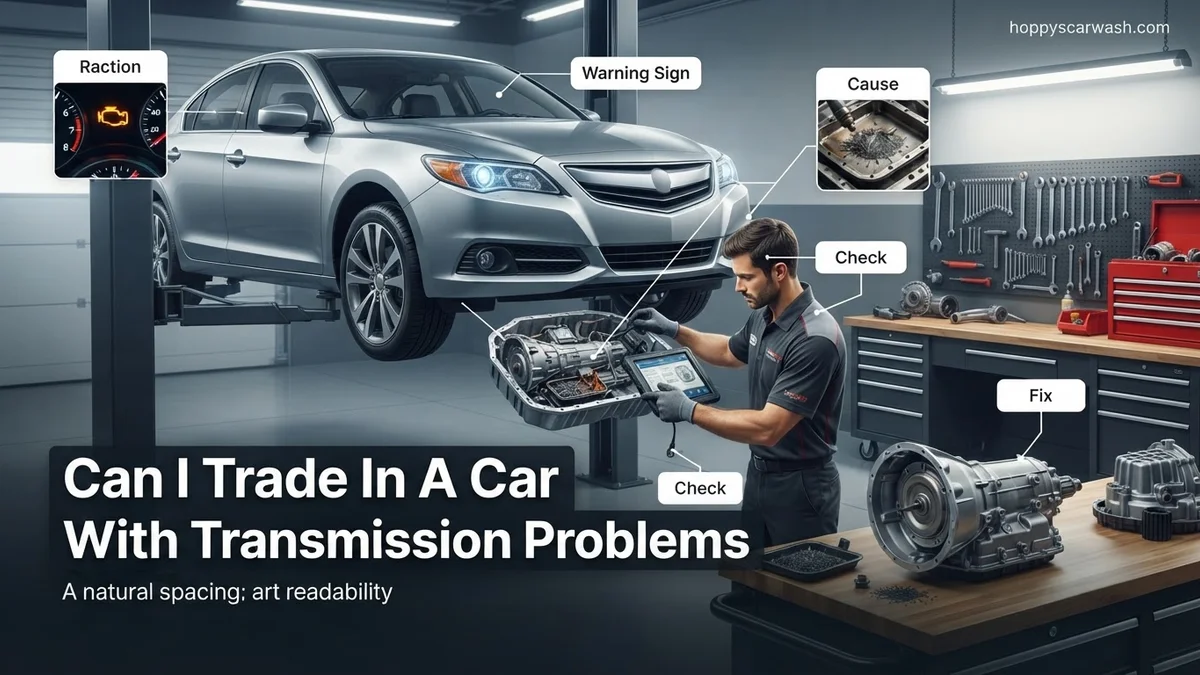
Can I Trade In a Car With Transmission Problems? 2026
Yes, you can trade in a car with transmission problems, as dealerships routinely accept mechanical failures and route them to wholesale auctions. However, the dealer will heavily deduct the estimated repair costs from your trade-in offer. Being honest about the mechanical issue ensures a smooth transaction and prevents legal liability for fraud.
Yes, you can trade in a car with transmission problems, and dealerships buy vehicles with mechanical failures every single day. Whether it is slipping gears, a complete refusal to shift, or a dashboard lit up with transmission fault codes, a bad gearbox does not mean your car is completely worthless. Dealerships routinely accept these vehicles because they have direct access to in-house mechanics, wholesale networks, and auto auctions.
Navigating this situation in 2026 requires understanding how dealerships price broken cars, whether you are legally obligated to disclose the mechanical failure, and how the financial math breaks down when comparing repair bills to trade-in deductions.
Key Takeaways
- Dealerships accept cars with bad transmissions, usually sending them straight to wholesale auctions.
- Expect a steep reduction in trade-in value that often exceeds the independent repair cost.
- Disclose known mechanical issues honestly to avoid legal disputes or rejected trade-in deals.
- Compare the cost of a transmission rebuild against the dealer’s trade-in penalty before deciding.
- Private party sales or junk yards serve as viable alternatives if dealer offers are too low.
What Causes Dealerships to Accept Cars with Transmission Problems
Dealerships are not intimidated by mechanical failures because they operate on a completely different economic scale than retail car buyers. When you bring in a car with a failing transmission, the sales and service departments view it as a project rather than a personal burden. Understanding their backend operations helps you negotiate realistically and removes the anxiety of rejection.
The Wholesale and Auction Pipeline
Not every car traded into a dealership stays on the front lot for retail sale. Dealerships handle bad transmissions in a few predictable ways:
-
In-House Rebuilds: If your car is a high-demand model for 2026, the dealer’s service center might drop in a rebuilt or used transmission and flip it for retail profit.
Dealer-Only Auctions: Many trade-ins with major mechanical flaws go straight to wholesale auctions where independent used car lots or scrap buyers purchase them.
Trade-In Value Adjustments: The dealer assumes all the risk of fixing the vehicle, which means their initial offer will heavily reflect worst-case repair costs.
Legal Disclosure Requirements
You might wonder if you can just clear the error codes and hope the appraiser doesn’t notice the heavy slipping during the test drive. Legally and ethically, transparency matters. While most used cars are traded in “as-is,” actively hiding a known, severe mechanical defect through deceptive practices can sometimes lead to contract disputes. Furthermore, any professional appraiser will immediately notice a bad transmission the moment they put the car in drive. Being honest builds leverage and keeps the negotiation grounded in reality.
How to Fix Your Trade-In Value Loss and Evaluate Repair Costs
The biggest shock of trading in a broken car is the sheer size of the trade-in value deduction. Dealerships do not deduct the exact cost of a parts-and-labor repair; they add a heavy safety margin to protect their profit margins. Evaluating the math before you visit the dealership prevents you from getting completely lowballed.
The Financial Math: Repair vs. Trade-In Deduction
Dealerships operate on worst-case scenarios. If an independent shop tells you a transmission replacement costs $4,000, a dealership will often deduct $5,000 to $6,000 from the clean trade-in value to account for diagnostic time, unforeseen complications, and profit margins. Consider this financial comparison:
-
Option A (Fix it first): Spend $4,000 out of pocket to fix the transmission, raising the trade-in value by $3,000 net. You often lose money fixing a car right before a trade.
Option B (Trade as-is): Accept a $5,000 reduction in trade value, walking away with zero repair hassle and immediate closure.
The 2026 Market Reality: With rising labor rates and supply chain pressures on transmission components, fixing the car yourself rarely yields a dollar-for-dollar return on trade-in value.
Minimizing Your Loss at the Dealership
You can mitigate how severely the dealership penalizes your trade-in by controlling the narrative. Gather independent quotes for the transmission repair before you visit the lot. If the dealer tries to slash your trade-in value by $7,000 for a repair you know costs $3,500, you have concrete data to push back against extreme lowball offers. Knowing your numbers turns you from a vulnerable seller into an informed negotiator.
Step-by-Step Guide to Trading In a Car with Mechanical Failures
Navigating a dealership trade-in with a failing transmission requires a methodical approach to protect your financial interests. Following a structured process ensures you secure the highest possible valuation while maintaining absolute transparency.
1. Secure an Independent Diagnostic Report
Visit an independent mechanic to get a formal diagnostic trouble code (DTC) scan. Having a professional assessment prevents dealership service departments from exaggerating the mechanical failure to slash your trade-in offer.
2. Gather Complete Maintenance Records
Compile all oil change histories, fluid flush records, and previous repair receipts. Dealerships prefer purchasing vehicles with known mechanical histories because it helps them calculate reconditioning costs accurately.
3. Obtain Multiple Online Instant Cash Offers
Use digital platforms like Carvana, CarMax, and Edmunds to get baseline wholesale valuations. These automated valuations provide a strong negotiating benchmark before you ever step foot on a physical dealership lot.
4. Disclose the Mechanical Defect Upfront
Inform the used car manager about the transmission slippage or failure before they appraise the vehicle. Ethical disclosure builds rapport and protects you from potential legal disputes regarding misrepresentation under 2026 consumer protection laws.
What If the Dealer Valuation Is Too Low or Rejects the Car
If a dealership offers a drastically low valuation or outright refuses to take the vehicle, you still have viable alternatives to offload the car profitably. Dealerships manage reconditioning differently, meaning rejection from one lot does not close every door.
1. Target Specialized Cash-For-Cars Buyers
Contact national salvage buyers and online services that specialize in purchasing mechanical-failure and junk vehicles. These buyers factor towing and scrap metal or rebuilding potential directly into their profit margins, often paying more than traditional trade-in desks.
2. Sell the Vehicle to a Private Party “As-Is”
List the vehicle on peer-to-peer marketplaces with a transparent description detailing the exact transmission faults. Private buyers who are mechanics or DIY enthusiasts frequently purchase these cars at fair market rates.
3. Consider a Quick Part-Out Strategy
Evaluate whether selling high-value components—such as the engine, catalytic converters, body panels, and wheels—yields a higher return than a wholesale trade-in. This option requires time and physical space but maximizes residual value.
What If It Still Doesn’t Work?
If standard trade-in attempts and private sales fail to yield an acceptable offer, consider these advanced fallback steps:
- Consult a Specialized Transmission Rebuilder: Ask a dedicated transmission shop for a minor repair estimate that restores basic drivability just long enough to pass a standard dealer test drive. Professional band adjustments or solenoid replacements typically cost between $300 and $800.
- Explore Trade-In Assistance Programs: Many major manufacturers and automotive networks run special promotion programs in 2026 that accept non-running vehicles with guaranteed minimum trade-in allowances toward a new model purchase.
- Utilize State-Sponsored Vehicle Retirement Programs: Check regional air quality management districts or state departments of motor vehicles that offer financial incentives to surrender high-polluting or severely damaged vehicles.
Conclusion
Trading in a car with transmission problems is entirely feasible, provided you prioritize honesty, leverage independent vehicle data, and understand wholesale market dynamics. According to verified research and expert automotive sources, transparency during the appraisal process prevents legal complications and secures a fair valuation. Your actionable next step is to obtain an instant online appraisal today to establish a baseline financial floor for your vehicle.
❓ Frequently Asked Questions
Will a dealership automatically reject a car with a broken transmission?
No, dealerships rarely reject cars outright because they have access to wholesale networks and mechanics. Even non-running vehicles have salvage or auction value that dealerships can leverage.
How much money will a dealer deduct for a bad transmission?
A dealership will typically deduct the retail cost of a replacement or rebuilt transmission plus labor. This often ranges from $3,000 to $6,000 or more, depending on the make and model.
Is it illegal to trade in a car without mentioning transmission problems?
While trade-ins are technically sold ‘as-is,’ actively concealing a severe mechanical defect or resetting a check engine light immediately prior to appraisal can cross the line into misrepresentation or fraud.
Is it better to trade in a broken car or sell it privately?
Trading it in is faster and eliminates the hassle of private buyers test-driving a broken vehicle. However, a private ‘as-is’ buyer looking for a project car might pay more than a wholesale trade-in value.
What documents do I need if the car has a bad transmission?
You will need the vehicle title (or loan payoff information), valid registration, and a photo ID. The mechanical condition does not change standard ownership documentation requirements.
Can I roll negative equity from a broken trade-in into a new car loan?
Yes, if the trade-in value is lower than your loan payoff amount, you can roll the remaining balance into a new auto loan, though this increases your overall debt and monthly payments.