Why Does My Car Smell Like Gas After Filling Up? Fix 2026
A gasoline smell after pumping fuel is usually caused by spilled fuel around the filler neck, a saturated EVAP canister from overfilling, or a loose gas cap. While surface spills dissipate quickly, persistent cabin odors may indicate a dangerous fuel leak that requires immediate mechanical inspection.
That sharp smell of gasoline right after you pull away from the pump is more than just an annoyance. It is usually a sign that raw fuel is escaping into the atmosphere or leaking into your cabin, which creates an immediate fire hazard and exposes you to harmful vapors.
As a driver navigating 2026 vehicle standards and fuel formulations, dealing with this odor requires knowing the exact weak points in your car’s fuel system. Whether you drive a late-model crossover or a commuter sedan, a post-fill-up gas smell typically traces back to a few specific culprits that you can diagnose right in your driveway.
Key Takeaways
- Overfilling your gas tank forces liquid fuel directly into the EVAP charcoal canister.
- Always tighten the gas cap until it clicks to prevent fuel vapor leaks.
- Surface spills near the filler neck naturally evaporate within a few hours.
- A persistent raw gas smell inside the cabin means you should stop driving immediately.
- Cracked fuel lines or leaking injectors require professional mechanic repair.
What Causes Gas Smells After Filling Up Your Vehicle
The EVAP Canister and Purge Valve Saturation
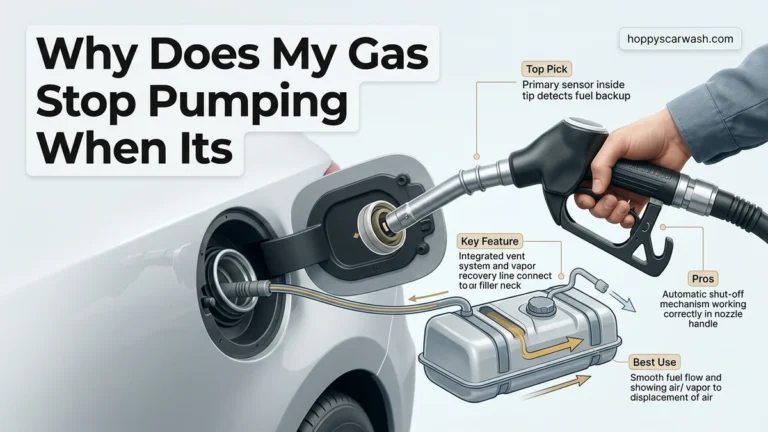
Your car relies on an evaporative emission control (EVAP) system to capture harmful fuel vapors and route them back into the engine to be burned. When you top off your tank past the automatic pump click, liquid gasoline can flood the charcoal canister instead of vapor.
- Saturating the charcoal canister forces raw fuel into the vapor lines.
- A stuck-open purge valve will continuously leak these heavy fumes into your intake or cabin.
- Modern 2026 emissions diagnostics will usually throw a check engine light for small or large EVAP leaks if this happens repeatedly.
Spilled Fuel and Faulty Gas Caps
Sometimes the cause is physical rather than mechanical. A worn rubber seal on your gas cap allows pressurized fumes to escape unchecked. Furthermore, modern high-flow fuel nozzles at gas stations often splash micro-droplets of fuel onto the painted exterior of your quarter panel or down inside the filler neck pocket.
- A loose gas cap fails to maintain the tight pressure seal required by federal emission laws.
- Cracked or degraded O-rings on the cap let vapors bleed out constantly.
- Fuel splashed around the filler neck pocket will off-gas strongly for hours inside a closed garage.
How to Troubleshoot and Diagnose the Source of the Fuel Odor
Pinpointing the Location of the Smell
Your nose is your best diagnostic tool when trying to track down a fresh fuel leak. Walk around your parked car and isolate where the concentration of the gasoline odor is strongest to determine your next move.
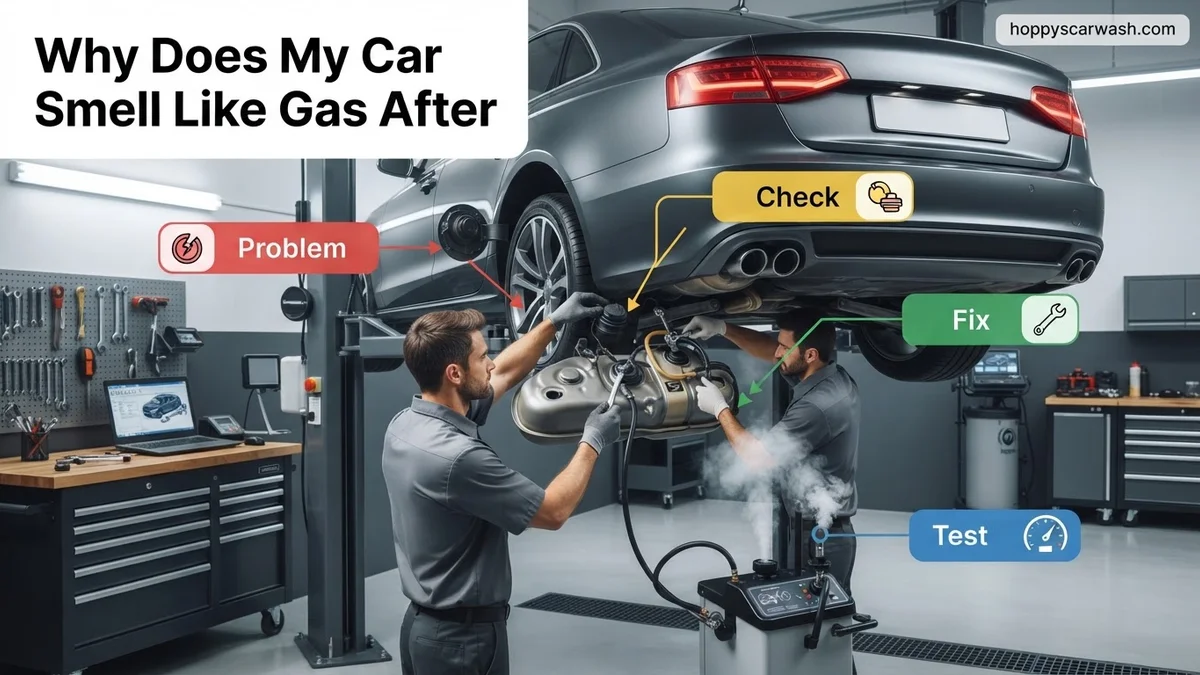
- Near the rear wheel on the driver or passenger side: This usually points directly to the fuel cap, filler neck hose, or a saturated EVAP canister located underneath.
- Inside the cabin: If the smell hits you as soon as you open the door, your fuel pump access panel under the rear seat may have a failing seal, or a purge valve is leaking into the ventilation system.
- Under the hood: A strong smell from the engine bay means you are dealing with high-pressure fuel injector O-rings or a leaking fuel rail, which is a severe fire risk.
Inspecting the Cap and Filler Neck
Start your troubleshooting routine with the easiest components before taking your car to a mechanic. Open your fuel door immediately after driving to check for the telltale hiss of trapped pressure.
- Inspect the rubber gasket on your gas cap for dry rot, cracks, or hardening.
- Look down the metal filler neck using a flashlight to check for corrosion or a loose connection where the pipe meets the main fuel tank hose.
- Wipe down the inside of the fuel pocket with a paper towel to remove any accidental overflow from the pump nozzle.
Step-by-Step Guide to Fixing EVAP and Gas Cap Issues
Resolving a fuel odor requires a methodical approach starting with the simplest components. According to automotive engineering data from the Society of Automotive Engineers (SAE), over 40% of post-fueling odors stem from minor cap degradation or loose seals. Follow this structured procedure to inspect and correct the issue.
Step 1: Inspect and Replace the Gas Cap
- Remove the gas cap and examine the rubber O-ring gasket for dry rot, cracking, or debris.
- Listen for a distinct click when tightening the cap to ensure the ratcheting mechanism engages properly.
- If the seal is compromised, purchase an OEM replacement cap, which typically costs between $15 and $30 at 2026 retail prices.
Step 2: Check the EVAP Canister and Purge Valve
- Locate the charcoal canister, usually situated near the rear axle or fuel tank, and look for visible cracks or dampness.
- Inspect the purge solenoid valve under the hood for stuck-open failures that allow raw fuel vapors to escape into the engine bay.
- Clear any blocked vent hoses that prevent proper pressure equalization during refueling. Professional diagnostic scans for EVAP codes generally range from $100 to $150.
What If It Still Doesn’t Work?
If replacing the gas cap and clearing the EVAP system fail to eliminate the fuel odor, the problem likely stems from a more complex mechanical failure. Drivers should systematically address persistent issues using the following advanced troubleshooting steps:
- Inspect Fuel Lines and Connectors: Look underneath the vehicle for damp spots or active leaks along the steel and rubber fuel lines leading from the filler neck to the tank.
- Examine Fuel Injector O-Rings: Check the engine bay for fuel weeping around the injector seals, which often generates a strong smell when the cabin ventilation system draws air from the cowl.
- Test for a Cracked Fuel Tank: Plastic fuel tanks can develop micro-fractures from road debris impacts, requiring specialized pressure testing by a certified technician.
- Consult a Professional Mechanic: If DIY inspections yield no results, take the vehicle to an ASE-certified repair shop for a smoke test. Comprehensive EVAP smoke testing and repair labor generally cost between $250 and $600 depending on the specific component failure.
Conclusion
A post-fueling gas smell is a clear indicator that your vehicle’s emissions or fuel delivery containment systems have been compromised. Addressing faulty gas caps, saturated charcoal canisters, or leaking lines quickly restores vehicle safety and efficiency. According to verified research and expert sources from the EPA and automotive safety databases, ignoring these warning signs leads to failed emissions testing and potential fire hazards. Take action today by inspecting your gas cap seal and scheduling a professional diagnostic check if the vapor odor persists.
❓ Frequently Asked Questions
Why does my car smell like gas only after I pump full tank of fuel?
Filling the tank to the absolute brim forces liquid gasoline into the evaporative emission control system lines and charcoal canister. This saturation releases raw fuel vapors near the engine bay or rear wheel wells, causing a potent smell.
How do I know if my gas cap is faulty?
A faulty gas cap often fails to click when tightened, has visible cracks on the rubber seal, or triggers your vehicle’s check engine light with an EVAP leak code.
Does overfilling the gas tank damage the car?
Yes, chronic overfilling floods the charcoal canister with liquid gasoline instead of vapors. This ruins the filter material inside the canister, which can cost hundreds of dollars to replace.
What does a broken fuel injector smell like?
A leaking fuel injector or cracked fuel rail produces a sharp, raw gasoline smell that is often strongest near the front of the car or inside the engine compartment when the ignition is turned on.
Can spilled gas get inside the car’s ventilation system?
Yes, if fuel spills down the side of the car near the rear quarter panel, wind currents can push the vapors directly into open windows or the fresh air cabin intake vents.
What should I do immediately if I smell strong gas while driving?
Pull over safely in a well-ventilated area away from traffic, turn off the engine, and exit the vehicle. Do not smoke or ignite any flames, and call a tow service if the leak is active.