Should You Put Air in Your Tires When It’s Cold? 2026
Yes, you should put air in your tires when the weather turns cold because tire pressure naturally drops by about 1 to 2 PSI for every 10°F drop in temperature. Ignoring this drop leads to underinflated tires, reduced fuel efficiency, and compromised winter safety.
Yes, you definitely need to put air in your tires when the temperature drops. For every 10-degree Fahrenheit drop in ambient temperature, your car tires lose about 1 to 2 PSI (pounds per square inch) of pressure. As winter settles in for 2026, that sudden morning frost will quickly trigger your dashboard Tire Pressure Monitoring System (TPMS) light.
Ignoring this seasonal pressure drop ruins your fuel economy and compromises your braking distance on slick roads. Adding air during cold snaps corrects this imbalance and keeps your vehicle safe on winter commutes.
Key Takeaways
- Tire pressure drops 1-2 PSI for every 10°F temperature decrease.
- Always check tire pressure when the tires are completely cold.
- Use the recommended PSI listed on the driver’s side door placard.
- Never inflate tires past the maximum pressure printed on the sidewall.
- Cold weather often triggers the TPMS dashboard warning light.
Why Temperature Changes Cause Tire Pressure Loss in Winter
The science behind winter tire deflation comes down to basic thermodynamics. Molecules inside your tire behave differently when exposed to freezing weather.
The Physics of Cold Air Contraction
Air is made of gas molecules that move rapidly when warm, pushing outward against the rubber inner walls. When winter temperatures plunge, these molecules lose thermal energy and slow down. Because they move slower, they pack closer together and exert less force on the tire interior. This natural contraction causes your overall tire pressure to drop steadily without any actual punctures or leaks present.
How Much Pressure Do You Actually Lose?
You can expect predictable losses based on the weather forecast. Consider these real-world benchmarks for your vehicle:
- A standard 32 PSI passenger car tire will drop to roughly 28 or 29 PSI after a sharp 20-degree drop overnight.
- If you park a warm car inside a heated garage in 2026 and walk out into a freezing morning, your gauge reading will plummet within hours.
- Neglecting this drop throughout the season increases tread wear on the outer edges and burns extra fuel.
Step-by-Step Guide to Properly Inflating Cold Weather Tires
Pumping air into your tires during freezing weather requires a bit more precision than doing it on a warm summer afternoon. Follow a methodical approach to ensure you do not over-inflate or misread your gauges.
Find Your Correct PSI and Check Tires Cold
Never guess your target inflation number or rely on the maximum pressure printed on the tire sidewall. Always use the manufacturer specifications:
- Open your driver-side door and look at the yellow and white placard attached to the door jamb.
- Note the recommended PSI for your specific front and rear tires (often ranging between 30 and 36 PSI).
- Always check and inflate your tires when they are cold, meaning the car has been parked for at least three hours or driven less than a mile. Driving heats up the internal air, giving you a falsely high pressure reading.
Use a Reliable Gauge at an Air Station
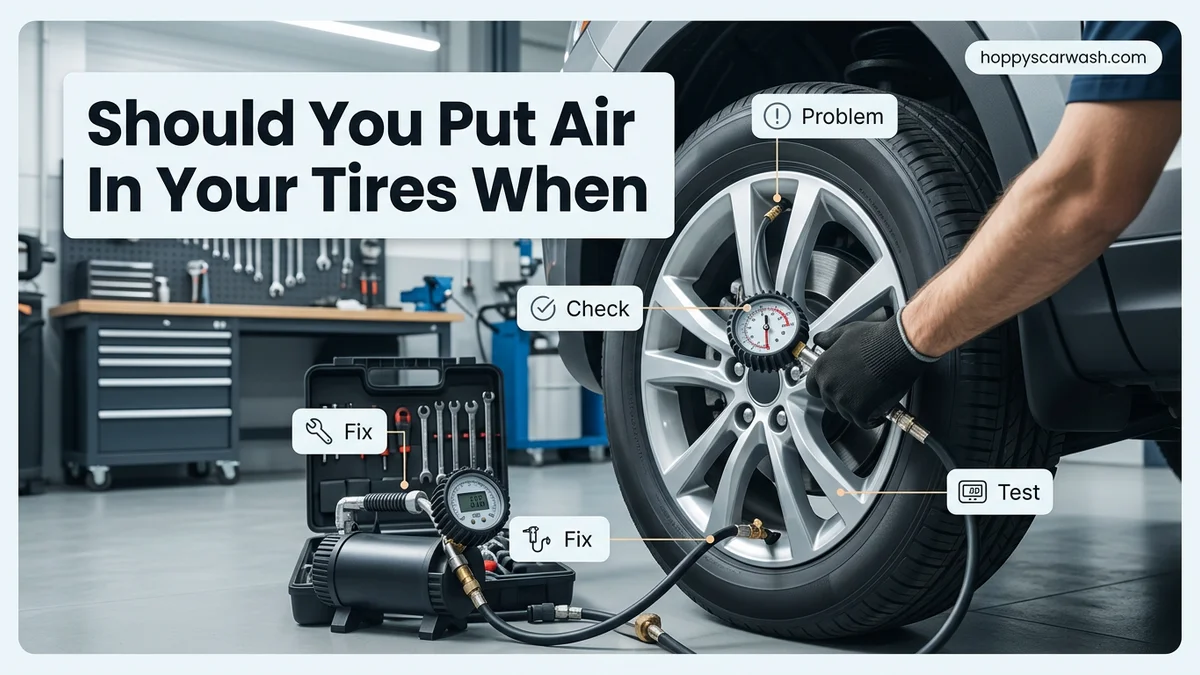
Digital gauges or standard pencil gauges work best when dealing with frosty valve stems. Screw the cap off, press the gauge firmly onto the valve until the hissing stops, and read the number. If your pressure is below the placard recommendation, attach the air compressor hose in short bursts. Check the pressure frequently between bursts to avoid overshooting your target PSI, and securely screw your valve caps back on to keep moisture out.
What to Do If Your TPMS Light Stays On After Adding Air
Sometimes the low-pressure warning light refuses to turn off even after you have successfully inflated all four tires to the manufacturer-specified PSI. According to the National Highway Traffic Safety Administration (NHTSA), tire pressure monitoring systems require a specific driving cycle to reset and register the new internal pressures accurately.
Driving to Reset the Sensor
Modern sensors in 2026 vehicles often need motion to wake up and transmit fresh telemetry data to the dashboard computer. Follow these steps to clear the warning light through normal driving:
- Verify that all tire pressures match the placard on the driver-side door jamb using a reliable digital gauge.
- Start the vehicle and ensure the parking brake is fully released.
- Drive continuously at speeds above 25 mph for at least 10 to 15 minutes without stopping.
- Allow the vehicle to sit turned off for one full hour if the light persists, then repeat the driving cycle.
Safety Risks and Fuel Efficiency Impacts of Driving Underinflated Tires
Ignoring cold-weather pressure drops creates severe safety hazards and measurable financial penalties at the fuel pump. The U.S. Department of Energy reports that for every 1-PSI drop in pressure across all four tires, vehicle fuel economy decreases by roughly 0.2 percent. While this seems minor, a standard winter pressure drop of 5 PSI results in a noticeable one percent loss in overall fuel mileage over the course of a 2026 winter season.
Structural and Braking Hazards
Underinflated tires flex excessively against the asphalt, generating dangerous internal heat that accelerates tread wear and increases blowout risks. According to safety tests conducted by the Tire Industry Association, running tires significantly below recommended levels extends braking distances by up to 15 percent on wet or icy winter roads. Maintaining proper inflation preserves the critical contact patch needed for secure handling and reliable stopping power.
What If It Still Doesn’t Work?
If you have added the correct amount of air and driven the vehicle for several miles, but the warning light remains illuminated, a mechanical or electronic fault is likely present. Try these diagnostic fallback steps:
- Check the spare tire pressure, as many trucks and SUVs integrate a TPMS sensor into the under-mounted or trunk-stored spare tire.
- Inspect the valve stems and sensor housing for physical damage, corrosion, or slow leaks caused by road salt and freezing moisture.
- Disconnect the vehicle’s 12-volt battery for 15 minutes to perform a hard computer system reset, keeping in mind this may also reset radio presets and clock settings.
- Visit a local certified tire service center or dealership if the sensor battery has failed; replacement TPMS sensors typically cost between $50 and $150 per wheel including labor.
Conclusion
Cold weather reliably reduces tire pressure, making seasonal inflation adjustments a mandatory maintenance task for winter driving safety. According to verified research and expert sources from the National Highway Traffic Safety Administration, restoring your tires to the correct PSI prevents premature tread wear, lowers fuel consumption, and ensures optimal braking performance. Your next actionable step is to check your tire pressures this week using a calibrated gauge before temperatures drop further.
❓ Frequently Asked Questions
Why does my TPMS light turn on every time the weather gets cold?
The Tire Pressure Monitoring System triggers a warning light when your tire pressure drops 25% below the manufacturer’s recommended level. Sudden cold snaps frequently cause this pressure drop, activating the dashboard alert.
Should I inflate my tires to the max PSI listed on the sidewall during winter?
No, never inflate your tires to the maximum PSI printed on the tire sidewall. That number represents the absolute maximum limit the tire can hold, whereas the correct pressure is found on your vehicle’s door placard.
Is it dangerous to drive on underinflated tires in the winter?
Yes, underinflated tires generate excess heat, wear out faster on the edges, reduce braking efficiency, and provide poor traction on slippery winter roads. Maintaining proper inflation is critical for safe winter driving.
Do I need more air in my tires if snow is on the ground?
You do not need extra air beyond the manufacturer’s recommended PSI. However, you must restore the tires to their standard recommended pressure to compensate for the cold-weather drop.
Why does my tire pressure look low in the morning but normal in the afternoon?
Air expands when heated and contracts when cooled. The afternoon sun warms the air inside the tire and raises the PSI, while overnight freezing temperatures cause the pressure to plummet again.
Can I use a standard portable inflator at home to fix cold tires?
Yes, a portable 12V air compressor or a bicycle pump with a pressure gauge works well for topping off tires at home, provided you measure the PSI accurately while the tires are cold.