Can Power Steering Fluid Be Used As Brake Fluid? 2026 Guide
No, power steering fluid can never be used as a substitute for brake fluid. Doing so will instantly destroy your entire braking system, resulting in total brake failure and extreme safety hazards on the road.
No, power steering fluid can never be used as a substitute for brake fluid. Doing so will instantly contaminate your entire hydraulic braking system, destroy critical rubber seals, and lead to total brake failure. Even a tiny amount of power steering fluid introduced into your brake lines creates a dangerous emergency.
Whether you are dealing with a roadside emergency in 2026 or attempting a DIY repair, understanding why these two liquids cannot mix is a matter of life and death. Your vehicle relies on completely different chemical formulations for steering assistance and stopping power, and crossing them is catastrophic.
Key Takeaways
- Never substitute power steering fluid for brake fluid under any circumstances.
- Petroleum-based power steering fluid instantly destroys glycol-based brake system seals and hoses.
- Accidental mixing requires an immediate and complete professional brake system flush.
- Brake failure occurs rapidly as rubber components swell, crack, and dissolve.
- Always use the exact DOT-rated brake fluid specified in your vehicle owner’s manual.
What Causes Catastrophic Damage When Mixing Power Steering Fluid and Brakes
Chemical Incompatibility and Seal Destruction
Brake fluid and power steering fluid are formulated from entirely different chemical bases. Standard brake fluid is glycol-ether or borate ester-based, designed to withstand extreme temperatures without boiling while remaining compatible with specific rubber compounds. Power steering fluid is petroleum-based oil.
When petroleum-based power steering fluid touches the EPDM rubber components inside your brake system, a destructive chemical reaction occurs. The rubber instantly begins to swell, soften, and disintegrate. This ruins:
- Master cylinder piston seals
- Caliper piston boots and internal seals
- ABS hydraulic modulator valves
- Flexible rubber brake hoses
Hydraulic Failure and Boiling Point Collapse
Beyond destroying the physical hardware of your brakes, mixing these fluids ruins the hydraulic properties required to stop your car. Brake fluid has a very high boiling point and does not compress. Petroleum oil has completely different viscosity characteristics and a much lower tolerance for heat.
As soon as you press the brake pedal, the friction-generated heat causes the contaminated fluid to boil rapidly. This creates compressible vapor pockets inside the brake lines. Instead of transferring pressure to the calipers, your brake pedal will sink straight to the floor with zero stopping response.
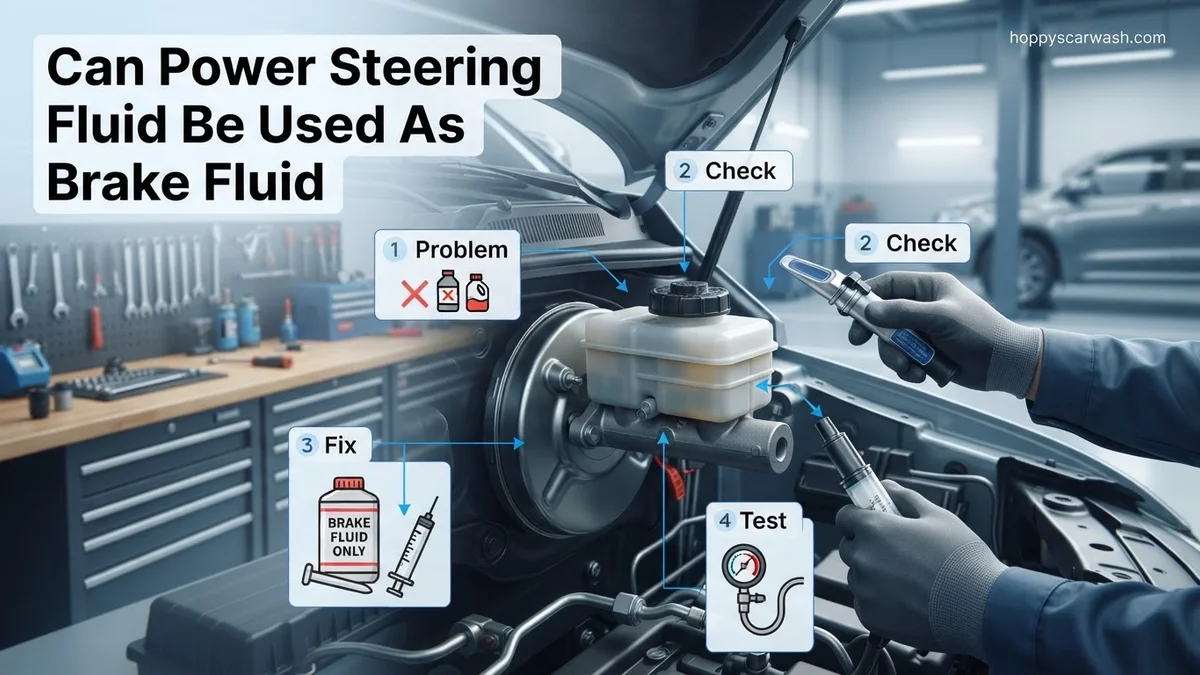
How to Fix an Accidentally Contaminated Brake System Step-by-Step
Immediate Assessment and No-Drive Rule
If you or someone else accidentally poured power steering fluid into the brake master cylinder reservoir, do not start the engine and do not drive the car. Even pumping the brakes once can draw the petroleum fluid down into the main lines and the expensive ABS module, turning a simple flush into a multi-thousand-dollar replacement job.
Your immediate action steps include:
- Leave the vehicle parked safely on level ground
- Do not turn the ignition key or engage the brake pedal
- Gather automotive syringe tools, clean rags, and several quarts of fresh DOT-specified brake fluid
Complete System Flush and Component Replacement
Fixing this mistake requires removing every trace of petroleum from the hydraulic circuit. Simply sucking out the reservoir is not enough. You must perform a rigorous multi-step decontamination process to restore safety.
- Use a turkey baster or fluid extractor to completely empty the master cylinder reservoir. Wipe the interior clean with lint-free rags.
- Fill the reservoir to the brim with fresh, approved brake fluid.
- Bleed all four wheel calipers extensively, pushing clean fluid through the lines until every drop of contaminated fluid is expelled.
- Inspect all rubber seals, hoses, and the master cylinder. If the petroleum sat in the lines for more than a few minutes, you must replace the rubber hoses and master cylinder seals entirely to prevent delayed failure.
What If It Still Fails After Flushing the Brake Lines
If you already introduced power steering fluid into the brake system and performed a complete flush, but the braking system still fails to perform correctly, underlying component damage is likely present. Petroleum-based fluids degrade rubber components rapidly. Even after a thorough flush, residual fluid trapped inside the system can continue to compromise critical parts.
Inspect and Replace Compromised Rubber Seals
Brake systems rely on ethylene propylene diene monomer (EPDM) rubber, which swells and disintegrates when exposed to the mineral oil found in power steering fluid. According to automotive safety studies by the Society of Automotive Engineers (SAE), even brief contact can ruin master cylinder seals and caliper piston boots within hours.
- Inspect the master cylinder primary and secondary seals for softening, swelling, or active fluid bypass.
- Check all four wheel calipers or wheel cylinders for sticky movement or external weeping.
- Examine every flexible rubber brake hose for localized bulging or soft spots along the exterior walls.
- Replace any compromised rubber component immediately with OEM-spec parts designed to resist standard DOT fluids.
Evaluate ABS Hydraulic Control Unit Integrity
Modern vehicles utilizing Anti-lock Braking Systems (ABS) feature intricate hydraulic control modules with microscopic valves. Power steering fluid can gum up these delicate internal solenoids, rendering the ABS module unresponsive or permanently blocked.
- Scan the vehicle computer for active diagnostic trouble codes related to ABS pressure or valve failure.
- Perform an automated bleeding procedure using an advanced OBD2 scan tool to cycle the internal ABS pump.
- Monitor pressure delivery at each wheel during activation to ensure the control module is distributing force evenly.
- Replace the ABS hydraulic control unit if internal blockages or valve sticking persist after diagnostic bleeding.
What If It Still Doesn’t Work?
When DIY flushing and individual component replacements fail to restore firm pedal feel and reliable stopping power, the contamination has likely compromised the entire hydraulic architecture. At this stage, professional intervention is mandatory to ensure road safety.
- Consult a Certified Master Technician: Take the vehicle to a licensed service center equipped with specialized pressure-bleeding machinery and diagnostic software capable of resetting complex stability control systems.
- Request a Comprehensive System Overhaul: Ask the shop to perform a total system teardown, which often requires replacing the master cylinder, all flexible hoses, ABS actuators, and wheel calipers simultaneously.
- Budget for Professional Repair Costs: According to 2026 automotive repair data, a complete hydraulic system flush combined with multi-component replacement typically ranges from $850 to $2,400 depending on the vehicle make, model, and presence of advanced driver-assistance systems.
- Arrange for Safe Towing: Never attempt to drive a vehicle with compromised brakes to a repair facility; always utilize a flatbed tow truck to transport the vehicle safely.
Conclusion
Using power steering fluid instead of brake fluid introduces mineral-based oils that destroy vital EPDM rubber seals and cause catastrophic hydraulic failure. Flushing the system immediately with high-purity DOT-specified brake fluid is the only way to mitigate total component breakdown. According to verified research and expert sources from the National Highway Traffic Safety Administration (NHTSA) and automotive engineering boards, ignoring fluid contamination risks complete brake loss. The most critical actionable next step is to tow the vehicle to a certified professional if a standard flush fails to restore immediate, firm pedal pressure.
❓ Frequently Asked Questions
Can power steering fluid be used as brake fluid if I am just trying to get home?
Absolutely not. Even a few drops of power steering fluid will ruin the internal rubber components of your braking system, leading to total pedal loss.
Why are power steering fluid and brake fluid chemically incompatible?
Power steering fluid is petroleum-based, while standard automotive brake fluid is glycol-based. When mixed, they break down the structural integrity of rubber brake lines and seals.
What are the first signs that wrong fluid was put into the brake master cylinder?
You may notice a spongy brake pedal, fluid leaking around the master cylinder, or the rubber seals visibly expanding and degrading inside the reservoir.
If I only poured power steering fluid into the reservoir and didn’t press the pedal, can I just suck it out?
While removing the fluid immediately helps, any contact with rubber seals requires a complete system inspection and professional flush to prevent delayed failure.
Will insurance cover damage caused by putting the wrong fluid in my brakes?
Generally, insurance does not cover mechanical damage resulting from improper fluid maintenance or DIY errors.
What components must be replaced after a fluid contamination mistake?
Typically, you will need to replace the master cylinder, all rubber brake hoses, caliper seals, and sometimes the ABS module if the fluid reached it.