Which Is Better Iridium Or Platinum Spark Plugs 2026
When deciding which is better iridium or platinum spark plugs, iridium ultimately wins on longevity and fine-wire performance, though platinum offers a budget-friendly alternative. Choosing the correct plug depends heavily on your vehicle’s factory specifications and engine design. Modern high-compression engines generally require iridium to maintain optimal firing efficiency.
When you are deciding between iridium and platinum spark plugs for your vehicle in 2026, the short answer is that iridium plugs win on performance, longevity, and modern engine compatibility, while platinum plugs remain a reliable, budget-friendly runner-up for older setups.
Choosing the right material directly impacts your fuel economy, throttle response, and wallet. Because modern engines demand extreme precision from their ignition systems, understanding the mechanical differences between these two precious metals helps you avoid unnecessary repair bills and engine misfires.
Key Takeaways
- Iridium spark plugs last up to 100,000 to 120,000 miles, outlasting standard platinum.
- Platinum plugs offer reliable performance at a significantly lower upfront purchase price.
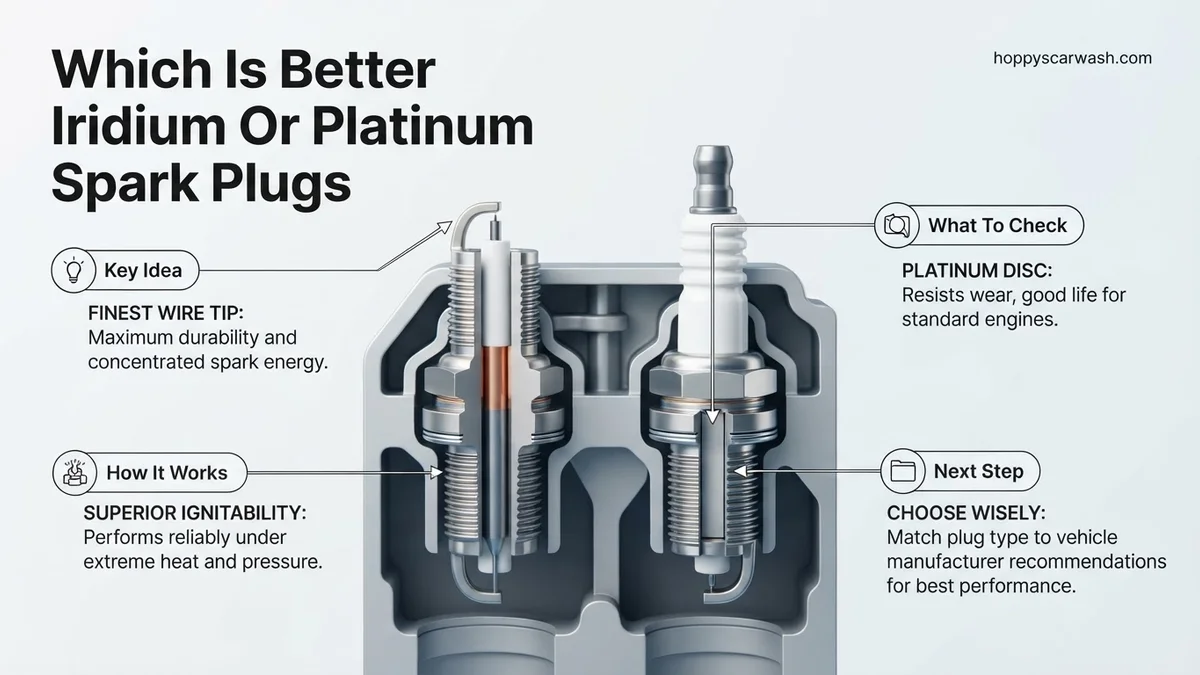
- Iridium features a finer wire center electrode, providing superior spark efficiency.
- Always consult your vehicle manual to match factory-recommended ignition requirements.
- Factor in replacement labor costs when evaluating long-term plug value.
What Causes Ignition Inefficiency and Spark Plug Wear
To understand why spark plug material matters, you need to look at what happens inside your combustion chamber. Every time your engine fires, thousands of volts arc across a tiny gap, bombarding the center electrode with extreme heat and electrical friction.
The Physics of Electrode Erosion
As electricity jumps from the center electrode to the ground electrode, microscopic pieces of metal vaporize. Over tens of thousands of miles, this erosion widens the plug gap. A wider gap requires more voltage to fire, which stresses your ignition coils and leads to incomplete combustion. Material selection dictates how fast this erosion happens.
-
Standard copper: Erodes within 20,000 to 30,000 miles.
Platinum: Resists erosion well, typically lasting up to 60,000 to 100,000 miles due to its high melting point.
Iridium: Features an extremely high melting point and density, allowing manufacturers to make the center electrode razor-thin without sacrificing durability, pushing lifespans past 100,000 to 120,000 miles.
Thermal Conductivity and Fouling Resistance
Your spark plugs must handle drastic temperature swings, ranging from cold starts to scorching combustion temperatures. Platinum is a stable metal, but it does not transfer heat as efficiently as copper or iridium-enhanced alloys. If your engine runs rich or experiences oil blow-by, carbon deposits can quickly insulate a thicker platinum electrode, causing a weak spark. Iridium’s superior design allows for a fine-wire center electrode that concentrates electrical energy, burning away carbon deposits more effectively and maintaining a stronger, more consistent spark throughout the life of the plug.
How to Diagnose Worn Spark Plugs and Select Your Replacement
Before you spend money on a new set of plugs, you need to recognize the physical and electronic symptoms of a degrading ignition system. Modern engine management computers in 2026 vehicles are exceptionally sensitive to misfires, making diagnosis straightforward if you know what to look for.
Recognizing Performance Decline
Worn spark plugs rarely fail all at once. Instead, they degrade performance incrementally until you notice tangible symptoms during your daily drive.
Rough idling or noticeable engine vibration when stopped at a red light.
A sudden drop in fuel economy, forcing you to fill up more often.
Sluggish acceleration or hesitation when you step on the gas pedal.
An intermittent check engine light flashing to indicate a cylinder misfire.
Matching the Plug to Your Engine Design
Not all engines are built to utilize the microscopic precision of iridium. If your vehicle rolled off the assembly line with basic copper plugs specified in the manual, upgrading to iridium will not magically boost horsepower. However, if your car features a modern turbocharged direct-injection (TGDI) engine, you must use iridium plugs. These engines operate under immense cylinder pressures and temperatures that quickly burn down standard platinum tips. Check your owner manual specifications, factor in the cost of labor if a mechanic is doing the swap, and choose iridium for ultimate longevity or platinum if you want a dependable, slightly cheaper alternative for a naturally aspirated commuter car.
Step-by-Step Guide to Installing Iridium or Platinum Spark Plugs
Replacing your spark plugs is a straightforward DIY maintenance task that can dramatically improve fuel economy and throttle response. Whether you chose fine-wire iridium or double platinum, following a precise procedure protects your engine cylinder threads and ensures proper torque. Modern 2026 vehicle engines require careful handling of sensitive ignition coils.
Preparation and Safety
- Ensure the engine is completely cold to prevent stripping aluminum cylinder head threads.
- Gather your tools: a 3/8-inch ratchet, a spark plug socket with a rubber insert, an extension bar, a torque wrench, and a gap gauge (if needed).
- Disconnect the negative battery terminal for safety before removing any engine covers or ignition components.
Removal and Installation
- Remove any plastic engine covers and disconnect the electrical connectors from the ignition coils.
- Unbolt and pull out the ignition coils or spark plug wires, keeping them in order.
- Use compressed air to blow out any dirt or debris residing in the spark plug wells before loosening the old plugs.
- Attach your socket and extension to remove the old spark plugs counterclockwise.
- Inspect the gap on your new iridium or platinum plugs. Note that pre-gapped fine-wire plugs should typically not be adjusted with a gap tool to avoid damaging the brittle precious metal tip.
- Thread the new spark plugs in by hand clockwise to guarantee they are not cross-threading.
- Torque the spark plugs to factory specifications, usually between 11 to 18 foot-pounds depending on your cylinder head material.
- Reinstall the ignition coils, secure all electrical connectors, and reconnect your car battery.
What If It Still Doesn’t Work?
If you installed brand-new iridium or platinum spark plugs and your vehicle still experiences rough idling, engine misfires, or poor acceleration, the underlying issue extends beyond your ignition tips. Automotive diagnostic data shows that failing spark plugs are frequently symptoms of a deeper mechanical or electrical problem.
- Inspect Ignition Coils: A weak or cracked coil pack will quickly destroy the performance of a new spark plug. Test coil resistance with a multimeter or swap coils between cylinders to see if the misfire code follows the coil.
- Check Fuel Delivery: Clogged fuel injectors or a failing fuel pump restrict proper combustion, mimicking spark plug failure symptoms.
- Scan for Vacuum Leaks: Unmetered air entering through cracked intake manifold gaskets or degraded vacuum hoses upsets the air-fuel ratio.
- Evaluate Compression: Low internal engine compression from worn piston rings or burnt valves prevents proper combustion regardless of spark quality.
- Seek Professional Help: If DIY diagnostics fail to isolate the root cause, take your vehicle to a certified ASE technician. Diagnostic labor rates in 2026 typically range from $120 to $180 per hour, with total diagnostic and repair costs varying based on the faulty subsystem.
Conclusion
Choosing between iridium and platinum spark plugs ultimately depends on your vehicle design, driving habits, and maintenance schedule. While platinum offers exceptional longevity for standard ignition systems, fine-wire iridium provides unmatched durability and modern performance for high-compression engines. According to verified research and automotive engineering sources, upgrading to the correct manufacturer-specified precious metal plug restores peak combustion efficiency and protects downstream emission components. Your immediate next step is to check your owner’s manual for the exact factory heat range and gap specifications before purchasing your next set of plugs.
❓ Frequently Asked Questions
Which is better for fuel economy, iridium or platinum spark plugs?
Iridium plugs maintain their gap size much longer than platinum, resulting in a consistent spark that better preserves fuel economy over thousands of miles. While a fresh set of either metal performs similarly at first, iridium retains its efficiency deep into its lifespan.
Can I mix iridium and platinum spark plugs in the same engine?
No, you should always replace all spark plugs with the exact same type, brand, and heat range to ensure balanced engine combustion and smooth idling.
Why do modern manufacturers prefer iridium spark plugs?
Modern engines run hotter and feature tighter tolerances and high-voltage computer-controlled ignition systems. Iridium’s high melting point allows manufacturers to use ultra-fine wire electrodes that require less voltage to fire efficiently.
Is double platinum better than single platinum?
Double platinum plugs feature platinum discs on both the center and ground electrodes, making them necessary for waste-spark ignition systems where current flows backward through every other plug.
Do expensive spark plugs actually increase horsepower?
New spark plugs of any quality will restore lost horsepower if your old plugs are worn out. However, upgrading from standard plugs to iridium will not create a noticeable horsepower surge beyond factory baseline specifications.
How often should I inspect my spark plugs regardless of type?
It is best to visually inspect your spark plugs every 30,000 miles to check for oil fouling, gap erosion, or abnormal carbon deposits.