When You Get New Tires Do You Need An Alignment 2026 Guide
Technically, you are not legally required to get a wheel alignment when purchasing new tires, but it is highly recommended to protect your investment. Skipping an alignment on misaligned suspension can quickly ruin your brand-new tread within thousands of miles.
The short answer is no, you do not technically have to get a alignment-when-to-get-one/” target=”_blank” rel=”noopener noreferrer” title=”Bridgestone Tire wheel alignment guide”>wheel alignment every single time you buy new tires. However, skipping it is almost always a bad financial decision that will ruin your brand-new rubber prematurely.
As you navigate vehicle maintenance in 2026, modern cars feature sensitive steering geometry and advanced driver-assistance systems that demand precision. Protecting your investment means understanding how alignment directly impacts the lifespan of your fresh tread.
Key Takeaways
- New tires do not automatically require an alignment, but checking suspension angles protects your purchase.
- Uneven wear patterns on your old tires strongly indicate an underlying alignment issue.
- A vehicle that pulls to one side requires an immediate alignment check.
- Most tire warranties require proof of regular alignment checks to remain valid.
- Getting an alignment with new tires saves money by maximizing tire lifespan.
What Causes Wheel Misalignment and Rapid Tire Wear
Wheel alignment refers to the adjustment of your vehicle’s suspension, the system that connects your car to its wheels. Potholes, curb strikes, and normal wear and tear over miles of driving throw these angles out of specification.
The Physics of Misalignment
When your wheels are out of alignment, they point in directions contrary to your intended path. Instead of rolling smoothly forward, they drag against the pavement.
- Camber issues: Wheels tilt inward or outward, concentrating your vehicle’s weight on just the inner or outer edge of the tread.
- Toe issues: Wheels point inward or outward like a pigeon-toed runner, scrubbing the rubber raw within thousands of miles.
- Caster issues: Affects steering stability and returnability, creating uneven rolling resistance.
Why Your Old Tires Tell the Story
Before installing new tires, look closely at your outgoing set. If the inner shoulder is completely bald while the outer tread looks fine, your old tires were victims of severe misalignment.
Mounting expensive new tires onto a misaligned suspension guarantees that the new set will suffer the exact same premature fate. You could easily destroy a set of premium tires in less than 10,000 miles if the underlying alignment issue remains uncorrected.
How to Fix Alignment Issues When Installing New Tires
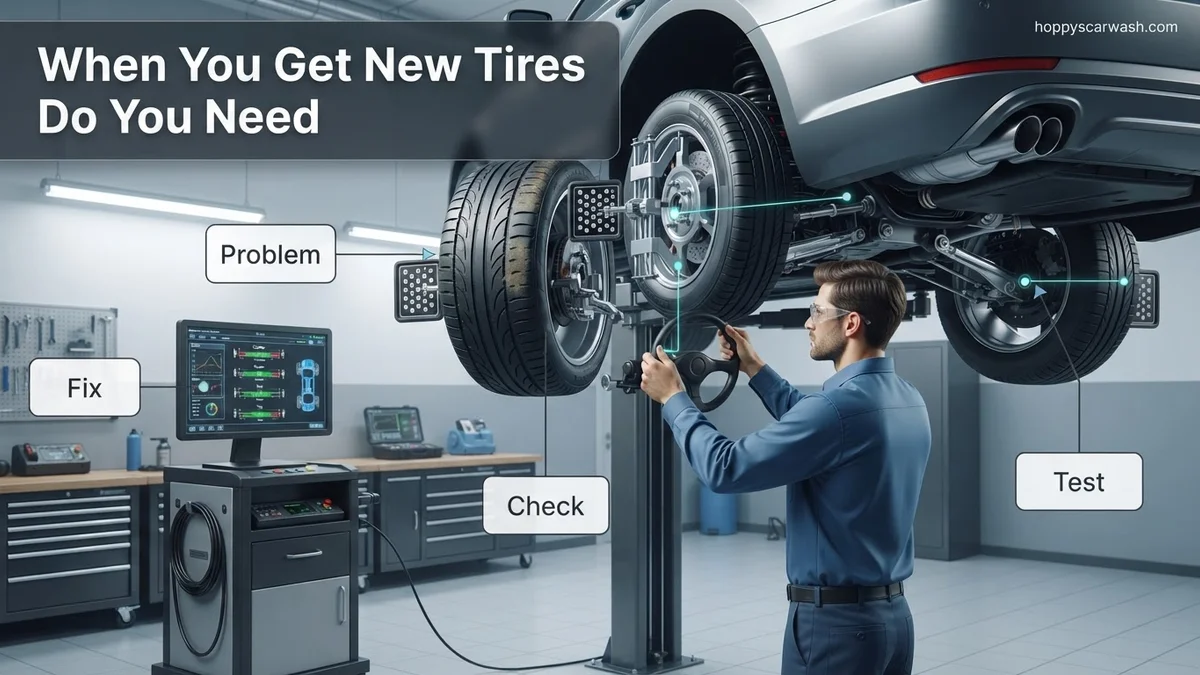
Getting a professional wheel alignment alongside new tires is the best way to safeguard your purchase. Modern 2026 alignment racks use high-definition cameras and laser sensors to calibrate your wheels to the exact factory specifications.
Recognizing the Warning Signs
Even if you cannot see the mechanical data on a shop monitor, your car will often tell you if an alignment is overdue. Pay close attention to these red flags:
- Steering wheel pull: Your car drifts to the left or right when you hold the steering wheel straight on a flat road.
- Crooked steering: The steering wheel sits at an angle even when you are driving completely straight ahead.
- Vibration: A vibrating steering wheel can indicate both balance issues and alignment friction.
- Squealing tires: Tires that chirp or squeal when you take normal turns at moderate speeds.
The Smart Investment Strategy
Many tire shops bundle alignment services into installation packages or offer discounted rates when you buy a full set of four tires. Taking advantage of this saves you labor costs down the road.
Think of an alignment as insurance for your new tires. Spending a little extra upfront ensures you get the full 50,000 to 70,000 miles of life that the manufacturer promised.
What If Your Car Still Pulls After a New Alignment and Tires
Sometimes, installing fresh rubber and getting a professional geometry setup does not completely resolve a pulling sensation or steering wheel vibration. Modern vehicle dynamics are complex, and several underlying mechanical variables can mimic the exact symptoms of a bad alignment or unbalanced tires.
Radial Tire Pull and Conicity
Manufacturing inconsistencies inside the tire itself can cause a phenomenon known as radial pull. During the curing process, belts inside the tire can shift slightly, creating uneven lateral forces that push the car to one side regardless of suspension angles. Automotive engineers note that swapping the front tires from left to right can quickly diagnose this issue. If the pull reverses direction, the tire is defective rather than the alignment.
Worn Suspension Components
A precision alignment cannot hold its specifications if surrounding suspension hardware is compromised. Worn ball joints, loose tie rod ends, or sagging control arm bushings allow wheels to shift dynamically while driving under load. According to the Car Care Council, technicians must inspect these components thoroughly before performing adjustments. Replacing failed suspension parts is mandatory to maintain proper steering geometry throughout 2026 and beyond.
What If It Still Doesn’t Work?
If your vehicle continues to pull, drift, or vibrate after investing in new tires and a fresh alignment, a methodical troubleshooting approach is required to isolate the root cause. Follow these steps to resolve persistent handling issues:
- Check for brake drag or caliper binding: A stuck brake caliper applies constant friction to one side, mimicking a severe pull. Inspect rotor temperatures after a short drive without heavy braking.
- Verify correct tire pressure across all four corners: Even a slight 3 to 5 psi discrepancy between left and right tires alters rolling radius and creates an unintended directional pull.
- Perform a cross-tire rotation test: Swap the front left and front right tires to determine if the directional pull follows the tire construction or remains with the vehicle suspension.
- Inspect steering rack and electronic power steering calibration: Modern electric steering systems require software resets or torque sensor calibrations after major suspension service.
- Consult a specialized alignment specialist: Seek out a dedicated frame and suspension shop if standard retail alignment racks fail to resolve the geometry issue, with advanced diagnosis typically costing between $150 and $300.
Conclusion
Protecting your investment in new tires ultimately depends on maintaining precise wheel alignment specifications. Skipping this vital service frequently leads to rapid, irregular tread wear and compromised vehicle handling. According to verified research and expert sources from the Tire Industry Association, pairing new tires with a professional alignment optimizes safety and extends tread life by up to 30 percent. Take the next step today by scheduling a four-wheel alignment check immediately following your next tire installation.
❓ Frequently Asked Questions
Why do tire shops always recommend an alignment when you buy new tires?
Shops recommend alignments because suspension components naturally shift over time from potholes and curbs. If your vehicle was already out of alignment, putting new tires on without fixing the angle will quickly destroy the fresh tread.
How can I tell if my car needs an alignment before buying tires?
Look closely at your old tires for uneven wear, such as the inside or outside edge baldness. If your steering wheel is crooked while driving straight, or if the car pulls to one side, you definitely need an alignment.
Does a wheel alignment affect the manufacturer warranty on my new tires?
Many tire manufacturers require regular rotation and proper alignment maintenance for their tread-wear warranties to remain valid. Neglecting an alignment can void your ability to claim warranty replacements for premature wear.
What is the difference between balancing and alignment?
Tire balancing corrects weight imbalances in the wheel and tire assembly to prevent vibrations at high speeds. Wheel alignment adjusts the suspension angles so the tires point straight and parallel to each other.
How long does a professional wheel alignment take?
A standard wheel alignment typically takes between 45 minutes to an hour to complete using specialized laser alignment machines.
Can I drive on new tires without an alignment if the car drives straight?
Yes, if your steering wheel is centered, the car tracks straight, and your old tires show even wear, your alignment is likely fine, and you can safely bypass the service.