Should I Start My Car Every Day in Cold Weather 2026 Guide
No, you should not start your car every day just to let it idle in cold weather. Idling does not effectively recharge the battery and can actually cause excessive engine wear and fuel waste.
You do not need to start your car every day in freezing weather just to keep it healthy. In fact, firing up your engine daily and letting it idle in the driveway for ten minutes does more harm than good to your mechanical components and wastes fuel.
Many drivers in 2026 still cling to outdated winter myths passed down from the era of carburetors. Modern fuel-injected engines manage air-fuel mixtures automatically and reach operating temperatures much faster when actually driven. If your car sits unridden for days or weeks at a time, running it briefly without driving it will drain your battery further rather than saving it.
Key Takeaways
- Daily idling drains more battery power than the alternator replaces during short run times.
- Modern fuel-injected engines only need 30 seconds of idle time before driving gently.
- Leaving a car parked and idling creates damaging moisture condensation inside the exhaust.
- Use a battery maintainer or tender instead of daily engine starts for parked vehicles.
- Driving the car for 20 minutes is required to actually recharge a depleted battery.
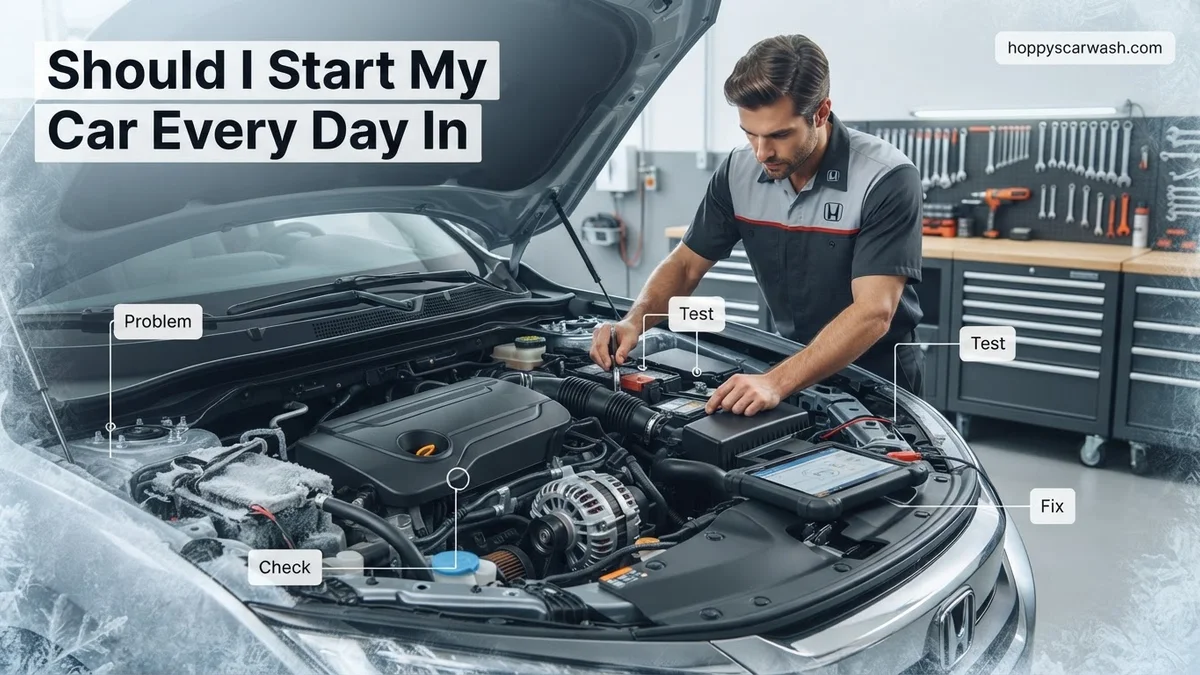
What Causes Cold Weather Battery Drain and Engine Wear
Cold temperatures chemically slow down the reactions inside your car battery. When winter temperatures drop below freezing, your battery loses a significant portion of its cranking power while your engine oil thickens into a syrup-like consistency. This creates a severe double-whammy for starting the vehicle.
The Myth of the Daily Idle
Starting your car requires a massive surge of electrical energy from the battery. Your alternator then needs to work overtime to replenish that lost power. If you only let the car idle for five or ten minutes, the alternator does not spin fast enough to fully replace the energy used during startup.
- Idling actually drains more battery life than it restores during short runs.
- Extended idling washes oil off cylinder walls, leading to premature metal-on-metal wear.
- Moisture accumulates in your exhaust system because the engine never reaches high enough temperatures to evaporate condensation.
How Alternator Recharge Rates Actually Work
Your alternator is designed to charge the battery efficiently when the engine runs at normal driving speeds, typically between 2,000 and 3,000 RPM. Idling barely registers enough RPM to offset the electrical load of your heater blower, rear defroster, and seat warmers. To actually put a net positive charge back into a cold battery, you need to drive the vehicle at highway speeds for at least 20 to 30 minutes. Starting the car just to let it sit in the driveway accomplishes nothing beneficial.
How to Fix Cold Weather Vehicle Storage Step-by-Step
If you have a secondary vehicle or work from home and your car sits parked for days at a time during the winter, you need a proactive strategy. Abandon the daily start-up routine and protect your car’s electrical and mechanical systems using proper preservation steps.
Using a Smart Battery Maintainer
The single best investment you can make for a rarely driven car in 2026 is an automatic smart trickle charger or maintainer. Unlike old-school chargers that could overcook a battery, modern smart maintainers monitor voltage levels and deliver a safe, low-amp current indefinitely.
- Park your vehicle in its normal winter spot near an electrical outlet.
- Plug the smart maintainer into a grounded wall outlet first.
- Attach the positive (red) and negative (black) clamps to your battery terminals.
- Leave the unit connected whenever the car will sit unused for more than three or four days.
Establishing a Proper Driving Schedule
If you cannot use a plug-in battery maintainer, you must change how often you drive rather than how often you idle. Instead of starting the engine for ten minutes every day, plan one solid trip every week. Drive the car for 25 to 30 minutes on major roads or the highway. This guarantees the alternator thoroughly recharges the battery, the engine oil reaches peak operating temperature to burn off moisture, and your braking components stay free of surface rust.
What If It Still Doesn’t Work and Your Battery Dies
Despite your best preparations, sub-zero temperatures in 2026 can still outsmart an aging battery or a stubborn alternator. If you turn the key or push the start button and encounter only rapid clicking or complete silence, your charging system requires immediate intervention. Modern vehicles feature sensitive electronics that demand specific recovery procedures to avoid permanent damage.
Safe Jump-Starting Procedures
When your battery gives out entirely, knowing how to respond safely prevents electrical surges and personal injury. Follow these verified steps to revive your vehicle:
- Position the working vehicle so the jumper cables reach both batteries, ensuring the metal bumpers do not touch.
- Turn off the ignition on both vehicles and engage the parking brakes firmly.
- Connect the first red positive clamp to the dead battery’s positive terminal, then attach the second red clamp to the live battery’s positive terminal.
- Connect the first black negative clamp to the live battery’s negative terminal, and attach the final black clamp to an unpainted metal surface on the dead car’s engine block.
- Start the working vehicle, wait three to five minutes, and then attempt to start the disabled car.
Professional Intervention and Repair Costs
If a standard jump-start fails to revive the engine, the issue likely extends beyond a simple surface discharge. According to automotive service data from AAA, mobile diagnostic services and towing become necessary when internal battery plates warp or starter motors freeze solid.
- Call a certified roadside assistance provider if the engine cranks sluggishly but refuses to catch, indicating a fuel delivery or ignition failure.
- Expect professional battery testing and replacement services to range between $150 and $250, depending on your vehicle’s specific group size and start-stop technology requirements.
- Budget an estimated $350 to $600 if the alternator or starter motor requires replacement due to cold-weather stress.
Conclusion
Starting your car every day just to let it idle in freezing weather is an outdated habit that wastes fuel, degrades engine oil, and rarely saves a dying battery. Instead, preserve your vehicle’s health by driving it regularly for 20 minutes, using a smart battery tender, and relying on a block heater during extreme cold snaps. According to verified research and expert sources from leading automotive organizations, proper maintenance rather than idle idling is the definitive key to winter reliability. Your actionable next step for this 2026 winter season is to test your battery’s reserve capacity at a local auto parts store before the next deep freeze hits your region.
❓ Frequently Asked Questions
Why do people think they need to start their car every day in winter?
This habit is a carryover from older carbureted vehicles of the past that needed help getting fuel flowing in freezing temperatures. Modern fuel-injected cars do not operate this way, making daily starting unnecessary and harmful.
How often should I actually drive my parked car during winter?
If you must keep a vehicle stored outside during winter, driving it once a week for at least 20 to 30 minutes at highway speeds is ideal to fully warm up the engine and recharge the battery.
Does idling a cold engine cause damage?
Yes, running an engine at low idle speeds in freezing weather delays warm-up times, which prolongs the period where acidic combustion byproducts cause accelerated wear on internal components.
Will a battery tender damage my car if left plugged in all winter?
No, modern smart battery maintainers monitor voltage levels and automatically switch to a float mode once the battery is fully charged, preventing overcharging.
Can I jump-start my car myself if the battery dies from cold weather?
Yes, you can use a portable lithium-ion jump starter or jumper cables connected to another running vehicle, provided you follow proper safety procedures.
Do synthetic oils help cars start better in cold weather?
Yes, synthetic oils flow much more easily at extremely low temperatures compared to conventional oils, reducing strain on the starter motor and battery during cold cranks.