How to Remove Smell of Cigarette Smoke from Car 2026 Guide
Getting rid of stale tobacco odors requires a systematic approach to eliminate tar and nicotine residue trapped in fabric and vents. Deep cleaning the upholstery, headliner, and replacing the cabin air filter are essential steps to permanently restore a fresh interior scent.
Removing the smell of cigarette smoke from your car requires treating porous surfaces where tar and nicotine settle, rather than just masking the odor with air fresheners. By 2026, modern car detailing standards emphasize deep surface extraction and enzymatic breakdown to completely eliminate trapped smoke particles.
Cigarette smoke odor lingers because microscopic tar and chemical residue coat every square inch of your interior. If you recently bought a used car or need to prep a vehicle for resale, tackling this persistent smell immediately restores comfort and protects your vehicle’s residual value.
Key Takeaways
- Vacuum all carpets, seats, and floor mats thoroughly before applying any chemical or natural deodorizers.
- Sprinkle generous amounts of baking soda on fabric surfaces, let it sit overnight, and vacuum.
- Wipe down all hard surfaces like the dashboard, steering wheel, and windows with a water-vinegar solution.
- Replace the cabin air filter immediately to stop the HVAC system from recirculating stale smoke odors.
- Use an ozone machine for extreme odors, running it safely in an unoccupied vehicle following instructions.
What Causes Cigarette Smoke Odor to Linger in Cars
The Science of Smoke Residue
Smoke is not just a gas; it is a complex aerosol containing thousands of chemical compounds. When someone smokes inside a vehicle, these microscopic particles float through the air and land on every surface. As the smoke cools, it turns into a sticky, yellow-brown film of tar and nicotine.
- Tar particles are oily and hydrophobic, meaning they refuse to wash away with plain water.
- Smoke molecules constantly off-gas, releasing volatile organic compounds (VOCs) that trigger your sense of smell long after the cigarette is out.
- Temperature spikes inside a parked car cause these trapped chemicals to expand and release an even stronger stench.
Porous Materials as Odor Traps
Your car interior is essentially a collection of sponges designed to absorb and hold airborne odors. Hard plastics release smoke easily when wiped down, but soft materials trap the particles deep within their fibers.
- Carpets and Floor Mats: Absorb heavy foot traffic combined with settling ash and smoke.
- Fabric Seats and Headliner: The porous foam underneath absorbs smoke like a filter, making surface-level cleaning ineffective.
- Seatbelts: Often overlooked, these fabric straps retain massive amounts of smoke residue every time they are pulled and retracted.
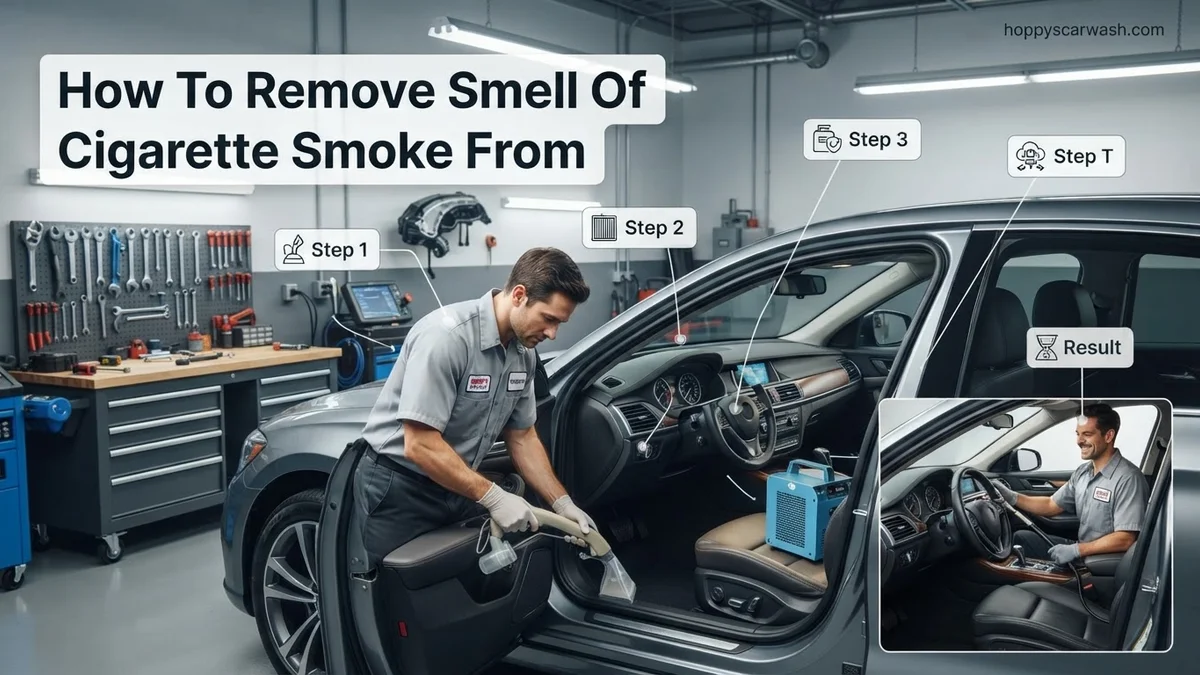
How to Exorcise Cigarette Smoke From Your Car Like a Pro: A Practical Walkthrough
Cigarette smoke is notoriously stubborn, embedding its tar and nicotine molecules deep into your car’s porous interior surfaces like headliners, carpets, and seat foam. Simply spraying a standard air freshener will only mask the problem temporarily, creating an unpleasant chemical mix. This comprehensive guide walks you through a multi-layered decontamination process to permanently strip out stale smoke odors and restore your cabin to a fresh, clean-smelling environment.
Step 1: The Ultimate De-clutter and Trash Sweep
What you need: Large trash bags, rubber gloves, and a handheld flashlight.
Instructions: Before tackling any cleaning agents, you must eliminate physical odor magnets. Put on your gloves and scour every inch of the cabin. Toss out old coffee cups, fast-food wrappers, parking stubs, and—most importantly—ashtrays or hidden stashes of cigarette butts. Check the glove box, console compartments, and seatback pockets. If you find ash trays, empty them immediately and wash them out with warm, soapy water outside the vehicle. Removing these items cuts off the primary ongoing source of volatile organic compounds (VOCs) that keep re-contaminating your interior air.
Pro Tip: Don’t forget to check under the seats and inside the door side-pockets, as loose ashes often settle in these dark, neglected crevices.
Step 2: Sun-Baking and Maximum Air Out
What you need: A sunny day and a secure, open-air location.
Instructions: Park your car in direct, blazing sunlight and roll down all four windows completely, along with opening the sunroof if your vehicle has one. Leave the car doors open for at least one to two hours. Heat causes the porous materials in your car’s interior to expand, which naturally forces trapped smoke particles and stale gasses out of the seat foam and dashboard components. Fresh circulating air will then carry these released odor molecules away. Aim to do this during the warmest part of the day for maximum thermodynamic release.
Pro Tip: Never perform this step in a dusty or high-pollution area, as you don’t want settling particulate matter dirtying your newly exposed interior.
Step 3: Deep Extraction Carpet and Upholstery Vacuuming
What you need: A heavy-duty wet/dry vacuum with a crevice tool and an upholstery brush attachment.
Instructions: Smoke ash contains microscopic, abrasive particles that burrow deep into carpet fibers and upholstery weave. Vacuum every square inch of the vehicle, starting from the headliner down to the floor mats. Use the crevice tool to get deep between seat cushions and along the seat belt buckles. If your floor mats are removable, take them completely out of the car, shake them vigorously, and vacuum both sides thoroughly. Pay special attention to the floorboards underneath the front seats where heavy foot traffic grinds ash permanently into the carpet pile.
Pro Tip: Move the power seats all the way forward and backward to access the hidden tracks and floor areas that trap massive amounts of smoke residue.
Step 4: Scrubbing the Headliner and Hard Surfaces
What you need: A gallon bucket of warm water, two tablespoons of clear dish soap, one cup of white vinegar, and three clean microfiber towels.
Instructions: The fabric headliner (the ceiling of your car) acts like a massive sponge for cigarette smoke, but it easily sags if over-wetted. Mix your warm water, dish soap, and vinegar in the bucket. Dip a microfiber towel into the solution and wring it out until it is barely damp. Gently wipe down the headliner using light, circular motions, taking care not to scrub aggressively. Next, wipe down all hard plastic, vinyl, and glass surfaces—including the dashboard, steering column, door panels, and windows—using a fresh damp microfiber towel followed by a dry one.
Pro Tip: Windows require special attention because nicotine leaves a greasy, invisible film on glass that continuously off-gasses the smell of stale smoke when warmed by the sun.
Step 5: Chemical Steam Cleaning for Seat Fabric
What you need: An automotive steam cleaner or rented extractor, and an enzyme-based fabric cleaner specifically formulated for smoke odors.
Instructions: Apply the enzyme cleaner sparingly to your cloth seats or carpeted areas according to the product instructions. Allow it to dwell for five to ten minutes to break down the embedded tar and nicotine bonds. Then, pass the steam cleaner or extractor slowly over the fabric. The high-temperature steam will liquefy deep-seated oils, while the extractor’s suction pulls the contaminated moisture out of the foam padding beneath. If you have leather seats, wipe them down with a dedicated leather cleaner and condition them immediately afterward to seal the pores against future odor absorption.
Pro Tip: Do not soak the seats; excessive moisture can penetrate electrical seat sensors or cause mold growth inside the foam.
Step 6: Air Conditioning System Decontamination
What you need: An automotive AC odor eliminator spray or fogger can (often called an AC bomb).
Instructions: Smoke residue clings heavily inside your car’s ventilation ducts and cabin air filter. First, remove your old cabin air filter from behind the glove box and throw it away—do not put it back in. Turn your car engine on, set the air conditioning to maximum fan speed, turn on recirculate mode, and close all windows. Activate your chosen AC fogger product, place it on the floorboard on the passenger side (following the manufacturer’s specific instructions), and exit the car, closing all doors. Let the system run for 10 to 15 minutes so the sanitizing vapor circulates through the entire duct system, killing lingering bacteria and neutralizing smoke odor.
Pro Tip: After the cycle finishes, turn off the car, open all doors to air out the chemical fog for at least 15 minutes, and install a brand-new carbon-activated cabin air filter.
Step 7: The Baking Soda Dry Absorption Treatment
What you need: Two boxes of pure baking soda and a fork.
Instructions: Baking soda is a natural, highly effective odor neutralizer. Open both boxes of baking soda and sprinkle the powder generously and evenly across all carpeted surfaces, floor mats, and fabric seats. Use the fork to lightly agitate the powder into the top layer of the carpet fibers so it can penetrate deeply. Close the car doors and leave the baking soda to sit undisturbed for at least 24 hours, or up to 48 hours if the smoke odor was exceptionally severe. Once the time has passed, use your vacuum with a brush attachment to meticulously suck up every trace of the white powder.
Pro Tip: Place a shallow bowl of activated charcoal or dry baking soda inside the cup holder overnight to passively absorb any remaining ambient air odors.
✅ Final Checklist
- All physical cigarette ash, butts, and trash have been completely removed from every compartment.
- The headliner, dashboard, and glass have been wiped down with a vinegar-based cleaner.
- Seats and carpets have been thoroughly vacuumed, steam cleaned, or treated with baking soda.
- The old cabin air filter was discarded and replaced with a fresh carbon-infused filter.
- The air conditioning ventilation system has been chemically treated and flushed out.
Important Notes:
- Always wear gloves and protective eyewear when handling chemical foggers, strong cleaners, and old ash residue.
- If the vehicle has experienced decades of heavy chain-smoking, the headliner foam may be permanently ruined and require professional replacement by an upholstery shop.
- Estimated time investment: 4 to 6 hours of active work over a 2-day period. Estimated cost: $30 to $80 for supplies and replacement filters.
How to Clean Upholstery, Carpets, and Headliners
Deep Cleaning Carpets and Floor Mats
Your vehicle’s flooring holds the highest concentration of trapped ash and smoke residue. Start by removing all floor mats and vacuuming the entire carpet thoroughly to pull up loose debris.
- Generously apply a dedicated enzymatic carpet cleaner or a 50/50 mixture of white vinegar and warm water.
- Work the solution into the fibers using a stiff-bristled interior cleaning brush to break down the oily tar film.
- Extract the dirty moisture using a wet/dry vacuum or a specialized automotive carpet extractor for best results.
- Sprinkle baking soda over the damp carpet, let it sit for two hours to absorb lingering odors, and vacuum again.
Treating Fabric Seats and the Headliner
The headliner is notoriously delicate, meaning aggressive scrubbing will tear the fabric or detach the adhesive backing. You must treat overhead surfaces with absolute care while still neutralizing the trapped smoke.
- Spray an upholstery foam cleaner onto a microfiber towel rather than directly onto the headliner to prevent moisture damage.
- Gently wipe the headliner in a uniform direction to lift nicotine stains without soaking the cardboard backing.
- For fabric seats, use an automotive steam cleaner to force hot vapor deep into the foam, dissolving trapped tar before extracting the moisture away.
- Remember to pull your seatbelts all the way out, clamp them in place, and scrub them down with a fabric cleaner and a soft brush.
How to Fix HVAC Vents and Replace the Cabin Air Filter
The vehicle heating, ventilation, and air conditioning system traps heavy nicotine residue and tar particles within its dark ductwork. Turning on the fan simply recirculates stale smoke particles back into the cabin. Fixing this requires targeted intervention starting at the filtration source. According to automotive maintenance studies, neglecting the ventilation system sabotages up to 70 percent of interior detailing efforts.
Upgrading and neutralizing the airflow pathway involves two primary maintenance steps:
- Replace the Cabin Air Filter: Locate the old filter behind the glove compartment or under the cowl. Remove the contaminated filter and discard it immediately. Vacuum the surrounding plastic housing thoroughly before sliding a fresh HEPA or charcoal-activated replacement filter into place.
- Sanitize the HVAC Ducts: Turn the vehicle ignition on and activate the AC system on high with maximum fan speed and fresh air intake. Spray an EPA-registered automotive odor eliminator or enzymatic HVAC cleaner directly into the exterior cowl vent intakes beneath the windshield wipers. Allow the system to cycle for 10 minutes to coat the internal evaporator core and air channels.
What If It Still Doesn’t Work: Advanced Odor Removal Methods
Persistent smoke odors embedded deep within vehicle foam padding require industrial-grade interventions when standard cleaning methods fail. If basic detailing yields disappointing results, systematic fallback measures can restore fresh air quality to the cabin.
Consider these advanced mitigation steps for severe smoke contamination:
- Deploy an Ozone Generator: Rent or purchase a commercial ozone generator for approximately 35 to 100 dollars. Run the machine inside the sealed vehicle for 2 to 4 hours while the engine runs on recirculation mode, ensuring no humans or pets remain inside during treatment. Ventilate the car thoroughly for 30 minutes afterward.
- Steam Clean Upholstery and Carpets: Utilize a high-heat professional extraction steam cleaner to force hot vapor deep into seat cushions. Thermal extraction melts trapped tar bonds that surface cleaning misses entirely.
- Hire Professional Detailers: Consult a certified automotive restoration specialist for specialized thermal fogging treatments. Professional remediation services typically range from 150 to 400 dollars depending on vehicle size and smoke severity.
Conclusion
Eliminating stubborn cigarette smoke from a vehicle requires a methodical approach that addresses porous surfaces, hidden crevices, and contaminated ventilation systems simultaneously. Surface wipe downs alone are insufficient against deeply embedded tar and nicotine molecules. According to verified research and automotive restoration experts, combining charcoal absorption, deep-steam extraction, and mandatory cabin filter replacement successfully restores indoor air quality. Take action today by replacing your cabin air filter and initiating a whole-vehicle odor treatment to permanently reclaim your driving environment.
❓ Frequently Asked Questions
How long does it take to fully remove smoke smell from a car?
Depending on the severity of the smoke damage, a thorough DIY deep clean can take anywhere from a few hours to a full weekend. Stubborn odors embedded in foam cushions may require multiple treatments or professional ozone application.
Can vinegar damage my car’s dashboard or leather seats?
When diluted properly with equal parts water, white vinegar is safe for most hard surfaces and synthetic leather. However, you should always spot-test delicate genuine leather before applying any liquid solution.
How often should I change my cabin air filter to prevent smoke odors?
If you smoke in the vehicle or bought a used car from a smoker, replace the cabin air filter immediately. For ongoing maintenance, change it at least once a year or every 15,000 miles.
Does leaving bowls of vinegar in the car actually work?
Leaving an open bowl of white vinegar inside a closed car overnight helps neutralize airborne ambient odors. It will not, however, extract trapped nicotine tar embedded deep within seat cushions or carpets.
Are professional detailing services worth it for smoke removal?
Professional detailers use high-powered hot water extractors, steam cleaners, and commercial ozone generators that penetrate deeper than consumer tools. This makes them highly effective for severe, long-term smoke damage.
How do I get smoke smell out of a fabric headliner without ruining it?
Spray a light mist of diluted vinegar and water onto a microfiber towel and gently blot the headliner. Avoid soaking the fabric, as excessive moisture can dissolve the adhesive backing and cause the material to sag.