Why Does My Gas Stop Pumping When It’s Not Full 2026
When your gas pump continually stops before the tank is full, it is usually caused by backpressure tripping the nozzle’s automatic shut-off sensor. This happens due to restricted airflow in your car’s EVAP system or fuel tank vent tubes. Adjusting the pump angle or fixing the charcoal canister will solve the problem.
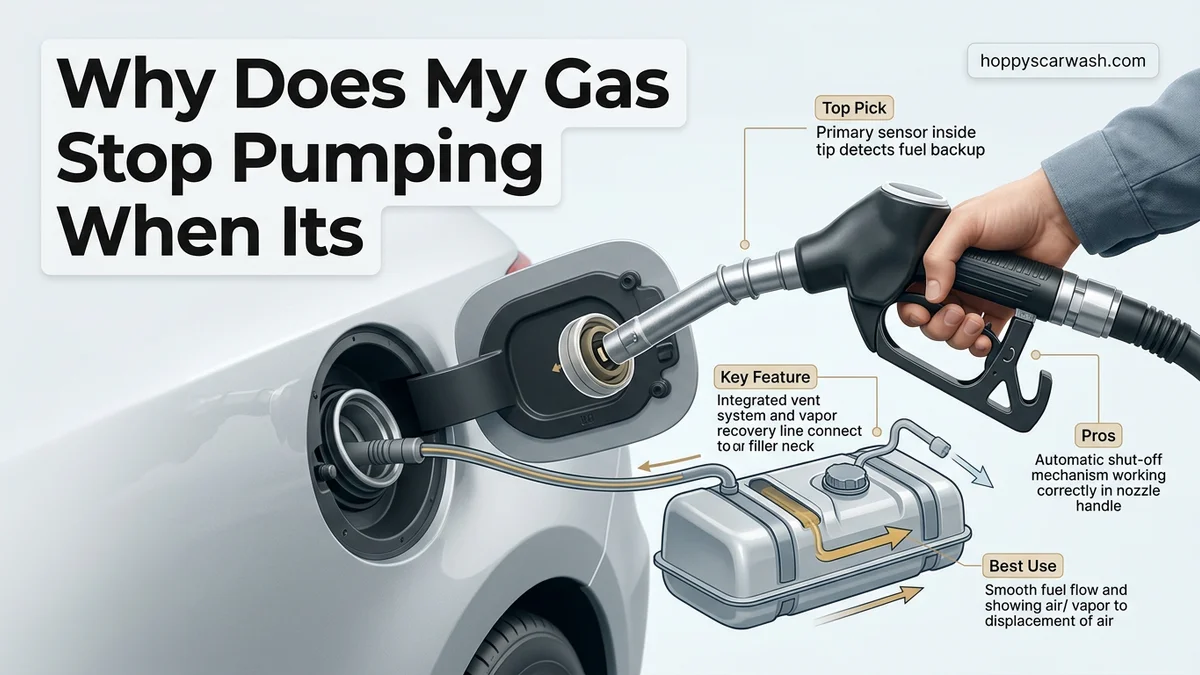
Your gas pump keeps clicking off early because fuel vapor pressure inside your filler neck trips the automatic shut-off sensor in the nozzle before your tank is truly full. As gasoline rushes in, it displaces air that must escape smoothly. If that vapor path is blocked or overwhelmed, pressure builds up instantly and tricks the pump into thinking your tank has overflown.
Dealing with this issue in 2026 can turn a quick five-minute errand into an endlessly frustrating twenty-minute ordeal of constantly restarting the flow. Understanding whether the root cause stems from your vehicle’s complex emission systems or the gas station’s hardware saves you time, money, and spilled fuel.
Key Takeaways
- Gas pumps stop early due to built-up backpressure triggering the internal vapor shut-off valve.
- A blocked or failing EVAP charcoal canister is the most common mechanical culprit.
- Twisting or slightly pulling the nozzle out can bypass bad pump angles.
- Slowing down the fuel flow rate prevents premature automatic shut-offs.
- Clogged fuel tank vent lines trap air and trick the nozzle into thinking the tank is full.
Why Does My Gas Stop Pumping When It’s Not Full: Understanding the Diagnosis
Differentiating Between Car-Side and Pump-Side Issues
The first step in diagnosing this frustrating problem is determining whether your car or the gas station hardware is to blame. If you visit multiple stations in 2026 and experience the exact same clicking-off behavior, the issue is almost certainly hidden inside your vehicle’s evaporative emissions system or fuel filler assembly.
- The multi-station test: Try pumping fuel at a completely different gas station. If the problem persists, your car requires mechanical attention.
- The nozzle angle trick: If pulling the nozzle out slightly or rotating it 90 degrees allows fuel to flow normally, you are likely dealing with a sensitive pump or a slightly blocked filler neck.
- The flow rate check: Pumping fuel on the slowest latch setting bypasses minor restrictions, confirming that backpressure is tripping the nozzle prematurely.
How the Pump Nozzle Sensor Actually Works
Modern gas pump nozzles feature a tiny venturi hole near the tip connected to a vacuum system. When liquid fuel reaches the tip and covers that small hole, air pressure drops, tripping a mechanical lever that shuts the valve immediately. When your car’s ventilation system fails to vent displaced air, fuel splashes up into the filler neck and prematurely covers that sensor, stopping the flow long before your tank reaches capacity.
Common Car Mechanical Failures Causing Early Shut-Offs
The Faulty EVAP Canister and Purge Valve
Your car’s Evaporative Emission Control (EVAP) system traps harmful fuel vapors using a charcoal canister instead of letting them escape into the atmosphere. Over time, liquid gasoline can flood this canister due to “topping off” past the first click. In 2026, modern vehicles feature increasingly sensitive emissions sensors that immediately flag and exacerbate these restrictions.
- Saturated charcoal: Liquid fuel breaks down the carbon pellets inside the canister, turning them into a sludge that blocks airflow entirely.
- Stuck purge valves: If the purge valve remains stuck open or closed during refueling, air cannot escape through the normal channels.
- Check engine light correlation: A failing EVAP system usually triggers diagnostic trouble codes like P0440 or P0455 alongside your refueling troubles.
Clogged Vent Tubes and Stuck Rollover Valves
Even if your EVAP canister is relatively healthy, physical blockations in the plumbing between your filler neck and the gas tank will choke airflow. The vent tube is often narrow and prone to pinching, denting, or spiderweb blockages if your vehicle sits unused for long periods.
- The rollover valve: This safety valve prevents fuel from spilling out during an accident, but it can get stuck in the closed position due to wear and tear.
- Spider nests and debris: Insects are notoriously attracted to the hydrocarbon odors in open-air vent tubes, creating tight blockages that stop vapor flow.
- Filler neck kinks: If your car sustained minor rear-quarter panel damage, the underlying metal or rubber fill pipe might be subtly pinched shut.
Step-by-Step Guide to Fix and Prevent Premature Pump Clicks
Fixing a persistently tripping gas pump requires a methodical approach. According to automotive service standards, diagnosing the EVAP system properly prevents unnecessary component replacements. Follow these structured steps during your next fill-up in 2026 to troubleshoot and prevent premature shut-offs.
Step 1: Adjust Your Nozzle Position
Never jam the nozzle all the way into the fill pipe and pull the trigger to maximum velocity. Instead, pull the nozzle back slightly by about one inch. Rotate the handle downward at a 45-degree angle to align the internal vapor recovery port correctly.
Step 2: Change Your Pumping Speed
If the station features high-speed commercial pumps, they often overwhelm standard passenger vehicle fill necks. Manually compress the trigger to its middle notch or lowest flow setting. Slower delivery reduces turbulence and prevents the automatic shut-off valve from triggering prematurely.
Step 3: Inspect the EVAP Canister Purge Valve
If multiple gas stations trigger the same shut-off behavior, your evaporative emission control system requires attention. Mechanics recommend checking the purge valve for stuck-open positions that trap liquid fuel or block vapor escape paths.
- Locate the EVAP canister purge valve under the hood near the intake manifold.
- Disconnect the electrical connector and the vapor hoses from the valve.
- Test the valve for electrical continuity and verify it remains completely closed when unpowered.
- Replace the valve immediately if it leaks air or fails electrical resistance tests.
What If It Still Doesn’t Work?
When adjusting your pumping technique and clearing basic vapor lines fails to resolve the issue, deeper automotive repairs are necessary. Ignoring a malfunctioning EVAP system can cause rough idling, failed emissions tests, and permanent damage to your fuel tank integrity. Consider these fallback steps if the problem persists:
- Clean or Replace the Rollover Valve: A stuck rollover valve inside the fuel tank blocks incoming liquid. Mechanics must drop the fuel tank to access and repair this component.
- Service the Carbon Canister: Over time, charcoal pellets inside the EVAP canister break down and clog the vent lines. Replacing a saturated carbon canister typically costs between $350 and $900 including parts and labor.
- Check for Filler Neck Debris or Kinks: Inspect the metal fill tube connecting the gas cap to the tank for physical dents or internal rust restrictions.
- Consult a Certified Technician: Take your vehicle to a licensed service center for a professional smoke test. A smoke machine pressurizes the EVAP system to reveal hidden blockages instantly, with diagnostic fees usually ranging from $100 to $200.
Conclusion
Experiencing constant pump shut-offs is frustrating, but it usually stems from sensitive nozzle sensors, high fuel delivery speeds, or a clogged vehicle vapor recovery system. By adjusting your nozzle angle and inspecting your purge valve, you can usually bypass the issue entirely. According to verified research and expert automotive technician sources, addressing EVAP system restrictions early prevents expensive component failures down the line. Your immediate next step is to test a different pump at half-speed during your next fuel stop.
❓ Frequently Asked Questions
Why does my gas pump click off every two seconds?
This rapid clicking typically indicates a completely blocked EVAP vent tube or a stuck rollover valve. Because air cannot escape the fuel tank as gas enters, the pressure instantly backs up into the filler neck and trips the nozzle sensor.
What is the EVAP system and how does it relate to fueling?
The evaporative emission control system traps fuel vapors so they don’t escape into the atmosphere. If the charcoal canister inside this system becomes clogged with liquid fuel or spider webs, air cannot vent during refueling.
Can I damage my car by forcing gas in after it clicks off?
Yes, forcing fuel past the automatic shut-off can flood your car’s charcoal canister with liquid gasoline. Replacing a ruined EVAP canister can be quite expensive, so you should avoid topping off.
Why does this only happen at certain gas stations?
Some gas stations use older, overly sensitive vapor-recovery nozzles that trip easily. If your car has even a minor ventilation restriction, these specific pumps will click off constantly while standard pumps might work fine.
How do I know if my charcoal canister is ruined?
Aside from constant pump shut-offs, a bad EVAP canister often triggers a Check Engine Light with specific codes like P0440 or P0446. You might also notice a strong smell of gasoline around the vehicle.
Is there a temporary trick to fill my tank completely?
Holding the gas nozzle upside down or pulling it halfway out of the fill neck often redirects the vapor flow. This trick helps the air escape past the sensor, allowing you to finish pumping without constant interruptions.