What Happens If Cabin Air Filter Is Upside Down Cabin 2026
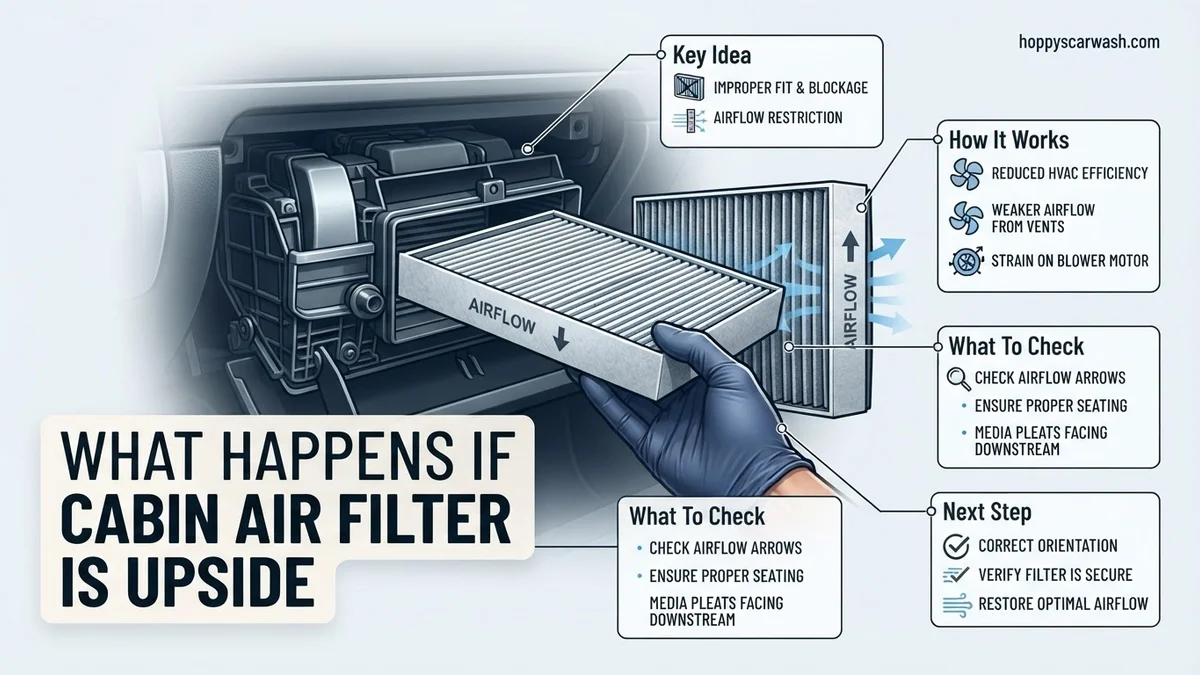
Installing your car’s cabin air filter upside down restricts vital airflow and forces the HVAC blower motor to work much harder. Without proper orientation, unbonded structural pleats can collapse, allowing dust, debris, and allergens to completely bypass filtration.
Installing your car cabin air filter upside down directly compromises your vehicle’s HVAC efficiency by causing severe airflow restriction, structural sagging, and unfiltered debris bypass. When the filter media faces the wrong way, the structural support ribs fail to withstand the pressure of the blower motor, leading to media collapse.
As we navigate automotive maintenance in 2026, modern vehicle climate systems rely heavily on precise airflow dynamics. Getting the orientation wrong forces your blower motor to work significantly harder, which can lead to premature electrical failure while allowing dust, pollen, and road pollutants straight into your cabin.
Key Takeaways
- An upside-down cabin air filter significantly restricts airflow from your vehicle’s vents.
- Blower motors strain and overheat when forced to pull air through collapsed filter pleats.
- Unfiltered dust and leaves bypass the filter, entering the cabin and HVAC core.
- Always match the directional arrow on the filter frame to the HVAC housing airflow.
- Fixing the issue takes less than ten minutes with basic glovebox removal.
What Causes Cabin Air Filter Performance Issues and Airflow Restrictions
Structural Collapse and Media Bending
Cabin air filters feature a directional design with rigid plastic or cardboard support combs on one side. When you install the filter upside down, the unsupported side faces the incoming rush of air from the blower motor or cowl intake. Without proper reinforcement, the pleated paper material bends, warps, or completely collapses under normal operating pressure. This structural failure creates gaps along the edges of the housing where air completely bypasses the filtration media, rendering the filter useless.
Blower Motor Strain and Reduced Airflow
Reversing the filter disrupts the designed aerodynamic path, creating immediate resistance. Your HVAC blower motor must draw or push air against a newly formed aerodynamic wall, causing several immediate operational issues:
- Airflow from your dashboard vents drops by 30 to 50 percent, noticeably reducing defrosting and cooling speeds.
- The blower motor draws excess electrical current as it struggles to pull air through the collapsed or restricted media.
- Extended operation in this state overheats the blower motor resistor, frequently burning out the thermal fuse.
- Unfiltered debris slips through the warped edges, accumulating directly on the evaporator core and causing foul odors.
How to Fix an Incorrectly Installed Cabin Air Filter Step-by-Step
Locating and Accessing the Filter Housing
Fixing an inverted cabin air filter takes only a few minutes and requires no special tools for most 2026 vehicle models. Open your glove box and empty its contents to prevent items from spilling. Push in the sides of the glove box housing to release the stop tabs, allowing the compartment to drop completely downward. Behind the glove box, you will see a rectangular plastic access door secured by side clips or thumb latches. Squeeze these latches to remove the cover and expose the edge of the cabin air filter.
Correcting Orientation Using Airflow Arrows
Pull the incorrectly installed filter straight out of the housing, noting how the debris has settled on the top surface. Look at the outer plastic frame of the filter for an embossed arrow accompanied by the word AIRFLOW. Correctly positioning this component requires following these simple rules:
- In systems where air pulls downward from the top cowl, the arrow must point DOWN.
- In systems where air pushes horizontally or upward from the blower motor, the arrow must point toward the cabin (usually UP or FORWARD depending on the housing angle).
- Check your owner’s manual or look at the directional arrow printed directly on the permanent HVAC housing slot for confirmation.
- Slide the filter back into the tray with the arrow matching the designated airflow direction, then snap the access door and glove box back into place.
What If Your HVAC Airflow Still Doesn’t Improve After Reversing the Filter
Correcting an upside-down cabin air filter normally restores standard HVAC performance instantly. However, if your vents still push weak airflow or strange odors persist after you flip the element, a deeper underlying issue likely exists within your vehicle’s ventilation system. Automotive climate control studies indicate that restricted airflow frequently stems from compounding maintenance oversights rather than a single installation error.
Check for Pre-Existing Blower Motor Obstructions
Debris frequently bypasses improperly seated filters and jams the blower wheel. When a cabin filter is installed upside down, gaps around the frame allow leaves, dust, and wrappers to slip past into the blower housing. This accumulation throws the fan motor off balance and restricts the volume of air reaching the dashboard vents.
Inspect for Evaporator Core Blockages
An inverted filter allows airborne contaminants to coat the moist evaporator core directly. Over time, organic buildup creates a dense sludge mat that severely impedes heat transfer and airflow. Professional automotive technicians emphasize that cleaning a contaminated evaporator requires specialized chemical foaming agents rather than simple filter replacements.
Key Considerations for Maintaining Proper Cabin Air Filter Orientation
Preventing installation mistakes during routine maintenance saves time and protects your vehicle’s climate control electronics. Adhering to strict replacement protocols ensures your cabin environment remains free of pollutants and allergens throughout the year 2026. Industry benchmarks recommend inspecting your filtration medium every 12,000 to 15,000 miles, or more frequently if you drive in dusty environments.
Pay Close Attention to Airflow Arrow Indicators
Every quality cabin air filter features printed directional arrows on its rigid frame. These critical indicators must always point downward toward the blower motor, aligning with the gravitational pull and the manufacturer’s designed suction path. Ignoring these directional markings risks immediate structural collapse of the pleats under high fan speeds.
Verify Housing Cleanliness During Swaps
Before sliding a new filter into the plastic tray, wipe down the interior housing compartment with a damp microfiber cloth. Removing accumulated grit prevents premature wear on the perimeter sealing gasket and ensures an airtight fit. A secure seal prevents unfiltered air from bypassing the media entirely.
What If It Still Doesn’t Work?
If reversing your cabin air filter and cleaning the housing does not resolve your HVAC issues, systematic troubleshooting is required. Follow these steps to isolate and correct persistent ventilation failures:
- Inspect the blower motor resistor for thermal damage or corrosion, which often causes erratic fan speeds regardless of filter position.
- Test the blend door actuator to ensure air is successfully routing through the correct dash, floor, or defrost vent pathways.
- Check the fresh air intake cowl beneath the windshield wipers for wet, compacted leaf debris blocking incoming outside air.
- Consult a certified professional technician if the HVAC system emits burning electrical odors or makes persistent mechanical grinding noises.
Seeking professional diagnostic assistance typically ranges from $100 to $250 depending on labor rates and the complexity of accessing deeply buried HVAC components in modern vehicles.
Conclusion
Installing a cabin air filter upside down restricts airflow, accelerates media degradation, and forces your vehicle’s blower motor to work harder than intended. Correcting this orientation restores optimal cabin ventilation and protects sensitive HVAC components from premature failure. According to verified research and expert automotive sources, maintaining proper filter alignment and replacement intervals maximizes interior air quality and system efficiency. Take the next step today by inspecting your cabin filter’s directional arrows to ensure your climate control system operates at peak performance.
❓ Frequently Asked Questions
What are the primary symptoms of an upside-down cabin air filter?
Common symptoms include weak airflow coming from the dashboard vents, a whistling or straining noise from the blower motor behind the glovebox, and a sudden increase in dust settling on your interior surfaces.
Why do cabin air filters have directional arrows in the first place?
The arrows ensure the filter’s structural reinforcement faces the correct direction of incoming air pressure. If installed backward, the weak side of the filter can bend, letting debris slip past the edges.
Can an upside-down filter cause musty odors in my car?
Yes, restricted airflow prevents moisture from evaporating properly inside the evaporator housing. This trapped humidity fosters mold and mildew growth, resulting in a persistent musty smell.
What should I do if the arrow on my new filter is confusing?
Always check the old filter’s orientation before pulling it out of the housing. If you already discarded it, look for airflow indicators molded directly into the plastic HVAC housing.
Does driving with an upside-down filter damage the blower motor permanently?
While minor mistakes won’t cause instant failure, running the blower motor under high resistance for months causes overheating. This frequently leads to blower motor resistor failure or total motor burnout.
Do aftermarket cabin air filters work differently regarding airflow direction?
Most aftermarket filters use the same universal arrow convention as OEM parts. However, cheaper brands may lack internal support grids, making correct directional installation even more critical to prevent collapse.