How Much Does Brakes and Rotors Cost to Replace in 2026
Replacing your car’s brakes and rotors typically costs between $300 and $800+ per axle, depending heavily on your vehicle type and mechanic fees. This comprehensive price guide breaks down parts versus labor costs to help you budget for your next service.
Replacing both your brake pads and rotors typically costs between $300 and $800 per axle in 2026. If you need a complete brake job for all four wheels, your total bill will often land anywhere from $600 to $1,600+ depending on your vehicle make and model.
Ignoring a grinding noise or a vibrating steering wheel when you press the pedal quickly turns a simple pad swap into an expensive rotor replacement. Knowing what to expect financially helps you budget accurately and keeps you from overpaying at the repair shop.
Key Takeaways
- Expect to pay between $300 and $800+ per axle for parts and professional labor.
- Labor usually accounts for $150 to $300 of the total bill, depending on shop rates.
- Economy cars are significantly cheaper to service than trucks, SUVs, or luxury vehicles.
- Standard ceramic or metallic brake pads cost less than high-performance alternatives.
- Always replace pads and rotors together to ensure optimal stopping power and longevity.
What Causes High Brake and Rotor Replacement Costs
Your vehicle type and driving habits heavily influence the final repair bill. A standard commuter sedan requires vastly different hardware than a heavy-duty pickup truck or a high-performance sports car.
Vehicle Size and Weight Class
- Compact Cars: Smaller vehicles use lighter, less expensive components, keeping axle costs on the lower end around $300 to $450.
- SUVs and Trucks: Larger vehicles require heavy-duty, thicker rotors and larger pads to safely stop extra weight, pushing costs closer to $600 to $900 per axle.
- Luxury and Performance Cars: European imports or sports cars often require specialized, premium materials like drilled or slotted rotors, which can easily spike axle costs past $1,000.
Material Quality and Rotor Type
The grade of metal and friction material you select impacts the initial price tag and long-term durability. Standard ceramic pads and smooth blank rotors offer the best value for daily driving. Upgrading to semi-metallic pads for heavy towing or high-carbon rotors to resist warping will increase your parts budget significantly in 2026.
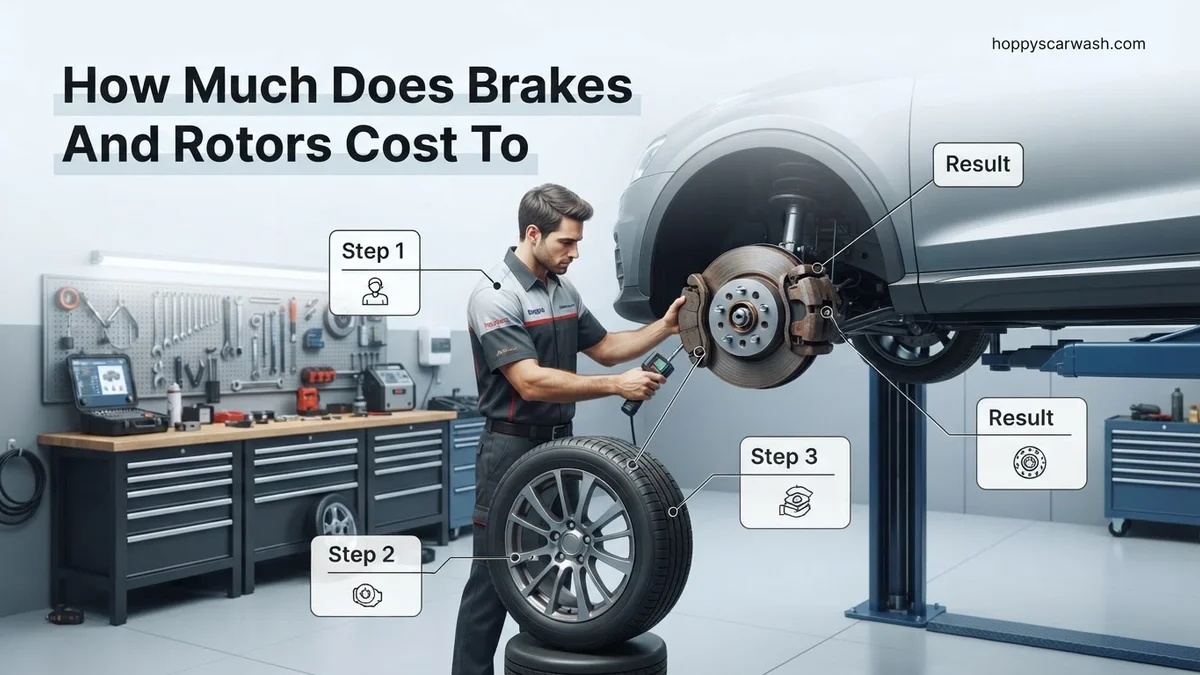
Master Brake and Rotor Replacement Costs in 5 Simple Steps
Understanding how much brakes and rotors cost to replace can save you hundreds of dollars and prevent unnecessary auto repair shop markups. This comprehensive guide breaks down the true expenses of parts, labor, and diagnostics, allowing you to accurately estimate your vehicle maintenance budget. By following this practical walkthrough, you will learn how to identify your specific car needs, calculate realistic costs, and decide whether to tackle the job yourself or hire a professional mechanic.
Step 1: Assess Your Vehicle Make and Model
What you need: Vehicle owner’s manual, registration card, or VIN (Vehicle Identification Number).
Instructions: Brake and rotor replacement costs vary dramatically depending on what you drive. A standard compact sedan like a Honda Civic will require a much smaller financial investment than a heavy-duty pickup truck or a luxury German import like a BMW. Locate your vehicle’s exact year, make, model, and trim level. Luxury vehicles often utilize larger, cross-drilled rotors and specialized ceramic brake pads that command premium pricing. Check your paperwork to confirm if your vehicle has standard steel brakes or upgraded performance packages, as this dictates the baseline cost of components.
Pro Tip: Never rely on a generic online quote without inputting your specific trim level, as sport packages often require entirely different brake components.
Step 2: Calculate the Cost of Replacement Parts
What you need: Internet access, local auto parts store website, or major online automotive retailers like RockAuto or Amazon Automotive.
Instructions: Search for front and rear brake pads and rotors designed specifically for your vehicle. Entry-level organic brake pads and standard blank rotors generally cost between $150 and $250 for a single axle (two wheels). Mid-tier ceramic pads paired with coated, rust-resistant rotors typically range from $250 to $450 per axle. High-end performance or heavy-duty truck components can easily exceed $600 per axle. Remember that you will usually replace brakes in pairs—either both front wheels or both rear wheels—to ensure balanced braking performance and vehicle safety.
Pro Tip: Look for bundle kits that package both pads and rotors together, which frequently offer a 10 to 20 percent discount compared to buying components separately.
Step 3: Factor in Professional Labor Rates
What you need: Local mechanic quotes, dealership service department price lists, or mobile mechanic service apps.
Instructions: If you choose not to do the work yourself, professional mechanics will charge for labor. Most repair shops quote between 1.5 to 2.5 hours of labor per axle. Depending on your geographic location and whether you visit an independent mechanic or a dealership, labor rates typically range from $100 to $200 per hour. Therefore, labor costs alone will usually add $150 to $400 to your total invoice. Dealerships are generally on the higher end of this spectrum, while independent neighborhood repair shops offer more competitive pricing.
Pro Tip: Always ask if the labor estimate includes caliper service and brake fluid lubrication, as some shops charge extra for slide pin greasing.
Step 4: Total the Overall Expense and Compare Options
What you need: Calculator, notepad, and the price figures gathered from previous steps.
Instructions: Combine your parts and labor estimates to calculate the grand total. A standard professional front brake and rotor replacement usually totals between $300 and $700 per axle. Doing the job yourself using DIY parts drops the total cost down to the $150 to $350 range, meaning you save strictly on labor fees. Review your budget and your mechanical comfort level. If your total repair bill exceeds $1,000 for all four wheels, consider whether you have the basic tools required to perform a DIY replacement in your driveway over a weekend afternoon.
Pro Tip: Beware of shops offering ultra-cheap “brake specials” under $100, as they almost always use inferior metallic pads and will upsell you on expensive rotor replacements once your car is on the lift.
Step 5: Account for Hidden or Additional Fees
What you need: Awareness of potential supplementary vehicle issues and shop policies.
Instructions: When replacing brakes and rotors, unexpected costs can occasionally arise. If a brake caliper is seized or leaking, a replacement caliper will add $100 to $250 per side including labor. Additionally, professional shops will charge minor environmental disposal fees, state taxes, and shop supply fees for brake cleaner and high-temperature grease, usually adding $20 to $50 to the final bill. If your brake fluid hasn’t been flushed in over 3 years, a fluid flush may be recommended, costing an extra $100 to $150.
Pro Tip: Always request a itemized written estimate before authorizing any work to ensure there are no surprise fees when you pick up your car.
✅ Final Checklist
- Confirmed the exact year, make, model, and trim level of your vehicle
- Priced out replacement parts for both front and rear axles as needed
- Obtained at least two competitive labor quotes from local mechanics or dealerships
- Calculated the complete estimated cost including potential taxes and shop fees
- Weighed the financial savings of a DIY approach against the convenience of professional installation
Important Notes:
- Never compromise on brake quality; reliable stopping power is your vehicle’s most critical safety system.
- Seek professional help immediately if you encounter stuck bolts, stripped threads, or hydraulic brake fluid leaks during a DIY attempt.
- Estimated total cost range: $150 to $350 for DIY parts per axle; $300 to $800 per axle for professional installation taking roughly 2 to 4 hours.
How to Calculate Total Parts Versus Labor Expenses
Breaking down a repair estimate into raw materials versus shop time helps you spot inflated invoices. Generally, a professional brake replacement splits the total bill evenly between the hardware and the technician’s labor charge.
The Cost of Parts: Pads and Rotors
- Brake Pads: Quality replacement pads generally run between $40 and $150 per axle set.
- Brake Rotors: Individual rotors typically cost $50 to $150 each, meaning you will spend $100 to $300 for a pair on a single axle.
- Total Parts Estimate: Expect to pay $140 to $450 total for physical components per axle before taxes and shop fees.
Understanding Mechanic Labor Rates
Replacing pads and rotors on one axle takes a professional mechanic about 1.5 to 2 hours. With shop labor rates in 2026 averaging $100 to $200 per hour depending on your location, you should expect to see a labor charge of $150 to $400 on your invoice. Dealerships usually charge toward the higher end of this range, while independent local mechanics offer more competitive pricing.
How to Fix and Lower Your Final Brake Service Bill
Replacing brakes and rotors in 2026 can stretch your automotive maintenance budget. However, smart consumers can significantly lower their final service bill by adopting strategic cost-saving measures. According to automotive consumer research from the Car Care Council, proactive maintenance and smart parts sourcing are the two most effective ways to reduce brake repair expenses.
Shop Around for Independent Mechanics
Dealership service centers typically charge between $150 and $250 per hour for labor. Reputable independent repair shops often charge 30 to 40 percent less for the exact same labor quality. Always request written itemized quotes from at least three different certified shops before authorizing any brake work.
Source Your Own OEM or Aftermarket Parts
Buying your own brake pads and rotors online can save you substantial markups. Many independent mechanics allow customers to bring their own parts, though they may not offer a labor warranty on customer-supplied components. Look for trusted aftermarket brands like Ceramic Power Stop, Bosch, or Brembo through verified automotive retailers.
- Inspect your current braking system to determine if you only need pads or both pads and rotors.
- Compare labor rates between local franchise dealerships and certified independent mechanics.
- Ask service advisors about upcoming seasonal maintenance promotions or manufacturer mail-in rebates.
What If Your Brakes Still Squeak or Grind After Replacement
Investing in brand-new brakes and rotors should yield a quiet, responsive stopping experience. If your vehicle still exhibits strange noises or vibrations shortly after a fresh installation, a component failure or improper installation technique is likely to blame. Automotive technicians note that newly installed brakes require a specific bedding-in process to prevent premature noise and glazing.
Troubleshooting Post-Replacement Noise
A high-pitched squeal immediately after replacement usually indicates missing anti-rattle clips, a lack of high-temperature brake lubricant on the caliper slide pins, or un-bedded pads. A deep grinding sound, however, points to a more severe mechanical error, such as a misaligned splash shield rubbing directly against the new rotor surface.
- Perform a proper bedding-in procedure by safely accelerating to 45 mph and firmly applying the brakes down to 10 mph several times without coming to a complete stop.
- Check for foreign debris or a bent metal dust shield trapped between the back of the rotor and the wheel hub assembly.
- Return immediately to the technician who performed the service to inspect for loose caliper bolts or defective brake pad shims under warranty.
- Seek professional diagnostic help from an ASE-certified brake specialist if the vibration persists, which typically costs between $100 and $150 for an inspection.
Conclusion
Navigating the costs of replacing brakes and rotors in 2026 requires understanding parts pricing, labor rates, and smart shopping strategies. While a complete axle service can range from $300 to $800+ depending on your vehicle class, proactive maintenance prevents more expensive caliper and master cylinder failures down the road. According to verified research and automotive safety experts, scheduling a professional brake inspection at the first sign of wear remains the best way to safeguard both your wallet and your safety on the highway.
❓ Frequently Asked Questions
Why are luxury vehicle brake replacements so much more expensive?
Luxury and European cars often require specialized, higher-tolerance parts and intricate electronic parking brake reset procedures, which increase both parts and labor costs.
Is it cheaper to buy parts online and bring them to a mechanic?
Some shops allow customer-supplied parts, but many will not offer a warranty on labor if the parts fail, and some shops refuse customer parts altogether.
How do I know if my rotors need to be replaced instead of resurfaced?
Rotors must be replaced if they have fallen below the minimum thickness safety stamp, are deeply gouged, or have severe warping that causes steering wheel vibration.
What is the difference in cost between a dealership and an independent shop?
Dealerships usually charge $150 to $250+ per hour in labor, while independent local mechanics often charge $90 to $150 per hour for the same service.
Does a brake job include fluid flushing?
No, a standard brake pad and rotor replacement only covers the hardware, pads, and rotors. Brake fluid flushes are usually a separate service costing $100 to $150.
What happens if I ignore worn-out rotors?
Worn rotors can ruin new brake pads prematurely, cause longer stopping distances, and eventually lead to complete brake failure or caliper damage.