How Long Can You Drive With a Bad Brake Booster in 2026
Driving with a bad brake booster is extremely dangerous and strongly discouraged. While you might technically be able to drive for a few miles or until the vacuum completely fails, stopping will require immense physical effort and drastically increase your stopping distance.
The short answer is: you should not drive with a bad brake booster at all. If you are forced to ask how long you can push your luck in 2026, the practical reality is that you are looking at a matter of a few miles—not days or weeks—and every tap of the pedal requires immense physical strength to stop a moving vehicle.
Your brake booster multiplies the force of your foot using engine vacuum or hydraulic pressure. When it fails, you lose that mechanical advantage entirely. While the brakes technically still work through raw hydraulic pressure, stopping distances increase dramatically, putting you, your passengers, and everyone else on the road at extreme risk.
Key Takeaways
- Never drive long distances with a failing brake booster due to severe safety risks.
- A bad booster makes the brake pedal feel rigid and extremely hard to push.
- Stopping distances increase significantly, making low-speed emergency stops nearly impossible.
- Listen for hissing noises under the dashboard, which indicate a vacuum leak.
- Replace the brake booster immediately upon noticing symptoms to prevent accidents.
The Real Dangers of Driving With a Bad Brake Booster
Modern driving demands split-second reactions. When a critical component like the brake booster fails, the physics of your car change drastically. Understanding the risks helps clarify why postponing this repair is never worth the gamble.
Catastrophic Loss of Stopping Power
Without the booster assisting your foot, pressing the brake pedal feels like standing on a block of concrete. You have to push with roughly 15 to 40 pounds of additional force to achieve the same deceleration.
- Emergency stops become nearly impossible at highway speeds.
- Muscle fatigue sets in rapidly if you encounter heavy traffic.
- Stopping distances can easily double or triple, depending on vehicle weight.
Secondary Component Failures
A failing vacuum booster often leaks air, which upsets your engine’s air-fuel ratio. This can trigger rough idling, stalling at stoplights, and vacuum-related engine codes on your dashboard. Driving under these conditions in 2026 also risks damaging the master cylinder, turning a simple booster swap into a much more expensive double repair.
Proven Symptoms Used to Diagnose a Failing Brake Booster
Before the booster completely gives out, your car will broadcast clear warning signs. Recognizing these symptoms confirms whether your braking issue stems from the booster itself or a simpler issue like worn-out brake pads.
The Stiff Pedal and Hissing Noise
The most telltale sign of a dying booster is a rigid pedal that refuses to depress smoothly. You might also notice distinct auditory clues.
- A persistent hissing sound when you press or release the brake pedal.
- A pedal that stays pushed down or returns to its resting position very slowly.
- The pedal feels hard even right after you start the car’s engine.
Engine Performance Changes and Pedal Height
Because most boosters rely on engine vacuum, a torn internal diaphragm creates a vacuum leak. This directly impacts how your engine runs.
- Your engine RPM may spike or dip erratically when you apply the brakes.
- The brake pedal might feel unusually high or low compared to its normal resting point.
- Your Check Engine light may illuminate alongside spongy or rock-hard pedal behavior.
Step-by-Step Guide to Replacing a Defective Brake Booster
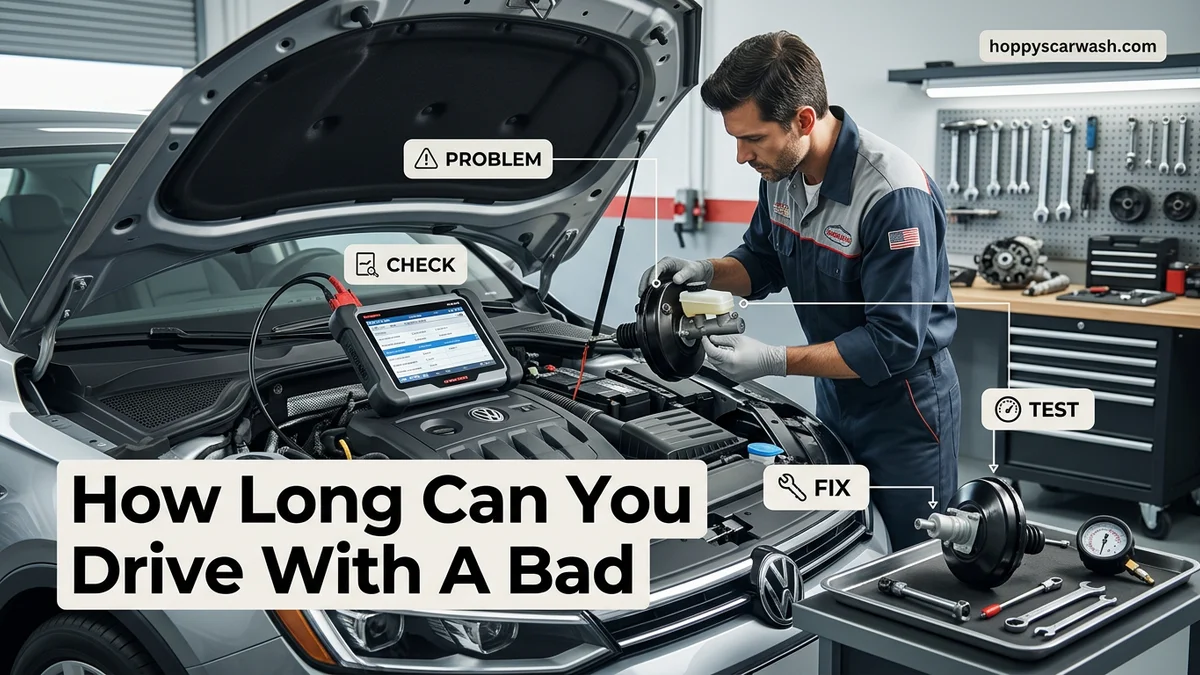
Replacing a failed brake booster requires precision, mechanical aptitude, and adherence to strict safety protocols. According to certified automotive technicians from the National Institute for Automotive Service Excellence (ASE), this repair usually takes between two to four hours depending on vehicle layout.
Preparation and Disassembly
- Disconnect the negative battery terminal to protect electrical components and prevent accidental system activation.
- Locate the master cylinder mounted on the firewall inside the engine bay directly in front of the driver.
- Unbolt the master cylinder from the brake booster, carefully pulling it forward without bending or kinking the rigid metal brake lines.
- Remove the vacuum hose from the check valve on the front housing of the brake booster.
Interior Removal and Reinstallation
- Access the driver-side footwell, remove any lower dash panels, and disconnect the pushrod from the brake pedal assembly by removing the retaining clip or pin.
- Unbolt the brake booster mounting nuts from the interior firewall bulkhead.
- Extract the old booster through the engine bay, ensuring the rubber firewall gasket transfers to the new unit.
- Install the new 2026-compliant replacement booster by reversing the extraction steps, torquing all firewall nuts to the manufacturer specification usually ranging between 15 to 25 foot-pounds.
What If It Still Doesn’t Work?
If you have installed a new brake booster and the pedal still feels stubbornly hard or unresponsive, the root cause lies elsewhere in the braking circuit. Follow these diagnostic steps to resolve the lingering issue:
- Inspect the Vacuum Supply: Check the vacuum hose connecting the intake manifold to the booster for cracks, collapses, or blockages. A failing vacuum pump on direct-injection or hybrid vehicles will also prevent proper assist.
- Test the Check Valve: Verify that the one-way check valve on the booster lets air flow only toward the engine. A stuck valve completely eliminates vacuum retention.
- Bleed the Master Cylinder: Trapped air inside the master cylinder or brake lines mimics a hard pedal feel and requires thorough hydraulic bleeding.
- Consult Professional Repair Shops: If troubleshooting fails, tow the vehicle to a certified facility. According to industry data, professional brake booster replacement costs range from $600 to $1,200 including parts and labor.
Conclusion
Driving with a bad brake booster is an extreme hazard that drastically extends stopping distances and compromises vehicle control. Once symptoms appear, immediate replacement is mandatory to prevent catastrophic brake failure. According to verified research and expert safety sources, addressing vacuum and hydraulic faults promptly keeps roads safe. Schedule an inspection or complete your hardware replacement today to restore dependable stopping power.
❓ Frequently Asked Questions
Can a bad brake booster cause total brake failure?
While it does not drain brake fluid, it eliminates power assist. This means your hydraulic brakes still function, but stopping the vehicle requires immense physical force, often mimicking total brake failure in emergency scenarios.
What are the early warning signs of a failing brake booster?
Early signs include a slightly firmer brake pedal, a hissing sound when pressing the brakes, the engine stalling when braking, or the brake pedal taking longer to return to its original position.
Can I test my brake booster at home?
Yes, pump the brake pedal a few times with the engine off to clear residual vacuum, hold pressure on the pedal, and start the engine. If the pedal sinks slightly, the booster is working; if it stays hard, it is faulty.
Is it legal to drive with a bad brake booster?
Driving a vehicle with compromised safety equipment like failing brakes can result in citations for operating an unsafe vehicle, and it places you and others at severe legal and physical risk.
Can a vacuum leak mimic a bad brake booster?
Yes, a damaged or disconnected vacuum hose prevents the booster from receiving the engine vacuum it needs to function, producing identical symptoms to a broken booster unit.
How long does it take a mechanic to replace a brake booster?
Professional replacement usually takes between 2 to 4 hours, depending on how difficult it is to access the unit under the dashboard and engine bay.