Why Does It Sound Like Water Sloshing in My Car 2026 Guide
Hearing a liquid sloshing noise usually means water is trapped inside a vehicle compartment, most commonly within the doors, rocker panels, or air conditioning evaporator housing. Left unaddressed, this trapped moisture can cause electrical failures, foul odors, and rust. Identifying the exact location of the sound is the first step toward clearing the blockage and draining the fluid.
Hearing a distinct water sloshing sound behind your dashboard or under your floorboards usually means fluid is trapped somewhere it shouldn’t be. This audio phenomenon is surprisingly common in modern vehicles navigating the roads of 2026, and it points directly to blocked drainage channels or internal leaks.
Ignoring this noise leads to more than just an annoying sound every time you brake or accelerate. Trapped water rapidly causes mold growth, foul odors, electrical component failures, and rusted floor pans. Pinpointing the exact source quickly saves you from expensive interior restoration work down the road.
Key Takeaways
- A sloshing sound usually indicates water trapped in car doors, rocker panels, or the AC system.
- Clogged AC condensate drain tubes cause water to back up behind the dashboard.
- Blocked drain holes at the bottom of car doors trap rainwater and car wash runoff.
- Clearing AC lines with compressed air or poking door drains open instantly releases trapped water.
- Removing debris from windshield cowls and sunroof drains prevents future water pooling issues.
What Causes Water Sloshing Noises in a Car
Blocked AC Evaporator Drain Tube
Your vehicle’s air conditioning system naturally pulls humidity from the air, creating condensation that must escape. A rubber drain tube routes this moisture outside underneath the vehicle.
- Spiderwebs, road grime, and debris frequently clog this small flexible tube.
- Condensate backs up into the plastic HVAC housing located behind the glove box.
- Every time you take a sharp turn, that pool of water sloshes back and forth inside the dash.
Clogged Door and Rocker Panel Drains
Car doors are not entirely waterproof, allowing rain and car wash water to slip past the outer window seals. Small weep holes at the bottom of the door shell let this water escape.
- Waxes, dirt, and rust flakes easily block these tiny drainage holes over time.
- Water fills the bottom of the door panel instead of draining out onto the pavement.
- When you open or close the door—or accelerate from a stop—you hear a distinct sloshing sound right beside your seat.
How to Diagnose Where the Water Is Trapped
Locate the Sound Source Using the Audio Cue Method
Finding the mystery liquid requires engaging your senses while the car is safely parked on a level surface. Ask a friend to rock the vehicle while you sit inside to isolate the acoustic source.
- Behind the dashboard: Points directly to a blocked AC evaporator drain or a leaking heater core mixing coolant with air pockets.
- Inside the doors or floorboards: Indicates clogged door weep holes or plugged sunroof drains that channeled water down the interior pillars.
- Rear cargo area: Often caused by leaking trunk seals or accumulated moisture in the spare tire well.
Inspect Common Exterior Drainage Points
Once you narrow down the general zone, look for physical evidence of blocked water paths. Grab a flashlight and check the critical exit points around your vehicle.
- Look underneath the passenger side floor area for a puddle of AC condensation while the engine runs; if the ground is dry, the drain is blocked.
- Feel the carpeted areas around the footwells to determine if the water is leaking inward from the cowl or doors.
- Check the bottom edges of all doors for dampness or blocked drain slots.
Step-by-Step Instructions to Drain and Fix the Water Buildup
Fixing trapped water requires a systematic approach to locate the blockage and clear the drainage pathway safely. According to automotive service standards, addressing a flooded rocker panel or plugged sunroof drain prevents long-term electrical failure and mold growth.
Clearing Sunroof and Door Drains
- Locate the sunroof drain tubes positioned at the four interior corners of the sunroof housing.
- Insert a flexible automotive trim removal tool or a length of non-marring weed trimmer line down the tube to push out debris.
- Pour a small amount of clean water into the sunroof tray to verify that it drains freely beneath the vehicle near the front wheels.
- Open the car doors and inspect the bottom edge for small rubber drain plugs; squeeze or remove these to let accumulated door-cavity water escape.
Clearing Cowl and HVAC Drains
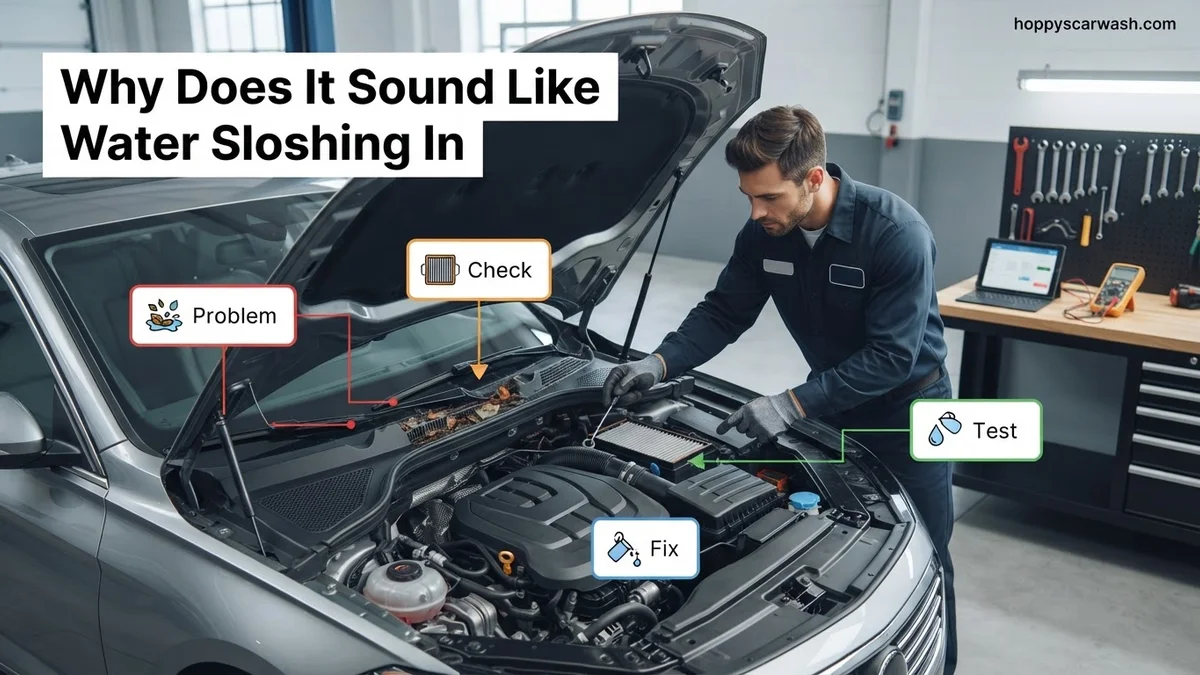
- Lift the hood and remove any leaves, pine needles, or dirt accumulated in the plastic cowl grille beneath the windshield wipers.
- Locate the rubber HVAC condensation drain tube on the engine-side firewall under the hood.
- Insert a blunt wire or pipe cleaner gently into the rubber nipple to dislodge compressed dirt and mildew plugs.
- Allow the system to drain completely, and run the vehicle’s air conditioning on high to ensure condensation flows outward properly.
What If the Sloshing Sound Still Doesn’t Stop After Clearing Drains
If clearing the standard drain paths fails to silence the sloshing noise, trapped water likely resides within a sealed body cavity or structural frame rail. Persistent fluid accumulation requires advanced troubleshooting steps and professional intervention.
- Check the rocker panels: Inspect the lower structural metal beneath the doors. Many modern vehicles feature rubber plugs underneath that can be popped out to drain internal rocker panel flooding.
- Lift interior carpeting: Feel the floorboards for dampness. If carpets are saturated, pull back the trim to check for standing water trapped above the factory vapor barrier.
- Inspect rear quarter panels: In hatchback or SUV models, water frequently pools in the spare tire well or rear quarter panel pockets due to failing tail light gaskets.
- Consult a professional: If structural cavities remain flooded, visit a trusted body shop or dealership service center. Professional diagnostic fees typically range from $100 to $200, while complete interior water extraction and mold remediation services span $250 to $600 depending on vehicle size.
Conclusion
Hearing water sloshing in your vehicle indicates a blocked drainage system that threatens vital electrical components and interior air quality. Clearing sunroof tubes, cowl grilles, and door drains quickly resolves most standard accumulations before structural damage occurs. According to verified research and automotive service data, proactive drain maintenance prevents costly interior remediation and electrical repairs. Take action today by inspecting your vehicle’s exterior drain points and clearing any visible blockages.
❓ Frequently Asked Questions
Why does the sloshing sound happen specifically when I accelerate or brake?
When you press the gas or brakes, momentum causes the trapped pool of water to shift back and forth against the walls of its enclosure, making the sloshing sound clearly audible over the engine noise.
How do I unclog the drain holes at the bottom of my car doors?
Look along the lower metal seam on the inside of the door for small rectangular slots. Use a zip tie, small screwdriver, or piece of wire to gently poke inside and clear out dirt or sealant blocking the exit.
Could trapped water in my car be engine coolant instead of rainwater?
If the sloshing sound comes from behind the dashboard and you smell a sweet syrup odor or notice your coolant level dropping, air bubbles or a leaking heater core could be the culprit.
What tools do I need to fix a clogged AC evaporator drain?
You typically just need a flashlight, a can of compressed air with a long extension straw, or a flexible piece of weed-eater line to snake up into the rubber drain tube from underneath the vehicle.
Where are sunroof drain tubes located, and how do I clean them?
Sunroof drains run down the four corner pillars of the cabin. You can clear them by gently blowing compressed air down the drain holes located in the corners of the open sunroof frame.
How can I prevent water from getting trapped in my car in the future?
Regularly clear leaves and pine needles from the area beneath your windshield wipers (the cowl) and keep your door and sunroof drainage channels clean of dirt and debris.