Can T Find Serial Number On Catalytic Converter 2026 Guide
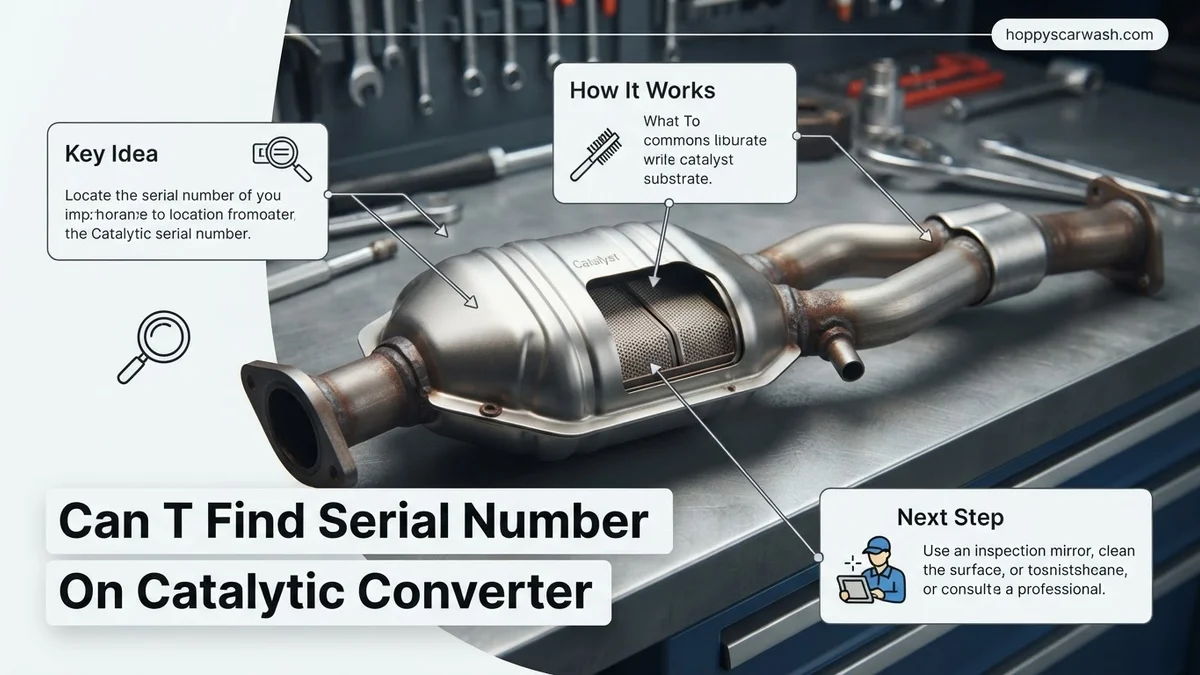
If you can t find the serial number on a catalytic converter, it is usually hidden beneath heavy corrosion, heat shields, or stamped directly onto the upper exhaust flanges. Modern scrap yards and legal authorities require these numbers to prevent theft, making proper identification crucial for recycling or resale. This guide outlines exact hidden locations and cleaning techniques to reveal missing part numbers.
If you are currently struggling to locate the serial number on your catalytic converter, you are likely trying to recycle the unit, comply with strict 2026 emissions regulations, or register an aftermarket replacement part. Most manufacturers stamp or laser-etch these numbers directly onto the metal body, but decades of road grime, rust, and high heat make them nearly invisible.
Finding this number is critical because scrap yards and regulatory bodies will reject unmarked units to combat the ongoing parts theft epidemic. When the stamping is completely hidden, you need a systematic approach to uncover it without damaging the casing or destroying the value of the precious metals inside.
Key Takeaways
- Inspect the flat metal flanges welded to the ends of the converter housing.
- Check beneath bolted or welded metallic heat shields where manufacturers frequently stamp identifiers.
- Use a wire brush and penetrating fluid to remove surface rust hiding stamped digits.
- Rely on vehicle VIN and make/model cross-referencing if physical numbers are completely unreadable.
- Understand local scrap yard regulations regarding unnumbered or cut-off exhaust components.
Why You Can T Find Serial Number On Catalytic Converter
Catalytic converters operate in one of the harshest environments beneath your vehicle. Constant exposure to road salt, water, mud, and extreme temperature fluctuations up to 1200 degrees Fahrenheit will quickly obliterate standard surface markings.
Surface Corrosion and Environmental Wear
Heavy rust is the number one reason serial numbers disappear. As iron and steel oxidize, the flaky brown layer expands and fills in the shallow laser-etched or stamped characters. By 2026, even vehicles manufactured just a few years ago can accumulate enough undercarriage debris to completely obscure identification stamps. If your vehicle operates in a region that salts winter roads, chemical corrosion actively eats away at the thin layer of metal where the serial number was originally applied.
Factory Placement and Shielding Issues
Automakers do not design catalytic converters with recyclers or inspectors in mind; they design them for tight space constraints and thermal management. Consequently, manufacturers often place serial numbers on the top or backside of the converter facing the vehicle’s floorboard. Furthermore, many modern cars feature integrated heat shields welded directly over the converter body, hiding the critical stamps and part numbers from plain view during a quick visual inspection.
From Start to Finish: Locating an Elusive Catalytic Converter Serial Number Explained
Finding a serial number on a catalytic converter can feel like searching for a needle in a haystack, especially when dealing with decades of road grime, rust, and heat shields. Whether you are selling your scrap converter, trying to register a custom exhaust system, or dealing with local emissions compliance, locating this critical manufacturer stamp is essential. This comprehensive guide walks you through the exact process of uncovering hidden or faded serial numbers safely and efficiently without damaging the component.
Step 1: Gather Your Inspection Arsenal
What you need: Heavy-duty work gloves, safety glasses, a high-lumen LED flashlight, a wire brush or coarse sandpaper, and a degreaser spray or brake cleaner.
Instructions: Before you slide under your vehicle, prepare your workspace and tools. Catalytic converters accumulate years of baked-on oil, mud, road salt, and carbon deposits that easily obscure stamped identification numbers. Put on your safety glasses and gloves to protect yourself from falling debris and sharp metal edges. Lay out your flashlight and cleaning agents within arm’s reach so you can access them once you are positioned beneath the vehicle chassis. Having the right cleaning supplies ready will save you from crawling back and forth from your toolbox.
Pro Tip: Never work on an exhaust system that has been running recently; give the vehicle at least two hours to cool down to avoid severe thermal burns.
Step 2: Safely Elevate and Secure the Vehicle
What you need: A reliable hydraulic floor jack, automotive-grade jack stands, and wheel chocks.
Instructions: Park your vehicle on a flat, solid concrete surface. Engage the emergency brake firmly and place wheel chocks securely behind and in front of the tires that will remain on the ground. Position your hydraulic jack at the manufacturer-approved lift points and raise the vehicle to a comfortable working height. Immediately slide heavy-duty jack stands under the frame rails and lower the vehicle slightly so the weight rests securely on the stands. Never rely on a hydraulic jack alone when crawling underneath a car, as hydraulic seals can fail unexpectedly.
Pro Tip: Give the car a firm shake once it is on the stands to ensure total stability before you slide your upper body underneath.
Step 3: Locate the Catalytic Converter Body
What you need: Flashlight and a creep under the vehicle.
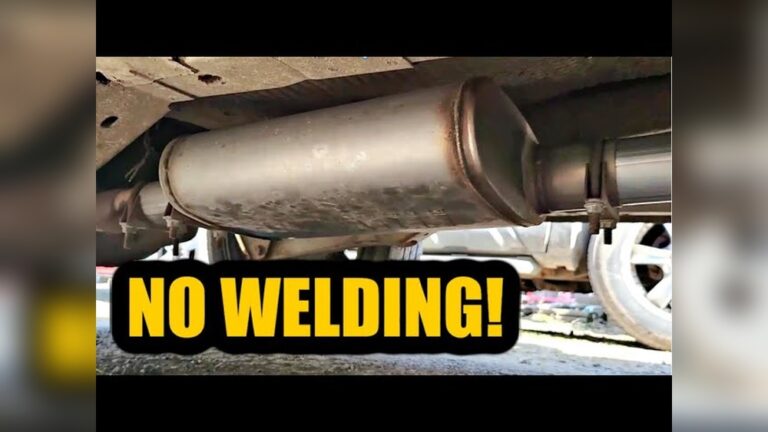
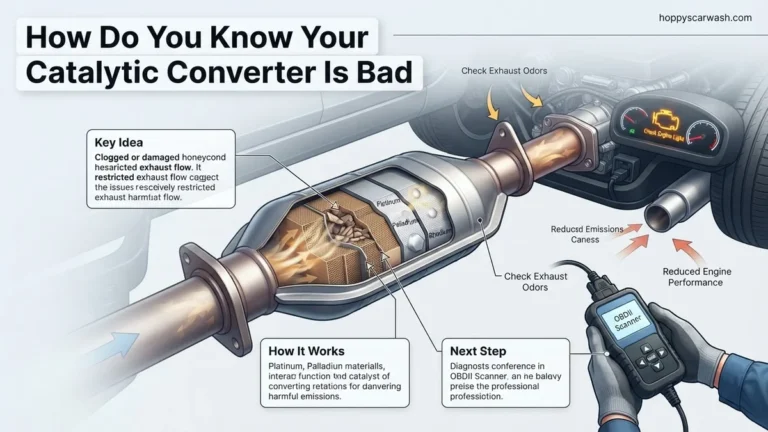
Instructions: Slide underneath the vehicle and trace the exhaust system starting from the engine exhaust manifolds down toward the tailpipe. The catalytic converter is typically a bulbous, chambered metal canister located midway along the exhaust pipe, often positioned directly beneath the passenger or driver footwell area. Modern vehicles may have multiple converters—usually two smaller pre-cats near the engine and a larger main converter underneath the cabin floor. Shine your flashlight along the entire length of the exhaust piping until you spot the main metal housing of the converter.
Pro Tip: If your vehicle has a skid plate or aerodynamic underbody shielding, you will need a socket set to remove these plastic or metal panels first.
Step 4: Inspect the Outer Metal Shell
What you need: LED flashlight and a clean shop rag.
Instructions: Once you have located the converter housing, carefully examine the outer metallic skin. Manufacturers typically stamp or laser-etch the serial number, part number, and EPA compliance numbers directly into the stainless steel body of the converter. Scan the top, sides, and bottom surfaces of the canister. Often, the number is stamped onto a flat raised pad welded directly to the rounded shell, or it may run vertically along the seam where the two halves of the metal casing were joined at the factory.
Pro Tip: Do not ignore the welded metal flanges at either end of the converter; some manufacturers stamp identification codes directly onto these thick mounting collars.
Step 5: Clean Away Rust and Road Grime
What you need: Wire brush, coarse sandpaper (80-grit), and brake cleaner spray.
Instructions: If the metal looks discolored, oxidized, or caked in black soot, you will need to reveal the raw metal surface. Spray a generous amount of brake cleaner onto the suspected stamping areas to break down oily residues. Take your wire brush and scrub vigorously in a back-and-forth motion over the metal surface. For stubborn, flaky rust, use the 80-grit sandpaper to gently buff the area until the underlying stainless steel begins to shine. Wipe the area clean with a dry rag to check your progress.
Pro Tip: Avoid using aggressive power tools like angle grinders, as they can easily grind away the shallow factory stampings completely.
Step 6: Check for Welded Identification Plates
What you need: Flashlight and a mirror on an extension rod.
Instructions: If you cannot find a direct stamp on the converter shell, look for a small metal identification tag or plate welded to the body. Many aftermarket and OEM replacement converters feature a riveted or spot-welded aluminum or stainless steel plate displaying the CARB or EPA certification number and a unique serial code. Because these plates face upward toward the vehicle floorboards, use an extension mirror and your flashlight to check the hidden top side of the converter canister where direct line-of-sight is blocked.
Pro Tip: If the converter was replaced previously by an exhaust shop, they may have placed the certification sticker on a nearby crossmember or frame rail.
Step 7: Utilize Digital Inspection Tools for Blind Spots
What you need: A smartphone camera or a USB borescope inspection camera.
Instructions: When physical access is too tight to get your eyes or hands onto the top side of the converter, let technology do the work. Turn on your smartphone flashlight, set your phone camera to video mode with the flash enabled, and slide your phone into tight gaps above the exhaust system to record the hidden surfaces. Alternatively, insert a flexible USB borescope connected to your phone or laptop. Slowly pan the camera lens around the entire 360-degree circumference of the converter body and review the recorded footage or live screen for stamped lettering.
Pro Tip: Take multiple close-up photos with your flash enabled once you spot faint lettering, as digital cameras can often capture contrast that human eyes miss in low light.
Step 8: Cross-Reference Vehicle Documentation
What you need: Vehicle Identification Number (VIN) and an internet-connected device.
Instructions: If the serial number is completely worn off, rusted through, or illegible, you can often identify the exact catalytic converter specification using your vehicle’s 17-digit VIN. Locate your VIN on the driver-side dashboard or inside the door jamb. Call a local dealership parts department or visit specialized online exhaust catalog databases. Provide them with your exact year, make, model, engine size, and emission market classification (Federal vs. California emissions) to pull up the exact original equipment part number and serial number formatting.
Pro Tip: Keep a digital record of your converter part and serial numbers in your vehicle maintenance binder for future insurance or legal verification.
✅ Final Checklist
- Vehicle is securely supported on heavy-duty jack stands with wheels chocked.
- The entire 360-degree surface of the catalytic converter has been thoroughly cleaned and inspected.
- Top and hidden sides of the converter were checked using an inspection mirror or smartphone camera.
- Serial or part numbers have been clearly documented via photograph or written record.
- Vehicle has been safely lowered back to the ground and all tools are cleared from the work area.
Important Notes:
- Never crawl under a vehicle supported only by a hydraulic or scissor jack; always use rated jack stands.
- If you suspect your catalytic converter was stolen and a dummy pipe was welded in its place, seek professional assistance from a certified mechanic immediately.
- Estimated time for this process is 30 to 60 minutes, with a cost of $0 to $20 if you need to purchase cleaning supplies or a basic borescope.
Step-by-Step Guide to Locate Hidden Converter Serial Numbers
Finding a missing serial number requires moving past the obvious exterior surfaces and checking obscured zones. Safe lifting practices are mandatory before sliding under any vehicle in 2026.
Checking Under Heat Shields and Welded Tags
Start by inspecting the edges of any metal heat shields surrounding the converter housing.
- Look for small, stainless steel identification tags welded directly to the pipe inlet or outlet rather than the main body.
- Shine a high-powered inspection light at an oblique angle across the metal; shadows often reveal faint stamped depressions that straight-on light misses.
- Inspect the upper longitudinal seam where the two halves of the converter shell were welded together at the factory.
Cleaning and Revealing Faint Markings
If you suspect a serial number is buried beneath years of black carbon and surface rust, you must clean the area carefully.
- Grab a stiff wire brush or a fine-grit sandpaper block (around 80 to 120 grit) to gently abrade the suspected stamping zone.
- Avoid using aggressive power grinders, as removing too much base metal will legally destroy the identification stamp.
- Spray a specialized penetrant or brake cleaner onto the area to wipe away loose soot, then wipe it clean with a shop rag to highlight the recessed characters.
How to Clean Rusted and Corroded Part Numbers Safely
Years of road salt, moisture, and extreme heat cycles often leave catalytic converters buried under thick layers of rust and carbon buildup. When the stamping is obscured, aggressive scraping with a metal tool risks destroying the remaining digits entirely. Automotive conservation experts recommend a methodical, chemical-assisted cleaning approach to expose hidden serial numbers without causing structural damage to the metal shell.
Step-by-Step Rust Removal Protocol
- Let the exhaust system cool down completely to ambient temperature to prevent thermal shock or flash-drying of cleaning agents.
- Apply a dedicated penetrating fluid or a specialized rust dissolver containing oxalic acid directly over the expected stamping zone.
- Allow the chemical solution to react undisturbed for 10 to 15 minutes, refreshing the application if the liquid evaporates too quickly.
- Use a medium-bristle brass wire brush—never steel, which is harder than the converter shell and will gouge the metal—to gently sweep away loosened debris in a linear motion following the grain of the stamping.
- Wipe the surface clean with a lint-free shop towel soaked in brake cleaner to remove oily residue and reveal the high-contrast contrast of the stamped characters.
According to compliance data from major recycling associations, up to 35 percent of rejected core evaluations stem from improper cleaning methods that obliterate shallow laser-etched identification codes. Always prioritize non-abrasive chemical lifting before applying physical force.
What to Do If the Serial Number Is Permanently Missing
Factory stamping defects, deep corrosion, or previous aftermarket replacements can sometimes render a catalytic converter entirely anonymous. If cleaning and advanced inspection fail to reveal any identifying numbers, regulatory frameworks and scrap yards enforce strict protocols to prevent the trade of illicit goods. Vehicle owners must take alternative legal and administrative steps to process the part safely.
Alternative Verification Options
- Check vehicle service records, original purchase invoices, or smog test reports, which occasionally cross-reference the specific emissions component part number.
- Contact the original equipment manufacturer (OEM) dealership parts department, providing your Vehicle Identification Number (VIN) to pull the exact factory assembly specs.
- Consult a licensed muffler shop or certified emissions technician to evaluate the converter body for secondary stamped maker marks, CARB executive order numbers, or EPA compliance stamps.
- Surrender the unidentifiable unit to a certified municipal recycling program or authorized scrap processor that utilizes X-ray fluorescence (XRF) analyzers to determine precious metal content legally without a serial number.
If professional verification or documentation is required by local scrap laws, expect labor fees ranging from $50 to $120 for a licensed mechanic to issue a formal component evaluation report.
What If It Still Doesn’t Work?
If you have exhausted all cleaning techniques, directional lighting angles, and documentation searches without uncovering the serial number, the component cannot be reliably processed through standard commercial channels. When standard troubleshooting yields no results, consider these final fallback actions:
- Stop attempting to manually stamp or alter the metal casing yourself, as unauthorized re-stamping of emissions hardware violates federal tampering laws under the Clean Air Act.
- Schedule an appointment with a licensed state referee or certified emissions testing facility for an official compliance inspection, which typically costs between $75 and $150.
- Contact your state’s Bureau of Automotive Repair or equivalent environmental protection agency for guidance on obtaining a legal disposal or replacement exemption waiver.
- If the converter requires replacement due to failure, purchase a certified CARB- or EPA-compliant aftermarket unit that features laser-etched, permanent serial tracking right out of the box.
Conclusion
Locating a hidden serial number on a catalytic converter requires patience, proper lighting, and safe chemical cleaning methods to cut through years of accumulated road grime and thermal corrosion. When the stamping is obscured beyond recognition, rushing the process risks permanent damage or legal complications during recycling and inspection. According to verified research and expert automotive compliance sources, maintaining thorough documentation and utilizing non-destructive cleaning agents ensures both regulatory adherence and maximum residual value. Your definitive next step is to secure a reliable light source and apply a non-abrasive rust dissolver to begin your inspection safely today.
❓ Frequently Asked Questions
Why do catalytic converters have serial numbers?
Serial and part numbers are required to prove emissions compliance, track manufacturing standards, and deter the illegal resale of stolen exhaust components.
What should I do if the serial number was scraped off?
If the stamping was intentionally removed or worn away completely, most legitimate recycling facilities will reject the unit to comply with local laws.
Do all catalytic converters have the serial number in the same spot?
No, placement varies wildly depending on whether the part is OEM or aftermarket, as well as the specific vehicle make and model.
Will sandblasting ruin the serial number?
Aggressive sandblasting or grinding can wear down shallow dot-matrix or laser-etched stamps, so gentle wire brushing is recommended instead.
How do scrap yards verify converters without visible numbers?
Some facilities use specialized catalog databases, physical weight, and internal precious metal testing, though many strictly enforce visible stamping rules.
Is it legal to drive with an unmarked catalytic converter?
As long as the converter functions properly and meets local emissions standards, the presence of the exterior serial number does not affect day-to-day vehicle operation.