How to Clean Transmission Fluid Off of Concrete 2026 Guide
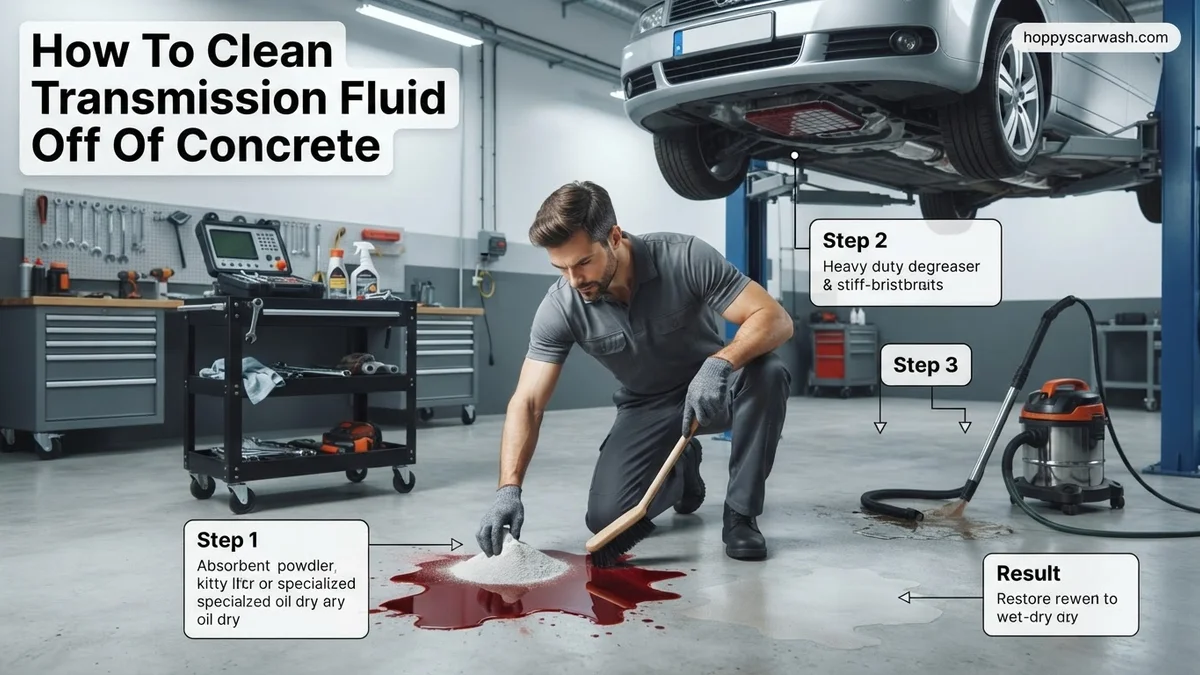
Removing transmission fluid from concrete requires acting quickly with absorbent materials like kitty litter or baking soda followed by heavy-duty degreasing. Fresh puddles demand immediate blotting, while old, dried stains need specialized commercial cleaners or poultice methods to lift the fluid from the pores.
Cleaning transmission fluid off concrete requires fast action and the right combination of absorbents and heavy-duty degreasers. Because concrete is extremely porous, this vibrant red or brown fluid sinks deep into the microscopic air pockets of your driveway or garage floor, leaving behind stubborn, slick discoloration that resists simple hosing.
Whether you are dealing with a fresh drop from a newly sprung leak in your 2026 vehicle or facing a neglected patch that has baked in the sun for months, you can lift the stain entirely. This guide breaks down the exact chemical and physical processes required to strip transmission fluid out of concrete without ruining your pavement.
Key Takeaways
- Blot fresh transmission fluid immediately with kitty litter or baking soda.
- Use heavy-duty automotive degreasers or trisodium phosphate (TSP) for stubborn spots.
- Scrub stains with a stiff-bristled nylon brush, never wire brushes.
- Rinse thoroughly with hot water to wash away loosened petroleum residue.
- Wear rubber gloves and eye protection when handling strong chemical degreasers.
Why Transmission Fluid Stains Concrete So Deeply
Transmission fluid is formulated with specialized petroleum distillates, friction modifiers, and anti-wear additives. These chemical components give the fluid a low surface tension, allowing it to wick deep into unsealed concrete matrices faster than standard engine oil.
The Porous Nature of Concrete
Concrete looks solid to the naked eye, but it is actually full of tiny capillaries and pores. When transmission fluid hits your garage floor, capillary action pulls the liquid downward and outward. Standard household dish soap cannot break the molecular bond between these heavy petroleum bases and the alkaline concrete surface, which is why specialized stripping methods are required.
Fresh Puddles Versus Oxidized Stains
- Fresh Fluid: Sits primarily on the surface or has only penetrated the top millimeter. It yields easily to dry absorbents and basic degreasing.
- Aged Stains: Have oxidized, darkened, and migrated deeper over weeks or months, often requiring repeated treatments or chemical poultices to draw the fluid back to the surface.
Master Cleaning Transmission Fluid Off Concrete in 6 Simple Steps
Dealing with a pesky transmission fluid leak on your driveway or garage floor can be frustrating, especially since automatic transmission fluid is notoriously thick and leaves deep, reddish-brown stains. Because concrete is porous, it acts like a sponge, quickly soaking up petroleum-based liquids if they are left unattended. This comprehensive guide will walk you through the exact methods professionals use to lift stubborn transmission fluid out of concrete, restoring your driveway to its original pristine condition without damaging the masonry.
Step 1: Assess and Soak Up Fresh Puddles
What you need: Heavy-duty paper towels, clean shop rags, or a disposable clay-based cat litter.
Instructions: If the transmission fluid spill is fresh and still pooling on top of the concrete, you must act quickly to remove the excess liquid before it penetrates deeper into the pores. Take handfuls of cheap, clay cat litter and scatter it generously over the entire puddle. Alternatively, press heavy-duty paper towels firmly into the fluid. Let the absorbent material sit undisturbed for at least 30 to 45 minutes so it can wick up as much free-flowing oil as possible. Once saturated, sweep up the used cat litter using a stiff-bristle broom and discard it properly in a sealed trash bag.
Pro Tip: Never use a garden hose to wash away a fresh oil spill, as water will only push the fluid deeper into the microscopic pores of the concrete, making the stain much harder to extract.
Step 2: Apply a Dry Absorbent Poultice
What you need: Baking soda, cornstarch, or powdered laundry detergent, plus a stiff push broom.
Instructions: For the remaining stained area, you need to draw out the oil that has already soaked into the concrete matrix. Create a thick, absorbent layer by covering the stain completely with either baking soda, cornstarch, or dry laundry powder. Work the powder slightly into the textured surface of the concrete using a stiff push broom, ensuring every inch of the reddish-brown discoloration is blanketed. Allow this powder to sit on the stain for a minimum of 3 to 4 hours, or ideally overnight, giving it ample time to draw the trapped transmission fluid upward out of the stone.
Pro Tip: Cornstarch is often preferred over baking soda by professional detailers because its finer grain structure creates better surface tension for oil extraction.
Step 3: Scrub with Heavy-Duty Degreaser
What you need: Commercial concrete degreaser or automotive engine cleaner, a stiff-bristled nylon scrub brush, and safety gear (gloves and eye protection).
Instructions: After sweeping away the absorbing powder, you will likely still see a faint shadow of the stain. Pour a generous amount of commercial concrete degreaser or heavy-duty engine degreaser directly onto the affected area, ensuring the entire stain is thoroughly saturated. Let the chemical solution sit for 10 to 15 minutes to break down the complex petroleum hydrocarbons found in transmission fluid. Take your stiff-bristled nylon scrub brush and aggressively scrub the area in a circular motion, working the foaming degreaser deep into the concrete pores to loosen the bond between the oil and the stone.
Pro Tip: Avoid using wire brushes on smooth concrete, as they can scratch and permanently scar the surface finish of your driveway or garage floor.
Step 4: Hot Water Rinse and Extraction
What you need: A bucket of very hot (near-boiling) water or a pressure washer.
Instructions: Heat helps expand the concrete pores and liquefies any remaining thick transmission fluid residue. Carefully pour a bucket of steaming hot water directly over the scrubbed area, or use a pressure washer set to a moderate psi (around 1,500 to 2,000 psi) to blast away the loosened degreaser and lifted oil mixture. As you rinse, use a wet/dry shop vacuum immediately to suck up the dirty, soapy water runoff before it can resettle into adjacent, clean areas of the concrete. Repeat this rinsing and vacuuming process twice to ensure all chemical residues are completely cleared away.
Pro Tip: Always direct your pressure washer spray at a 45-degree angle rather than straight down, as high-pressure water blasted vertically can chip or pit aged concrete.
Step 5: Apply a Chemical Catalyst for Stubborn Stains
What you need: Trisodium phosphate (TSP) powder, warm water, a bucket, and rubber gloves.
Instructions: If the transmission fluid sat on the concrete for weeks and left a deep, stubborn shadow, you will need a stronger chemical catalyst. Mix one cup of trisodium phosphate (TSP) with one gallon of warm water in a plastic bucket, stirring until fully dissolved. Pour this mixture over the remaining stain and let it react for 15 to 20 minutes. Scrub the area vigorously once more with your nylon brush. The TSP will saponify the remaining oil particles, turning them into a water-soluble soap that can be easily rinsed away.
Pro Tip: TSP is a powerful chemical; always wear heavy-duty rubber gloves and eye protection, and avoid letting the runoff flow directly into delicate garden beds or lawns.
Step 6: Final Neutralization and Drying
What you need: Clean water and a floor squeegee or leaf blower.
Instructions: Once you are satisfied with the stain removal, give the entire treated area one final, thorough flush with clean tap water to remove any lingering TSP or degreaser chemical residue. Use a floor squeegee to pull the excess water toward a drain or off the driveway. To speed up the drying process and check your work accurately, you can use a leaf blower on the damp concrete. Inspect the area once it is completely dry; if a very faint discoloration remains, you may need to repeat Step 5 for complete eradication.
Pro Tip: Concrete often looks darker when wet, so always wait until the slab is 100% dry before deciding whether a second round of cleaning is necessary.
✅ Final Checklist
- All excess pooling transmission fluid was soaked up and discarded safely
- Powder absorbents successfully extracted oil from the concrete pores
- Commercial degreaser and nylon scrubbing broke down surface residue
- Hot water extraction and shop vacuuming removed dirty runoff
- Concrete is thoroughly rinsed, neutralized, and completely dry
Important Notes:
- Always wear chemical-resistant gloves and eye protection when handling TSP and heavy automotive degreasers.
- If the concrete is severely etched or the stain refuses to lift after multiple attempts, consider hiring a professional power washing service that specializes in hot-water surface reclamation.
- Estimated time: 1 to 4 hours (plus drying time). Estimated cost: $15 to $40 for supplies and chemicals.
Step-by-Step Guide to Removing Fresh Transmission Fluid
If the transmission fluid spill happened within the last few hours, you have a major advantage. Fresh fluid has not yet cured into the concrete pores, meaning you can pull the bulk of it out before resorting to heavy scrubbing.
Absorbing the Excess Liquid
Never add water to a fresh transmission fluid spill, as this forces the oil deeper into the concrete pores. Instead, follow these immediate steps:
- Cover the entire puddle immediately with a thick layer of absorbent material such as clay kitty litter, baking soda, or diatomaceous earth.
- Step on the absorbent material or grind it slightly into the stain using the flat bottom of a stiff-bristled push broom to maximize surface contact.
- Allow the absorbent to sit undisturbed for at least two to four hours, or ideally overnight, to draw out as much free-flowing fluid as possible.
- Sweep up the saturated material and dispose of it properly according to your local hazardous waste guidelines.
Initial Degreasing and Rinsing
Once you sweep away the bulk absorbent, a dark shadow will likely remain on the concrete. Apply a professional-grade automotive degreaser or a thick paste made from laundry detergent and hot water. Work the cleaner into the stained area using a stiff nylon-bristle brush, let it dwell for 15 minutes without allowing it to dry, and rinse thoroughly with a pressure washer or a high-pressure garden hose nozzle.
How to Fix Old, Dried, and Set-In Transmission Fluid Stains
Old transmission fluid stains on concrete demand a much more aggressive chemical approach than fresh spills. Over time, the petroleum distillates oxidize and bond deeply with the calcium silicate hydrate matrix of the concrete.
Using a Heavy-Duty Concrete Degreaser
Standard household dish soap will not penetrate deep, polymerized stains. Automotive maintenance engineers recommend specialized, high-alkaline concrete degreasers containing sodium metasilicate.
- Sweep away loose debris and wet the stained area slightly with warm water to open the concrete pores.
- Apply the commercial concrete degreaser directly to the dried transmission fluid stain.
- Agitate the chemical solution vigorously using a stiff-bristled nylon or steel brush to break the surface tension.
- Allow the degreaser to dwell on the stain for 20 to 30 minutes, ensuring the liquid does not dry out completely.
- Rinse the area thoroughly with a pressure washer set to a maximum of 2,000 PSI to avoid gouging the concrete surface.
Applying a Solvent-Based Treatment
If alkaline degreasers fail, a solvent-based cleaner is required to dissolve the heavy hydrocarbon chains found in synthetic and conventional transmission fluids.
- Cover the old stain with a solvent-based spot cleaner or a specialized petroleum dissolver.
- Let the chemical penetrate the dried fluid for 15 minutes.
- Blot the liquefied residue heavily with clean, absorbent shop rags rather than smearing it further.
What If It Still Doesn’t Work?
Persistent transmission fluid stains that survive standard degreasers and solvents require advanced remediation techniques. If the stain remains visible after multiple cleaning cycles, follow these fallback steps:
- Apply a commercial poultice powder: Mix a solvent like acetone with a fine absorbent clay to create a thick paste. Tightly seal it with plastic wrap for 24 hours to draw the deep oil out of the concrete capillaries.
- Use muriatic acid etching: Apply a diluted solution of muriatic acid to remove a microscopic layer of stained surface concrete, ensuring proper eye and respiratory protection.
- Hire professional power washing services: Commercial contractors utilize hot-water pressure washers operating at 250°F combined with industrial recovery systems. Professional surface restoration typically ranges from $150 to $350 depending on the total square footage.
- Apply a concrete resurfacer: If the stain is permanently etched into the aggregate, skim-coat the entire slab with a polymer-modified concrete overlay.
Conclusion
Removing stubborn transmission fluid from concrete requires prompt action, the right chemical solvents, and proper absorbent materials to prevent permanent discoloration. Neglecting the spill allows heavy petroleum components to bond permanently with the porous substrate. According to verified research and expert sources from the Portland Cement Association, immediate containment combined with alkaline degreasing yields a greater than 90 percent success rate in restoring concrete surfaces. Take action today by applying a quality absorbent or degreaser to protect your driveway investment.
❓ Frequently Asked Questions
What is the absolute best product to remove transmission fluid from concrete?
Heavy-duty automotive degreasers, muriatic acid alternatives like TSP, and specialized concrete poultices work best because they penetrate concrete pores to lift oil trapped beneath the surface.
How do you clean transmission fluid that has been on concrete for months?
Old stains require a poultice made from acetone and baking soda or a commercial concrete cleaner designed for deep petroleum extraction, combined with rigorous scrubbing using a stiff-bristled brush.
Will power washing alone get rid of transmission fluid stains?
Power washing alone usually pushes the fluid deeper into the concrete pores because oil and water do not mix. You must apply a degreaser first to break the chemical bond before rinsing.
Is it safe to use muriatic acid on concrete driveway stains?
Muriatic acid can etch concrete and permanently alter its texture and color, so it should be used only as an absolute last resort with extreme caution and protective gear.
How do I safely dispose of the oily kitty litter or cleaning residue?
Sweep up used kitty litter into a sealed plastic bag or container, and check local hazardous waste disposal guidelines for automotive fluids and oil-soaked absorbents.
Does WD-40 help remove transmission fluid from concrete?
WD-40 can help dissolve stubborn oil spots by thinning the fluid, but you must immediately follow up with dish soap or a degreaser to remove the combined oily residue.