Can You Mix Universal Coolant With Pink Coolant in 2026
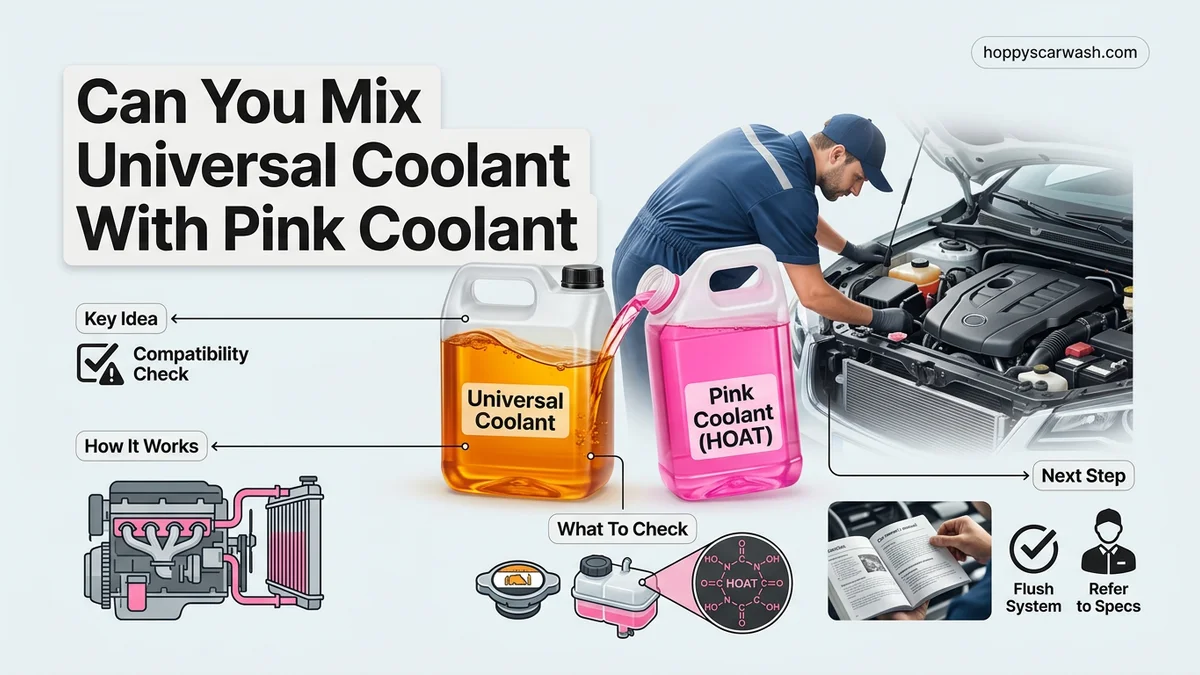
Never mix universal coolant with pink coolant unless it is an absolute emergency. Doing so can cause chemical reactions, leading to sludge buildup, clogged heater cores, and severe engine overheating.
Mixing universal coolant with pink coolant is generally a bad idea for your vehicle’s cooling system, and doing so can lead to severe chemical reactions, gel formation, and blocked radiator passages. Even though modern multi-vehicle formulas claim to mix with anything, pink coolants—typically Asian OEM formulations featuring Organic Acid Technology (OAT) or specific Hybrid Organic Acid Technology (HOAT)—rely on specialized corrosion inhibitors that often clash with the additive packages found in traditional or standard universal coolants.
As vehicle manufacturing standards evolve into 2026, tighter cooling system tolerances mean that incorrect fluid mixtures cause heat dissipation failures much faster than they did in older cars. If you have already topped off your pink coolant reservoir with a generic universal fluid, understanding the underlying chemistry and knowing how to correct the mistake quickly will save you from expensive water pump and heater core replacements.
Key Takeaways
- Mixing incompatible coolants can cause the fluid to gel and clog your radiator.
- Pink coolant is typically an Asian OEM formulation requiring specific phosphate-based inhibitors.
- Universal coolants use varied additive technologies that may react poorly with specialized OAT formulas.
- Always flush your cooling system completely before switching coolant types.
- In an emergency, adding distilled water is safer than mixing incompatible antifreeze formulations.
What Causes Coolant Incompatibility Issues When Mixing Universal and Pink Formulations
The Chemistry Clash Between OAT, HOAT, and Universal Additives
The primary danger of mixing universal coolant with pink coolant lies in the corrosion inhibitor packages. Pink coolants used by Toyota, Lexus, Honda, Hyundai, and Kia usually rely on phosphated OAT (P-OAT) chemistry, which lacks silicates and amines. Meanwhile, many traditional or older universal coolants utilize inorganic acid technology (IAT) or legacy HOAT formulas containing silicates. When these conflicting chemical packages bond inside a hot engine, they frequently drop out of suspension, creating a thick, silty gel.
Real-World Risks to Your Cooling System
When this chemical sludge forms, it disrupts the thermal efficiency of your engine and destroys critical components:
- Clogged Heater Cores: The narrow channels of your heater core trap gel first, leaving you with cold cabin air during winter months.
- Water Pump Failure: Abrasive particulate buildup degrades the mechanical water pump seal, leading to premature leaks and bearing failure.
- Radiator Tube Blockage: Reduced flow rates through the aluminum radiator fins cause engine temperatures to spike, risking warped cylinder heads.
- Compromised Gaskets: Incompatible additives eat away at modern ethylene glycol and propylene glycol hose linings, causing sudden ruptures.
How to Fix a Mixed Coolant System With a Complete Flush
Diagnostic Checks and Signs of Contamination
If you suspect someone mixed universal coolant with your factory pink fill, look inside the coolant overflow reservoir rather than just reading the color. Contaminated coolant often turns a murky brown, develops a cloudy haze, or floats a gummy residue at the surface of the fluid. Do not rely on color alone, as some universal coolants attempt to mimic pink hues using dyes while retaining fundamentally different base additive formulas that still react poorly with your OEM fluid.
Step-by-Step Cooling System Remediation
Once you confirm an improper mixture, a standard drain-and-fill is rarely enough to remove all the old fluid trapped in the heater core and engine block. Follow these steps to restore your system integrity:
- Drain the System: Safely empty the radiator via the petcock and remove the lower radiator hose once the engine is completely cool.
- Flush with Clean Water: Fill the system with distilled water, run the engine until it reaches normal operating temperature with the cabin heater on high, then drain again.
- Use a Chemical Flush Agent: If you already notice gelling, add a dedicated cooling system flush cleaner to break down stubborn silicate residue before rinsing.
- Refill with Correct Spec: Re-fill the system using a 50/50 mix of distilled water and the exact OEM-specified pink coolant required by your vehicle manual.
Step-by-Step Guide to Draining and Replacing Your Engine Coolant
If you accidentally mixed universal and pink coolant, or if your service interval has arrived in 2026, a complete system flush is required. Leaving contaminated fluid in the block accelerates corrosion and water pump failure. Automotive engineers recommend following a strict procedural method to remove all traces of old chemicals.
Preparation and Draining
- Ensure the engine is completely cold to prevent severe thermal burns from pressurized, boiling fluid.
- Locate the radiator drain plug (petcock) at the bottom corner of the radiator or disconnect the lower radiator hose.
- Place a wide catchment pan underneath and open the plug, allowing the old coolant to drain completely into a sealed container.
- Remove the coolant reservoir tank, empty the remaining sludge, and wash it thoroughly with clean water before reinstalling.
Flushing and Refilling
- Close the drain plug securely and fill the system with distilled water mixed with a dedicated commercial cooling system flush chemical.
- Run the engine with the cabin heater set to high for roughly 15 minutes to circulate the cleaner through the core and engine block.
- Drain the flush mixture once the engine cools down, then repeat the process with plain distilled water until the draining fluid runs completely clear.
- Fill the system with the manufacturer-specified coolant type (such as fresh pink OAT coolant for Asian or European models) using a 50/50 ratio with distilled water, then bleed out any trapped air pockets.
What If Your Engine Still Overheats After a Coolant Flush
If your engine temperature continues to climb after flushing out mixed coolants, chemical incompatibility is no longer the primary issue. The contamination may have already caused mechanical damage, or an underlying problem is restricting fluid flow. Consider these advanced diagnostic and repair steps:
- Check for Air Pockets: Trapped air in the cooling passages prevents proper heat transfer. Use a specialized spill-free coolant funnel to properly burp the system.
- Inspect the Thermostat: Debris or gel residue from mixed coolants can jam the thermostat closed. Test or replace the thermostat, which typically costs between $150 and $300 including labor.
- Test the Water Pump: Impeller blades can corrode or break off under harsh chemical reactions. A failing water pump requires immediate replacement, averaging $400 to $900 depending on vehicle make.
- Seek Professional Help: If purging the system and replacing primary components fails to stabilize temperatures, consult a certified technician for a block test to rule out a blown head gasket. Professional diagnostic fees generally range from $100 to $200.
Conclusion
Mixing universal coolant with pink OAT or HOAT coolant creates a high risk of chemical gelling, scale buildup, and premature cooling system failure. According to verified research from automotive maintenance experts and fluid chemists, preserving the integrity of specialized inhibitor packages requires sticking strictly to manufacturer-approved formulations. The safest actionable next step is to perform a complete cooling system flush and refill with the exact fluid chemistry specified in your owner’s manual.
❓ Frequently Asked Questions
Why do different coolants have different colors like pink and green?
Colors are used by manufacturers to distinguish between different chemical formulations, such as OAT, HOAT, and IAT technologies. Never rely on color alone, as the underlying chemical additives determine true compatibility.
What should I do immediately if I accidentally mixed universal and pink coolant?
You should schedule a complete cooling system flush as soon as possible. Leaving the incompatible mixture in your engine can lead to sludge formation and restricted fluid flow.
Will mixing coolants void my factory car warranty?
While using the wrong fluid might not instantly void your entire warranty, any engine damage directly caused by coolant contamination or gelling will typically not be covered.
Can I use universal coolant as a temporary stopgap in an Asian vehicle?
It is strongly discouraged. Even a short-term mix can trigger minor chemical reactions that degrade seals and promote premature water pump wear.
How often should a complete coolant flush be performed?
Most vehicle manufacturers recommend flushing and replacing the coolant every 30,000 to 50,000 miles, or according to your specific maintenance schedule.
Does flushing the system remove all traces of the old coolant?
A standard drain only removes about half the fluid, which is why a professional flush using clean water or a flushing agent is necessary to clear out old incompatible chemicals.