Can a Snake Get Inside Your Car From Underneath? 2026
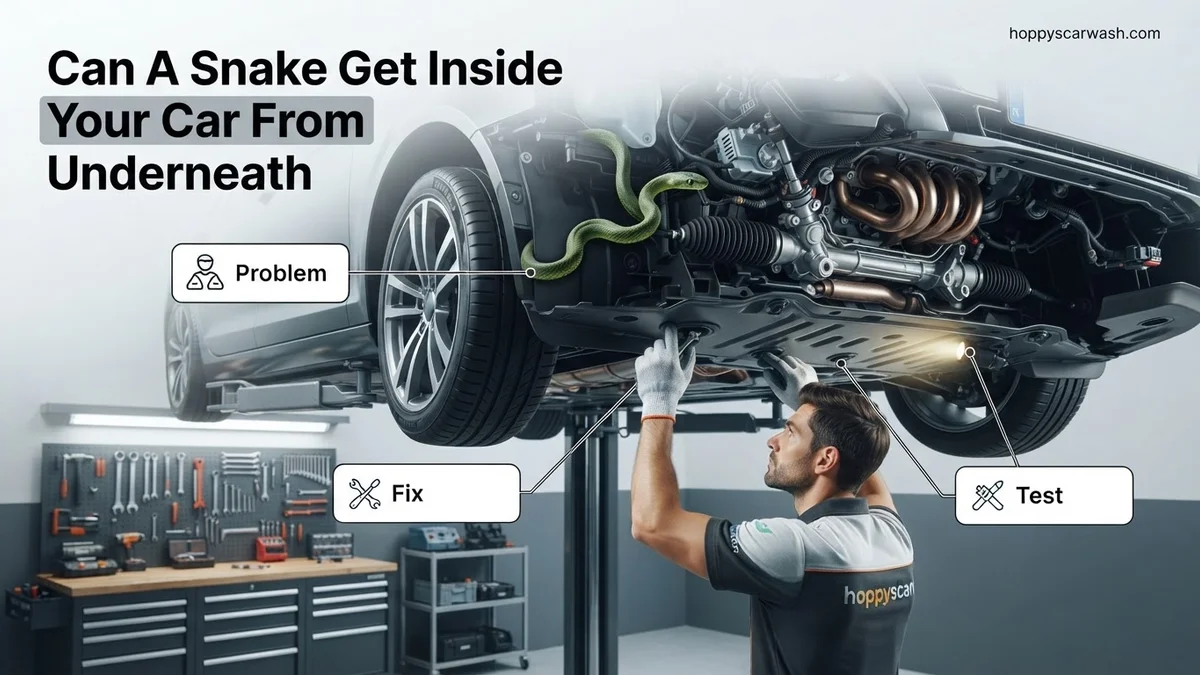
Yes, a snake can get inside your car from underneath by slithering up through the open undercarriage into the engine bay and finding small gaps into the cabin. Snakes are cold-blooded creatures that seek out the warmth of a recently driven vehicle or shelter from harsh weather.
Yes, a snake can definitely get inside your car from underneath, though it usually stops in the engine compartment before ever reaching the cabin. As automotive designs evolve through 2026, modern vehicles still feature numerous mechanical gaps, drainage holes, and wiring channels that connect the outside world directly to the inside of your vehicle.
Finding a serpent wrapped around your exhaust manifold or slithering beneath your floorboards is a terrifying experience that happens more often than you might think. Understanding how these reptiles breach your car’s defenses from the ground up is the first step in keeping your vehicle snake-free.
Key Takeaways
- Snakes routinely access the engine bay from open spaces in the vehicle undercarriage.
- Rubber firewall grommets, steering columns, and AC drain tubes provide paths into the cabin.
- Missing floorboard plugs or rusted-out frame holes allow direct ground access.
- Snakes are drawn to vehicles for residual engine heat or dark, protected spaces.
- Professional pest removal is recommended if a snake enters the vehicle interior.
What Causes Snakes to Access the Undercarriage of Your Car
Seeking Warmth and Shelter
Snakes are cold-blooded animals that constantly hunt for stable temperatures. When the weather drops or after you finish driving, your car’s engine bay and undercarriage retain heat for hours, acting as a giant thermal radiator. In 2026, urban sprawl continues to displace local wildlife, forcing snakes to seek refuge in suburban driveways where parked vehicles offer a dark, secure, and warm hiding spot away from predators.
Chasing Prey and Moisture
Your car’s undercarriage is a hotspot for rodents, insects, and lizards seeking shelter. If mice have nested near your cabin air filter or inside your bumper, snakes will follow their scent trails directly underneath your vehicle. Additionally, parking on damp grass, near retention ponds, or after heavy rain attracts snakes looking for moisture, leading them right up into your car’s frame rails and lower splash guards.
How to Fix Gaps and Seal Undercarriage Entry Points Step-by-Step
Inspect and Plug Firewall Openings
The firewall separates your engine bay from the interior cabin, but it is pierced by steering columns, wiring harnesses, and AC lines. Over time, rubber grommets dry out, crack, or fall out completely, leaving thumb-sized gaps that a desperate snake can squeeze through. Follow these steps to secure these vulnerable areas:
- Safely lift your vehicle in 2026 using a rated hydraulic jack and secure jack stands.
- Inspect the engine bay firewall with a bright flashlight for missing rubber seals or loose wiring boots.
- Fill minor gaps around cables using high-temperature automotive silicone sealant.
- Replace severely damaged rubber grommets with OEM-spec parts to block interior access paths.
Secure Floor Pans and Pedal Linkages
Below the carpeting, factory drain plugs and floor pan access holes can deteriorate or pop loose. Furthermore, steering shafts and accelerator pedal linkages require openings in the floorboard that must remain sealed against the elements. To bulletproof these lower entry points:
- Strip back interior floor mats and check the condition of rubber floor plug inserts.
- Apply heavy-duty flashing tape or automotive body plug seals to any loose or missing floor pan covers.
- Check the steering column boot under the dashboard to ensure it fits tightly around the metal shaft without visible gaps.
What If It Still Doesn’t Work and a Snake Gets Trapped Inside
If prevention steps failed and a snake managed to breach the cabin or engine compartment of your vehicle in 2026, standard DIY removal methods might not suffice. When a serpent becomes trapped inside the closed environment of a modern automobile, panic can cause erratic behavior, making the animal more defensive. Do not attempt to grab or corner the reptile barehanded, as even non-venomous species can inflict painful bites or cause dangerous driving distractions.
Immediate Fallback Protocol
- Safely Park and Secure the Vehicle: Immediately pull over in a well-lit, open area away from tall grass or brush. Turn off the ignition, secure the parking brake, and exit the car calmly if the snake is inside the cabin.
- Keep Visual Track of the Animal: Watch the snake from a safe distance to note its exact location. This information is critical for professionals attempting swift extraction.
- Contact Animal Control or Local Authorities: Many municipal animal control departments or local non-emergency dispatch services assist with wildlife removal from private property, including vehicles, often at no direct charge.
- Call a Professional Wildlife Removal Service: If municipal services are unavailable, hire a licensed nuisance wildlife control operator. According to 2026 industry data, professional snake extraction services typically range from $150 to $350 depending on the urgency and complexity of the vehicle disassembly required.
- Consult an Automotive Technician: If the snake has crawled deep into the dashboard electronics, climate control ducts, or frame rails, an automotive technician may need to carefully dismantle panels. Professional mechanic labor rates average $100 to $200 per hour.
Conclusion
Understanding whether a snake can enter your car from underneath confirms that while the undercarriage offers multiple potential entry points, snakes primarily seek shelter, warmth, or prey. Implementing proactive deterrents, keeping parking areas clear of debris, and sealing vulnerable gaps effectively minimizes this unusual automotive risk. According to verified research and expert wildlife sources, remaining calm and utilizing professional removal services ensures both human safety and animal welfare if an intrusion occurs. Your next actionable step is to inspect your vehicle’s engine bay perimeter and undercarriage for any obvious gaps or nesting materials today.
❓ Frequently Asked Questions
Can a snake actually get inside the passenger cabin from underneath the car?
While the undercarriage leads primarily to the engine bay, snakes can slip from the engine compartment into the cabin via the steering column, pedal linkages, or degraded firewall grommets.
What are the most common entry points under a vehicle?
The most frequent access points include missing plastic splash guards, gaps around wiring harnesses, damaged rubber floor plugs, and the air conditioning condensation drain tube.
How can I prevent snakes from getting under or inside my car?
Park your vehicle on clean asphalt or concrete away from tall grass, brush, and woodpiles. Ensure all rubber grommets are intact and that engine splash guards are securely fastened.
What should I do immediately if I see a snake crawl under my car?
Avoid driving the vehicle immediately if possible, as the snake may migrate further into moving parts. Tap on the hood or honk the horn to encourage it to leave, or call animal control if it remains trapped.
Will driving the car force a snake to fall out from underneath?
While vibration and wind can cause a snake to drop out on the road, many snakes will simply cling tighter to the frame or crawl deeper into the engine bay to escape.
Should I use DIY snake repellents around my car?
Granular or liquid chemical repellents offer limited effectiveness outdoors and generally do not prevent a motivated snake from seeking shelter under a warm vehicle.