Does The Toyota Corolla Have A CVT Transmission? Guide 2026
Yes, modern Toyota Corollas feature a CVT transmission, specifically utilizing a Direct Shift-CVT with a physical launch gear on standard models and an e-CVT on hybrid variants. This setup has been standard across most Corolla configurations since the 2014 model year, balancing fuel efficiency with responsive driving dynamics.
Yes, the modern Toyota Corolla does use a CVT (Continuously Variable Transmission) for the vast majority of its lineup. If you are shopping for a Corolla from 2014 up to the current 2026 model year, a CVT comes standard on almost all gas-powered trims, while hybrid variants utilize a specialized electronic CVT.
Understanding which transmission sits in your Corolla matters practically for your daily driving experience, fuel economy expectations, and long-term maintenance schedule. CVT systems behave differently than traditional geared automatics, meaning you will notice unique acceleration traits and specific fluid service intervals when you own one.
Key Takeaways
- Modern Toyota Corollas (2014-present) utilize a CVT transmission for optimal fuel economy.
- Standard gas models use Toyota’s Direct Shift-CVT featuring a physical first gear.
- Corolla Hybrid models use an electronically controlled continuous variable transmission (e-CVT).
- Manual transmissions are available on select sport trims like the GR Corolla and specific older sedan years.
- Check your specific model year door jamb or manual to confirm exact transmission type.
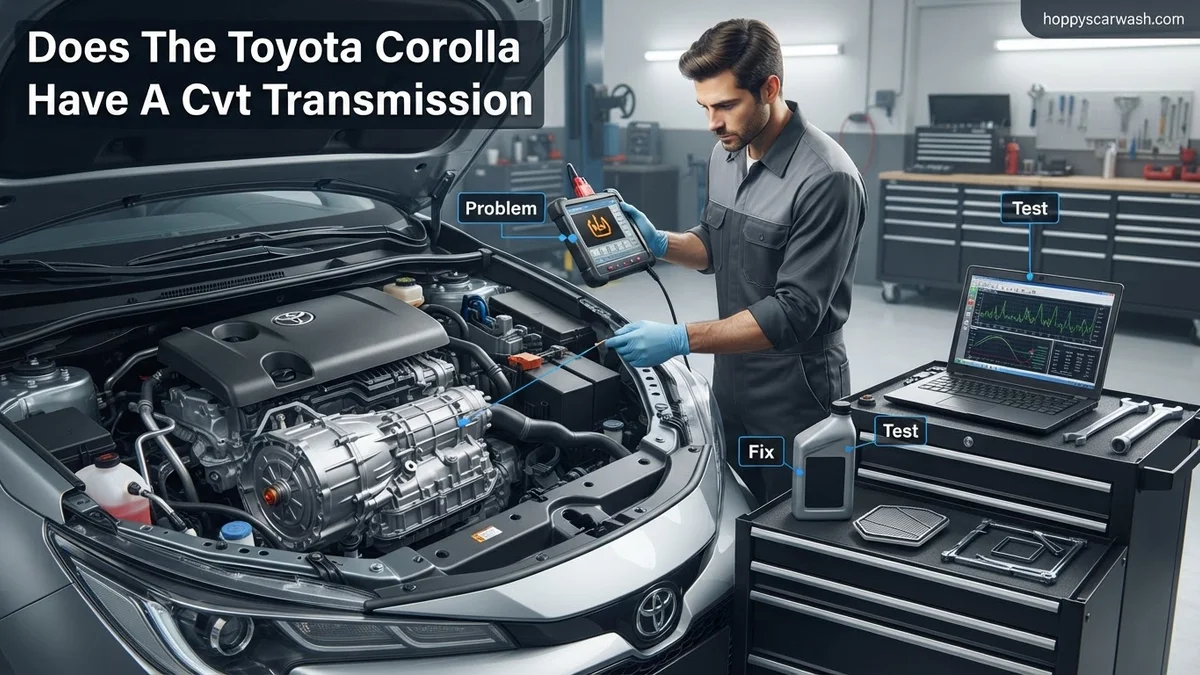
Identifying Corolla CVT Transmission Types and Model Years
Standard Gas Models (2014 to 2026)
Toyota first introduced a standard CVT to the Corolla lineup for the 2014 model year to replace the older four-speed and five-speed automatic transmissions. If you drive a conventional gas-powered Corolla from 2014 through 2026, it almost certainly features a CVT. Toyota updated this setup starting in the 2019 model year with their innovative Direct Shift-CVT, which adds a physical launch gear to improve initial acceleration feel and durability off the line.
- 2014–2018 models: Equipped with a standard continuously variable transmission paired with a 1.8-liter engine.
- 2019–2026 models: Upgraded to the Direct Shift-CVT on most gas trims, featuring a traditional first gear for sharper initial takeoff.
- Exceptions: Certain sporty trims or specific international markets occasionally offered a 6-speed manual transmission, though availability has shrunk significantly by 2026.
Corolla Hybrid Models and the e-CVT
If you choose a Corolla Hybrid, the vehicle still features a transmission referred to as a CVT, but the underlying mechanics differ entirely. Rather than using belts and pulleys like a traditional CVT, the hybrid uses an Electronic Continuously Variable Transmission (e-CVT). This planetary gearset seamlessly blends power from the gasoline engine and electric motors without any shifting sensation.
- Design: Planetary gear system rather than a belt-driven pulley system.
- Reliability: Known for extreme durability due to the lack of friction clutches and traditional wear items.
- Availability: Standard on all Corolla Hybrid trims from their introduction through the 2026 model year.
How to Check Which Transmission Your Corolla Has
Checking via Window Sticker and VIN
Pinpointing the exact transmission in your specific Corolla takes only a few minutes. The most foolproof method involves reviewing the original window sticker (Monroney label) or running your Vehicle Identification Number (VIN) through an online decoder or a dealership service portal. Toyota lists the transmission type explicitly under the standard equipment or mechanical specifications section.
- Window Sticker: Look for terms like CVT, Direct Shift-CVT, e-CVT, or Manual.
- VIN Decoder: Free online Toyota VIN decoders reveal the exact factory build sheet, including transmission codes.
- Door Jamb Sticker: The manufacturing placard on the driver-side door frame sometimes contains drivetrain production codes.
Physical Verification Under the Hood and Cabin
You can also verify your transmission type through physical inspection inside and outside the vehicle. If your gear shifter features a manual gate with sequential shifting positions (usually marked as + and – or M mode), your gas-powered Corolla uses a CVT programmed with simulated stepped gears. Additionally, checking the under-hood maintenance labels will often specify the exact automatic transmission fluid type required, which differs between standard CVTs and e-CVTs.
- Shift Lever Check: Moving the shifter to manual mode simulates fixed gear ratios in modern Corollas.
- Instrument Cluster: Hybrid models display power flow diagrams and an e-CVT operational energy screen.
- Dipstick Check: CVT models feature specific transmission fluid check procedures distinct from manual gearboxes.
Step-by-Step Maintenance Guide for Toyota CVT and e-CVT Systems
Proper maintenance dictates the long-term reliability of modern Toyota Corolla transmissions. While traditional automatic gearboxes required fluid changes every 30,000 to 50,000 miles, Toyota’s modern Direct Shift-CVT and e-CVT units feature advanced engineering. However, preventative care remains vital as the Corolla fleet moves through 2026.
Fluid Inspection and Replacement Protocols
Toyota often labels traditional automatic transmission fluid as “lifetime fill” under normal driving conditions. Independent automotive engineers and transmission specialists strongly recommend a proactive approach for CVTs.
- Inspect the transmission fluid color and condition every 30,000 miles, looking for dark discoloration or a burnt smell.
- Drain and refill the CVT fluid using strictly OEM Toyota Genuine CVT Fluid TC or FE, depending on the exact model year specifications.
- Avoid flushing machines that use high pressure, as this can dislodge debris and clog internal valve bodies within the sensitive CVT pulley system.
- Reset the transmission fluid degradation counter using an OBD-II scanner capable of communicating with the Toyota ECM after completing a fluid change.
Thermal Management and Software Updates
Heat is the primary enemy of continuously variable transmissions. Ensuring optimal cooling keeps internal belt friction within safe parameters.
- Check the external transmission fluid cooler lines and radiator connections during every routine oil change for signs of weeping or leaks.
- Verify with your local Toyota dealership that your Corolla’s powertrain control module (PCM) has the latest software calibrations applied for optimal shift logic and pressure regulation.
What If Your Corolla Transmission Shows Signs of Slipping or Failure
If your Toyota Corolla CVT exhibits symptoms like delayed engagement, shuddering during acceleration, whining noises, or sudden RPM spikes without a corresponding increase in vehicle speed, immediate action is required. Ignoring these early warning signs can lead to catastrophic internal component failure.
- Check the transmission fluid level and condition immediately, as low fluid pressure causes severe belt slip and clutch pack hesitation.
- Scan the vehicle for diagnostic trouble codes (DTCs) using an advanced OBD-II scanner to isolate sensor failures, solenoid issues, or pressure anomalies.
- Consult a certified Toyota technician or professional transmission specialist if hardware codes or mechanical slipping persist despite proper fluid levels.
- Prepare for potential repair costs if internal mechanical damage has occurred; repairing or replacing a failed CVT typically ranges from $3,500 to $6,000 for parts and labor, whereas a complete e-CVT hybrid assembly replacement can range from $4,000 to $6,500 depending on regional labor rates.
Conclusion
Understanding whether the Toyota Corolla features a CVT transmission provides crucial insight into modern fuel economy, driving dynamics, and long-term maintenance requirements. Both the standard Direct Shift-CVT and the hybrid e-CVT deliver exceptional efficiency when paired with strict adherence to fluid change intervals and software updates. According to verified research and expert automotive sources, proactive thermal management remains the single most effective way to maximize the lifespan of these advanced transmissions. Schedule a professional fluid inspection for your Corolla today to ensure optimal powertrain health through 2026 and beyond.
❓ Frequently Asked Questions
What is the difference between a standard CVT and Toyota’s Direct Shift-CVT?
A standard CVT relies entirely on a steel belt and pulleys, which can feel rubbery during takeoff. Toyota’s Direct Shift-CVT adds a physical mechanical first gear for initial acceleration before seamlessly switching over to the belt system.
How can I tell if my Toyota Corolla has a CVT or a traditional automatic?
You can check the owner’s manual, look at the shift gate for simulated manual shift points (like ‘M’ or ‘+/-‘), or check the vehicle specifications using your VIN on Toyota’s official owner portal.
Do Corolla manual transmission models exist in newer generations?
Yes, though rare on standard modern sedans, 6-speed manual transmissions have been offered on specific sport trims and are standard equipment on the high-performance GR Corolla.
How often should the transmission fluid be changed on a Corolla CVT?
While some manufacturers claim lifetime fluid, mechanics generally recommend inspecting CVT fluid every 30,000 to 60,000 miles and changing it to ensure long-term durability.
Does a CVT make the Toyota Corolla louder during acceleration?
Under heavy acceleration, a CVT can cause the engine to hold a steady, high RPM, which some drivers describe as a droning sound compared to the shifting steps of a traditional automatic.
Is the Corolla e-CVT in hybrids reliable?
The e-CVT found in Corolla hybrids is structurally very different from a belt-driven CVT. It uses a planetary gear set with virtually no wearing friction belts, making it exceptionally durable and reliable.