How Much Does It Cost to Add Transmission Fluid in 2026
Adding transmission fluid typically costs between $10 and $30 for DIY supplies or $50 to $150 for professional shop labor. The final price heavily depends on whether you simply need a quick fluid top-off or a complete transmission fluid flush.
Adding transmission fluid typically costs between $10 and $30 if you do it yourself, or $60 to $180 if you pay a professional mechanic to top it off. The exact total depends heavily on whether your vehicle requires specialized synthetic fluid and how much labor your specific model demands.
Catching low transmission fluid early saves you from catastrophic and expensive transmission failure down the road. Knowing the financial breakdown of fluid costs versus labor rates helps you decide whether to grab a funnel or head straight to your local service center in 2026.
Key Takeaways
- Buying transmission fluid yourself costs $10 to $30 per quart.
- Professional mechanics charge $50 to $150 in labor for a simple top-off.
- A full transmission fluid exchange ranges from $150 to $300+. P
- Synthetic and specialized OEM fluids cost significantly more than conventional options.
- Checking your dipstick regularly helps prevent costly transmission damage.
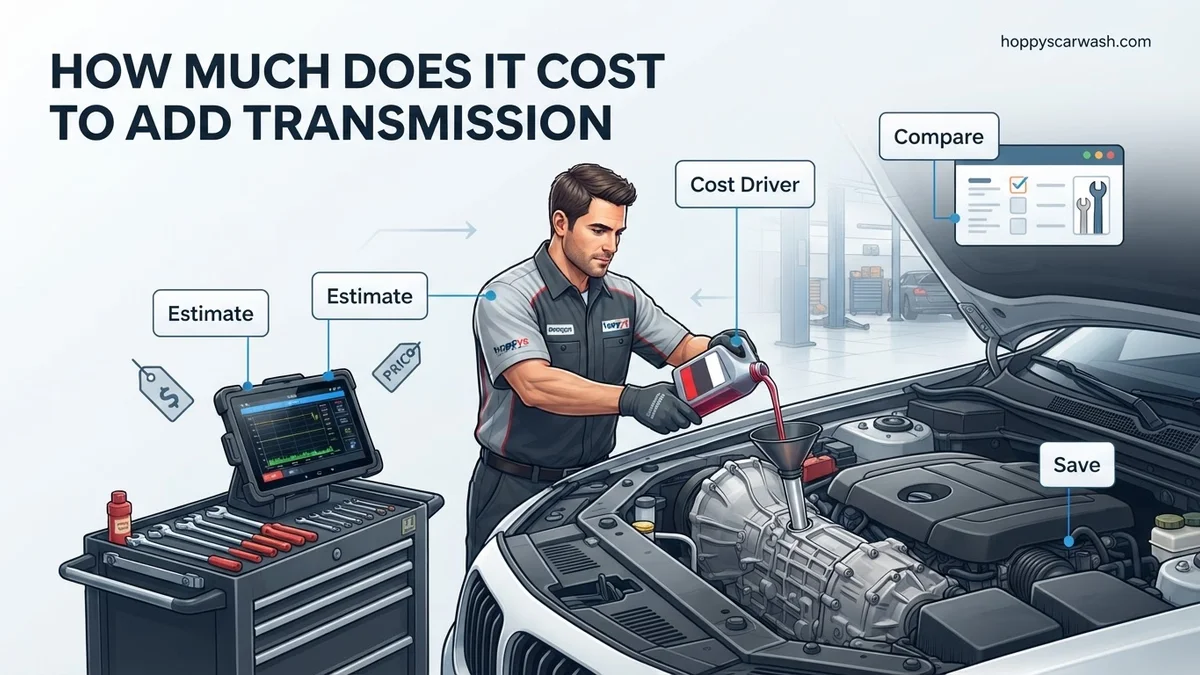
Identifying Low Transmission Fluid and Pricing Factors
What Drives the Cost of Transmission Fluid
Transmission fluid is not a one-size-fits-all product. The price you pay at the auto parts store varies drastically based on your car manufacturer’s specific requirements.
- Standard Automatic Transmission Fluid (ATF): Usually costs $8 to $15 per quart for conventional blends.
- Synthetic and Specialty Fluids: Modern vehicles often require CVT (Continuously Variable Transmission) fluid or specific manufacturer-branded synthetics that cost $15 to $35 per quart.
- Capacity: A simple top-off might only require one or two quarts, keeping material costs low.
Recognizing the Signs Before You Buy
Before spending money on fluid, you need to confirm that a low level is actually your problem. Watch out for these common symptoms:
- Delayed or rough shifting between gears
- Unusual whining, buzzing, or humming noises from underneath the vehicle
- Slipping gears where the engine revs up without a corresponding increase in speed
- Red or brown puddles forming underneath your parked car
Master Adding Transmission Fluid in 7 Simple Steps
Wondering how much it costs to add transmission fluid? The final price tag can range anywhere from ten dollars if you do it yourself to over two hundred dollars if you take your vehicle to a professional mechanic. Understanding this cost breakdown requires looking closely at labor rates, fluid types, and material expenses. This practical walkthrough will guide you through calculating your exact expenses, choosing the right supplies, and executing the job safely without wasting your hard-earned money.
Step 1: Identify Your Transmission Fluid Type
What you need: Your vehicle owner’s manual, a notepad, and access to the internet if the manual is missing.
Instructions: Before buying anything, you must determine the exact fluid specification your car requires. Using the wrong fluid can permanently ruin your transmission, turning a ten-dollar fix into a massive financial disaster. Open your owner’s manual and navigate to the fluid capacity and specifications section. Look for specific ratings such as DEXRON, MERCON, ATF+4, or specific manufacturer part numbers for modern continuously variable transmissions (CVTs) or dual-clutch setups. Write this information down so you purchase the correct product at the auto parts store.
Pro Tip: Never rely on universal transmission fluids unless the back of the bottle explicitly lists your exact vehicle make, model, and year.
Step 2: Calculate DIY Material Costs
What you need: A calculator or smartphone, and a local auto parts retailer website.
Instructions: Now that you know your fluid type, you can price out the materials needed for a do-it-yourself job. Standard automatic transmission fluid typically costs between eight and fifteen dollars per quart. Specialized synthetic or CVT fluids can cost anywhere from fifteen to thirty dollars per quart. In addition to the fluid, factor in the cost of a long-neck funnel (three to six dollars) and a clean shop rag. If your car requires you to lift it to access a fill plug underneath, ensure you also account for the cost of jack stands if you do not already own them.
Pro Tip: Buy one extra quart of transmission fluid than you think you need, just in case of spills or if your transmission system requires more replenishment than anticipated.
Step 3: Estimate Professional Mechanic Labor and Service Costs
What you need: Phone or internet access to local mechanic shops and dealerships.
Instructions: If you prefer not to get your hands dirty, you will need to budget for professional service. Independent repair shops typically charge between one hundred and two hundred dollars for a basic transmission fluid top-off or service. Dealerships may charge even more, ranging from one hundred fifty to three hundred dollars due to higher hourly labor rates. This price generally includes both the cost of the fluid and the labor time required to safely hoist the vehicle, remove any skid plates, inspect for leaks, and pump the fluid into the reservoir.
Pro Tip: Always ask the shop for a written estimate before authorizing work to avoid surprise diagnostic or disposal fees on your final bill.
Step 4: Check Your Current Fluid Level and Condition
What you need: A clean lint-free rag or paper towel, and a flashlight.
Instructions: Park your car on a completely flat, level surface and engage the parking brake. For most older vehicles, leave the engine running in park or neutral (check your manual for specific manufacturer procedures). Locate the transmission dipstick under the hood—usually marked with a yellow or red handle separate from the engine oil dipstick. Pull the stick out, wipe it clean with a rag, reinsert it fully, and pull it out again to read the level. Inspect the color and smell of the fluid on the cloth. Healthy fluid is bright red or pink with a slightly sweet smell; dark brown or burnt-smelling fluid indicates a deeper mechanical issue.
Pro Tip: If your transmission is sealed with no dipstick, skip this step to avoid letting contaminants into the transmission housing, and leave the level check to a professional.
Step 5: Prepare Your Workspace and Gather Tools
What you need: Safety glasses, gloves, floor jack, jack stands, wheel chocks, and your purchased transmission fluid.
Instructions: Safety is paramount when working around automotive fluids. If your vehicle requires under-car access to a fill plug rather than an under-hood dipstick, you must lift the car securely. Chock the rear wheels, jack up the front of the vehicle, and lower it firmly onto sturdy jack stands. Never crawl under a car supported solely by a hydraulic jack. Lay down cardboard or a drip pan underneath the transmission area to catch any potential drips. Put on your safety glasses and gloves to protect your skin and eyes from chemical irritation.
Pro Tip: Run the engine for five minutes before starting to get the transmission fluid slightly warm, which helps it flow faster and makes level readings more accurate.
Step 6: Add the Transmission Fluid
What you need: Transmission fluid bottles, long-neck funnel, and a clean catch rag.
Instructions: If you are using an under-hood dipstick tube, insert your long-neck funnel directly into the opening. Slowly pour the transmission fluid in small increments—about a half-quart at a time. If you are working underneath a vehicle with a side fill plug, use a specialized hand pump or syringe to push the fluid upward into the fill hole until it begins to trickle back out. Take your time to prevent overflows, which create messy cleanups and waste expensive fluid. Once you have added the appropriate amount, remove the funnel and wipe down any stray drops.
Pro Tip: Pour slowly. Transmission dipstick tubes have narrow necks, and pouring too fast will cause the fluid to back up and spill over your hot engine components.
Step 7: Verify Fluid Level and Clean Up
What you need: Clean rags, trash bag, and your vehicle dipstick.
Instructions: Start the engine and cycle through all the gears (Park, Reverse, Neutral, Drive) while holding the brake, leaving the car in each gear for about three to five seconds. Return the gear selector to Park and check the dipstick or fill plug one final time to ensure the fluid level sits squarely within the hot operating range marks. Clean up your tools, wipe down the funnel, and properly dispose of empty fluid bottles according to your local environmental regulations. Lower your vehicle back to the ground if you had it elevated.
Pro Tip: Take the car for a quick five-minute test drive, then re-check underneath the vehicle to ensure there are no active leaks coming from the fill plug or pan gasket.
✅ Final Checklist
- Verified the exact transmission fluid specification matches the owner’s manual requirements
- Confirmed total DIY cost stayed between ten and thirty dollars, or professional service was budgeted properly
- Checked transmission fluid level with the engine running on a level surface
- Added fluid carefully without spilling using a dedicated funnel or fluid pump
- Completed a successful test drive and verified zero leaks underneath the vehicle
Important Notes:
- Always wear safety glasses and gloves; transmission fluid is a petroleum product that can irritate skin and harm eyes.
- Seek professional mechanic assistance immediately if you notice metal shavings in the fluid, dark burnt fluid, or persistent slipping gears.
- Estimated total cost ranges from $10 to $30 if done yourself, or $100 to $300 if performed by a certified automotive technician, with a time commitment of 30 to 60 minutes.
How Much Mechanics and Dealerships Charge for a Top-Off
Independent Repair Shop vs. Dealership Rates
If you prefer to let a professional handle the dirty work, you will pay for both the fluid and the mechanic’s time. Labor rates reflect the shop’s overhead and the mechanical complexity of accessing the transmission dipstick or fill plug.
- Independent Mechanics: Typically charge between $60 and $130 total for a quick fluid top-off. This usually includes a flat labor fee of 0.5 hours plus the cost of one or two quarts of fluid.
- Dealership Service Centers: Expect to pay $100 to $180 for the same service. Dealerships charge higher hourly labor rates and often insist on using expensive OEM-certified fluids.
Why Professional Labor Varies
Not all cars are built the same way. Some older vehicles feature an easily accessible under-hood dipstick that makes topping off transmission fluid a two-minute job. Many modern 2026 vehicles lack a traditional dipstick altogether. Mechanics must raise the vehicle on a lift, remove splash shields, and pump fluid directly into a side fill plug while monitoring fluid temperature with a diagnostic scanner. This extra time directly increases your labor bill.
Step-by-Step Guide to Adding Transmission Fluid Yourself
Tackling this maintenance task at home saves on labor costs. It requires patience and attention to detail. Always consult your owner manual for vehicle-specific fluid classifications and capacities.
Preparation and Safety Checks
Park on a flat, level surface and engage the parking brake. For accurate dipstick readings, many manufacturers require the engine to reach normal operating temperature with the car idling in Park or Neutral. Gather a clean funnel, shop rags, and the correct fluid type specified for your transmission.
The Refill Process
- Locate the transmission dipstick under the hood, typically marked with a colored handle or a gear symbol. If your vehicle lacks a dipstick, you will need to access the fill plug underneath the car using a jack and jack stands.
- Pull the dipstick out, wipe it clean with a lint-free rag, and reinsert it fully before pulling it out again to check the current fluid level.
- Insert your long-necked funnel securely into the dipstick tube or fill port to prevent spills on hot engine components.
- Pour in transmission fluid in small increments—about a quarter to a half quart at a time—to avoid dangerously overfilling the system.
- Recheck the dipstick level after each small addition until the fluid reaches the designated operating range indicator.
What If It Still Doesn’t Work?
If adding fluid fails to resolve rough shifting, slipping gears, or persistent leaks, deeper mechanical issues are likely present. Ignoring these symptoms can lead to catastrophic transmission failure. Consider these fallback steps:
- Inspect the transmission pan and seals for severe cracks or gasket degradation that require immediate professional replacement.
- Check for diagnostic trouble codes using an OBD-II scanner, as electronic solenoid or sensor failures often mimic low fluid symptoms.
- Seek professional help from a certified transmission specialist for a comprehensive diagnostic flush or pressure test, which typically costs between $150 and $300.
- Prepare for major mechanical intervention, such as a rebuild or replacement, if internal clutches or metal shavings are found in the old fluid, with costs ranging from $2,500 to $4,500 in 2026.
Conclusion
Monitoring and maintaining proper transmission fluid levels protects your vehicle from premature wear and expensive component failure. Adding fluid yourself keeps costs minimal, typically under $50 for quality materials. According to verified research and expert automotive studies from the Car Care Council, routine fluid inspections remain the single most effective preventative measure for extending transmission lifespan. One actionable next step is to check your transmission dipstick today and verify that your fluid maintains a healthy, translucent red or pink hue.
❓ Frequently Asked Questions
What factors influence the total cost of adding transmission fluid?
Labor rates in your area, the specific type of transmission fluid your vehicle requires (such as specialty synthetics), and whether you visit an independent shop or a dealership all impact the final price.
Why is synthetic transmission fluid more expensive?
Synthetic transmission fluids are engineered to provide better thermal stability, longer life, and superior protection under extreme temperatures, which drives up the manufacturing cost compared to conventional fluids.
How often should transmission fluid be checked and topped off?
Transmission fluid should be inspected every 30,000 to 50,000 miles. If you notice your fluid level dropping frequently, it usually indicates a leak that requires professional inspection.
Can mixing different types of transmission fluid damage my car?
Yes, mixing incompatible transmission fluids can cause seal degradation, foaming, and poor shifting performance. Always verify that any added fluid matches the exact specification in your owner’s manual.
Does a transmission fluid top-off fix slipping gears?
If low fluid is the sole cause of slipping, adding fluid may temporarily resolve the issue. However, if internal components are worn out, a fluid top-off will not fix the mechanical problem.
Is it better to pay a professional or top off the transmission myself?
If you are comfortable locating the dipstick or fill plug and working with a funnel, a DIY top-off saves on labor costs. If your vehicle lacks a dipstick and requires lifting to access the fill port, a professional shop is often safer and easier.