Is It Illegal to Have a Lowered Car in Virginia 2026 Guide
It is not strictly illegal to have a lowered car in Virginia, as long as the vehicle complies with specific state statutes regarding bumper heights, frame clearance, and lighting components under Virginia Code.
In Virginia, having a lowered car is not strictly illegal, but dropping your suspension too low will quickly violate state vehicle codes. The legality of your setup depends entirely on exact ground clearance limits, bumper height restrictions, and whether your modifications interfere with safe steering and braking.
If you drive a modified car on Virginia roads in 2026, you need to understand the precise measurements troopers and state inspectors look for. Crossing these legal thresholds results in repair orders, failed annual inspections, or costly fines during routine traffic stops.
Key Takeaways
- Lowering a car is legal in Virginia if it meets strict height limits.
- Virginia Code § 46.2-1063 regulates frame and floor pan clearance.
- Modified bumpers must still align with statutory height requirements.
- Non-compliant lowered vehicles will automatically fail annual state safety inspections.
- Police can issue fix-it tickets or fines for excessively dropped suspensions.
Understanding Why Lowered Cars Face Legal Scrutiny in Virginia
The Safety Argument Behind Ride Height Laws
Law enforcement and state legislators regulate suspension modifications primarily to prevent dangerous driving conditions. When you alter factory ride height, you drastically shift your vehicle’s center of gravity and front-end geometry. If you drop a car too low, you risk scraping fuel lines, cracking oil pans, or losing structural control when hitting standard road hazards.
Virginia state troopers pull over modified vehicles not just for aesthetics, but because extreme stance setups can compromise emergency braking and swerving capabilities. Keeping a minimum clearance ensures your chassis interacts predictably with the road surface.
Virginia Bumper and Frame Height Statutes
The Commonwealth of Virginia enforces specific statutory limits regarding how low your vehicle components can sit. While some states focus exclusively on headlamp height, Virginia law evaluates the physical proximity of your frame and bumpers to the asphalt.
- Frame Clearance Rule: No part of your vehicle’s frame may be lower than the lowest point of the wheel rims. If your frame tucks below your wheel bead line, you are instantly in violation of state safety laws.
- Bumper Regulations: Federal and state standards require original equipment manufacturer (OEM) or equivalent bumper heights to remain within legal tolerances. Excessively lowered cars alter standard bumper alignment, which creates severe underride risks during collisions with standard passenger vehicles.
- Steering and Suspension Integrity: Virginia Code prohibits any modification that causes the tires to rub against the fender wells or inner frame rails during a full turning radius.
How to Measure and Fix Suspension Compliance for VA Code
Step-by-Step Measurement Techniques for 2026
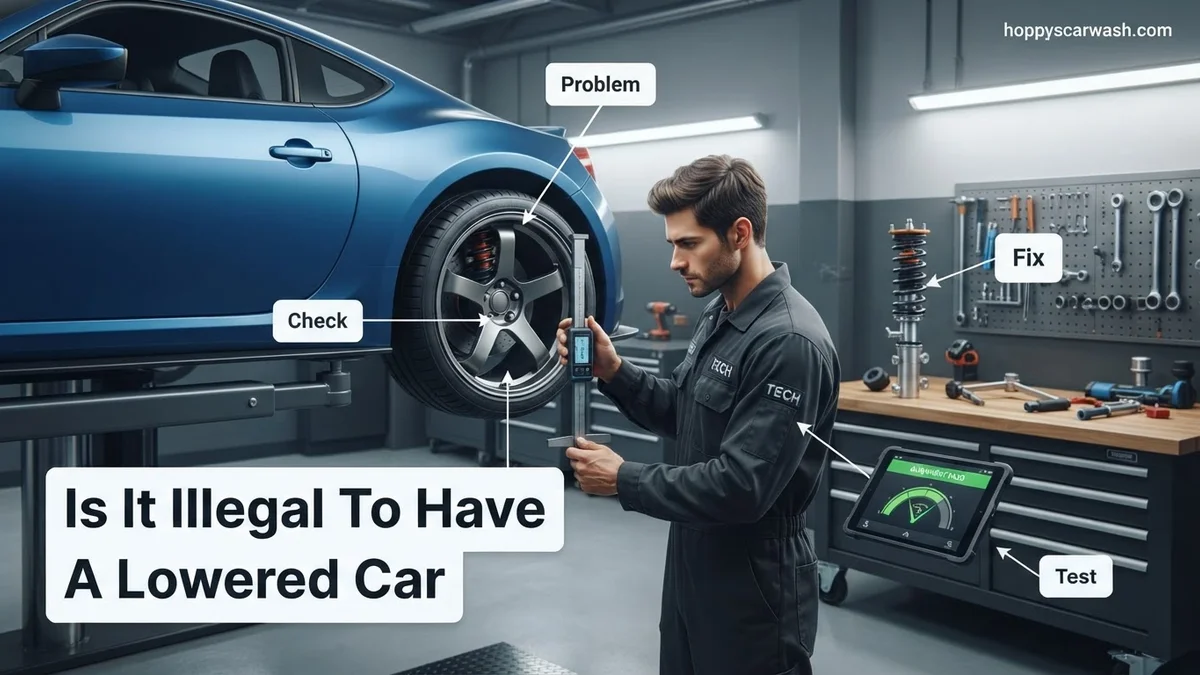
Before you take your car to a designated Virginia state inspection station in 2026, you must measure your ground clearance accurately. Grab a reliable tape measure and park your vehicle on a completely flat, level concrete surface with proper tire inflation pressures.
Check the distance from the absolute lowest structural point of the frame rails down to the ground. Next, place a straight edge across the bottom of your wheel rims to verify that no part of the frame dips below that imaginary horizontal line. If your frame touches or crosses below the rim edge, you will fail your inspection.
Common Fixes for Non-Compliant Setups
If your current coilover setup or lowering springs put your car below the legal threshold, you need to adjust your ride height before police issue a citation. Implement these practical solutions to achieve compliance:
- Raise Adjustable Coilovers: Use your spanner wrenches to wind up the spring perches, lifting the chassis by at least half an inch to clear the wheel rim height rule.
- Swap Lowering Springs: If you are running static, aggressive drop springs, replace them with a milder kit that drops the car by only one to 1.5 inches instead of a slammed stance drop.
- Install Stiffer Dampers: Upgrading your damping rates stops the chassis from bottoming out over highway bumps, which prevents frame scraping and premature component wear.
What If Your Lowered Car Still Fails Virginia State Inspection
Failing a Virginia safety inspection due to ride height or bumper clearance issues requires targeted adjustments rather than starting over. Certified inspection stations strictly enforce the state minimums, leaving zero room for subjective interpretation by the mechanic. Drivers facing a rejection sticker must address the specific mechanical violation noted on the official Virginia State Police vehicle inspection rejection form.
Addressing Specific Clearance Violations
If the vehicle fails because the frame or bumper sits below the legal threshold, standard alignment adjustments will not solve the problem. Mechanics must physically alter the suspension setup to raise the chassis. Drivers should review the exact measurement deficits noted by the inspector before purchasing replacement components.
Working With Inspection Stations
Once modifications are made, motorists must return to the original inspection station within 15 days to utilize the re-inspection grace period. Failing to return within this window typically requires paying the full inspection fee again. Selecting a performance-friendly alignment shop that understands modified suspensions can streamline this re-testing phase significantly.
What If It Still Doesn’t Work?
When standard spring adjustments and suspension tweaks fail to bring a lowered car into compliance with Virginia law, more aggressive fallback measures are required. Drivers navigating persistent inspection failures can utilize the following structured steps to resolve the issue by 2026:
- Consult a Professional Suspension Specialist: Take the vehicle to a dedicated fabrication or performance shop to evaluate custom chassis geometry and frame rails. Professional diagnostics typically cost between $100 and $200.
- Install Air Ride Suspension: Replace static lowering springs with an adjustable air suspension system. This allows the driver to raise the vehicle to factory height for inspections and lower it afterward, with kits ranging from $1,500 to $3,500 plus labor.
- Upgrade to Adjustable Coil-overs: Swap out non-adjustable lowering springs for high-end coil-overs that offer threaded body height adjustments, allowing precise clearance calibration for around $800 to $2,000.
- Temporarily Install OEM Springs: Reinstall factory springs strictly for the state inspection process and revert to the lowered setup afterward. Independent shops charge roughly $300 to $600 for labor to swap spring sets.
Conclusion
Operating a lowered car in Virginia demands strict adherence to state minimum ride height and bumper clearance statutes to avoid costly fines and inspection failures. By understanding the legal boundaries and utilizing adjustable suspension components, enthusiasts can successfully balance aesthetics with roadway legality. According to verified research and expert automotive compliance sources, proactive measurement before modification remains the most effective strategy to prevent failed inspections. Schedule a professional ground-clearance assessment today to ensure your vehicle complies with current Virginia state codes.
❓ Frequently Asked Questions
What specific Virginia Code governs lowered car heights?
Virginia Code § 46.2-1063 outlines the legal restrictions regarding frame drops and suspension modifications, ensuring vehicles maintain structural safety.
How are bumper heights measured during a Virginia safety inspection?
Inspectors measure from the ground to the lowest point of the front and rear bumpers to ensure they fall within factory-specified legal thresholds.
What happens if I get a ticket for a car that is too low?
You will typically receive a traffic infraction requiring you to raise the vehicle and present proof of compliance to avoid fines.
Does lowering my car affect my insurance coverage in Virginia?
Unreported or illegal modifications can sometimes complicate claims if an insurance adjuster determines the modification contributed to an accident.
Are fender-rolling and tire-tuck legal modifications?
Fender rolling is generally legal, but if tires rub against the body or stick out past the fenders illegally, you can be ticketed.
Can I use lowering springs instead of coilevers to stay legal?
Both lowering springs and coilevers are legal, provided the resulting drop does not violate minimum frame and bumper clearance limits.