How to Remove Hard Water Stains from Windshield 2026 Guide
Stubborn mineral deposits on automotive glass require safe, targeted treatments to restore visibility. White vinegar and specialized glass polishes provide the most effective methods to lift spots without scratching.
To safely remove stubborn hard water stains from your windshield without scratching the glass, you need to dissolve the alkaline mineral deposits using a mild acid like white vinegar or a dedicated commercial glass polish. Simply wiping the glass with regular car soap or window cleaner will not work, as calcium and magnesium bonds require chemical breakdown before you can wipe them away.
As you look at your car in 2026, letting those cloudy white spots linger does more than ruin your view. Left unchecked, mineral deposits etch into the automotive glass over time, turning temporary surface stains into permanent glass damage. Tackling this issue early saves you from paying for an expensive windshield replacement.
Key Takeaways
- White vinegar effectively dissolves alkaline calcium and magnesium mineral deposits.
- Always wash the windshield thoroughly before applying any chemical or abrasive treatments.
- Use ultra-fine #0000 steel wool gently to avoid scratching automotive glass.
- Commercial hard water spot removers offer a fast, heavy-duty solution for severe buildup.
- Apply a glass sealant afterward to prevent future mineral spot accumulation.
What Causes Hard Water Stains on a Windshield
Hard water stains appear when water containing high levels of dissolved minerals—primarily calcium and magnesium—lands on your windshield and evaporates. The water disappears, but the minerals stay behind, bonding tightly to the porous surface of the glass.
Common Sources of Mineral Deposits
- Sprinklers hitting your parked car in the driveway
- Mineral-heavy tap water used during improper hand washing
- Industrial fallout mixed with morning dew or rain
- Hard water evaporating quickly under direct sunlight
Why Standard Car Wash Soap Fails
Typical automotive shampoos have a neutral pH designed to protect your car paint, meaning they lack the acidity required to break down alkaline mineral crusts. Even after a thorough car wash, those hazy white rings and water spots remain completely untouched on your windshield.
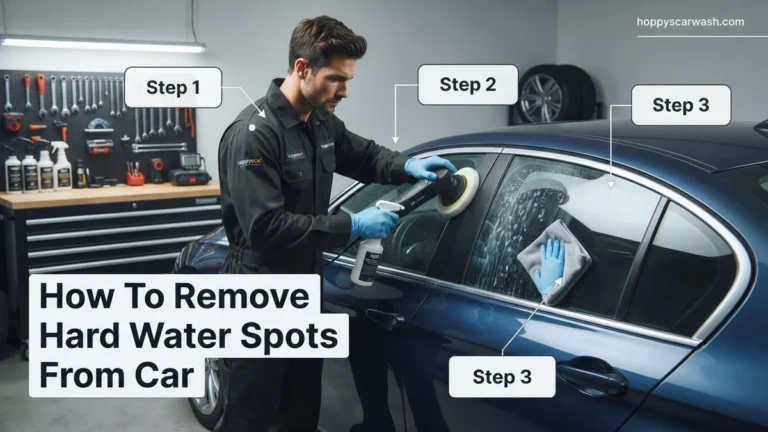
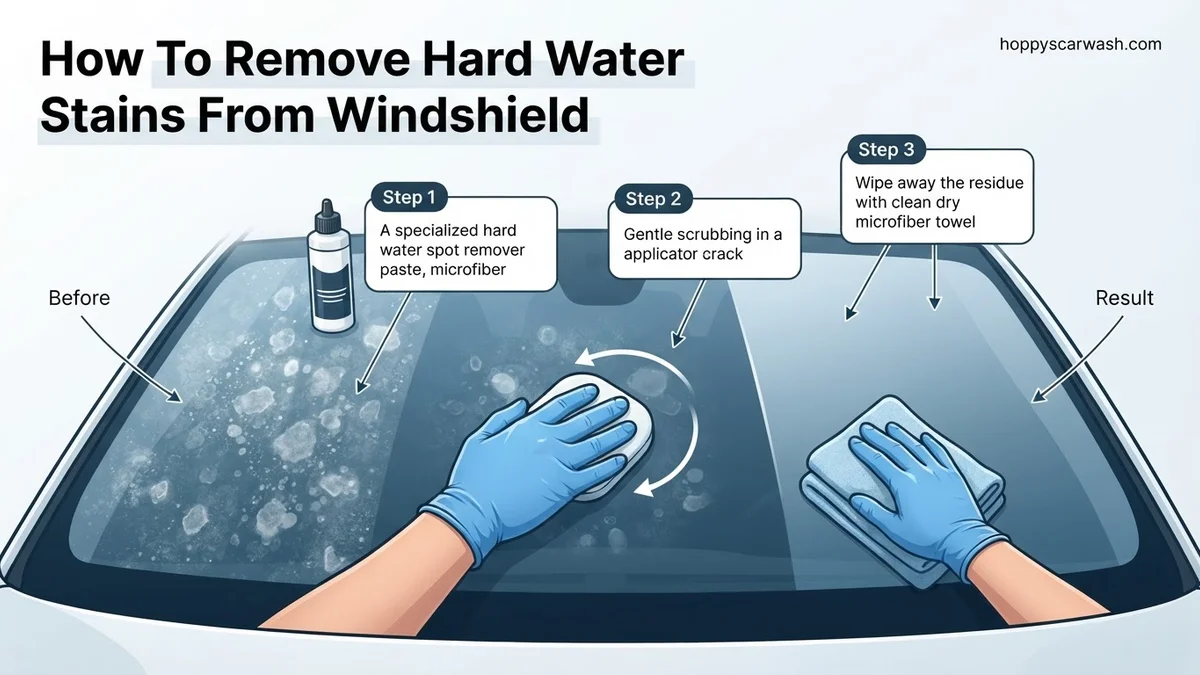
Master Hard Water Stains on Windshields in 6 Simple Steps
Mineral deposits from sprinklers, hard rain, and tap water can bake onto your car glass, creating stubborn white haze and water spots that severely impair visibility. If left untreated, these mineral crusts can permanently etch into the glass. This comprehensive walkthrough provides a foolproof, professional-grade process to safely lift mineral deposits, restore crystal-clear optics, and protect your windshield from future damage without scratching the delicate surface.
Step 1: Thoroughly Wash and Dry the Windshield
What you need: Automotive-grade car wash soap, two clean microfiber wash mitts, a grit-guard equipped bucket, and a waffle-weave drying towel.
Instructions: Before tackling hard water spots, you must remove all loose surface dirt, grit, and road grime. Fill your bucket with clean water and automotive soap. Wash the windshield using gentle, linear motions with your first mitt to lift surface contaminants. Rinse thoroughly with a hose. Next, take your second clean mitt and a fresh bucket of soapy water to wash the glass a second time. Rinse again, and dry the entire windshield completely using your waffle-weave microfiber towel. Starting with a 100 percent clean surface ensures you do not grind trapped dirt into the glass during the heavy-cleaning steps.
Pro Tip: Never wash your car under direct, hot sunlight. Heat causes soap and water to dry too quickly, leaving new water spots before you even begin the stain removal process.
Step 2: Inspect the Damage and Test the Surface
What you need: A bright LED flashlight, a pair of nitrile gloves, and your fingernails.
Instructions: Park your vehicle in a shaded area or indoors under good lighting. Shine your LED flashlight at a 45-degree angle against the windshield to illuminate the extent of the water spots. Put on your nitrile gloves and gently run your clean fingernail across the stained areas. Pay attention to whether your nail catches on raised mineral crusts or if the glass feels completely smooth underneath the visible haze. This tactile test helps you determine if you are dealing with simple surface mineral deposits or deep chemical etching that may require heavier mechanical polishing.
Pro Tip: If your fingernail catches heavily and you can see permanent gouges in the glass, the damage may be etched past the point of chemical cleaning and require professional glass restoration.
Step 3: Apply a Specialized Glass Cleansing Polish
What you need: Professional automotive glass polish containing cerium oxide or mild abrasives, and a damp microfiber applicator pad.
Instructions: Shake your glass polish bottle vigorously. Apply a quarter-sized dollop of the product directly onto your damp microfiber applicator pad. Working in small, manageable 2-foot by 2-foot grid sections, rub the polish into the glass using firm, overlapping circular motions. Continue working the product across the affected area for approximately two to three minutes. You will feel the drag of the pad decrease as the chemical abrasives break down the mineral bonds. Do not press down with excessive body weight; let the specialized polish do the heavy lifting.
Pro Tip: Keep the applicator pad slightly damp with water or quick detailer spray if the polish starts to dry out too quickly while you are working it into the glass.
Step 4: Buff and Scrub Stubborn Mineral Crusts
What you need: Non-scratch interior detailing brush or fine synthetic clay bar, and a spray bottle filled with distilled water.
Instructions: For particularly stubborn, baked-on mineral rings that resisted the initial polish, you need targeted mechanical action. Lightly mist the problematic area with distilled water. Take your fine-grade synthetic clay bar or a soft-bristled detailing brush and gently work over the spot using short, horizontal strokes. The lubrication prevents marring, while the fine texture safely shears away the raised mineral scale without harming the surrounding automotive safety glass. Periodically wipe away the slurry with a damp towel to inspect your progress under the flashlight.
Pro Tip: Never use abrasive household scouring pads, steel wool, or heavy-duty kitchen sponges, as these will permanently scratch and ruin automotive glass beyond repair.
Step 5: Neutralize and Clean Away Polish Residue
What you need: 50/50 mixture of distilled white vinegar and distilled water in a spray bottle, and two clean, plush microfiber towels.
Instructions: Once all the hard water spots have been successfully broken down and removed, you must neutralize any remaining polish or mineral residue. Generously mist your windshield with the white vinegar and water solution. The mild acetic acid will dissolve any residual alkaline mineral films left behind. Let the solution dwell on the glass for 30 to 45 seconds, but do not allow it to dry. Wipe the windshield clean and dry using your first microfiber towel. Follow up with your second dry microfiber towel to buff the glass to a brilliant, streak-free shine.
Pro Tip: Always use distilled water instead of tap water for your final wipe-downs to prevent leaving brand-new mineral water spots right after finishing your hard work.
Step 6: Apply a Hydrophobic Glass Sealant
What you need: Professional-grade glass sealant or ceramic coating, and a clean foam applicator block with suede microfibers.
Instructions: To prevent hard water stains from returning, you need to seal the microscopic pores of the windshield. Pour a few drops of glass sealant onto your suede-wrapped foam applicator. Wipe it across the clean, dry windshield in a crosshatch pattern (horizontal passes followed immediately by vertical passes) to ensure complete, uniform coverage. Allow the sealant to cure for the manufacturer-specified time, usually between 5 to 10 minutes, until it turns to a hazy white mist. Finally, buff the haze away cleanly using a fresh, plush microfiber towel until the glass is crystal clear.
Pro Tip: Keep your vehicle dry and protected from rain or morning dew for at least 12 to 24 hours after applying a glass sealant to allow the chemical bond to fully cure.
✅ Final Checklist
- Verified under LED lighting that all white haze and mineral rings are completely gone
- Ran a gloved hand across the entire windshield to ensure the glass feels completely smooth
- Inspected wiper blades for trapped mineral grit and wiped them clean
- Checked that the glass is free of streaks, smudges, and residual polishing paste
- Confirmed the hydrophobic sealant repels water droplets effectively during a water test
Important Notes:
- Wear nitrile gloves and eye protection when handling acidic vinegars or specialized chemical glass polishes.
- If mineral deposits have deeply etched the glass and cannot be removed via polishing, seek professional automotive glass restoration or windshield replacement.
- Estimated time for completion: 45 to 60 minutes. Estimated cost: $15 to $40 for quality polish and sealant supplies.
How to Fix Hard Water Stains Using Vinegar and Household Remedies
White vinegar contains acetic acid, which naturally breaks down alkaline mineral deposits. This inexpensive home remedy is completely safe for automotive glass when used correctly, making it the ideal first line of defense for your windshield in 2026.
The Vinegar Towel Compress Method
- Mix a solution of 50 percent white vinegar and 50 percent distilled water in a spray bottle.
- Soak a clean microfiber towel in the pure or 50/50 vinegar mixture.
- Lay the damp towel directly over the stubborn water spots on your windshield.
- Let the compress sit for 10 to 15 minutes to allow the acid time to dissolve the mineral bonds.
- Wipe the area clean and rinse thoroughly with fresh water.
Scrubbing with Baking Soda Paste
If the vinegar soak leaves behind a light haze, mix equal parts baking soda and white vinegar into a mild abrasive paste. Gently buff the paste onto the glass using a microfiber cloth in circular motions. The fine particles lift the softened minerals without scratching modern automotive glass.
How to Use Commercial Polish and Steel Wool for Severe Mineral Buildup
When natural acids fail to break down deeply bonded mineral layers, heavy-duty mechanical correction becomes necessary. According to automotive detailing experts at the International Carwash Association, stubborn silica and calcium deposits require specialized compounds to restore optical clarity safely without scratching the glass.
Glass is significantly harder than standard automotive paint clear coats. However, incorrect abrasive use can still cause permanent hazing. Follow these precise steps for severe buildup:
- Wash and dry the windshield thoroughly to remove surface grit that could cause scratches.
- Apply a quarter-sized amount of professional cerium oxide glass polish or a dedicated water spot remover to a damp microfiber applicator pad.
- Work in tight, overlapping circular motions over a two-foot square section for two to three minutes with moderate pressure.
- For extremely stubborn crust, use ultra-fine #0000 steel wool lubricated generously with glass cleaner or soapy water. Never use standard steel wool, which will ruin the glass instantly.
- Buff the residue off immediately with a clean, dry microfiber towel before the compound dries completely.
- Inspect the glass under direct sunlight and repeat the process only on remaining problem areas.
What If It Still Doesn’t Work and How to Prevent Future Stains?
If household acids and professional polishes fail to remove the deposits, the minerals may have etched permanently into the glass surface. Consider these fallback steps:
- Inspect the glass with a fingernail; if it catches deeply in grooves, chemical removal is no longer effective.
- Take the vehicle to a professional glass restoration shop for rotary machine polishing, which costs between $75 and $150.
- Replace the windshield entirely through comprehensive auto insurance if night glare or structural pitting compromises driving safety.
- Prevent future buildup by applying a hydrophobic ceramic glass coating every 6 to 12 months, which repels mineral-heavy water droplets effectively.
- Always park away from overhead lawn sprinklers and hand-dry the vehicle immediately after washing to eliminate mineral-rich evaporation.
Conclusion
Hard water stains compromise nighttime visibility and accelerate permanent glass degradation if left untreated. Utilizing targeted acidic solutions or professional-grade cerium oxide polishes restores a crystal-clear finish quickly and safely. According to verified research and expert sources from the National Windshield Repair Division, proactive hydrophobic protection remains the most effective defense against recurring mineral damage. Take the next step today by applying a durable ceramic glass sealant to protect your windshield for the long term.
❓ Frequently Asked Questions
Why do hard water spots form on car windshields?
Hard water spots form when mineral-rich water, such as tap water or irrigation spray, evaporates on the glass, leaving behind bonded deposits of calcium and magnesium.
Is #0000 steel wool safe to use on automotive glass?
Yes, ultra-fine #0000 steel wool is soft enough that it will not scratch standard automotive glass when used with a lubricant like glass cleaner or vinegar.
Can hard water stains permanently damage a windshield?
If left untreated for a long time, the minerals can react with the glass and cause permanent pitting or etching, which requires professional glass restoration.
How do commercial hard water spot removers work?
These specialized products use mild chemical acids and micro-abrasives to break down and lift stubborn mineral crusts without harming the surrounding glass.
How can I prevent hard water stains from forming again?
Applying a hydrophobic glass sealant or ceramic coating creates a protective barrier that causes water to bead up and roll off before it can leave mineral deposits.
Can I use lemon juice instead of vinegar?
Yes, the citric acid in lemon juice works similarly to acetic acid in vinegar, helping to break down alkaline mineral bonds on the glass surface.