How to Get Rid of Hard Water Spots on Windshield Best 2026
Hard water spots consist of mineral deposits left behind when mineral-rich water evaporates on automotive glass. Removing these stubborn stains requires dissolving the minerals with a mild acid like white vinegar or using a specialized glass polish to restore clear visibility without scratching the surface.
To quickly remove stubborn hard water spots from your car windshield, you need to neutralize the mineral bonds using a mild acid like white vinegar or a dedicated glass polishing compound. Regular soap and water will not work because these spots are actually crusty deposits of calcium and magnesium left behind when hard water evaporates on hot glass.
As you head out on the road in 2026, dealing with etched glass is more than just an aesthetic annoyance. Mineral crust scatters oncoming headlights at night, creating a dangerous glare that severely limits your visibility. Tackling this issue right away prevents the minerals from permanently etching into the safety glass.
Key Takeaways
- White vinegar effectively dissolves light mineral deposits on glass.
- Always wash the windshield thoroughly before applying any spot removal treatment.
- Use #0000 superfine steel wool only with a lubricant to prevent scratching.
- Dedicated glass polishing compounds handle etched or deeply set water spots.
- Apply a hydrophobic glass sealant to prevent future mineral buildup.
What Causes Hard Water Spots on a Windshield and Why Regular Washing Fails
Hard water spots happen when water containing high levels of dissolved minerals sits on your car and evaporates under the sun. Once the H2O disappears, it leaves behind solid rings of calcium, magnesium, and sometimes silica. These minerals bond tightly to the microscopic pores of automotive glass.
The Science Behind Stubborn Mineral Bonding
- Mineral content in tap and well water is naturally alkaline, making it stick firmly to glass.
- Solar heat bakes these minerals, essentially baking them into the porous surface of your windshield.
- Standard automotive shampoos are pH-balanced for dirt and grime, lacking the acidity needed to break down mineral bonds.
- Using a standard wash mitt often grinds these abrasive mineral crusts further into the glass, causing micro-scratches.
Why Traditional Car Washes Miss the Mark
Drive-through car washes and basic bucket washes simply slide over the top of baked-on mineral deposits. Unless you use a chemical demineralizer or a targeted mechanical abrasive, those spots will stubbornly remain. In fact, standard automated brushes can sometimes bake the minerals in even further through friction and heat.
How to Diagnose and Fix Hard Water Spots on Windshield Like an Expert
Mineral deposits from evaporated tap water, sprinkler systems, or acid rain can etch into your auto glass, obscuring your vision and ruining your car’s appearance. Standard washing won’t remove these stubborn white rings. This guide walks you through a proven, methodical process to safely dissolve, polish, and protect your windshield, restoring crystal-clear visibility.
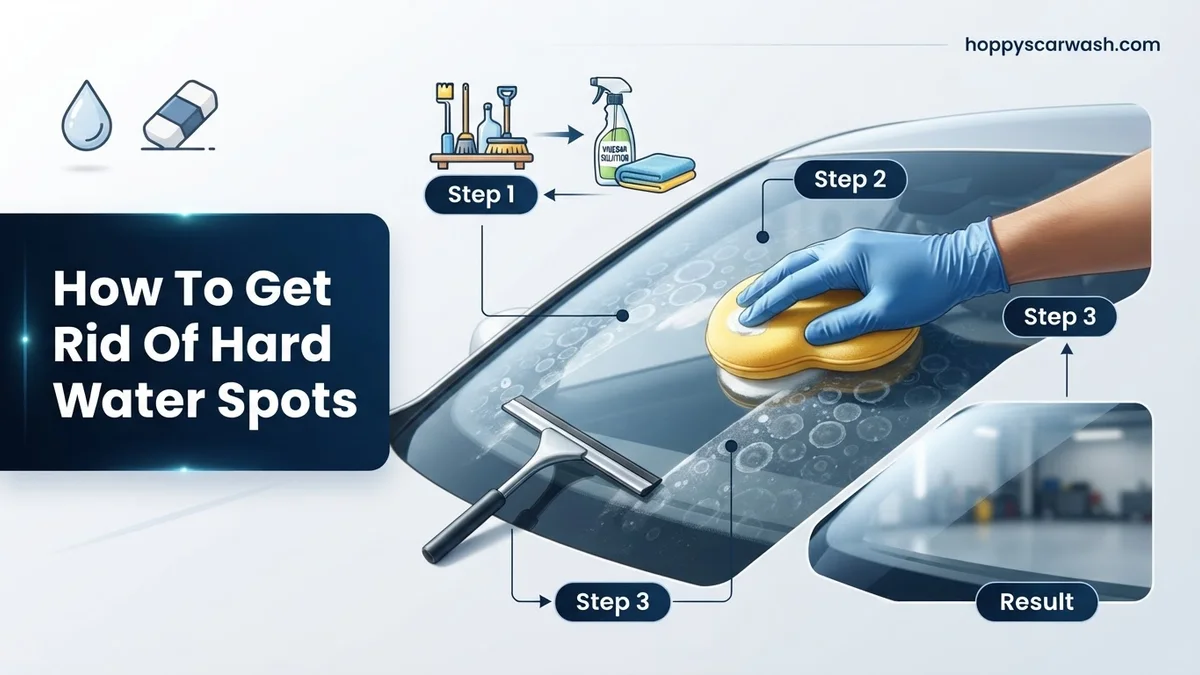
Step 1: Deep Clean the Windshield Surface
What you need: Automotive-safe car wash soap, two buckets, a microfiber wash mitt, a garden hose with a spray nozzle, and a drying towel.
Instructions: Before tackling mineral spots, you must remove all loose dirt, grit, and road grime to prevent scratching your glass during the correction process. Fill one bucket with soapy water and the other with clean rinse water. Wash the windshield thoroughly using top-to-bottom motions with your microfiber mitt. Rinse the glass completely with clean water from your hose. Dry the windshield entirely with a clean microfiber drying towel so you can accurately assess the extent and exact location of the hard water spots.
Pro Tip: Never perform glass correction under direct sunlight; hot glass causes cleaning solutions to flash-dry instantly, leaving behind chemical streaks.
Step 2: Prepare a DIY Vinegar Neutralizing Solution
What you need: Distilled white vinegar, a clean spray bottle, and distilled water.
Instructions: Hard water spots are alkaline mineral deposits (mostly calcium and magnesium), making a mild acid the ideal natural solvent to break them down. Mix a solution of 50 percent distilled white vinegar and 50 percent distilled water inside your spray bottle. Liberally mist the entire windshield until the glass is uniformly damp. Allow the acidic solution to dwell on the surface for two to three minutes without letting it dry completely. You may notice a slight bubbling or fizzing effect as the acetic acid begins to chemically react with and dissolve the surface mineral crust.
Pro Tip: Always use distilled water for mixing your solution. Tap water contains minerals that can add new spots right back onto your freshly cleaned glass.
Step 3: Perform the Vinegar Soaking Method
What you need: Distilled white vinegar, a stack of paper towels or a large microfiber cloth, and your spray bottle from the previous step.
Instructions: For stubborn, baked-on mineral rings that resist a simple spray, you need prolonged chemical contact. Fully saturate a few sheets of paper towels or a large microfiber cloth with your pure or diluted vinegar solution. Lay the soaked towels flat across the hardest-hit areas of the windshield. Let this vinegar compress sit undisturbed for 10 to 15 minutes. The saturated barrier prevents the vinegar from running off the vertical glass, giving the acid extended dwell time to chemically soften the bonded calcium carbonate deposits. Afterward, lift the towels and wipe down the glass.
Pro Tip: If the paper towels begin to dry out during the 15-minute window, lightly mist them with more vinegar from your spray bottle to maintain moisture.
Step 4: Use a Specialized Glass Scrubbing Compound
What you need: A dedicated automotive glass scrub or polishing compound (such as Cerium Oxide or dedicated water spot remover), a damp microfiber applicator pad, and clean water.
Instructions: If vinegar fails to completely eliminate etched water spots, you will need a mechanical abrasive designed specifically for automotive glass. Apply a quarter-sized dollop of your specialized glass scrubbing compound directly onto a damp microfiber applicator pad. Working in small 2-foot by 2-foot grid sections, rub the compound firmly into the glass using overlapping circular motions. Apply moderate, even pressure for roughly 60 to 90 seconds per section. The micro-abrasives in the formula will gently shear away the stubborn mineral crust without scratching the tempered glass surface.
Pro Tip: Do not use household scouring powders like Comet or abrasive scouring pads intended for kitchen dishes, as they will permanently scratch and ruin your windshield.
Step 5: Rinse and Inspect the Windshield
What you need: A bucket of clean water, a clean sponge, and a dry microfiber towel.
Instructions: After scrubbing your glass, it is crucial to remove all spent compound residue and loosened mineral debris. Flush the entire windshield thoroughly with clean water, using your sponge to wipe away lingering paste. Dry the glass completely with a fresh, clean microfiber towel. Step back and inspect the windshield from various angles under good lighting, or run your hand lightly across the surface (it should feel completely smooth, like glass). If you still see hazy white rings or spots remaining, repeat Step 4 specifically on those trouble areas.
Pro Tip: Inspect the glass while looking through it from inside the vehicle; this vantage point reveals any lingering hazing or spots that exterior light might miss.
Step 6: Apply a Hydrophobic Glass Sealant
What you need: A high-quality automotive glass sealant or ceramic coating, two clean microfiber towels, and isopropyl alcohol (IPA) spray.
Instructions: Now that your windshield is pristine and bare, you must protect it from future mineral bonding. Spray a small amount of IPA onto the glass and wipe it clean to remove any remaining polishing oils. Apply a few drops of your glass sealant onto a small applicator pad and spread it across the windshield in a cross-hatch pattern (side-to-side, then up-and-down). Allow the product to cure for the manufacturer’s specified duration—usually between 5 to 10 minutes—until it develops a slight haze. Buff the haze away firmly with a clean microfiber towel until the glass is crystal clear and slick.
Pro Tip: A good glass sealant causes rain to bead up and roll off at highway speeds, and it prevents future hard water minerals from directly bonding to the pores of the glass.
✅ Final Checklist
- Windshield is completely free of white rings, mineral crust, and surface hazing
- Glass feels entirely smooth to the touch with no rough or gritty patches
- All chemical residues, vinegars, and polishing compounds have been thoroughly rinsed away
- Hydrophobic sealant or coating has been evenly applied and buffed to a streak-free shine
- Wiper blades are clean and free of trapped debris that could scratch the treated glass
Important Notes:
- Always wear nitrile gloves and work in a well-ventilated area when handling chemical glass polishes and sealants.
- If water spots have deeply etched into the glass and cannot be removed via polishing, seek professional glass restoration or windshield replacement.
- Estimated time: 45 to 75 minutes. Estimated cost: $15 to $40 depending on whether you already own specialized glass compounds and sealants.
How to Fix Hard Water Spots Step-by-Step Using Vinegar and Household Solutions
If you are dealing with light to moderate water spots, household white vinegar is your best first line of defense. The acetic acid in vinegar breaks down the alkaline mineral crust without harming the surrounding glass or rubber trim. Always work in a shaded area so the solution does not evaporate too quickly.
The White Vinegar Compress Method
- Wash and dry your windshield thoroughly to remove loose surface dirt and prevent scratching.
- Mix a solution of equal parts distilled white water and standard 5 percent white vinegar in a spray bottle.
- Soak a clean microfiber towel in the vinegar solution until it is fully saturated.
- Lay the wet towel directly across the water-spotted areas of the windshield and let it dwell for 5 to 10 minutes.
Wiping Down and Neutralizing the Glass
- Gently scrub the spots with the damp microfiber towel using small circular motions.
- Rinse the windshield thoroughly with clean water to remove any residual vinegar smell and loosened minerals.
- Dry the glass completely with a fresh, lint-free microfiber towel to prevent new water spots from forming.
- If stubborn spots remain after the vinegar treatment, you may need to step up to a dedicated glass polish or fine grade 0000 steel wool.
How to Remove Stubborn Etched Mineral Deposits Using Glass Polish and Steel Wool
When chemical neutralization fails, physical intervention becomes necessary. Stubborn, heavily etched mineral deposits require specialized abrasives designed specifically for automotive glass. Using incorrect materials can permanently scratch the windshield, so proper technique and tool selection are critical for success in 2026.
Selecting the Right Grade of Steel Wool and Polish
Automotive detailing experts strongly advise using only #0000 superfine steel wool. Coarser grades will gouge safety glass. Pair this with a dedicated cerium oxide glass polish or a professional-grade silica water spot remover paste to gently abrade the mineral crust without damaging the surrounding glass surface.
Step-by-Step Mechanical Removal
- Wash and dry the windshield thoroughly to remove loose surface dirt that could cause scratching during the polishing process.
- Apply a quarter-sized amount of specialized glass polish or water spot compound directly onto a pad of #0000 superfine steel wool.
- Work in small 12-by-12-inch sections using firm, overlapping circular motions for approximately 30 to 60 seconds per zone.
- Buff away the remaining residue immediately using a clean, dry microfiber towel before the compound dries completely.
- Inspect the glass under direct sunlight or a specialized inspection light to ensure all mineral crust has been fully leveled.
What If It Still Doesn’t Work and How to Prevent Future Water Spot Buildup
If chemical cleaners and fine steel wool fail to eliminate the blemishes, the mineral deposits have likely etched deep into the glass structure. When DIY methods fall short, car owners must turn to professional solutions or preventative maintenance to protect their visibility on the road.
- Professional Glass Restoration: Take the vehicle to a professional detailer equipped with a rotary buffer and specialized cerium oxide glass pads. Professional correction typically costs between $100 and $250 depending on the severity of the damage.
- Windshield Replacement: If deep pitting compromises structural integrity or night-time visibility, insurance coverage may apply for a complete windshield replacement. Standard automotive glass replacement ranges from $300 to $600 out of pocket.
- Apply a Ceramic Coating: Prevent future mineral buildup by applying a hydrophobic silica or ceramic glass coating. These treatments create an ultra-slick barrier that causes water to bead and roll off instantly, eliminating mineral bonding.
- Use Dedicated Wash Routines: Never let tap water air-dry on a hot windshield. Always dry the vehicle promptly after washing using a filtered water spot-free rinse system or a plush microfiber drying towel.
Conclusion
Hard water spots compromise night visibility and ruin the aesthetic appeal of any vehicle if left untreated. Successfully eliminating these mineral crusts requires progressing from mild acidic household solutions to dedicated chemical spot removers and fine steel wool abrasives. According to verified research and expert automotive detailing sources, applying a hydrophobic glass coating afterward prevents future mineral bonding and reduces cleaning time. Take the next step today by gathering your supplies and treating your windshield before the stubborn minerals etch permanently into the glass.
❓ Frequently Asked Questions
Why do hard water spots form on car windshields?
Water containing high levels of calcium and magnesium lands on the vehicle and evaporates under the sun. The water disappears, but the mineral solids remain, bonding tightly to the porous surface of the automotive glass.
Is white vinegar safe to use on rubber window trim and car paint?
While white vinegar is safe for glass, it can dull automotive paint or dry out rubber seals if left on too long. Always rinse the surrounding areas thoroughly with clean water immediately after treating the windshield.
What is the best commercial product for removing stubborn water spots?
Dedicated chemical water spot removers and cerium oxide-based glass polishes are the most effective commercial solutions. These products break down mineral bonds chemically or buff them away mechanically without harming the structural integrity of the glass.
How can I tell if my windshield glass is permanently etched?
Run your clean fingernail across the water spot after washing and drying the windshield. If your nail catches in a groove or depression, the mineral has etched into the glass and requires polishing rather than simple chemical dissolution.
Can I use lemon juice instead of white vinegar?
Yes, the citric acid in lemon juice works similarly to acetic acid in vinegar to break down mineral deposits. However, vinegar is generally preferred because it is less sticky and easier to clean off the vehicle.
How do I prevent hard water spots from forming in the future?
Applying a hydrophobic glass sealant or ceramic coating creates a protective barrier that causes water to bead up and roll off. This significantly reduces the chances of mineral deposits bonding to the windshield during evaporation.