What Should My Battery Voltage Be While Driving 2026 Guide
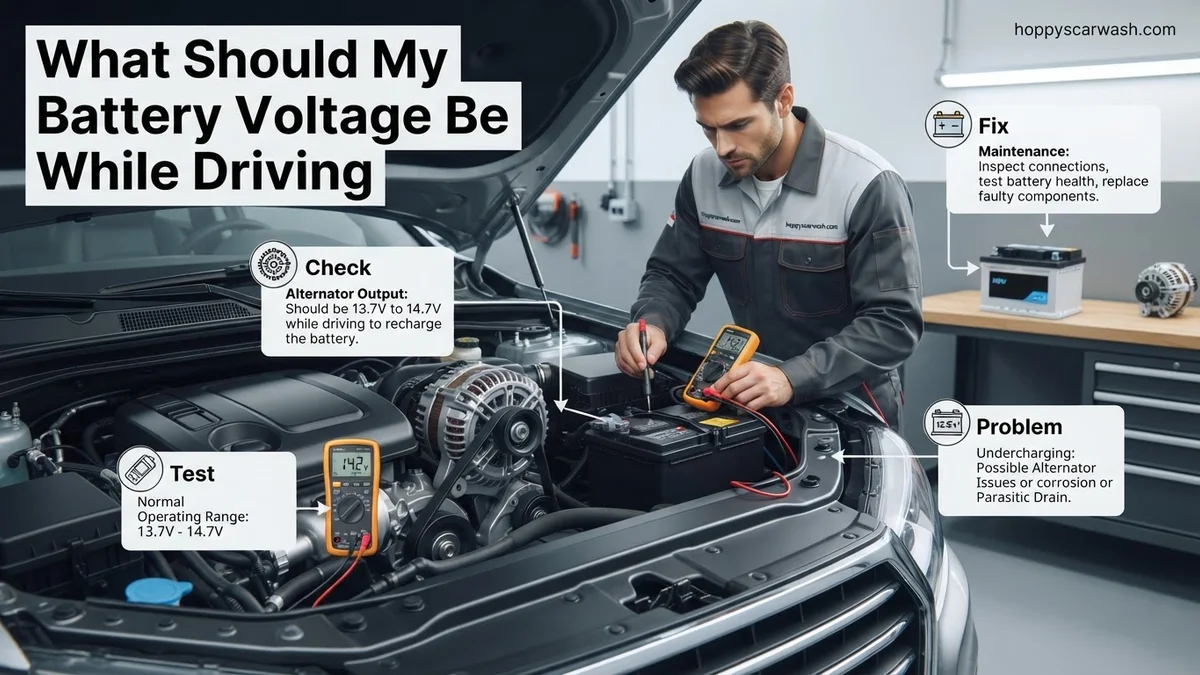
While driving, your car’s normal battery voltage should read between 13.7 and 14.7 volts due to the alternator actively charging the system. If your dashboard or multimeter shows a reading consistently below 13.2 volts or spiking above 15 volts, you likely have a failing alternator or a faulty voltage regulator.
When you are driving your car in 2026, a healthy battery voltage should consistently read between 13.7 volts and 14.7 volts. If you glance at your dashboard or plug in a digital multimeter and see numbers in this range, your charging system is doing its job properly.
Monitoring this metric is crucial because the battery does not power the car while the engine runs; the alternator does. A sudden drop or spike in voltage tells you immediately if your alternator, voltage regulator, or battery is failing before you end up stranded.
Key Takeaways
- Normal voltage while driving ranges strictly between 13.7V and 14.7V.
- Engine-off resting voltage should be around 12.6 volts when fully charged.
- Readings below 13.2V while driving indicate the alternator is not charging properly.
- Voltage spikes above 15.0V point to a failing internal voltage regulator.
- Use a digital multimeter or OBD2 scanner to monitor live voltage accurately.
What Should My Battery Voltage Be While Driving — Normal Ranges Explained
Understanding what your electrical system is doing requires looking at the numbers under different operating conditions. Modern vehicles demand a lot of power for advanced infotainment, driver-assistance sensors, and climate control, making a steady voltage supply more important than ever.
The Ideal Operating Range (13.7V to 14.7V)
When your engine is running and you are cruising down the road, the alternator pumps electricity back into the battery while powering the car’s electronics.
- A normal reading sits comfortably between 13.7V and 14.7V for most standard lead-acid and AGM batteries.
- If your vehicle features smart charging systems common in late-model cars, you might occasionally see the voltage drop to around 13.2V temporarily when the computer decides the battery is fully charged.
- Accessory loads like heated seats, headlights, and rear defrosters might cause a minor dip, but the system should compensate quickly.
Engine Off vs. Engine Running Readings
You cannot judge your alternator by looking at the battery when the car is turned off.
- With the engine completely off, a fully charged resting battery should read roughly 12.6 volts.
- Anything below 12.2 volts at rest means your battery is heavily discharged or losing its capacity to hold a charge.
- The moment you turn the key or press the start button, the voltage will plummet during cranking, but it must bounce right back up into the 14-volt range once the engine catches.
Why Low or High Voltage Readings Happen During a Drive
If your voltage readings fall outside the normal window while you are driving, your electrical system is waving a red flag. Ignoring these warnings usually leads to a dead battery, dimming headlights, or sudden electronic failure on the highway.
Signs and Causes of Low Voltage (Below 13.2V)
If your driving voltage drops below 13.2 volts, your battery is draining faster than it is being replenished.
- A failing alternator is the most common culprit, specifically a worn-out internal diode or a dying stator.
- Loose, corroded, or damaged battery cables can create excessive resistance, preventing the alternator current from reaching the battery.
- A slipping or worn serpentine belt will cause the alternator pulley to spin too slowly to generate adequate power.
- Running too many aftermarket accessories simultaneously can also overwhelm a stock charging system.
The Dangers of High Voltage Spikes (Above 15.0V)
Too much voltage is just as dangerous as too little voltage. If your display shows readings climbing past 15.0 volts while driving, you have a serious problem.
- A faulty voltage regulator—usually built directly into modern alternators—is almost always responsible for an overcharging condition.
- Overcharging will rapidly boil the electrolyte fluid inside standard batteries, causing swelling, a distinct sulfur smell, and permanent internal damage.
- Sustained high voltage can fry sensitive vehicle computers, blow dashboard fuses, and burn out expensive headlight bulbs.
How to Test Your Car Battery and Alternator Voltage Step-by-Step
Accurate diagnosis requires a digital multimeter set to direct current (DC) voltage. Automotive engineering standards dictate that testing must occur at both rest and under load to isolate charging system failures effectively in 2026 vehicles.
Step-by-Step Multimeter Testing Procedure
- Prepare the Vehicle: Ensure the ignition, headlights, and all accessories are turned completely off. Open the hood and locate the battery terminals.
- Test Rest Voltage: Touch the red multimeter probe to the positive terminal and the black probe to the negative terminal. A healthy resting battery should read between 12.4 and 12.6 volts.
- Start the Engine: Turn on the vehicle and let it idle. Observe the multimeter screen as the starter motor cranks and the engine catches.
- Measure Charging Voltage: With the engine running, the reading should immediately climb into the 13.7 to 14.7-volt range.
- Apply Electrical Load: Turn on the high-beam headlights, rear defroster, and maximum blower motor. The voltage may dip briefly but should recover and stay above 13.4 volts.
What If Your Voltage Still Drops After Replacing the Alternator
Replacing a failing alternator should immediately restore healthy charging metrics. If voltage metrics continue to fluctuate or drop below standard operating thresholds, hidden electrical bottlenecks are usually to blame. Modern 2026 powertrain control modules rely heavily on pristine circuit integrity.
- Inspect Serpentine Belt Tension: A worn, glazed, or slipping belt prevents the alternator pulley from spinning at the required RPM, mimicking a failed alternator.
- Check Ground and Power Cables: Corroded, loose, or frayed battery cables and engine-to-chassis grounds create high electrical resistance. This restricts current flow regardless of alternator output.
- Test the Battery Internal Resistance: A severely sulfated or shorted battery forces the alternator to work overtime, eventually burning out new charging components.
- Evaluate the Battery Sensor (BMS): Many modern vehicles feature a Battery Monitoring Sensor on the negative terminal that must be reset or replaced if faulty.
- Seek Professional Help: If DIY troubleshooting yields no results, visit a certified automotive electrical technician. Diagnostic labor typically ranges from $100 to $250, while complex wiring harness repairs can cost between $300 and $800.
Conclusion
Monitoring your car battery voltage while driving ensures you catch charging system failures before getting stranded. Maintaining an active reading between 13.7 and 14.7 volts safeguards sensitive onboard electronics from premature wear and sudden electrical failure. According to verified research and automotive engineering data from the Society of Automotive Engineers, proactive voltage testing remains the single most effective preventive maintenance step for vehicle reliability. Make it a habit to test your charging system output with a digital multimeter at the start of every seasonal change in 2026.
❓ Frequently Asked Questions
Why does my car battery voltage drop when I turn on the headlights and AC?
Turning on heavy electrical accessories places a sudden load on the electrical system. While a healthy alternator will quickly compensate and bring the voltage back up to the 13.7V-14.7V range, a brief dip is completely normal.
Can I drive my car if the voltage is sitting at 12.4 volts?
You can drive a short distance, but 12.4 volts indicates the alternator is not charging the battery. The vehicle is running strictly on stored battery power and will eventually stall once the battery drains completely.
What causes car voltage to spike above 15 volts while driving?
A voltage spike above 15 volts is almost always caused by a failing voltage regulator, which is typically built directly inside the alternator. This overcharging can boil the battery acid and fry sensitive electronic components.
How do I check my car voltage without a multimeter?
Many modern vehicles display live system voltage on the digital instrument cluster or through the infotainment screen’s hidden diagnostic menu. Alternatively, you can plug a cheap digital voltmeter directly into a 12V accessory socket.
Does cold weather affect car battery voltage while driving?
Yes, freezing temperatures increase internal resistance, causing the alternator to work harder and output slightly higher voltage (sometimes up to 14.8V or 15V briefly) to replenish the cold battery.
How long do alternators last before they cause low voltage?
Most standard car alternators last between 100,000 and 150,000 miles before internal components like diodes or brushes wear out and cause charging failure.