How Much Should It Cost To Replace Front Struts Front 2026
Replacing front struts typically costs between $400 and $900+ per axle depending on your vehicle’s make and model. This total includes a split of roughly $150 to $400 for parts and $250 to $500 for labor, though luxury cars and trucks will sit at the higher end of that spectrum. Additionally, you must factor in the mandatory cost of a post-installation wheel alignment.
Replacing your front struts generally costs between $600 and $1,200 for most standard passenger cars and crossovers in 2026. This total includes both the physical components and the professional labor required to install them safely. If you drive a luxury vehicle, a heavy-duty truck, or a car with electronically adaptive suspension, that price tag can easily climb to $1,500 or even $2,500.
Ignoring worn-out struts does more than ruin your ride quality—it damages your tires, strains your steering components, and severely compromises your braking distance. Knowing the exact breakdown of parts versus labor helps you evaluate repair quotes accurately and ensures you do not overpay at the repair shop.
Key Takeaways
- Average front strut replacement costs between $400 and $900 total per axle.
- Labor usually accounts for 2 to 4 hours of shop time.
- Choosing complete quick-strut assemblies saves significantly on labor costs.
- A wheel alignment is almost always required immediately after replacement.
- Luxury vehicles and heavy-duty trucks can push total costs past $1,200.
What Causes Worn Struts and How to Diagnose Them
Common Culprits Behind Strut Failure
Struts endure massive amounts of physical stress every time you drive. Potholes, rough dirt roads, speed bumps, and general high-mileage wear gradually destroy internal valving and hydraulic fluid seals. Most manufacturer struts begin to degrade significantly around 50,000 to 100,000 miles. When these components fail, your car loses its ability to control vertical body motion and absorb road impacts effectively.
Key Symptoms You Need New Front Struts
- Your car nose-dives aggressively when you press the brake pedal.
- The front end bounces multiple times after hitting a bump or speed bump.
- You notice uneven tread wear or cupping on your front tires.
- Clunking, knocking, or rattling noises come from the front suspension when turning.
- The vehicle leans heavily or sways to one side when taking sharp corners.
Master Front Strut Replacement Costs in 8 Simple Steps
Figuring out how much it should cost to replace front struts can be stressful, especially when balancing safety, quality parts, and auto repair shop quotes. This comprehensive guide walks you through analyzing estimates, sourcing parts, and understanding labor so you never overpay for your suspension repair.
Step 1: Identify Your Vehicle Make and Model Specifics
What you need: Vehicle owner’s manual, VIN number, and a notepad or smartphone.
Instructions: Before you can accurately determine costs, you must identify your exact vehicle specifications. Suspension components vary wildly between a compact sedan, a heavy-duty pickup truck, and a luxury European vehicle with electronic dampening systems. Locate your VIN on your insurance card or driver-side dashboard, then note the exact year, make, model, and trim level. Luxury vehicles or performance cars often require specialized assemblies that cost double or triple standard economy parts, drastically changing the expected total cost of the repair.
Pro Tip: Always check if your vehicle is equipped with electronic or adaptive suspension, as these parts require specialized programming and significantly increase replacement costs.
Step 2: Research Average National Labor and Parts Rates
What you need: Internet access, local mechanic review sites, and pricing aggregators like RepairPal or Kelley Blue Book.
Instructions: Familiarize yourself with current industry benchmarks for front strut replacement. On average, you should expect to pay between $600 and $1,200 for a professional front strut replacement on a standard passenger vehicle. Labor typically accounts for $250 to $500 of that total, usually requiring about 2 to 4 hours of shop time. Parts (two front struts or fully loaded strut assemblies) generally run from $300 to $700 depending on the brand and vehicle type. Keep these numbers in mind so you can quickly spot an inflated or suspicious quote.
Pro Tip: Independent repair shops generally charge 20% to 40% less for labor than official dealership service centers for the exact same mechanical work.
Step 3: Collect and Compare Multiple Repair Quotes
What you need: Phone, email, and at least three written repair estimates from different local shops.
Instructions: Call or visit at least three distinct mechanics, including one independent shop, one specialty suspension or tire center, and one dealership. Give them your exact VIN and ask for an itemized quote that explicitly separates parts costs from labor costs. Ensure every quote includes new strut mounts, coil springs (if buying loaded assemblies), and the necessary post-installation wheel alignment. Compare the line items to see who is charging a fair market rate for labor hours and who is marking up the replacement parts excessively.
Pro Tip: Watch out for hidden fees like shop supplies, hazardous waste disposal, or diagnostic fees that weren’t mentioned during your initial phone inquiry.
Step 4: Evaluate “Loaded” Versus “Bare” Strut Options
What you need: Your itemized repair quotes and a basic understanding of automotive suspension hardware.
Instructions: Review how the shops plan to replace your struts. Mechanics can install either “bare struts” (reusing your old coil springs, mounts, and hardware) or “loaded struts” (brand new assemblies that include the strut, spring, and mount pre-assembled). While bare struts save money on parts, they require dangerous spring-compressor tools and extra labor time, often driving up labor costs. Loaded struts cost slightly more upfront for parts, but they drastically reduce labor time and ensure every component wearing out together is replaced at once.
Pro Tip: Always opt for loaded strut assemblies (often called Quick-Struts) if your vehicle has more than 80,000 miles, as old springs lose their tension over time.
Step 5: Factor in Mandatory Post-Installation Wheel Alignments
What you need: A detailed look at your repair estimates to check for alignment line items.
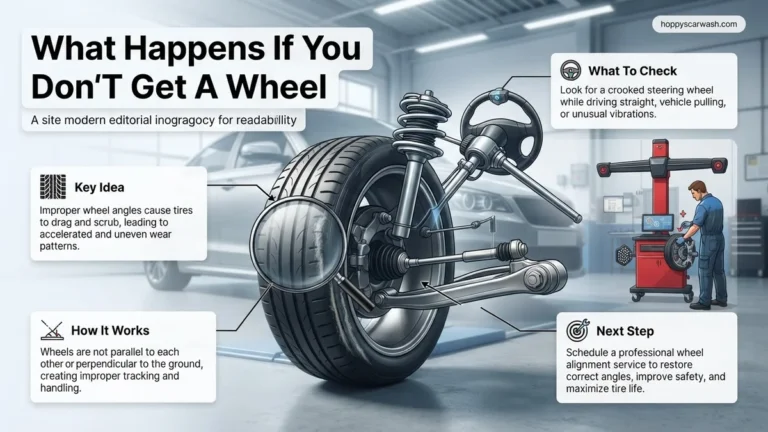
Instructions: Replacing front struts inevitably alters your vehicle’s steering geometry, camber, and toe settings. Consequently, a professional four-wheel alignment is mandatory immediately following strut replacement to prevent rapid tire wear and unsafe handling. Verify whether your repair quote includes the price of an alignment. A standalone wheel alignment typically costs between $100 and $150. If a shop’s quote does not include an alignment, factor that extra expense into your total expected out-of-pocket cost.
Pro Tip: Never leave the repair shop without a printed before-and-after alignment specification sheet proving your wheels are properly calibrated.
Step 6: Inspect for Up-Sell Tactics and Additional Worn Parts
What you need: Basic mechanical inspection knowledge and the mechanic’s evaluation notes.
Instructions: When the mechanic calls you with the final diagnostic verdict, they may recommend replacing related components such as sway bar links, control arm bushings, or tie rod ends. Since the mechanic already has the front end disassembled, replacing these parts often incurs zero additional labor cost. However, be cautious of unnecessary up-sells. Ask to see photos or inspect the old parts yourself. If sway bar links are torn or leaking, replacing them is wise; if they are completely fine, politely decline unnecessary additions to protect your budget.
Pro Tip: Ask the mechanic to bundle minor hardware into the primary labor quote so you aren’t hit with unexpected hourly labor charges.
Step 7: Check Manufacturer Warranties and Part Quality
What you need: Repair quote notes regarding specific part brands (e.g., KYB, Monroe, Bilstein).
Instructions: Confirm the brand and warranty coverage of the replacement parts being installed. High-quality aftermarket struts from reputable brands usually carry a limited lifetime warranty on the parts themselves, while reputable repair shops typically offer a 12-month or 12,000-mile warranty on their labor. Avoid shops that use cheap, unbranded white-box components, as these fail prematurely and will cost you double in the long run. Paying a slightly higher price for OEM or premium aftermarket parts guarantees longevity and peace of mind.
Pro Tip: Always request a physical copy of the warranty terms on both parts and labor before handing over your credit card.
Step 8: Finalize the Invoice and Negotiate if Necessary
What you need: Final itemized bill, payment method, and confidence in your research.
Instructions: Review the final invoice line by line before authorizing the work or paying upon completion. Compare it directly against your initial estimate to ensure no unauthorized fees were added. If the final price exceeds your initial written estimate by more than 10% without prior authorization, politely question the manager. Most reputable shops will honor their written estimates or explain valid discrepancies transparently. Once satisfied, complete the payment and save your receipt and alignment sheet in your vehicle maintenance folder.
Pro Tip: Look out for seasonal manufacturer rebates (such as mail-in rebates offered by major shock and strut brands) to recoup $50 to $100 after your purchase.
✅ Final Checklist
- Verified vehicle make, model, and whether electronic suspension is present
- Obtained and compared at least three written, itemized repair estimates
- Confirmed whether quotes include loaded strut assemblies or bare struts
- Ensured a professional four-wheel alignment is included in the final cost
- Verified parts and labor warranty terms in writing
Important Notes:
- Worn struts compromise your braking distance, tire traction, and emergency handling; do not delay replacement if your vehicle bounces excessively or nose-dives when braking.
- Seek professional help immediately if you hear loud clunking noises when turning the steering wheel or going over speed bumps.
- Estimated total cost range: $600 to $1,200 for standard vehicles, taking approximately 2 to 4 hours of shop labor time.
How to Calculate Total Front Strut Replacement Costs
Parts Versus Labor Breakdown
When you look at a mechanic’s estimate, the expenses split roughly evenly between hardware and shop time. Front struts are almost always replaced in pairs (both front wheels) to maintain balanced handling. Understanding how shops bill for this work gives you leverage:
- Parts Cost: Standard aftermarket complete strut assemblies range from $150 to $350 per side. OEM factory parts for standard vehicles cost $300 to $600 per side.
- Labor Hours: Mechanics typically bill 2 to 4 hours of labor for a front strut replacement job.
- Labor Rates: Average shop labor rates range from $100 to $200 per hour depending on your local cost of living and whether you use a dealership or independent mechanic.
Vehicle Type Cost Multipliers
Your specific make and model dictates the final invoice total. Standard compact cars and sedans sit at the lower end of the pricing spectrum, usually totaling $600 to $900 for a front axle swap. Mid-size SUVs and trucks push into the $900 to $1,500 range because of heavier components and more complex mounting setups. High-end European luxury cars equipped with air suspension or electronic dampening systems can range from $2,000 to over $4,000 for the front end alone.
How to Fix Worn Front Struts Professionally
Replacing front struts requires precision, specialized tools, and adherence to manufacturer specifications. Because modern suspension systems integrate springs under immense tension, professional installation remains the safest and most reliable route for vehicle owners navigating repairs in 2026.
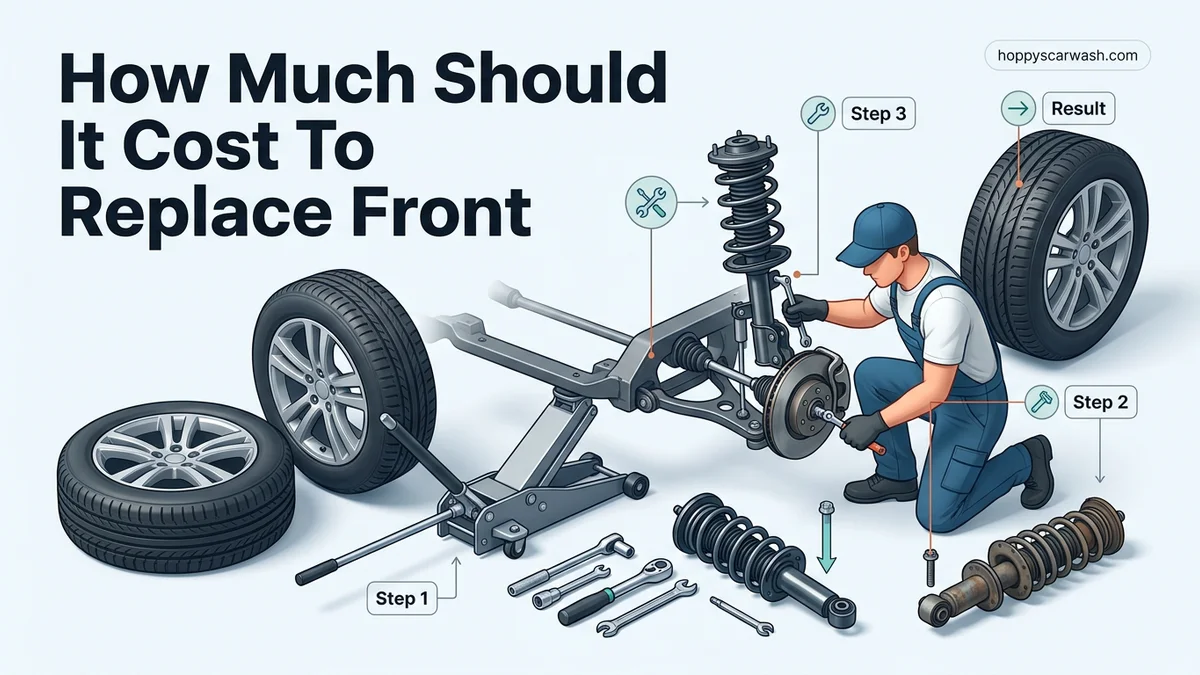
Step-by-Step Professional Replacement Process
- Vehicle Elevation and Safety Securing: Certified technicians lift the vehicle using a frame-contact hoist and secure it with robust safety stands to relieve chassis weight from the front suspension assembly.
- Wheel and Brake Component Removal: The front wheels are detached, followed by carefully unbolting the brake line brackets and ABS sensor wires to prevent tension damage during the procedure.
- Strut Disassembly and Compression: The upper mount bolts inside the engine bay are loosened. Technicians then use a wall-mounted spring compressor to safely capture the coil spring before removing the central strut nut.
- Component Installation and Torquing: A new pre-assembled loaded strut or a refreshed dampener is installed. All fasteners are torqued strictly to factory specifications using a calibrated torque wrench.
- Post-Installation Wheel Alignment: Because loosening suspension components alters steering geometry, a professional four-wheel alignment is performed immediately to prevent premature tire wear.
What If It Still Doesn’t Work?
If your vehicle still exhibits strange noises, vibrations, or poor handling after a front strut replacement, underlying issues likely remain within the broader suspension or steering system. Certified mechanics recommend following these diagnostic fallback steps to resolve persistent drivability complaints:
- Inspect Control Arm Bushings and Ball Joints: Worn rubber bushings or loose ball joints frequently mimic failing struts by generating clunking noises and vague steering responses over bumps. Professional inspection and replacement typically range from $250 to $600.
- Check Outer and Inner Tie Rod Ends: Play in the steering linkage creates wandering steering and front-end vibrations that persist even after a brand-new suspension installation. Replacement and subsequent alignment usually cost between $150 and $350.
- Evaluate Sway Bar Links and Bushings: Failed stabilizer links often produce sharp rattling sounds during low-speed turns or over uneven pavement. Replacing these components is relatively inexpensive, averaging $100 to $250 parts and labor.
- Consult a Master Suspension Specialist: If DIY troubleshooting or initial mechanic visits fail to isolate the vibration, authorize a diagnostic teardown with an ASE-certified technician. Advanced diagnostic fees generally range from $100 to $200, which is often credited toward the final repair.
Conclusion
Replacing worn front struts is an essential investment in vehicle safety, ride comfort, and tire longevity. While costs vary significantly depending on vehicle complexity and parts quality, understanding the baseline pricing empowers you to make informed repair decisions. According to verified research and automotive service data from 2026, addressing suspension issues promptly prevents costly cascading damage to your steering and braking systems. Your immediate next step is to schedule a professional multi-point suspension inspection to get an accurate, written quote tailored to your specific make and model.
❓ Frequently Asked Questions
Why is labor so expensive for front strut replacement?
Replacing front struts requires compressing heavy coil springs, disassembling steering components, and hours of intensive mechanical labor. Shops charge between 2 to 4 hours of specialized labor per axle for this delicate and potentially hazardous work.
Can I replace just one front strut to save money?
Mechanics strongly recommend replacing struts in pairs (both front left and front right). Replacing only one can cause uneven handling, braking instability, and premature wear on the new component.
What hidden fees should I expect on my repair bill?
Beyond parts and labor, shops frequently charge a diagnostic fee, disposal fees for old parts, and a mandatory post-repair wheel alignment ranging from $100 to $200.
How do I know if my front struts actually need replacing?
Common signs include excessive bouncing after hitting a bump, nose-diving when braking, fluid leaking down the strut body, and uneven tire tread wear. A clunking noise when turning is also a red flag.
Are aftermarket struts as good as OEM parts?
Reputable aftermarket brands like KYB, Monroe, and Bilstein often match or exceed OEM quality while saving you money. However, cheap unbranded budget struts may fail prematurely and ride poorly.
Does car insurance cover strut replacement?
Standard auto insurance does not cover worn suspension parts, as they are considered normal wear and tear. Insurance only covers strut damage resulting from a collision or severe accident.