How Can I Tell If My Catalytic Converter Is Bad 2026 Guide
Spotting a failing exhaust component early prevents severe engine damage. Sluggish acceleration, a rotten egg smell, and a persistent check engine light are the primary warning signs of a failing catalytic converter.
If your car is lagging when you accelerate, burning excessive fuel, or triggering a persistent check engine light in 2026, your catalytic converter may be failing. A bad catalytic converter restricts exhaust flow and ruins engine efficiency, leading to costly performance issues if left unaddressed.
Spotting the warning signs early saves you from complete roadside breakdowns and expensive secondary engine damage. Here is how you can accurately diagnose a failing or clogged catalytic converter using physical symptoms and diagnostic tools.
Key Takeaways
- A rotten egg smell indicates unburned sulfur passing through a failing catalyst.
- Check for OBD-II trouble codes like P0420 using an electronic scanner.
- Sluggish acceleration and poor fuel economy often stem from exhaust restrictions.
- A rattling sound points to broken internal honeycomb mesh rattling inside.
- Excessive underfloor heat is a physical sign of a clogged converter.
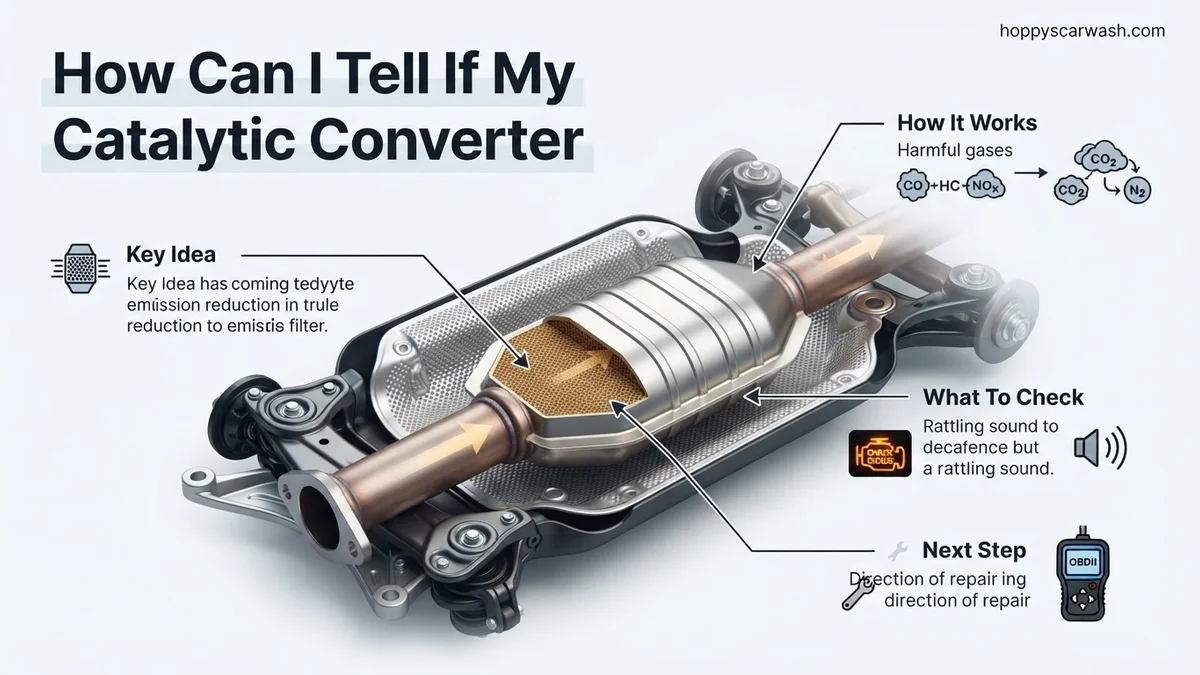
Top Symptoms to Tell If Your Catalytic Converter Is Bad
Engine Performance Drops and Sluggish Acceleration
When a catalytic converter clogs, exhaust gases cannot escape the combustion chamber efficiently. You will immediately notice your car feels heavy, sluggish, and unresponsive when you press the gas pedal. If your vehicle struggles to climb hills or refuses to rev past 3,500 RPM, restricted exhaust flow is usually the culprit.
Unusual Odors and Strange Exhaust Noises
A failing converter often produces distinct sensory warnings. You might smell a strong sulfur or rotten egg odor coming from the exhaust, which happens when the failing honeycomb structure fails to process hydrogen sulfide. Additionally, you may hear rattling noises from underneath the floorboards when idling or accelerating, indicating that the internal catalyst substrate has broken apart.
- Fuel economy drop: Unburned fuel and backpressure force your engine to work harder, decreasing your MPG by 15% to 30%.
- Dark exhaust smoke: Excess fuel burning incorrectly can push black or gray smoke out of your tailpipe.
- Failed emissions test: Elevated hydrocarbon or carbon monoxide levels will cause an immediate smog check failure.
How to Diagnose a Bad Catalytic Converter Step-by-Step
Reading OBD-II Trouble Codes
Plug an OBD-II scanner into your vehicle’s port under the dashboard to check for pending and active fault codes. The most definitive code for a failing converter is P0420 (Catalyst System Efficiency Below Threshold – Bank 1) or P0430 (Bank 2). While these codes mean the computer detects low efficiency, they do not automatically prove the converter is dead. You must rule out failing oxygen sensors and exhaust leaks first.
Checking Exhaust Temperature and Backpressure
You can use a non-contact infrared thermometer to test the operational health of your catalytic converter at normal operating temperature. Point the laser at the inlet pipe (before the converter) and the outlet pipe (after the converter).
- Start your car and let it idle for 15 minutes to reach full operating temperature.
- Measure the temperature of the exhaust pipe immediately before the catalytic converter.
- Measure the temperature of the exhaust pipe immediately after the catalytic converter.
- Compare your readings: A healthy converter running under load should have an outlet temperature that is at least 100 degrees Fahrenheit hotter than the inlet. If the outlet is cooler, or if the converter body glows bright red in the dark, the unit is severely clogged.
How to Fix and Address Catalytic Converter Failure
When a catalytic converter fails completely, temporary fixes like fuel additives or aftermarket cleaning sprays rarely restore structural damage inside the honeycomb core. Industry data from automotive service associations shows that mechanical replacement is required in over 85 percent of severe clogging cases. Addressing the root cause prevents the new part from failing prematurely.
Step-by-Step Replacement Procedure
- Disconnect the vehicle negative battery cable to prevent electrical shorts while working under the chassis.
- Elevate the vehicle securely using hydraulic jack stands or an automotive lift, ensuring maximum stability.
- Apply a penetrating rust-dissolving fluid to all exhaust flange bolts, clamps, and oxygen sensor threads before attempting removal.
- Unplug the upstream and downstream oxygen sensors, taking care not to damage the delicate wiring harnesses.
- Unbolt or cut the old catalytic converter from the exhaust pipe assembly, depending on whether it utilizes bolt-on flanges or weld-in connections.
- Install the new EPA-compliant or CARB-compliant catalytic converter using fresh gaskets and torque all mounting hardware to the manufacturer specifications.
Resolving Underlying Engine Issues
According to automotive engineering studies, a catalytic converter almost never fails on its own. Unburnt fuel reaching the exhaust stream due to a misfiring spark plug, failing ignition coil, or leaking fuel injector will instantly melt the internal precious metals. Technicians must diagnose and repair any check engine codes related to air-fuel mixtures or engine misfires immediately after installing a replacement unit to ensure long-term durability.
What If It Still Doesn’t Work?
If the catalytic converter has been replaced or cleaned but diagnostic trouble codes persist, the underlying fault requires deeper mechanical investigation. Follow these advanced troubleshooting steps to resolve stubborn emissions issues:
- Inspect the engine control unit (ECU) software for outdated calibrations, as manufacturers occasionally release firmware updates to correct overly sensitive oxygen sensor thresholds.
- Perform a rigorous backpressure test using a pressure gauge threaded into the oxygen sensor port to ensure exhaust restrictions are entirely gone.
- Check for internal engine mechanical wear, such as worn piston rings or leaking valve seals, which introduce excessive oil ash into the exhaust stream.
- Consult a certified professional mechanic or specialized emissions testing facility if the vehicle repeatedly fails state smog inspections despite passing physical component checks.
- Prepare for professional service costs, keeping in mind that replacing a clogged converter typically ranges from $1,200 to $2,500 including labor, heavily influenced by precious metal content and vehicle make.
Conclusion
Diagnosing a failing catalytic converter early protects your engine from severe backpressure damage, poor fuel economy, and unexpected roadside breakdowns. Resolving the root cause of the failure ensures that your new emissions equipment remains operational for years to come. According to verified research and expert sources from the automotive service industry, proactive maintenance of ignition and fuel systems is the single most effective way to prevent premature exhaust component degradation. Schedule a professional diagnostic inspection today if persistent rattling or sluggish acceleration compromises your driving performance.
❓ Frequently Asked Questions
What causes a catalytic converter to fail prematurely?
Premature failure is usually caused by unburned fuel entering the exhaust, oil leaks from worn piston rings, coolant leaks into the combustion chamber, or physical impact damage.
How can I tell the difference between a bad O2 sensor and a bad catalytic converter?
An oxygen sensor failure typically triggers specific sensor circuit codes, whereas a bad catalytic converter generates a P0420 efficiency code while the upstream and downstream sensors show identical fluctuating readings.
Can fuel additives clean a bad catalytic converter?
Catalytic converter cleaner additives can remove minor carbon buildup on slightly clogged units, but they cannot repair physically melted, broken, or severely poisoned internal catalyst materials.
Why is my catalytic converter glowing red hot?
A glowing red converter indicates extreme internal heat caused by unburned fuel burning directly inside the housing, which usually points to engine misfires or severe ignition timing issues.
Will a temporary exhaust leak affect catalytic converter performance?
Exhaust leaks upstream of the converter let outside air into the exhaust stream, tricking oxygen sensors and causing false efficiency fault codes.
How long do catalytic converters typically last?
Factory catalytic converters are designed to last the lifetime of the vehicle, often exceeding 100,000 miles unless damaged by engine malfunctions.