Why Is There Ice on the Inside of My Windshield 2026
Ice forms on the inside of your windshield when trapped cabin humidity meets sub-freezing glass. This occurs because warm air holds moisture that condenses and freezes on cold surfaces when the vehicle cools down.
Ice forming on the inside of your car windshield happens when excess moisture trapped inside your cabin meets glass that has dropped below 32 degrees Fahrenheit. Unlike the frost on the outside caused by morning dew and freezing air, interior ice means your car is holding onto too much humidity, which then condenses and freezes directly onto your dashboard-facing glass.
Dealing with this in 2026 is uniquely frustrating because modern vehicle sealing keeps air tight, trapping dampness from wet boots, snow-covered coats, and your own breath. If you ignore it, you risk not just delayed morning commutes, but long-term mold growth and electronic issues. Fixing this requires understanding the science of cabin dew points and changing how you manage moisture before you park for the night.
Key Takeaways
- Interior ice is caused by excess trapped moisture meeting freezing glass.
- Remove snow from boots and clothing before entering the vehicle.
- Run the air conditioner to strip humidity before turning off the engine.
- Use a specialized plastic scraper or isopropyl alcohol mix for safe removal.
- Absorb residual cabin moisture with reusable silica gel or charcoal packets.
What Causes Ice on the Inside of My Windshield
The Science of Cabin Humidity and Dew Points
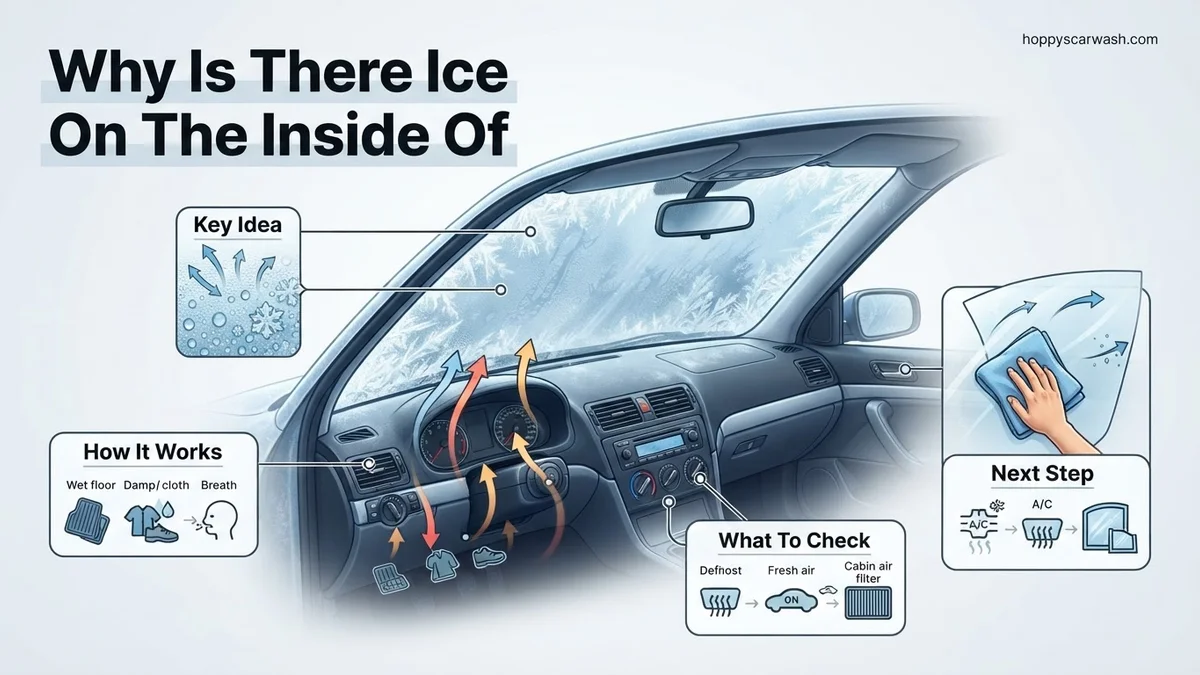
Your breath carries a significant amount of water vapor. When you drive your car in the winter, that warm, humid air fills the cabin. Once you turn off your engine, the interior temperature plummets, causing the air to lose its capacity to hold moisture. That water vapor looks for the coldest surface to cling to—which is your unheated windshield. If the glass temperature drops below freezing, that condensation instantly turns into a stubborn layer of interior ice. Even a small amount of trapped water can create a thick sheet by morning.
Common Sources of Trapped Moisture
That excess humidity usually comes from a few everyday culprits you bring into your car without thinking. In 2026, with shifting winter weather patterns bringing heavier wet snow to many regions, car interiors are more vulnerable than ever. Key moisture sources include:
- Snow tracked in on your shoes melting into floor mats
- Wet winter coats, umbrellas, and bags left on seats
- Leaking door seals or heater cores introducing ambient water
- Breathing and sweating of multiple passengers during long drives
How to Safely Remove Interior Windshield Ice Without Damage
Why Interior Scraping is Risky
Scraping ice off the inside of your windshield is much harder and riskier than dealing with the outside. The glass is often curved tightly, and working from a cramped driver seat makes applying the right angle difficult. Standard plastic ice scrapers can easily scratch your dashboard, steering column, or the delicate heating grid lines embedded in your rear and side glass. More importantly, using excessive force can compromise the structural adhesive holding your windshield in place, leading to dangerous leaks later on.
Safe and Effective Removal Techniques
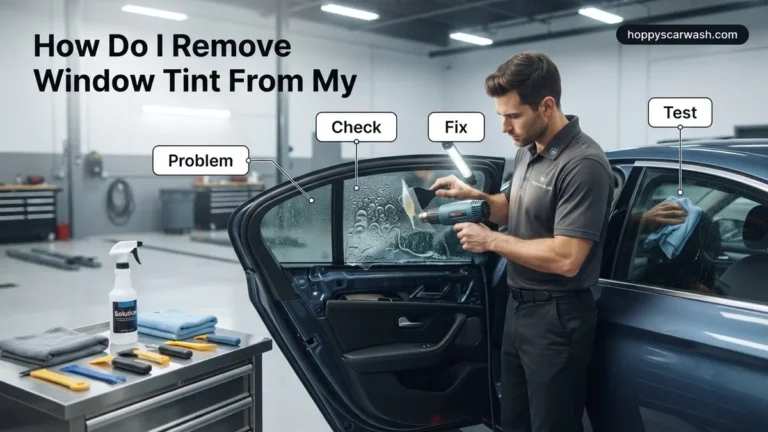
Instead of aggressively hacking away at the frozen layer with a sharp plastic edge, you need to melt the ice safely from the inside. Use these methods to clear your view without ruining your interior:
- Turn your vehicle on and direct the defroster exclusively to the windshield, starting on a low fan speed and gradually increasing it as the glass warms.
- Fill a spray bottle with a mixture of rubbing alcohol and water to lower the freezing point and wipe the ice away with a clean microfiber towel.
- Place a portable 12-volt cabin heater on your dashboard for a few minutes to circulate dry, warm air directly against the glass.
Step-by-Step Guide to Fix and Prevent Interior Frost Permanently
Eliminating interior frost requires a systematic approach to lower the relative humidity inside your vehicle’s cabin. According to automotive climate control experts at the Mobile Air Conditioning Society (MACS), managing cabin moisture before parking is the single most effective countermeasure. Follow this step-by-step protocol to permanently stop ice from forming on your inner glass in 2026.
- Clear out wet items: Remove all soaked floor mats, damp umbrellas, and gym bags from the vehicle every night. Trapped moisture in fabric acts as a continuous vapor source.
- Ventilate the cabin before parking: Three minutes before arriving at your destination, roll down your windows slightly and switch the heater to fresh air mode. This flushes warm, humid air out of the cabin and equalizes the interior and exterior glass temperatures.
- Blast the AC on your commute: Even during freezing winter drives in 2026, run your air conditioning system with the fresh-air intake enabled. The automotive evaporator core acts as a dehumidifier, stripping moisture out of the air before it reaches the windshield.
- Install moisture-absorbing packs: Place a rechargeable silica gel dehumidifying bag on your dashboard overnight. These products absorb ambient water vapor and can be easily dried out in a household microwave when saturated.
What If It Still Doesn’t Work and Moisture Keeps Returning?
If you have removed all wet items and optimized your climate controls, but interior ice still forms every morning, a mechanical defect is likely trapping humidity inside your vehicle. Persistent frost usually points to a compromised weather seal or a failing HVAC component.
- Inspect door and window seals: Check all rubber gaskets around your doors and trunk for cracks, hardening, or gaps that allow melting snow to leak inside. Replacing a damaged door seal typically costs between $100 and $250 in labor and parts.
- Check your cabin air filter: A clogged or saturated cabin air filter restricts airflow, preventing your defroster from effectively exhausting humid air. Swap this filter annually, which costs roughly $20 to $50.
- Diagnose a leaking heater core: If your windows feel greasy and smell sweet when defrosted, your heater core may be leaking antifreeze into the cabin. Professional heater core replacement is complex and generally ranges from $600 to $1,200.
- Consult an automotive technician: If you suspect a hidden water leak in your floor pan insulation or a malfunctioning fresh-air door actuator, take your vehicle to a certified mechanic for a smoke test or electronic diagnostics.
Conclusion
Interior windshield ice is more than just an annoying morning delay; it is a direct indicator of excessive cabin humidity and poor moisture management. By actively dehumidifying your vehicle’s interior, clearing out wet mats, and utilizing your air conditioning system correctly, you can eliminate interior frost for good. According to verified research and automotive safety experts, maintaining a dry cabin is essential for unobstructed visibility and safe winter driving. Make it your immediate next step to inspect your cabin air filter and place a moisture-absorbing pack on your dashboard tonight.
❓ Frequently Asked Questions
Why does ice form on the inside instead of the outside?
Exterior ice is caused by atmospheric precipitation or ambient freezing dew, while interior ice is caused specifically by the moisture trapped inside your car’s cabin meeting cold glass.
How can I get rid of interior ice quickly without a scraper?
You can spray a mixture of 70% rubbing alcohol and water onto the glass to lower the freezing point, then wipe it away with a microfiber towel.
Do silica gel dehumidifying bags actually work in cars?
Yes, reusable moisture-absorbing bags left on your dashboard or seats actively pull humidity out of the air, significantly reducing overnight frost formation.
Why do my car windows fog up and freeze every morning?
Fog turns into ice when temperatures drop below freezing overnight. If your windows are constantly fogging, you likely have an active moisture source like wet mats or a clogged cabin air filter.
Should I leave my car heater on fresh air or recirculation mode?
Always use fresh air mode in cold weather. Recirculation mode traps humid exhaled air inside the cabin, which dramatically increases window fogging and interior icing.
Could a leaking heater core cause ice on the inside windshield?
A leaking heater core introduces sweet-smelling coolant vapor into the cabin, which coats the windows in an oily film that attracts moisture and freezes easily.