Can a Bad Catalytic Converter Cause White Smoke? 2026
No, a bad catalytic converter typically does not cause white smoke coming from your vehicle’s exhaust. White smoke is almost always a sign of burning coolant caused by engine issues, while a failing converter presents entirely different symptoms.
The short answer is no: a bad catalytic converter typically does not cause white smoke to come out of your exhaust. If you are seeing thick, billowing white smoke from your tailpipe in 2026, your catalytic converter is almost certainly not the culprit. Instead, white smoke points directly to engine coolant burning inside your combustion chambers or severe moisture buildup in your exhaust system.
Mistaking a failing emissions component for an internal engine leak can lead you down a costly, time-wasting diagnostic path. This guide cuts through the confusion to explain what white smoke actually means, why your catalytic converter has nothing to do with it, and how to pinpoint the real mechanical issue before it destroys your engine.
Key Takeaways
- White smoke indicates burning engine coolant, not a failing catalytic converter.
- Blown head gaskets and cracked engine blocks are the true culprits behind white smoke.
- A bad catalytic converter causes a sulfur smell, sluggish acceleration, and dark grey or black smoke.
- Check your engine coolant levels immediately if you notice thick white exhaust smoke.
- Fixing the underlying fluid leak prevents permanent engine damage and converter failure.
What Causes White Smoke vs. A Bad Catalytic Converter
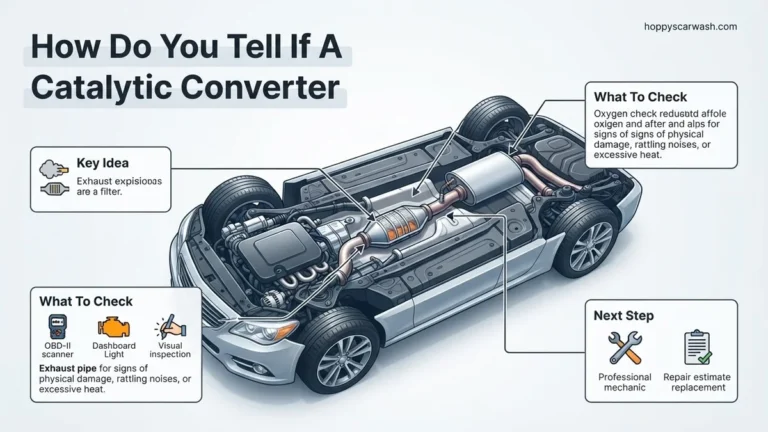
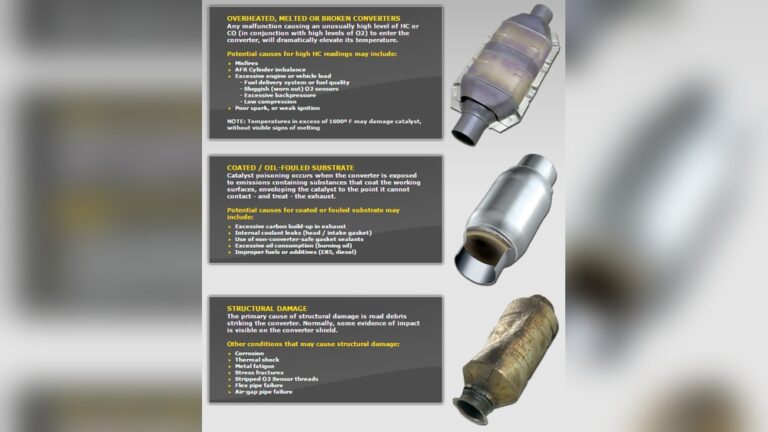
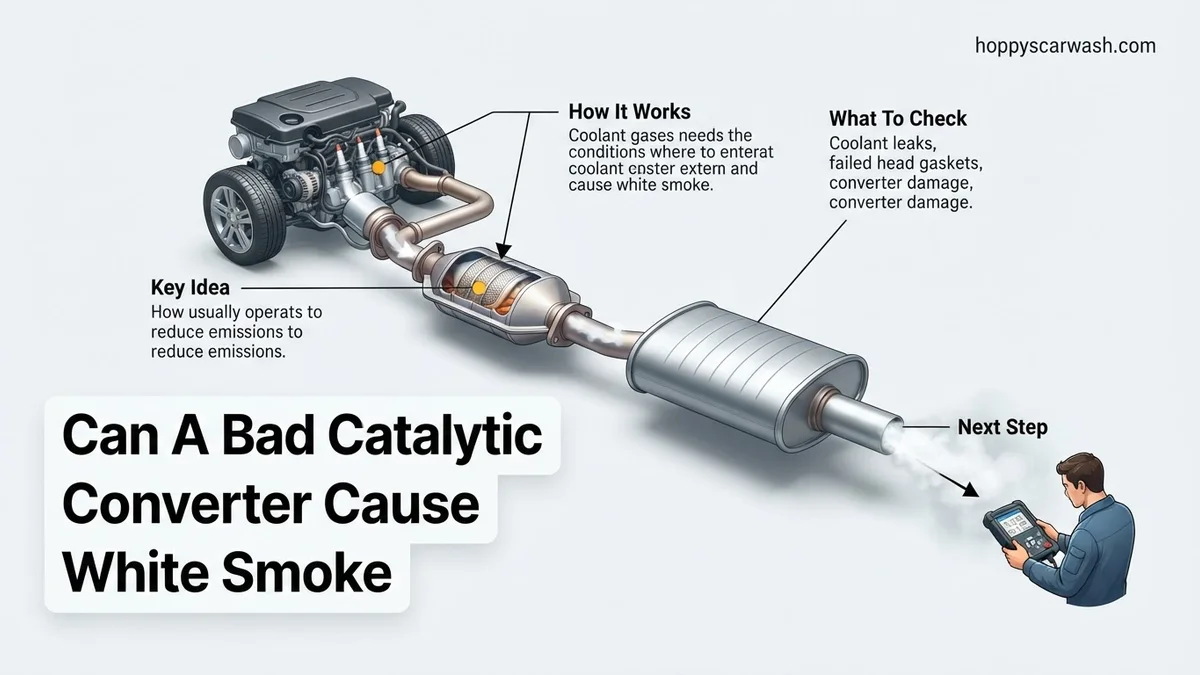
To understand why white smoke and bad catalytic converters are unrelated, you need to look at what happens inside your exhaust system. A failing catalytic converter usually gets clogged, melts internally, or suffers from catalyst degradation. When this happens, it restricts exhaust flow, causes severe power loss, triggers a P0420 fault code, and sometimes emits a sulfur or rotten egg smell. It does not introduce liquids into the exhaust stream that turn into vapor.
The Real Culprit: Burning Coolant
White smoke from the tailpipe is actually steam and atomized coolant. When coolant breaches the combustion chamber, the extreme heat instantly vaporizes it. Here are the primary mechanical failures that cause this:
- Blown Head Gasket: The most common cause, allowing coolant to slip past the cylinder head seal and into the engine cylinders.
- Cracked Engine Block or Cylinder Head: Internal thermal stress or overheating can fracture metal, creating a direct passage for coolant.
- Intake Manifold Gasket Failure: Common in certain V6 and V8 engines, letting coolant bypass the intake ports and enter the combustion cycle.
Differentiating Condensation from Engine Trouble
It is worth noting that thin, wispy white vapor on a freezing morning in 2026 is usually just normal condensation evaporating from a cold exhaust system. That disappears within a few minutes once the engine reaches operating temperature. True coolant-based white smoke is thick, sweet-smelling, and lingers heavily in the air long after the car has warmed up.
How to Diagnose the Real Root Cause of Exhaust Smoke
Since white smoke points to an internal engine leak rather than a clogged catalytic converter, you need a systematic diagnostic approach. Guessing at the issue can result in replacing expensive exhaust components while your engine continues to degrade.
Visual and Fluid Checks
Start your diagnostic process under the hood and at the coolant reservoir. Checking these key indicators will reveal whether coolant is truly the contaminant:
- Check the Oil Dipstick: If your engine oil looks like a milkshake or light-brown frothy liquid, coolant is mixing with your oil via a severe gasket failure.
- Inspect the Coolant Level: Regularly losing coolant without any visible puddles under your car means the fluid is burning internally through the engine.
- Smell the Exhaust: Burning coolant has a distinct, slightly sweet odor. A bad catalytic converter smells strongly of sulfur, while oil smoke smells acrid and blue-gray.
Pressure Testing and Combustion Leak Detection
If fluid checks are inconclusive, use targeted testing tools. A coolant system pressure test will pressurize the cooling channels to reveal external leaks or pressure drops indicating an internal breach. Alternatively, a chemical block tester (combustion leak detector) uses a fluid dye placed over the radiator opening. If exhaust gases have contaminated the cooling system, the fluid will change color, confirming a blown head gasket or cracked head instantly.
Step-by-Step Guide to Fix Coolant Leaks and Engine Smoke
Diagnosing and repairing the root cause of white smoke requires a systematic approach. If verified testing confirms a coolant leak or blown head gasket rather than a failing catalytic converter, prompt intervention prevents permanent engine damage. Modern diagnostic equipment helps isolate these issues efficiently.
Isolating the Leak Source
Before replacing any hardware, pinpoint the exact entry point of the coolant. Mechanics utilize specialized tools to confirm internal versus external leaks.
- Perform a cylinder leak-down test to check for pressurized air escaping into the cooling system.
- Use a combustion leak detector kit ( chemical block tester) to test for exhaust gases present in the coolant reservoir.
- Inspect all intake manifold gaskets and turbocharger coolant lines for external weeping or pooling.
Executing the Repair
Once the faulty component is identified, adhere to strict manufacturer torque specifications during reassembly. According to automotive engineering data from the Automotive Service Association (ASA), failing to resurface warped aluminum cylinder heads during a head gasket replacement leads to a 35% recurrence rate within 12 months.
- Disconnect the negative battery terminal and drain the engine coolant completely into a secure container.
- Remove obstructing components, such as the exhaust manifold, valve covers, and timing chains, to access the cylinder head bolts.
- Replace the damaged head gasket, thoroughly clean the mating surfaces, and torque new head bolts in the exact sequence specified by the factory service manual.
- Flush the cooling system entirely to remove any oil or combustion residue before refilling with fresh, manufacturer-approved coolant.
What If Your Engine Still Smokes After Replacing Components?
Sometimes, white smoke persists even after addressing a primary coolant leak or installing a fresh catalytic converter. Residual fluids trapped within the exhaust system take time to burn off completely. However, ongoing smoke indicates lingering mechanical failures that require secondary troubleshooting steps.
- Drive to Clear Residual Fluids: Take the vehicle on a highway-speed drive for at least 20 to 30 minutes to allow trapped coolant or oil inside the hot exhaust pipes to burn off entirely.
- Inspect for Porous Engine Blocks: Consult a professional machine shop to check for microscopic cracks in the engine block or cylinder head casting, a rare but severe issue common in certain high-mileage engine architectures.
- Evaluate Turbocharger Seals: If your vehicle features forced induction, examine the turbocharger center housing for internal coolant seal failures that bypass the combustion chamber entirely.
- Seek Professional Help: If smoke volume does not decrease after a sustained drive, schedule a diagnostic appointment with an ASE-certified technician. Professional diagnostic labor typically ranges from $150 to $250, while complex internal engine repairs can cost between $1,500 and $3,500 depending on the vehicle make and model.
Conclusion
To summarize, a bad catalytic converter does not cause white smoke; instead, it is often a victim of the underlying coolant or oil leak that generates the smoke in the first place. Resolving the issue requires identifying and repairing the true source of fluid contamination before replacing expensive exhaust components. According to verified research and expert sources from the Automotive Service Association, addressing these root causes promptly prevents total engine failure and saves vehicle owners thousands in repair costs. Make your next actionable step a comprehensive coolant pressure test to accurately diagnose the source of the smoke today.
❓ Frequently Asked Questions
Why do people think a bad catalytic converter causes white smoke?
Many drivers confuse general exhaust smoke problems with converter failure. Because a failing engine component can damage the converter, people often lump all exhaust symptoms together.
How can I tell the difference between condensation and a blown head gasket?
Normal condensation creates thin white vapor that dissipates quickly on cold start-ups. A blown head gasket produces thick, sweet-smelling white smoke that persists even after the engine reaches operating temperature.
Will a bad catalytic converter cause the check engine light to turn on?
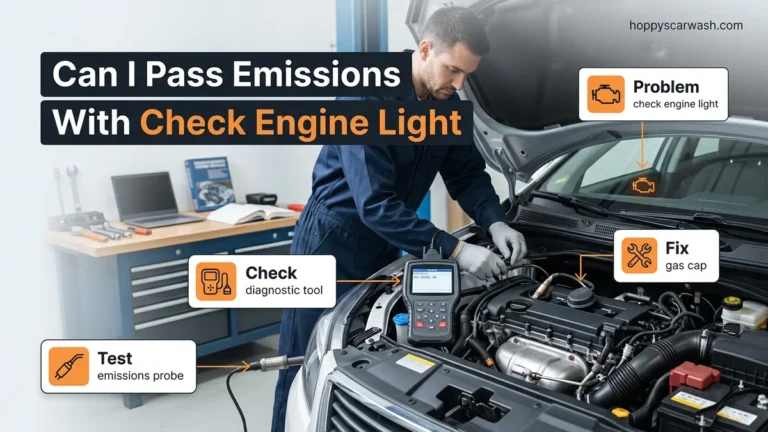
Yes, a failing converter almost always triggers a check engine light, typically generating diagnostic trouble codes such as P0420 or P0430 indicating catalyst efficiency below threshold.
Can I drive my car if it is producing white smoke?
You should not drive a car producing heavy white smoke. This usually indicates a severe coolant leak that can quickly lead to engine overheating and catastrophic failure.
Does oil smoke look different than coolant smoke?
Yes, burning oil produces distinct blueish-gray smoke with a sharp, acrid odor, whereas burning coolant produces dense white smoke that often has a slightly sweet smell.
What tests can a mechanic perform to check the catalytic converter?
A mechanic can use an infrared thermometer to check temperature differences before and after the converter, perform a backpressure test, or use a scan tool to monitor oxygen sensor data.