What Happens If You Drive With Parking Brake On 2026 Guide
Driving with the parking brake engaged causes rapid wear on brake pads, overheated rotors, and severe strain on your vehicle’s drivetrain. Forgetting to disengage it creates friction that ruins components quickly. Fortunately, addressing the issue immediately prevents long-term damage.
Driving with your parking brake engaged even for a short distance forces your vehicle to fight against its own braking system, generating intense friction and rapid heat. If you recently smelled a strange burning odor or noticed your car feeling sluggish, you likely left the emergency brake on.
In 2026, modern vehicles feature advanced dashboard warnings, but drivers still make this common mistake. Understanding the mechanical toll this takes on your vehicle right now helps you prevent catastrophic brake failure and costly repairs.
Key Takeaways
- Driving with the parking brake on causes rapid friction and extreme heat.
- Watch for burning smells, dashboard warning lights, and sluggish acceleration.
- Pull over immediately and disengage the brake to let components cool.
- Check for soft pedals, grinding noises, or fluid leaks before driving again.
- Electronic parking brakes often disengage automatically or alert you faster.
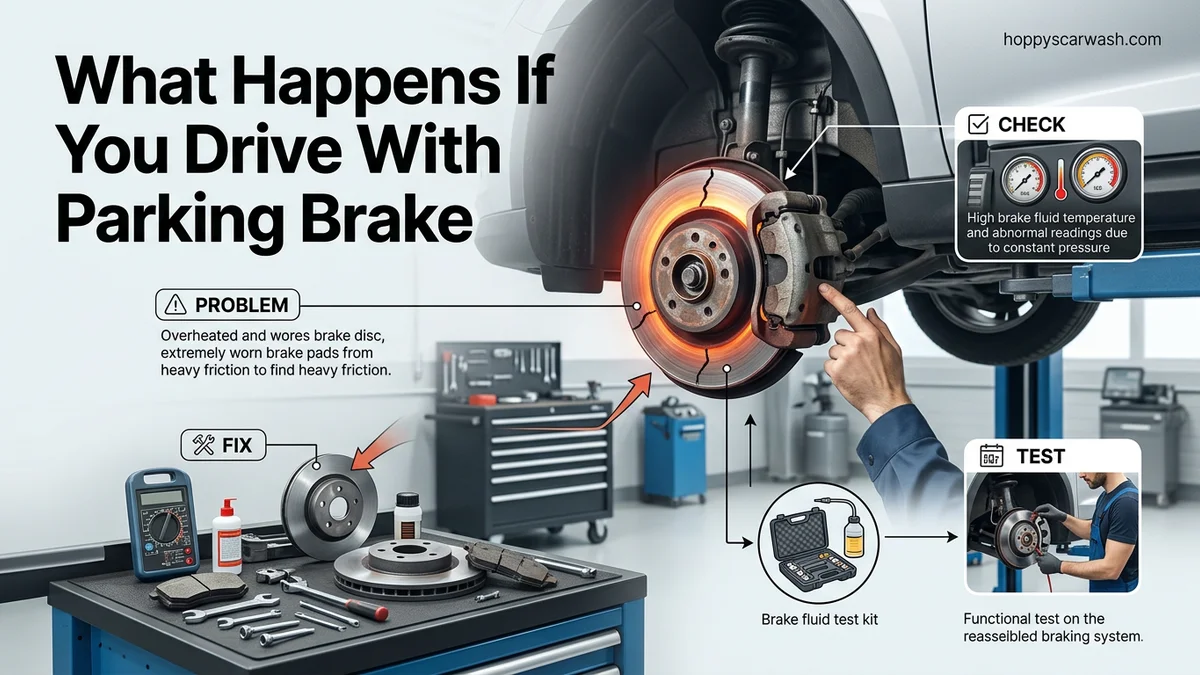
What Causes Damage When Driving With the Parking Brake On
Friction and Heat Overload
The primary issue when driving with the parking brake engaged is extreme heat. Your car’s engine has to work much harder to move the vehicle against the clamped brakes. This constant friction causes temperatures in the brake pads, shoes, and rotors to skyrocket within minutes. If you drive over 30 mph for more than a mile, you risk scorching your entire braking assembly.
Component Strain and Wear
Depending on your vehicle layout, the parking brake either clamps your rear disc pads or expands internal drum shoes. Driving with it on creates specific mechanical failures:
- Glazed Brake Pads or Shoes: The extreme heat bakes the friction material, making it glossy and significantly reducing your overall stopping power.
- Warped Rotors or Drums: Uneven heating causes metal brake rotors to warp, resulting in a pulsing sensation when you press the brake pedal later.
- Boiled Brake Fluid: Excessive heat transfers directly into the brake lines, causing the brake fluid to boil and creating dangerous air pockets that lead to a spongy brake pedal.
- Drivetrain Strain: Rear-wheel-drive and all-wheel-drive systems suffer heavy stress on the differential and transmission as they fight the locked wheels.
How to Fix and Inspect Your Brakes After Driving With the Brake On
Immediate Safety and Cool-Down Steps
If you realize you are driving with the parking brake on, pull over safely immediately and disengage the lever or electronic switch. Do not touch the wheels or brake components, as they will be hot enough to cause severe burns. Let the vehicle sit safely parked for at least 15 to 30 minutes to allow the brakes to cool down naturally.
Never throw water on hot brake rotors to cool them faster, because the thermal shock will instantly crack the metal. Once the system cools completely, perform a quick physical check of your vehicle before driving again:
- Look at the rear wheels for any visible smoke, discoloration, or a strong chemical burning smell.
- Test your brake pedal feel while the car is still in park to ensure it feels firm rather than spongy.
- Drive slowly in a safe, empty area to verify that normal braking response returns without scraping or grinding noises.
When to Visit a Professional Mechanic
Short distances under a quarter mile at low speeds usually cause minimal damage that merely wears down a tiny fraction of your pad life. However, if you drove several miles at highway speeds with the brake fully engaged, you likely need professional help in 2026. Watch out for lingering dashboard warning lights, a soft brake pedal, or persistent squealing noises.
Bring your car to a trusted technician for a thorough brake inspection if you notice any changes in stopping distance. Replacing glazed pads or a warped rotor early is far safer and cheaper than risking total brake failure down the road.
What If Your Brakes Still Feel Spongy or Smell Bad
Driving with the parking brake engaged often leaves lingering mechanical symptoms even after you release the lever. A persistent burning odor or a soft pedal feeling indicates that components require immediate inspection. According to data from the Car Care Council, heat dissipation issues compromise braking efficiency by up to thirty percent following severe friction events.
Addressing Persistent Burning Odors
A strong chemical or burning smell long after disengaging the brake points to trapped heat within the friction material. When organic brake pad compounds overheat, binders break down and release gases that linger in the wheel well. Park the vehicle safely, allow the assembly to cool completely for at least forty-five minutes, and inspect the rotor surface for blue discoloration, which signals extreme thermal stress.
Correcting Spongy Brake Pedals
If your brake pedal feels spongy or travels too close to the floorboards after a driving incident, excessive heat has likely boiled the brake fluid. Vapor bubbles form inside the hydraulic lines, compressing instead of transferring force to the calipers. Modern automotive safety standards outlined by the National Highway Traffic Safety Administration dictate that contaminated or boiled fluid must be flushed immediately to restore hydraulic pressure.
What If It Still Doesn’t Work?
If applying standard troubleshooting steps fails to resolve persistent brake drag, unusual noises, or dashboard warning lights, specialized intervention is required. Mechanical assemblies may have sustained permanent structural damage during the driving incident. Consider the following fallback steps if basic fixes fail:
- Inspect the cable tensioner: Check underneath the vehicle for stretched or seized parking brake cables that prevent the caliper levers from returning to their resting stops.
- Test for a stuck caliper piston: Elevated thermal spikes frequently cause rubber piston seals to melt and seize inside the caliper bore, requiring a complete caliper replacement.
- Consult a certified technician: Schedule an appointment with an ASE-certified mechanic to perform a comprehensive hydraulic pressure test and rotor thickness measurement.
- Budget for professional repairs: Professional repair costs for replacing warped rear rotors, scorched brake pads, and seized hardware typically range from $250 to $600 depending on your vehicle make and model.
Conclusion
Driving with the parking brake engaged accelerates wear on vital stopping components, generating extreme heat and reducing overall hydraulic efficiency. Promptly releasing the lever and addressing lingering symptoms like spongy pedals or burning odors prevents catastrophic brake failure. According to verified research and expert sources from automotive safety councils, routine pre-drive checks remain the single most effective defense against accidental parking brake damage. Make it a daily habit to verify that your brake warning light is fully extinguished before shifting into drive for your 2026 commutes.
❓ Frequently Asked Questions
What specific components are damaged when you drive with the parking brake on?
The primary components affected are the rear brake pads or shoes, which wear down rapidly against the rotors or drums. Extreme heat can also warp brake rotors, glaze the brake pads, and degrade the brake fluid.
How does driving with the parking brake on affect front-wheel drive versus rear-wheel drive cars?
Most parking brakes apply tension strictly to the rear wheels, regardless of whether the car is front-wheel or rear-wheel drive. This means the rear brakes absorb almost all the friction and heat, while the transmission experiences extra load pushing against locked wheels.
What should I do immediately after realizing the parking brake was on?
Pull over safely as soon as possible, disengage the parking brake fully, and leave the car in park or neutral to let the brakes air-cool. Avoid driving immediately if you smell heavy burning or notice smoke coming from the wheels.
Can driving with the parking brake on warp my brake rotors?
Yes, the intense friction generates high localized temperatures that can easily warp metal rotors. Warped rotors will cause a pulsing sensation in the brake pedal when you try to stop later.
How do I know if my brake pads are glazed from overheating?
Glazed brake pads appear shiny and smooth due to extreme heat melting the friction material slightly. This significantly reduces your stopping power, and the brakes may squeal or feel less responsive.
When is it necessary to take my car to a mechanic after this mistake?
You should visit a mechanic if you notice a spongy brake pedal, persistent grinding noises, visible fluid leaks, or if the parking brake lever feels loose and no longer holds the car securely.