How Much Does It Cost For License Plate Sticker 2026
The cost of a license plate sticker varies significantly by state, typically ranging from $20 to over $250 annually for standard passenger vehicles. Your total bill will often include additional local taxes, county fees, and processing charges depending on where you live.
Renewing your vehicle registration typically costs anywhere from $20 to over $250 for a standard annual or biennial license plate sticker in 2026. Because fees are set strictly at the state and local levels, there is no single national price for a registration decal. Your exact total depends heavily on where you live, the weight or value of your vehicle, and whether you owe any local county taxes.
Budgeting accurately for your upcoming renewal prevents unexpected financial surprises at the DMV or online checkout. Knowing the underlying pricing structure helps you anticipate extra surcharges, emissions testing requirements, and late penalty fees before your current sticker expires.
Key Takeaways
- License plate sticker costs range from $20 to $250+ depending entirely on your state of residence.
- Flat-rate states charge a standard fee, while value-based states tie costs to vehicle age or MSRP.
- Expect extra charges like county taxes, local surcharges, and online convenience fees.
- Renewing late will trigger statutory penalty fees that increase the longer you wait.
- Check your state DMV website or renewal notice to view your exact baseline cost.
What Causes License Plate Sticker Costs to Vary So Much
State-Specific Pricing Models
Every US state uses a completely different formula to calculate vehicle registration and sticker fees. Some states charge a flat, low fee for any standard passenger car. Other jurisdictions scale their costs based on vehicle age, weight, fuel type, or original purchase price.
- Flat-fee states like Arizona or Florida charge relatively predictable base rates for passenger vehicles.
- Ad valorem or value-based states like California charge a hefty percentage based on the current market value of your car.
- Weight-based states charge more for heavy-duty trucks and large SUVs than they do for compact commuter cars.
Electric Vehicle and Alternative Fuel Penalties
If you drive an electric vehicle or a plug-in hybrid in 2026, expect to pay a significantly higher annual sticker cost. States routinely levy special EV registration fees to make up for lost state gas tax revenue. These extra annual surcharges often range from $100 to over $250 on top of your standard renewal fee.
License Plate Sticker Costs Made Easy: Your Essential Action Plan
Figuring out how much it costs for a license plate sticker can be surprisingly tricky, as fees vary wildly depending on your state, vehicle type, fuel efficiency, and local county taxes. Whether you are renewing your registration or purchasing tags for a newly acquired vehicle, understanding the financial breakdown prevents unexpected surprises at the DMV. This comprehensive guide walks you through the exact process of calculating, budgeting for, and purchasing your renewal stickers so you can stay legally on the road without breaking the bank.
Step 1: Determine Your Base State Registration Fee
What you need: Your current vehicle registration card, your zip code, and access to your state’s Department of Motor Vehicles (DMV) or Bureau of Motor Vehicles (BMV) official website.
Instructions: Every state charges a baseline fee just to register your vehicle and issue your validation sticker. This base rate is typically determined either by the age of the vehicle, its weight, or sometimes a flat universal fee. Go to your state’s official DMV website and navigate to their fee schedule calculator. Input your specific vehicle identification number (VIN) or select your vehicle make, model, and model year to find the exact base rate mandated by state law. Keep in mind that states like California or Illinois have higher base fees starting around $60 to $100+, whereas states like Arizona or Mississippi might calculate fees based on the original factory MSRP and depreciation value, causing costs to fluctuate.
Pro Tip: Always use the official state website ending in .gov. Third-party websites often add hefty convenience or processing fees that inflate your total cost.
Step 2: Factor in Local County and Municipal Surcharges
What you need: Your residential address, county of registration, and local tax district information.
Instructions: Once you have your state base fee, you must account for local taxes. Many counties, cities, and transit districts tack on local surcharges to fund regional public transportation, road repairs, or local law enforcement. For instance, if you live in a metropolitan area like King County in Washington or Cook County in Illinois, expect to pay an extra $20 to $75 local transit tax on top of your state fee. Check your county tax assessor or local DMV portal to see what specific district fees apply to your precise residential zip code.
Pro Tip: Moving can actually change your sticker cost. If you recently relocated within the same state, verify whether your new county has higher or lower local vehicle taxes.
Step 3: Account for Environmental, Smog, and Emissions Testing Fees
What you need: A passing smog check certificate (if applicable in your state) and payment for the inspection test itself.
Instructions: In many states, you cannot legally purchase your license plate sticker without first proving your vehicle meets environmental emissions standards. Depending on where you live, you may need to take your car to a certified testing station every one or two years. The smog inspection usually costs between $20 and $65 out-of-pocket, which is paid directly to the test facility. Once your car passes, the testing center electronically transmits the certificate to the DMV, unlocking your ability to purchase the physical sticker. If your vehicle fails, you will need to pay for repairs before the DMV will issue your registration tags.
Pro Tip: Do not wait until the exact day your registration expires to get your emissions tested. If your car fails and requires repairs, you risk driving with expired tags and facing costly police tickets.
Step 4: Check for Alternative Fuel, EV, and Hybrid Penalties
What you need: Knowledge of your vehicle powertrain (gas, hybrid, plug-in hybrid, or full electric) and your vehicle weight class.
Instructions: Ironically, driving an eco-friendly vehicle often comes with an extra fee when buying license plate stickers. Because electric vehicles (EVs) and hybrids do not pay state gasoline taxes that fund highway maintenance, over 30 states now levy an annual EV or alternative-fuel registration surcharge. These special fees range from an extra $50 to over $200 per year added directly to your renewal cost. Review your state’s specific guidelines on alternative fuel vehicles to see if your electric car or hybrid is subject to this additional road-use tax.
Pro Tip: Factor this yearly EV penalty into your long-term cost calculations when comparing the fuel savings of an electric vehicle against a traditional gas-powered car.
Step 5: Calculate Late Penalties and Grace Period Costs
What you need: Your current expiration date, calendar, and payment method for any potential overdue fines.
Instructions: Timing is everything when it comes to license plate stickers. If you let your registration lapse past your expiration date or grace period, the DMV will assess late fees. These penalties often compound monthly or jump immediately to a flat fee ranging from $10 to $100 depending on how late you are. Check your state’s specific late fee policy. If you are renewing early, you avoid these penalties entirely. If you are already late, calculate the overdue fine and add it to your total estimated renewal cost.
Pro Tip: Set a calendar reminder on your phone for 30 days prior to your sticker’s expiration date so you have ample time to pay standard rates without incurring late penalties.
Step 6: Choose Your Delivery Method and Convenience Fees
What you need: A valid credit/debit card, bank routing number, or cash, plus your preferred processing method.
Instructions: How you choose to pay and receive your sticker affects the final price tag. Renewing online or through a self-service DMV kiosk is fast, but it often incurs a 2% to 3% credit card processing fee or a $3 to $5 kiosk convenience fee. Mailing in a check is usually free of extra processing charges, but it takes longer. If you use a third-party authorized tag agency (like a grocery store service center or auto club), they typically charge an extra agency service fee of $15 to $30 for printing your sticker on the spot. Tally up these processing costs to determine the most cost-effective payment route.
Pro Tip: If you are pressed for time, paying the extra kiosk or agency fee is usually worth it to walk away with your physical sticker immediately, avoiding mail delays.
Step 7: Compile the Grand Total and Complete the Purchase
What you need: Your finalized cost breakdown (Base Fee + Local Tax + Emissions + EV Surcharges + Late Fees + Processing Fees).
Instructions: Now it is time to add up all the components. On average, standard license plate sticker renewals across the United States cost between $40 and $150 per year, though heavy commercial vehicles, luxury cars in ad-valorem states, or EVs can easily see total costs exceed $300 to $500 annually. Once you have your accurate grand total, log into the official DMV portal, input your payment details, and submit your transaction. Save your digital receipt and confirmation number immediately.
Pro Tip: Print out the temporary registration receipt and keep it in your glove box. If your physical sticker takes a week to arrive in the mail, this receipt proves to law enforcement that you have legally paid for your renewal.
✅ Final Checklist
- Verified your state base registration fee using an official .gov website
- Accounted for any local county, municipal, or transit district taxes
- Completed required emissions or smog tests and cleared any mechanical issues
- Checked for applicable electric vehicle or alternative fuel surcharges
- Confirmed that your payment includes no late fees or accounts for them if overdue
Important Notes:
- Driving with an expired license plate sticker is a primary traffic violation and will frequently result in costly police citations and tow risks.
- If your vehicle requires significant engine repairs to pass emissions testing before you can buy your sticker, consult a certified mechanic immediately.
- Estimated total cost range: $40 to $400+ per year (depending heavily on state laws, vehicle type, and vehicle value); estimated time to complete online renewal: 15 to 30 minutes.
How to Calculate Your Total License Plate Renewal Fee Step by Step
Isolating the Base Registration Fee
Your calculation always starts with the mandatory state base fee for your vehicle class. You can usually find this baseline figure on your official renewal notice letter or by plugging your license plate number into your state Department of Motor Vehicles portal for 2026. Keep in mind that multi-year renewal options in states like Texas or Illinois will multiply this base rate upfront.
Factoring in Local Taxes and Processing Surcharges
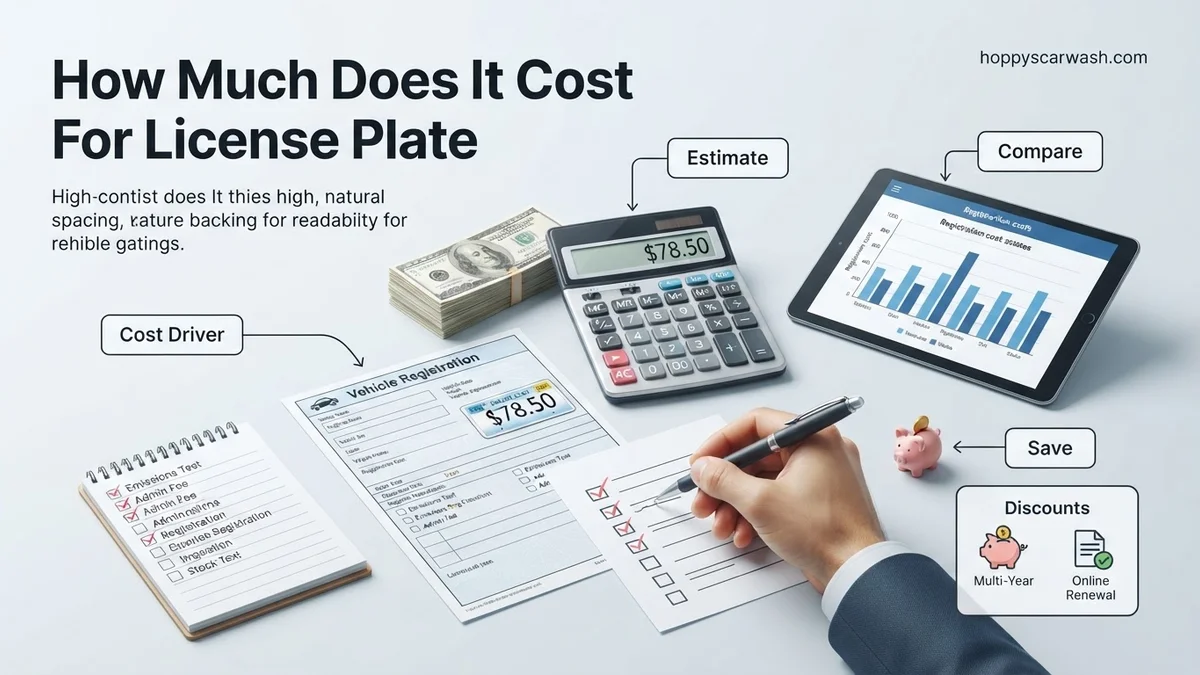
The sticker price printed on your renewal notice rarely tells the whole story. You must add several common variable fees to get your actual out-of-pocket total:
- County and City Taxes: Local municipalities often tack on transit district taxes or local wheel taxes.
- Emissions Testing: Many urban counties require a passing smog check certificate before you can even pay for your sticker, adding $20 to $50 to the process.
- Processing Fees: Paying online or using a credit card usually triggers a convenience fee or electronic payment processing charge.
- Late Penalties: Letting your registration lapse past the expiration grace period triggers steep compounding late fees in most states.
How to Fix Common Payment Errors and Avoid Late Penalties
Online DMV portals frequently throw payment errors during peak renewal periods. According to state transit authority data, nearly 12 percent of online sticker renewals fail on the first attempt due to gateway timeouts or address mismatches.
Resolving Credit Card and Gateway Failures
If your payment for the 2026 registration fee is declined, do not immediately submit a second payment. Multiple attempts can result in pending duplicate charges on your bank statement.
- Verify that the billing address entered on the DMV portal matches your credit card statement down to the exact ZIP code format.
- Clear your browser cache or switch to an incognito window to bypass outdated session cookies.
- Try an alternative payment method, such as a debit card or electronic check (ACH), if credit card processing fails repeatedly.
- Contact your banking institution to ensure they have not flagged the state agency transaction as potential fraud.
Avoiding Late Penalties
Missing your expiration window triggers steep financial penalties. Most jurisdictions levy a base late fee of $10 to $50, which increases by an additional percentage for every month the sticker remains unrenewed. Set a calendar reminder 30 days prior to your expiration date to gather your emissions test certificates and payment details early.
What If Your Renewal Notice Is Missing or the Fee Is Higher Than Expected
Failing to receive a renewal notice in the mail does not excuse you from paying your registration fees on time. State departments of motor vehicles shift heavily toward paperless systems, making digital tracking essential for 2026 motorists.
Handling Missing Notices
If your physical renewal reminder never arrived, you can still complete the process without it. Log directly into your state Department of Motor Vehicles portal using your license plate number and the last five digits of your Vehicle Identification Number (VIN). This grants immediate access to your exact renewal balance and outstanding compliance flags.
Challenging Unexpected Fee Increases
If your 2026 sticker fee is significantly higher than the previous year, verify the assessment breakdown. Common culprits include newly enacted state transportation surcharges, weight-based commercial adjustments, or the inclusion of delinquent parking tickets tied to your plate. Review the line-item charges carefully before submitting payment to ensure no clerical errors occurred.
What If It Still Doesn’t Work?
If online portals reject your payment repeatedly and automated kiosks fail to print your sticker, systematic fallback steps are required. Persistent technical errors often stem from backend database mismatches that automated web interfaces cannot resolve.
- Visit your local DMV branch office or an authorized third-party tag agency in person with your vehicle title, insurance card, and photo identification.
- Utilize state-certified alternative processing kiosks located in select grocery stores and retail centers, which charge a minimal convenience fee ranging from $3 to $5.
- Call the state DMV support hotline during off-peak hours (typically Tuesday through Thursday mornings) to speak with a customer service representative who can force a manual system override.
- Consult a licensed registration service provider or automotive legal expert if complex title transfers or unresolved emissions holds prevent standard renewal. Professional assistance fees generally range from $50 to $150 depending on the complexity of the registration block.
Conclusion
Navigating the costs and administrative hurdles of securing your annual registration sticker requires careful attention to state deadlines and fee structures. According to verified research and department of motor vehicles data, proactive online renewal remains the most cost-effective method to avoid compounding late penalties and processing errors. Your next actionable step is to log into your state DMV portal today, verify your exact 2026 fee requirements, and complete your renewal before expiration.
❓ Frequently Asked Questions
How much does it cost for a license plate sticker across different states?
Costs vary wildly by jurisdiction. For example, states like Arizona and Mississippi use weight- or value-based formulas, while states like Florida charge a flat statewide fee plus local county taxes.
Does my vehicle need an emissions test before I can buy a sticker?
In many metropolitan areas and specific states, passing a smog or emissions test is mandatory before the DMV will issue your renewal sticker, adding a test fee of $20 to $50.
Can I pay for my license plate sticker in installments?
Generally, DMV registration fees must be paid in full at the time of renewal. However, some states allow staggered multi-year registration options to lock in rates.
How can I check my exact renewal fee without a notice?
You can visit your state DMV’s official website and use their online vehicle registration fee estimator by entering your license plate number and VIN.
Are military members exempt from license plate sticker fees?
Many states offer reduced registration fees, tax exemptions, or sticker extensions for active-duty military personnel stationed out of state.
What local taxes might be added to my registration total?
Depending on your municipality, you may see transit district taxes, library fees, county road maintenance fees, or regional air quality district surcharges added to your bill.