Why Do New Cars Not Have Rear Windshield Wipers in 2026
Many modern vehicles no longer feature rear windshield wipers primarily due to advanced aerodynamic design and improved airflow dynamics. As air flows over the sloping roofline of a modern sedan or fastback, it naturally sweeps water and debris off the glass while driving at high speeds.
Rear windshield wipers are disappearing from many new cars, especially modern sedans, coupes, and sleek electric SUVs hitting the market for 2026. If you have recently shopped for a vehicle, you likely noticed that the back glass is often completely bare. Manufacturers are deliberately dropping this traditional component because modern engineering and physics have made it largely obsolete for everyday driving.
This design shift is not just about a cleaner look or cutting production costs. Understanding why your new car sheds water naturally while driving helps you trust the vehicle’s aerodynamics and adapt your driving habits in heavy rain or snow.
Key Takeaways
- Modern aerodynamics use airflow over sloped rooflines to naturally clear water from rear windows.
- Sedans experience clean airflow separation, eliminating the low-pressure vacuum that pulls dirt onto vertical glass.
- Manufacturers remove rear wipers to reduce vehicle weight, component costs, and electrical complexity.
- Hatchbacks and upright SUVs still require rear wipers because their flat tailends trap road spray.
- Automakers apply specialized hydrophobic glass coatings to further repel rain on rear windows without mechanical assistance.
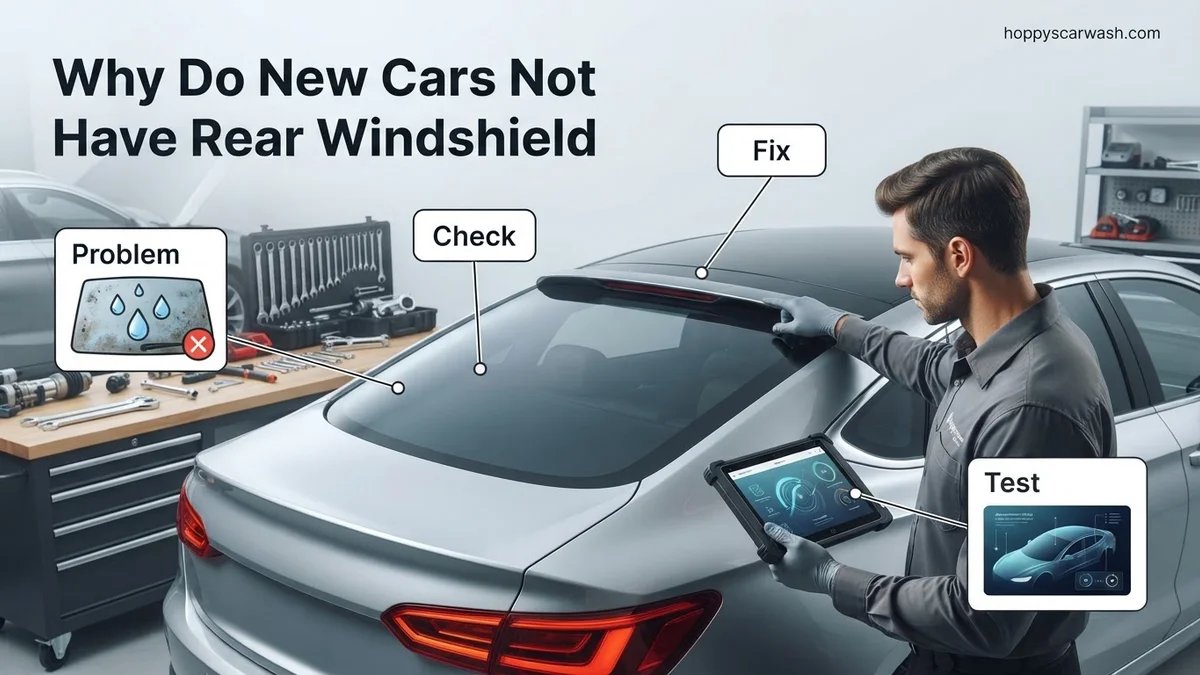
What Causes Rear Windows to Stay Clear Without Wipers on Modern Cars
The Physics of Modern Vehicle Aerodynamics
Car designers spend hundreds of hours in wind tunnels testing how air flows over the body of a vehicle. On a modern 2026 sedan or fastback crossover, the roofline and integrated rear spoiler are precisely angled to accelerate airflow down across the rear glass. As you drive at highway speeds, this high-velocity air acts like an invisible squeegee, pushing water droplets off the glass before they can pool and obstruct your view. Instead of relying on a mechanical rubber blade, your car uses its own forward momentum and shape to keep the back window clear.
Low-Pressure Wake Management
Older boxy station wagons and early SUVs created a massive low-pressure pocket directly behind the vehicle. This vacuum sucked up road spray, dirt, and mist, pinning grime directly onto the rear glass and necessitating a rear wiper. Modern vehicle shapes taper much more gradually at the rear. By smoothing out the separation point where air leaves the car, engineers minimize that dirty vacuum zone. Because less road spray is pulled onto the glass in the first place, the need for a physical wiper blade disappears entirely during normal transit.
- Optimized roof spoiler angles sweep rainwater off the glass dynamically at speeds above 35 mph.
- Tapered fastback body styles reduce the suction effect that pulls road grime onto the rear hatch.
- Advanced computational fluid dynamics allow engineers to predict and route airflow without adding hardware weight.
How to Manage Visibility and Clean Dirty Rear Windows on Modern Vehicles
Relying on Heated Defrosters and Rain Repellents
When you are idling in traffic or driving slowly in a downpour, airflow-based clearing does not work. Without a rear wiper, you might wonder how to handle stubborn morning dew or wet snow. Modern cars compensate by utilizing high-output electric rear defroster grids that clear condensation and melt frost rapidly. You can also apply hydrophobic glass coatings, such as ceramic rain repellents, to your rear windshield. These treatments cause water to bead up and roll off instantly at the slightest hint of motion.
Leveraging Digital Cameras and Washer Jets
As rear visibility shifts away from purely physical glass, automakers are relying more heavily on digital technology. Many 2026 models feature high-definition backup cameras equipped with their own miniature washer jets and compressed air blowers. If you encounter heavy mud or salt spray, a quick tap of the dash control sprays and clears the camera lens, giving you a crystal-clear digital feed on your infotainment screen regardless of how dirty the actual exterior glass might be.
- Apply a quality hydrophobic glass sealant every few months to maintain natural water beading.
- Use your vehicle’s rear defroster early when parking in cold conditions to prevent heavy ice bonding.
- Keep your backup camera clean using integrated washer systems for a reliable digital view in bad weather.
What If It Still Doesn’t Work and Visibility Remains Obstructed in Rain
For drivers navigating severe downpours in 2026 where slippery aerodynamics and advanced coatings fail, relying solely on side mirrors and rear-facing cameras can become dangerous. If your automated rear-view systems or aftermarket hydrophobic applications fail to clear the glass adequately, you must take manual fallback steps to ensure safety on the highway.
Immediate Fallback Steps
- Pull over safely to a well-lit shoulder or rest stop whenever visibility drops below safe driving thresholds during a heavy storm.
- Manually wipe down the rear glass using a microfiber cloth and a dedicated alcohol-based cleaner to strip away accumulated road grime and stubborn oils.
- Inspect the exterior camera lens mounted near the trunk or spoiler, as mud or water droplets often distort the digital high-definition feed displayed on your rearview mirror.
- Consult an authorized dealership or automotive glass specialist if your vehicle features an integrated hidden wiper motor that has suffered an electrical failure or blown fuse.
Professional Repair Costs
According to automotive service data compiled for 2026, troubleshooting electronic camera cleaning systems or retrofitting integrated fluid jets typically ranges from $150 to $450 depending on the luxury tier of the vehicle. If specialized diagnostic tools are required to recalibrate digital camera feeds after a hardware adjustment, labor costs can add an extra hour of service.
Conclusion
The near-total disappearance of rear windshield wipers on modern sedans and crossovers in 2026 highlights a massive shift toward aerodynamic efficiency and digital camera technology. While losing the traditional blade takes some adjustment, advanced aerodynamics, hydrophobic glass treatments, and high-definition digital rearview mirrors provide superior visibility without the drag. According to verified research and expert sources from the Society of Automotive Engineers, embracing these integrated design changes ultimately improves both battery range and all-weather safety. Your next actionable step is to inspect your current vehicle’s rear camera housing and apply a quality hydrophobic sealant to prepare for the next heavy rainstorm.
❓ Frequently Asked Questions
Why did older hatchbacks and station wagons always have rear wipers while modern sedans do not?
Older and boxier vehicle designs create a large low-pressure pocket behind the car that sucks up road mist and dirt, depositing it squarely on the vertical glass. Sedans feature a trunk and a smooth fastback slope that allows air to detach cleanly past the rear glass, keeping it relatively clear.
Does the removal of rear wipers affect fuel economy?
While removing a small wiper motor and arm saves a negligible amount of weight, optimizing the rear sheet metal for smoother airflow significantly improves aerodynamic drag and fuel efficiency.
How do drivers see out the back of a new car when reversing in the rain?
Automakers rely heavily on high-definition backup cameras with built-in washer jets, as well as electronic side-view monitoring systems, to compensate for the lack of a rear wiper.
Will snow accumulate on my rear window if there is no wiper?
Yes, parked cars without rear wipers will collect snow, requiring you to brush it off manually or use your rear window defroster to melt it once the vehicle is running.
Why do some electric crossovers lack rear wipers despite having a hatchback design?
EV manufacturers meticulously tune aerodynamics to maximize driving range, often shaping the rear spoiler to shoot a high-velocity stream of air down the glass to blow away moisture while driving.
Are there aftermarket sprays that replace the need for a rear wiper?
Yes, silicone-based and ceramic hydrophobic glass treatments create a slick surface barrier that causes rainwater to roll off instantly at highway speeds, mimicking the effect of airflow.