Is It Dangerous to Drive Without Power Steering in 2026
Driving without power steering is dangerous because it severely restricts your ability to maneuver the vehicle quickly in emergencies. While highway driving feels surprisingly normal, parking and sharp turns require immense physical strength and increase the risk of an accident.
Driving without power steering is physically exhausting and introduces significant safety risks, particularly during low-speed maneuvers, sudden obstacles, or emergency swerves. When your power assist fails, turning the steering wheel requires your own raw muscle power to overcome the resistance of the vehicle’s front tires and steering linkage.
Whether you are dealing with a sudden failure on your daily commute in 2026 or planning how to get a disabled vehicle home, understanding the physical demands, mechanical risks, and safety implications will help you make the right call before getting behind the wheel.
Key Takeaways
- Low-speed turns and parking require massive physical effort to maneuver the steering wheel.
- Highway driving feels manageable, but emergency lane changes become extremely hazardous.
- Driving a hydraulic system without fluid can permanently destroy the steering pump.
- Keep both hands firmly on the wheel and anticipate turns well in advance.
- Drive directly to a professional mechanic at a safe, reduced speed.
Is It Dangerous to Drive Without Power Steering?
Low-Speed Maneuvers and Parking Lot Hazards
The immediate danger of a power steering failure hits you the moment you try to park or turn at low speeds. Without mechanical assist, turning a heavy modern car while stationary or crawling at 5 mph requires intense physical exertion. You will need both hands firmly planted on the wheel, often using your entire upper body weight to muscle the car around a tight corner. In crowded 2026 parking lots or narrow urban streets, this delayed steering response drastically increases your risk of clipping a curb, a parked vehicle, or a pedestrian.
Highway Driving and Emergency Maneuvers
Once you reach cruising speeds, steering a car without power assist actually becomes surprisingly manageable. The physics of rolling momentum naturally lighten the load on your front tires, making highway lane changes feel relatively normal. However, the true danger lies in unexpected situations:
- Slow reaction times: Heavy steering prevents you from executing lightning-fast evasive maneuvers if debris flies into your lane.
- Driver fatigue: Fighting constant mechanical resistance wears out your arms and shoulders within minutes, impairing your overall driving focus.
- Sudden loss of control: Hitting a large pothole or experiencing a blowout while lacking power assist can violently wrench the steering wheel out of your hands.
What Causes Power Steering Failure in Vehicles
Hydraulic System Failures
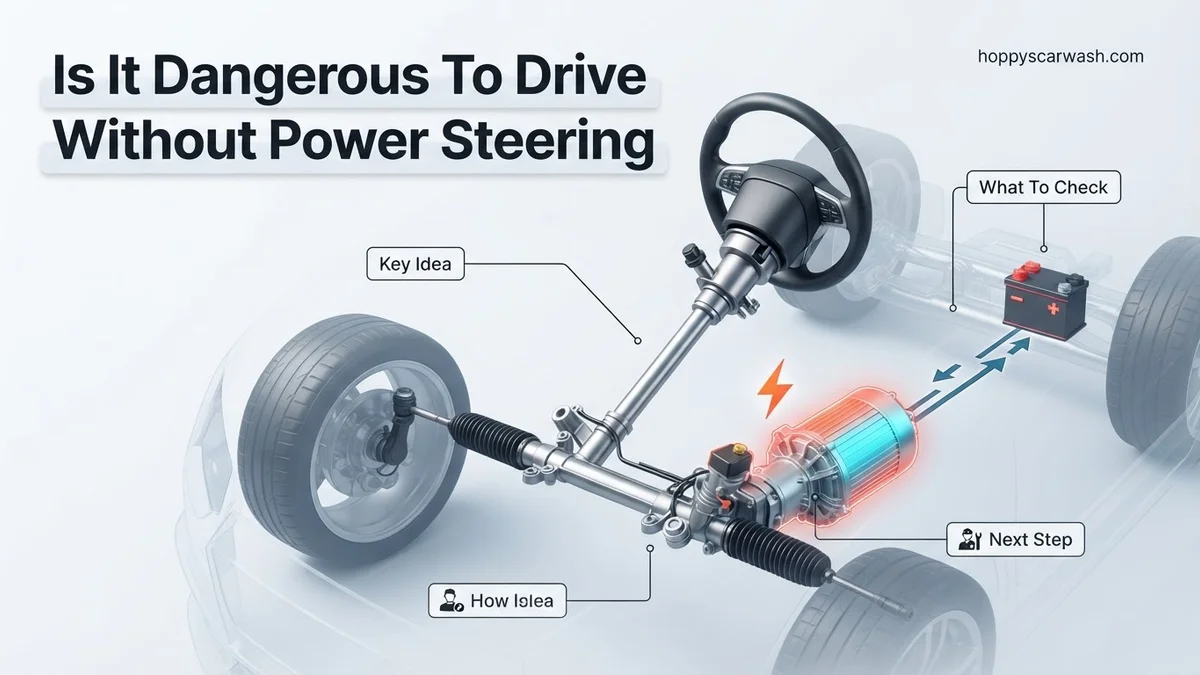
If you drive an older vehicle or a heavy-duty truck relying on traditional hydraulic power steering, failure usually points to a fluid leak or a mechanical breakdown. The system relies on a belt-driven pump that pressurizes fluid to assist your turns. Common culprits include:
- Broken or slipping serpentine belts: If the belt snapping the pump breaks entirely, you instantly lose both power steering and alternator charging.
- Severe fluid leaks: Cracked hoses, worn rack seals, or a damaged reservoir will drain hydraulic pressure, turning your steering heavy and whining.
- Internal pump failure: Mechanical wear inside the pump stops it from generating the necessary pressure to assist your steering inputs.
Electronic Power Steering (EPS) Glitches
Modern vehicles heavily favor Electronic Power Steering systems, which replace hydraulic fluid with an electric motor and control modules. When an EPS system fails, the root cause is usually electrical rather than mechanical. You might experience a sudden shutdown due to a blown high-amp fuse, a failing alternator failing to supply enough voltage, or a complete sensor failure within the steering column. While EPS systems often include a backup mechanical connection, the loss of electrical assistance leaves you with unassisted steering that feels identically heavy to a dead hydraulic setup.
How to Safely Drive and Handle a Car Without Power Steering
If your power steering fails mid-journey in 2026, handling the vehicle requires sudden physical adjustments. Modern vehicles are heavy, and moving the wheels without hydraulic or electric assistance demands significant upper-body strength. Drivers must employ specific techniques to maintain control.
Anticipate Movements Early
- Look far ahead down the roadway to anticipate turns and stops well in advance.
- Avoid sudden lane changes or abrupt swerves that require rapid steering wheel rotation.
- Increase your following distance to at least four to five seconds to allow ample braking and reaction time.
Use Momentum and Two Hands
- Keep both hands firmly positioned at the 9 o’clock and 3 o’clock positions on the steering wheel for maximum leverage.
- Never attempt low-speed maneuvers or parallel parking while the car is stationary; always roll forward slightly to reduce friction against the pavement.
- Use momentum to your advantage by easing off the accelerator early and letting the vehicle coast smoothly through gentle curves.
What If It Still Doesn’t Work and Requires Professional Repair
If basic troubleshooting steps fail to restore your power steering function, professional intervention is mandatory. Ignoring the issue risks complete steering lockup or permanent damage to the steering rack. Here are the necessary steps to take when professional repair is required:
- Safely park the vehicle in a secure location and avoid driving at highway speeds to prevent dangerous loss of control.
- Contact a certified mechanic or a dealership service center to diagnose whether the issue stems from an electrical sensor, a blown fuse, a broken serpentine belt, or a failing steering pump.
- Request a detailed cost estimate before authorizing repairs. In 2026, minor fixes such as replacing a power steering pump or serpentine belt typically range from $350 to $750, whereas replacing an entire electronic power steering (EPS) assembly can range from $1,200 to $2,500 depending on the vehicle make and model.
- Arrange for a professional tow service if the vehicle is unsafe or physically too difficult to steer to the repair facility.
Conclusion
Driving without power steering is physically demanding and introduces significant safety risks on modern roadways. While limping a vehicle to a safe location is possible using increased physical effort and proper momentum techniques, continued operation should be avoided. According to verified research from automotive safety experts and major manufacturers, addressing steering system failures immediately prevents catastrophic control loss. Your immediate actionable next step is to schedule an inspection with a certified automotive technician to diagnose and repair the underlying steering failure today.
❓ Frequently Asked Questions
Why is it harder to turn the steering wheel when the car is parked?
When stationary, the front tires fight the full weight of the vehicle against the pavement. Without hydraulic or electric assistance, overcoming this friction requires significant physical strength.
Can I drive on the highway if my power steering fails?
Highway driving feels relatively normal because momentum naturally lightens steering resistance. However, an unexpected highway emergency maneuver or obstacle avoidance can still overpower your reaction time.
How can I tell if my power steering pump is failing?
Common warning signs include a loud whining noise when turning the wheel, a stiff steering wheel, or visible fluid leaks under the front end of the car.
What should I do if my electric power steering stops working suddenly?
Safely pull over to the side of the road, turn off the engine, and restart the vehicle to reset the electronic control module. If the power does not return, avoid further driving.
Does driving without power steering ruin the steering rack?
Continuing to drive long distances without hydraulic fluid generates excessive heat and friction, which can completely destroy internal steering rack seals and components.
Is it legal to drive without power steering?
While there is rarely a specific law banning it, driving an unsafe, poorly controllable vehicle can lead to reckless driving citations if you cause an incident.