Does Driving With The Windows Down Use More Gas? Real 2026
The short answer is yes, but only at higher speeds. Driving with the windows down increases aerodynamic drag, while using the air conditioning strains the engine, meaning the most fuel-efficient choice depends entirely on how fast you are driving.
Driving with your windows down does use more gas, but only once you cross a specific speed threshold—typically around 45 to 55 mph. Below that tipping point, rolling down your windows is the more fuel-efficient choice because running your air conditioning puts an extra load on the engine.
For drivers navigating daily commutes or road trips in 2026, understanding this balance helps you save money at the pump. Whether you should crack the windows or blast the AC depends almost entirely on how fast your wheels are turning.
Key Takeaways
- Windows down is more fuel-efficient during slow city driving under 45 mph.
- AC is more efficient at highway speeds above 55 mph due to heavy drag.
- Aerodynamic drag creates a parachute effect that forces the engine to work harder.
- AC compressors pull power directly from the engine, impacting fuel economy steadily.
- Hybrid and electric vehicles handle auxiliary loads differently than standard gas cars.
What Causes Increased Fuel Consumption When Windows Are Down
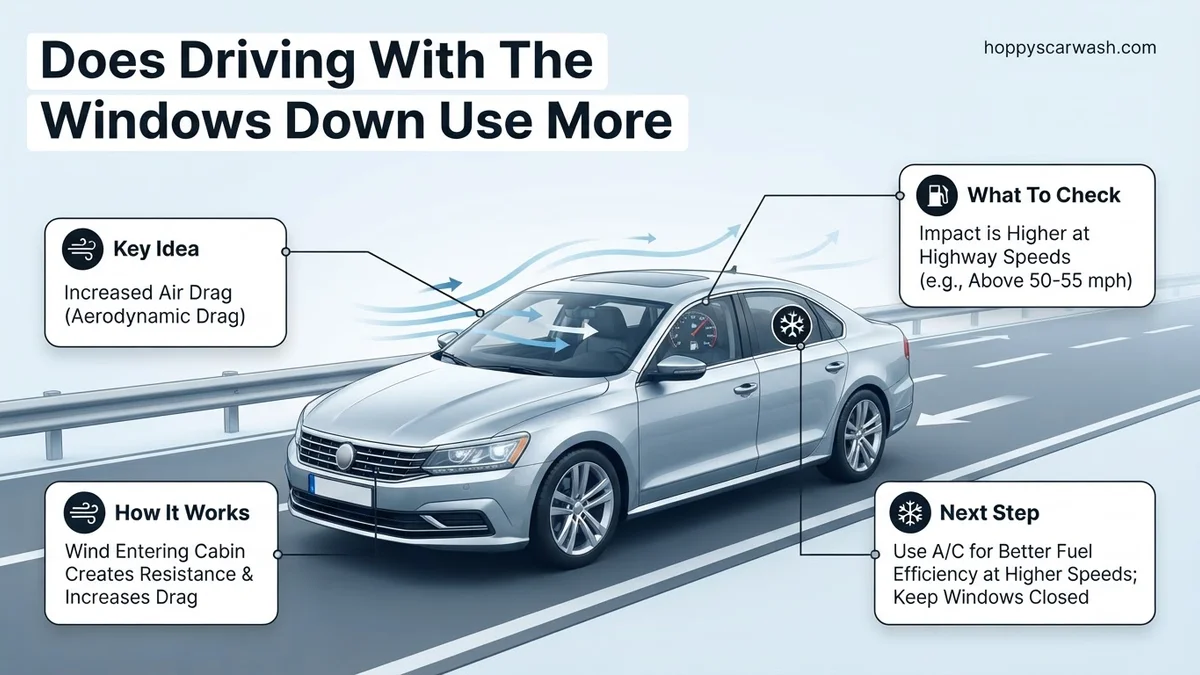
When you open your car windows at higher speeds, you disrupt the vehicle’s aerodynamic profile. Air rushes into the cabin, creating a pocket of high-pressure turbulence that acts like a miniature parachute pulling your car backward.
The Physics of Aerodynamic Drag
- Air resistance increases exponentially as your vehicle accelerates.
- At highway speeds, the engine must burn extra fuel just to push through the drag created by open windows.
- This aerodynamic penalty frequently outweighs the mechanical energy required to run an AC compressor.
City Driving vs. Highway Realities
If you are driving through city streets or stuck in stop-and-go traffic in 2026, aerodynamic drag is virtually a non-factor because your speeds are too low. In these scenarios, keeping the windows down uses essentially zero extra gas, whereas the AC compressor constantly drains engine power.
How to Balance AC Use and Open Windows for Maximum Efficiency
Mastering fuel economy on your daily drives requires knowing when to make the switch between window power and climate control. Managing this transition prevents you from wasting fuel unknowingly.
The 45-to-55 MPH Rule
- Under 45 mph: Keep the windows down to save fuel and enjoy the fresh air.
- Over 55 mph: Roll up the windows and turn on the air conditioning to minimize aerodynamic drag.
- Between 45-55 mph: Fuel usage from both methods is roughly equivalent, so choose based on personal comfort.
Modern Vehicle Optimizations
Automobile engineering in 2026 has made modern AC compressors more efficient than ever, often using variable-displacement technology that minimizes engine drag. However, the laws of physics regarding wind resistance remain unchanged. Even the sleekest new cars suffer measurable efficiency losses when driving at highway speeds with multiple windows fully open.
Step-by-Step Guide to Testing Your Vehicle’s Optimal Fuel Strategy
Every vehicle reacts differently to aerodynamic drag and auxiliary loads. Drivers can test their personal mileage variations using a structured, systematic approach during their daily 2026 commutes.
Isolating Variables for Accuracy
External factors like wind speed, traffic density, and route elevation skew fuel economy measurements. Eliminating these variables ensures accurate data collection for both window positions and air conditioning usage.
- Select a flat, familiar highway route with minimal traffic congestion and a constant speed limit of at least 65 mph.
- Fill the vehicle fuel tank completely using the same gas station pump until the automatic nozzle clicks off.
- Drive the route for exactly 50 miles with the windows completely rolled down and the climate control system turned off.
- Refuel at the exact same gas station pump immediately after the test run to record precise fuel consumption.
- Repeat the identical 50-mile route on a separate day under similar weather conditions with the windows closed and the air conditioning set to standard recirculation mode (level two fan speed).
What If Your Fuel Economy Still Suffers at High Speeds
If fuel economy remains low despite proper window and air conditioning management, underlying mechanical or aerodynamic inefficiencies are usually to blame. Addressing these root causes restores optimal vehicle efficiency.
Advanced Troubleshooting Steps
- Inspect tire inflation pressures monthly; under-inflated tires increase rolling resistance by up to 2 percent, compounding highway drag penalties.
- Check exterior accessories like roof racks, cargo boxes, or bicycle mounts, which create persistent aerodynamic drag regardless of window position.
- Scan the engine management system for failing oxygen sensors or dirty mass airflow sensors that skew fuel-to-air ratios.
- Schedule a professional diagnostic service at a certified repair facility if fuel economy drops more than 15 percent below EPA estimates. Professional diagnostic scans typically cost between $100 and $150.
Conclusion
The debate between cracking the windows and blasting the air conditioning ultimately depends on vehicle speed. According to verified research and expert sources from the Society of Automotive Engineers, windows down work best below 45 mph, while air conditioning wins out on the highway. Optimize your driving habits today by keeping windows shut at highway speeds. For your next commute, let climate control handle the cooling while you save at the pump.
❓ Frequently Asked Questions
Does driving with the windows down use more gas than using the air conditioning?
The answer changes based on vehicle speed. Below 45 mph, rolling down your windows uses less fuel because aerodynamic drag is low. Above 55 mph, the drag created by open windows is significant enough that using the AC is actually more fuel-efficient.
How does aerodynamic drag impact fuel economy?
When windows are open, air rushes into the cabin and creates turbulent drag, acting like a miniature parachute. Your engine must burn extra fuel to push the car forward against this resistance.
Why does running the air conditioning consume fuel?
The vehicle’s air conditioning system relies on a compressor that is powered directly by the engine via a drive belt. Operating this compressor places an extra physical load on the engine, increasing fuel consumption regardless of how fast you drive.
Do hybrid and electric vehicles follow the same rules?
Electric vehicles and hybrids still experience aerodynamic drag with open windows, but their auxiliary climate control systems draw power from the high-voltage battery pack rather than a belt-driven compressor, altering the efficiency math slightly.
Does cracking the windows slightly make a difference?
Cracking the windows a few inches reduces some of the massive turbulence caused by rolling them all the way down at high speeds, but it still introduces aerodynamic drag compared to keeping them fully sealed with the climate control on.
What is the most fuel-efficient way to cool a hot car quickly?
To cool down a hot car efficiently, roll down the windows for the first minute of driving to push out trapped hot air, then roll them up and turn on the AC to maximum recirculate mode.