Can You Put Synthetic Motor Oil in a Lawn Mower 2026 Guide
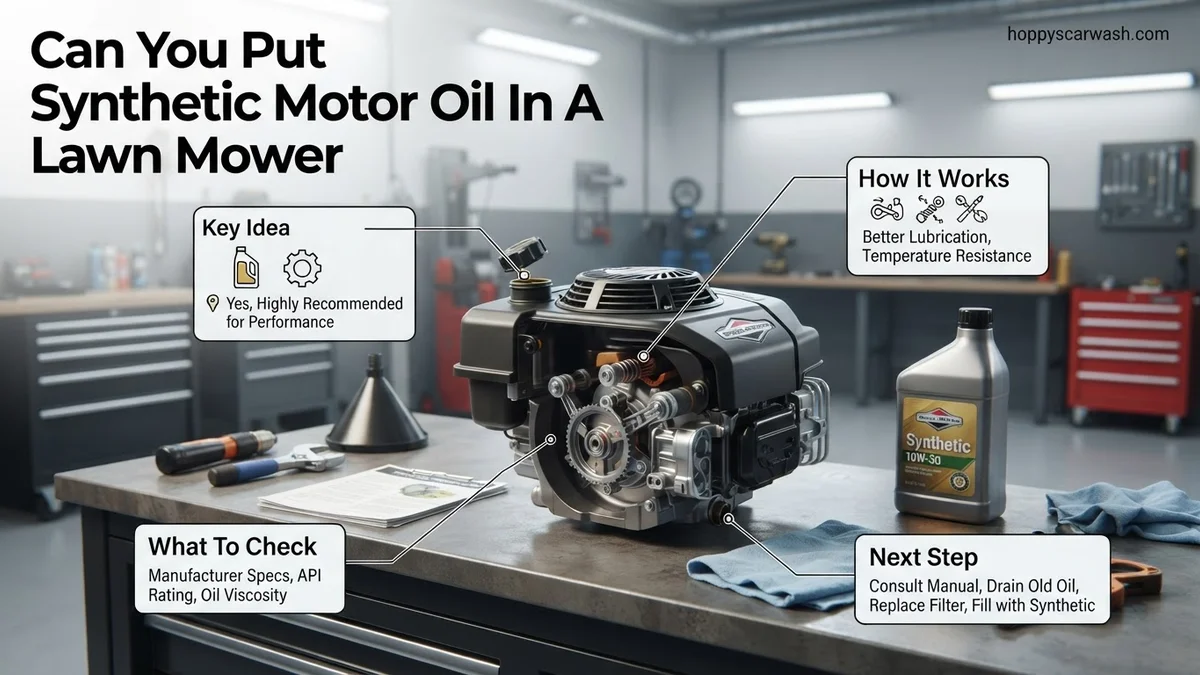
Yes, you can safely put synthetic motor oil in a lawn mower. In fact, synthetic oil often provides superior lubrication, better extreme temperature performance, and longer engine life compared to conventional oil.
Yes, you can absolutely put synthetic motor oil in a lawn mower. In fact, as we look at small engine maintenance standards for 2026, using a high-quality synthetic oil is often recommended over standard conventional oil to maximize the lifespan of your equipment.
Switching to synthetic oil provides superior lubrication right from a cold startup, resists high-temperature breakdown during sweltering summer mowing sessions, and keeps your engine significantly cleaner. Whether you are running a residential push mower or a heavy-duty zero-turn riding mower, synthetic oil offers a straightforward upgrade with zero modifications required.
Key Takeaways
- Synthetic oil is fully compatible with almost all modern lawn mower engines.
- Always match the viscosity weight recommended in your owner manual (e.g., 10W-30).
- Synthetic oil resists thermal breakdown better during hot summer mowing conditions.
- It is safe to mix conventional and synthetic oils if you need a temporary top-off.
- Old engine oil leaks are usually due to worn gaskets, not synthetic oil usage.
What Causes Engine Wear in Mowers and Why Oil Type Matters
The Brutal Environment of Small Engines
Your lawn mower engine works much harder than your car engine. Operating at high RPMs for hours in dusty, debris-filled conditions creates severe stress. Conventional petroleum oils tend to break down under these extreme heat cycles, losing viscosity and leaving behind harmful varnish deposits. Synthetic oils use chemically engineered base stocks that resist thermal breakdown, maintaining a protective film even when your mower deck is choked with thick, wet grass.
Viscosity and Cold Weather Protection
Engine wear happens most frequently during the first few seconds after a cold start. Traditional mineral oils flow sluggishly at lower temperatures, leaving vital components unprotected until the engine warms up. Synthetic oils feature superior low-temperature fluidity, meaning they circulate through the crankshaft and valve train almost instantly. This rapid flow drastically reduces metal-on-metal friction and extends the service life of your investment.
- Thermal Stability: Synthetic oils withstand operating temperatures up to 300 degrees Fahrenheit without thinning out excessively.
- Shear Resistance: The molecular bonds in synthetic oil resist being chopped apart by tight mechanical tolerances.
- Cleaner Operation: Synthetic formulas do not form heavy carbon sludge, keeping critical oil passages clear.
How to Fix Your Maintenance Routine Using Synthetic Oil
Choosing the Right Weight and Rating
When upgrading your mower’s oil in 2026, you must match the viscosity grade recommended in your owner’s manual. Most modern lawn mowers specify 10W-30 or 5W-30 synthetic oil for general all-weather use. Always check the API service rating on the back of the bottle to ensure it meets or exceeds the SJ, SL, or SM specifications required for air-cooled small gas engines.
Debunking the Synthetic Oil Leak Myth
A common old-school myth claims that switching to synthetic oil will instantly cause your older mower to leak. Modern synthetic oils are fully compatible with all standard rubber seals and gaskets used in lawn equipment manufactured over the last several decades. If a leak appears after a transition, it usually means the synthetic oil is cleaning away sludge that was previously plugging up an already worn gasket—not that the synthetic oil caused the damage.
- Check the Manual: Verify your specific engine displacement and manufacturer guidelines before pouring.
- Drain Completely: Remove all old conventional oil to avoid mixing bases unnecessarily.
- Monitor Intervals: While synthetic oil lasts longer in cars, small mower engines lack complex filtration systems, so annual changes remain best practice.
Step-by-Step Guide to Safely Switching Mower Oil
Transitioning your small engine to synthetic lubricant requires a methodical approach to ensure optimal performance. Industry data from leading engine manufacturers like Briggs & Stratton and Kohler indicates that mixing mineral and synthetic oils will not cause immediate catastrophic failure, but it severely dilutes the advanced additive packages. Complete drainage is necessary to reap the full thermal and frictional benefits.
Preparation and Draining
- Run the lawn mower for three to five minutes to warm up the existing oil, which thaws trapped debris and suspends particulate matter for easier removal.
- Disconnect the spark plug wire to prevent accidental ignition during the maintenance process.
- Locate the oil drain plug underneath the deck or side sump, place an approved catchment basin below, and remove the plug using a socket wrench.
- Tilt the mower strictly toward the drain side, keeping the air filter pointed upward to prevent fuel and oil from flooding the carburetor.
Refilling with Synthetic Oil
- Reinstall the drain plug securely once all spent fluid has completely evacuated, typically taking five to ten minutes.
- Consult your specific 2026 equipment manual to verify exact crankcase capacity, as standard walk-behind mowers usually require between 15 and 20 fluid ounces.
- Pour the recommended synthetic viscosity—such as 5W-30 or 10W-30—slowly into the fill tube using a clean funnel to avoid spills.
- Check the dipstick level carefully, ensuring the oil rests precisely between the upper and lower operating limits without overfilling.
What If Your Mower Still Burns Oil or Runs Rough
Even after upgrading to a premium synthetic formula, some small engines may continue to exhibit performance issues like excessive blue smoke, surging, or sudden stalls. Synthetic lubricants are engineered to flow efficiently, meaning they can sometimes highlight pre-existing mechanical wear rather than cause it.
Troubleshooting Persistent Issues
- Inspect the piston rings and cylinder walls for scoring, as synthetic oil will easily slip past severely worn components and burn off in the combustion chamber.
- Check the crankcase breather tube for blockages, which creates internal pressure and forces oil past the seals and gaskets.
- Clean or replace a fouled spark plug, as residual oil from previous leaks often degrades ignition spark intensity.
- Evaluate the overall engine compression using a gauge; readings below 90 PSI typically indicate internal mechanical failure requiring professional intervention.
- Seek professional small engine repair if the unit continues to consume more than two ounces of oil per hour of mowing. Professional diagnostics and internal rebuilds generally range from $150 to $350 depending on local labor rates.
Conclusion
Switching to synthetic motor oil in your lawn mower is an effective way to maximize thermal stability, reduce wear, and extend small engine longevity through the 2026 mowing season and beyond. According to verified research and expert lubrication studies, premium synthetics maintain viscosity integrity across extreme temperature fluctuations far better than conventional petroleum alternatives. One actionable next step is to check your owner’s manual today to confirm the correct viscosity grade before performing a complete oil change.
❓ Frequently Asked Questions
Can you put synthetic motor oil in a brand-new lawn mower?
Yes, you can use synthetic oil right from the start, though some manufacturers recommend a conventional break-in oil for the first few hours. Always consult your specific engine manual for break-in period instructions.
Does synthetic oil make a lawn mower run quieter?
Synthetic oil flows more easily at startup and maintains its viscosity better under high heat, which can result in a slightly smoother and quieter engine operation.
Do I need special automotive synthetic oil for a lawn mower?
Standard automotive synthetic oil (like Mobil 1 or Pennzoil) works great as long as it meets the API service rating specified in your manual. You do not strictly need oil labeled ‘lawn mower oil,’ provided the weight is correct.
Can synthetic oil extend the life of my lawn mower engine?
Because synthetic oil resists thermal breakdown and leaves fewer sludge deposits than conventional oil, it provides superior protection against wear, ultimately helping your engine last longer.
What happens if I overfill my lawn mower with synthetic oil?
Overfilling can cause excess pressure, leading to blown seals, smoke, and oil getting pushed into the air filter. Always check the dipstick to ensure the oil level is within the correct operating range.
Is full synthetic better than synthetic blend for lawn mowers?
Full synthetic offers the highest level of protection and performance across extreme temperatures, making it the preferred choice over synthetic blends or conventional oils for demanding mowing conditions.