What Year Honda CR V Have Transmission Problems 2026 Guide
The 2015 and 2016 Honda CR-V models are most notorious for severe transmission problems, specifically CVT shuddering and vibration. Earlier generations, particularly 2002 through 2004, also experienced high rates of premature automatic transmission failure.
When searching for what year Honda CR-V have transmission problems, you need a straight answer to protect your wallet. The model years with the most severe and well-documented transmission failures are 2015 to 2016 and older models from 2002 to 2004. If you are shopping for a used compact SUV in 2026, avoiding these specific windows is crucial to prevent sudden mechanical breakdowns.
Transmission issues can turn a reliable daily driver into a financial nightmare. Repairing or replacing a modern Continuously Variable Transmission (CVT) or a traditional automatic can easily cost between $3,500 and $6,000. Knowing which model years to scrutinize helps you make an informed purchasing decision and spot red flags during a test drive.
Key Takeaways
- The 2015 and 2016 model years suffer from documented CVT shudder and vibration issues.
- Early second-generation models (2002-2004) frequently experience total automatic transmission failure.
- Honda issued extended warranties and software updates to address the 2015-2016 CVT complaints.
- Always test drive a used CR-V up to highway speeds to check for transmission slip.
- Regular fluid changes every 30,000 miles significantly extend the lifespan of CR-V transmissions.
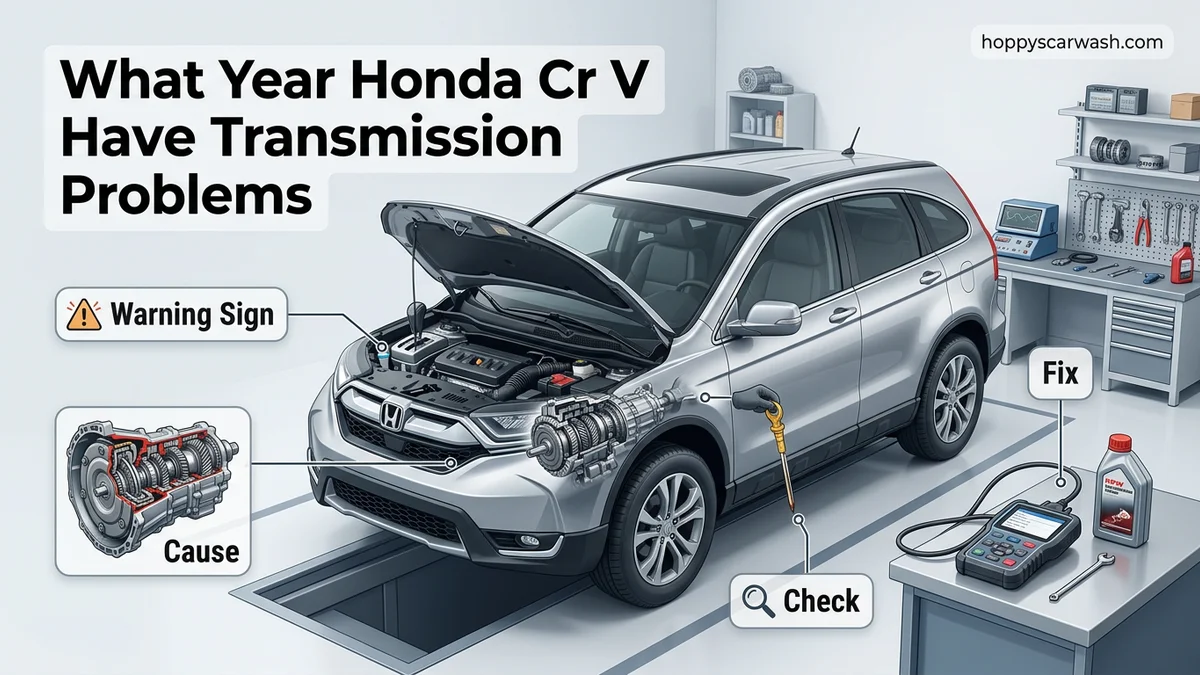
What Causes Transmission Problems in Specific Honda CR-V Years
The 2015 and 2016 CVT Vibration Crisis
The 2015 and 2016 Honda CR-V models introduced a Earth Dreams 2.4-liter engine paired with a CVT. Drivers quickly reported severe engine vibration, shuddering during acceleration, and total transmission slip. The root cause was poor software programming in the transmission control module (TCM). This software caused the CVT belt to slip against the pulleys, creating premature wear and tear.
- Software calibration flaws caused violent cabin shaking between 20 and 30 mph.
- Premature belt wear led to metal shavings circulating through the fluid.
- Honda issued a technical service bulletin (TSB) and extended the warranty on 2015-2016 models to 7 years or 150,000 miles to address the backlash.
Early Generation 2002 to 2004 Automatic Failures
If you are looking at older, budget-friendly used CR-Vs, the second generation (2002-2004) carries significant risk. These traditional 5-speed automatic transmissions suffered from mechanical design flaws. Internal components, particularly the third-gear clutch packs, lacked proper lubrication and oil flow. This caused catastrophic mechanical failure where the transmission would suddenly drop out of gear or lose reverse entirely.
- Inadequate fluid cooling channels led to overheating and burnt clutch material.
- Sudden total transmission lockup while driving at highway speeds in extreme cases.
- Many of these units required complete rebuilds or replacements before reaching 150,000 miles.
How to Diagnose and Fix Honda CR-V Transmission Shudder and Slipping
Common Symptoms to Watch For During a Test Drive
Catching transmission problems early saves you from paying for a total replacement. When test driving a used Honda CR-V from the high-risk years, you must pay close attention to how the vehicle shifts and accelerates. Do not rely solely on the dashboard check engine light, as transmission degradation often starts without triggering a diagnostic trouble code.
- Hesitation: A noticeable delay or pause when shifting from Park to Drive or Reverse.
- Shuddering: A rapid vibration or shaking sensation when you press the gas pedal at low speeds.
- RPM Fluctuation: Engine revs climbing without a corresponding increase in vehicle speed, indicating a slipping belt or clutch.
- Whining Noise: A high-pitched metallic whine from the transmission housing, especially common in failing CVTs.
Repair Options and Preventative Maintenance Steps
If your CR-V is already exhibiting transmission shudder, the fix depends heavily on the model year and severity of the damage. For 2015 and 2016 models experiencing minor vibration, a simple software update from a Honda dealership and a fresh transmission fluid flush often resolves the issue. However, if mechanical damage has already occurred, fluid changes will not fix worn metal components.
- Check if your vehicle qualifies for any remaining manufacturer extended coverage or recall repairs.
- Change your transmission fluid strictly every 30,000 to 50,000 miles to extend CVT lifespan.
- Budget for a complete unit replacement if metal shavings are discovered during a routine fluid drain.
What to Do If Your CR-V Transmission Still Fails After Service
When standard fluid changes, software updates, or component replacements fail to resolve persistent slipping and shuddering, drivers face difficult repair decisions heading into 2026. Dealership data and automotive diagnostic networks indicate that chronic internal mechanical failure requires escalation beyond basic maintenance.
Escalation Steps for Persistent Failure
- Request a Regional Field Technical Inspection: Ask your Honda dealership service manager to involve a factory field representative for a secondary diagnostic review of transmission control module maps and internal pressure logs.
- Obtain Independent Specialist Estimates: Consult an authorized rebuilding shop certified in continuously variable transmission (CVT) and traditional automatic teardowns to compare quotes against dealership pricing.
- Calculate Total Financial Exposure: Weigh the cost of a complete remanufactured transmission replacement—typically ranging from $3,800 to $5,800 including labor and a 3-year warranty—against current vehicle trade-in value.
- File a Formal Complaint With Safety Regulators: If your vehicle exhibits safety-critical power loss outside warranty coverage, submit a detailed report to the National Highway Traffic Safety Administration (NHTSA) to support ongoing defect investigations.
Proven Inspection Steps Before Buying a Used Honda CR-V
Purchasing a pre-owned Honda CR-V requires meticulous mechanical vetting to avoid inheriting expensive transmission liabilities. Buyers evaluating model years known for hesitation or CVT shudder must execute a rigorous pre-purchase evaluation protocol.
Used Vehicle Transmission Inspection Protocol
- Perform a Cold-Start Road Test: Drive the vehicle immediately after a cold soak to detect delayed engagement into drive or reverse, which signals internal fluid pressure loss or worn valve bodies.
- Monitor High-Speed Acceleration Bands: Accelerate steadily between 35 and 55 miles per hour to expose potential CVT belt slip, surging RPMs, or rhythmic shuddering vibrations.
- Verify Complete Maintenance Records: Check service logs for documented transmission fluid drain-and-fill intervals every 30,000 miles, especially for models produced between 2015 and 2020.
- Scan for Cleared Diagnostic Trouble Codes: Use an advanced OBD-II scanner to check pending and historic powertrain fault codes that indicate recent computer resets designed to mask active transmission faults.
Conclusion
Navigating Honda CR-V transmission reliability requires understanding which model years carry higher risk and knowing how to diagnose mechanical symptoms early. While certain generations demand proactive fluid maintenance and software updates, thorough pre-purchase inspections protect buyers from catastrophic repair bills. According to verified research and automotive industry expert sources, maintaining strict adherence to factory service intervals remains the single most effective defense against premature transmission failure. Schedule a professional fluid analysis and diagnostic scan today if your CR-V approaches high mileage or exhibits shifting irregularities.
❓ Frequently Asked Questions
What specific years of the Honda CR-V should I avoid for transmission issues?
You should exercise caution when shopping for 2015 and 2016 models, which feature a CVT prone to violent shuddering. Additionally, 2002-2004 models have a high documented failure rate for traditional automatic gearboxes.
Why did the 2015 and 2016 Honda CR-V transmissions fail?
The CVT units in these years suffered from software calibration issues that caused incorrect pulley pressures, leading to belt slip, vibration, and premature wear.
Did Honda extend the warranty on 2015-2016 CR-V transmissions?
Yes, Honda extended the warranty on the CVT for certain 2015 and 2016 models to 7 years or 150,000 miles, covering qualifying shudder-related repairs.
How can I tell if a used CR-V has transmission problems during a test drive?
Pay close attention during acceleration between 20 and 40 mph. If you feel a rhythmic surging, shaking, or hesitation, the transmission likely has the infamous CVT shudder.
Do manual transmission Honda CR-Vs have these same issues?
No, manual transmission equipped CR-Vs do not suffer from these electronic or CVT hydraulic failures, though they are increasingly rare in the North American market.
How often should I change the transmission fluid in a Honda CR-V?
To prevent premature wear, it is recommended to drain and fill the transmission fluid every 30,000 to 50,000 miles using genuine Honda fluid.