Can I Use Windex on the Inside of My Windshield? 2026
Standard Windex should never be used on tinted car windows because the ammonia content breaks down the tint film, causing purple discoloration and bubbling. If your windshield is completely untinted, standard Windex is generally safe on the glass, but it can still dry out dashboards and leave stubborn chemical residue.
The short answer is no, you should not use standard Windex on the inside of your windshield if your car has aftermarket window tint. Most traditional glass cleaners contain ammonia, which breaks down tint adhesive, turns purple, and causes ugly bubbling.
Even if your car does not have tinted windows, standard Windex poses risks to your dashboard, steering wheel, and electronics. In 2026, vehicle interiors feature advanced digital displays and sensitive soft-touch plastics that react poorly to harsh chemical overspray. Let us break down why ammonia is a problem and what you should use instead.
Key Takeaways
- Standard ammonia-based Windex destroys aftermarket window tint film.
- Ammonia causes expensive tint to bubble, peel, and turn purple.
- Untinted glass tolerates Windex, but ammonia can damage vinyl dashboards.
- Always use ammonia-free glass cleaners or DIY rubbing alcohol mixtures.
- Microfiber towels prevent streaks on interior windshield surfaces.
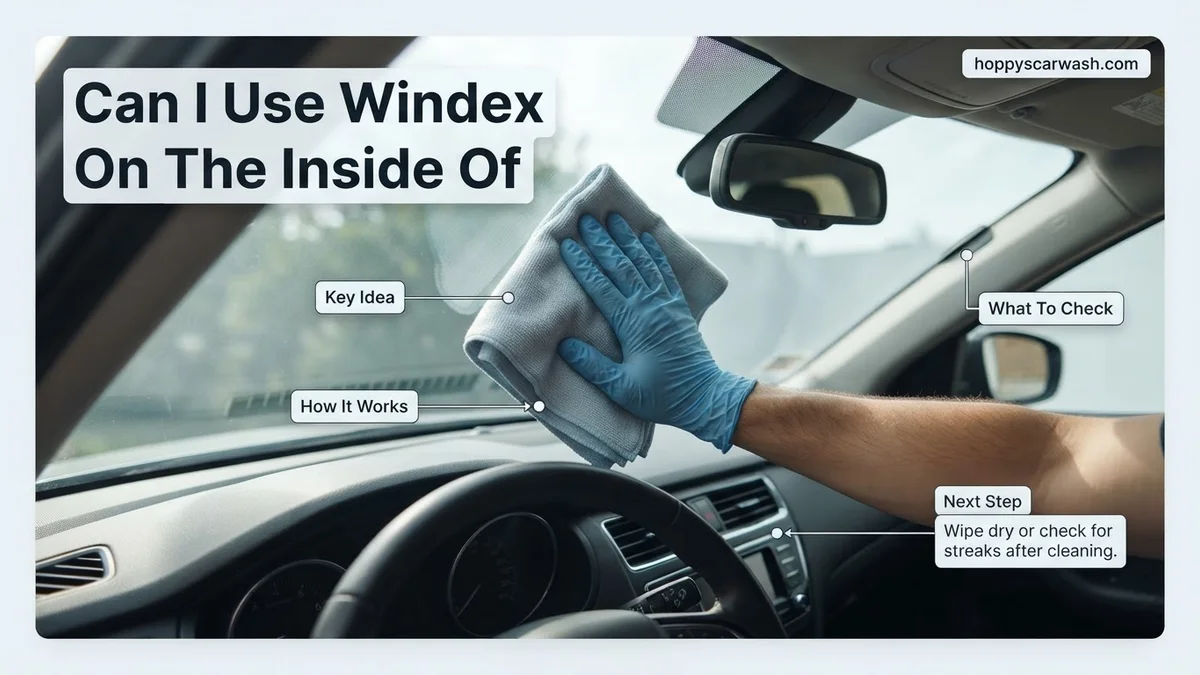
What Causes Windshield Damage When Using Ammonia Cleaners
Standard household glass cleaners rely on ammonia to cut through grease and dry quickly. While this works great on household windows, it wreaks havoc inside a modern vehicle.
The Threat to Aftermarket Window Tint
If you have dark film applied to your front side windows or a clear UV-blocking strip on your windshield, ammonia is your worst enemy.
- Ammonia chemically attacks the adhesive layer holding the tint film to the glass.
- It creates bubbling, peeling, and a cloudy purple discoloration that ruins visibility.
- Once tint is damaged by ammonia, you cannot repair it; you have to completely replace the film.
Dashboard and Interior Material Degradation
When you spray glass cleaner on an interior windshield, overspray is inevitable.
- Ammonia dries out vinyl, faux leather, and hard plastics, leading to cracking and fading.
- It leaves a chemical residue that reacts with dashboard protectants and attracts more dust.
- Overspray can permanently stain or streak sensitive navigation screens and digital instrument clusters.
If your windshield is not tinted, standard Windex will not etch the actual glass, but the collateral damage to your interior trim makes it a risky choice.
How to Fix Interior Windshield Haze Using Safe Alternatives
Clearing away that greasy interior film—often caused by outgassing plastics and HVAC buildup—does not require harsh chemicals. You can achieve a crystal-clear finish using automotive-specific or homemade solutions.
Automotive-Specific Glass Cleaners
The safest route for any vehicle in 2026 is choosing a cleaner formulated specifically for cars.
- Look for products explicitly labeled “tint-safe” or “ammonia-free.”
- Brands like Invisible Glass and Meguiar’s offer heavy-duty cleaning power without the chemical risks.
- These formulas cling better to vertical glass and evaporate without leaving a hazy film.
DIY Vinegar and Alcohol Mixtures
You can easily mix your own safe interior window cleaner at home using basic household ingredients.
- Combine equal parts distilled water and 70% rubbing alcohol in a spray bottle.
- Add a few drops of white vinegar to help cut through the oily haze.
- Always spray the cleaner directly onto your microfiber towel, never onto the glass, to protect your dashboard.
Step-by-Step Guide to Cleaning Your Windshield Without Streaks
Achieving a crystal-clear, streak-free interior windshield requires the proper technique, especially if you have decided to use an ammonia-based cleaner like traditional Windex or a specialized automotive glass cleaner. Professional detailers recommend specific procedures to eliminate the persistent haze caused by outgassing plastics and HVAC residues.
1. Preparation and Setup
- Park your vehicle in a shaded area or garage. Direct sunlight causes glass cleaners to evaporate too quickly, leaving stubborn residues and streaks behind.
- Lower your front windows slightly to allow adequate ventilation, particularly if you are using chemical-heavy formulas.
- Gather two to three clean, high-grade microfiber towels. Avoid standard cotton rags or paper towels, which leave lint particles on the glass.
2. The Cleaning Application
- Spray your chosen glass cleaner directly onto the microfiber towel rather than onto the windshield. This prevents overspray from landing on your dashboard, electronics, or steering column.
- Wipe the glass using a strict horizontal or vertical pattern. Avoid circular motions, which highlight streaks in direct sunlight.
- Buff the surface immediately with a second, completely dry microfiber towel to pick up any dissolved oils and moisture before they evaporate on their own.
What If It Still Doesn’t Work and Haze Persists?
If you have thoroughly cleaned your windshield and a stubborn, greasy haze remains, standard glass cleaners may not be strong enough to break down the microscopic layer of plastic plasticizer film. According to automotive restoration studies, interior windshield buildup often requires specialized intervention. Follow these steps if basic cleaning fails:
- Switch to an automotive-specific glass polish: Products containing mild cerium oxide or specialized abrasives can safely strip away stubborn chemical films without scratching modern safety glass.
- Use a dedicated clay bar treatment: Automotive detailing clay removes embedded microscopic contaminants from the glass surface. Lubricate the windshield with a quick detailer spray, gently glide the clay bar across the glass, and wipe clean with a microfiber towel.
- Deep clean your dashboard: The haze frequently returns because volatile organic compounds (VOCs) continue to outgas from dashboard plastics. Clean your dash thoroughly with a UV-protectant interior cleaner rather than a greasy silicone dressing.
- Seek professional detailing services: If chemical films are deeply bonded or if window tint film is interfering with visibility, consult a professional detailer. Professional interior windshield restoration typically ranges from $50 to $120 depending on regional labor rates and the severity of the residue.
Conclusion
While you can technically use traditional Windex on the inside of your windshield, the presence of ammonia poses a legitimate risk to tinted windows, leather dash accents, and specialized anti-glare coatings. According to verified research from automotive glass manufacturers, switching to an ammonia-free cleaner or a dedicated automotive glass formula delivers superior visibility without risking costly interior damage. For the best possible results in 2026, pair your chosen cleaner with a two-towel microfiber buffing method. Take the next step today by inspecting your windshield under direct sunlight to identify the true source of your interior glare.
❓ Frequently Asked Questions
Is it safe to use standard Windex on the inside of my windshield?
If your windshield does not have window tint, standard Windex is generally safe to use on the glass itself. However, you must take care to protect your dashboard, as ammonia can dry out and discolor vinyl and leather materials.
What happens if I use Windex on tinted windows?
Standard Windex contains ammonia, which chemically attacks window tint film. Over time, it causes the film to separate from the glass, creating unsightly bubbles, peeling edges, and a faded purple discoloration.
How can I tell if my windshield is tinted?
Many windshields have a factory tint strip at the very top, but full aftermarket tint on a front windshield is illegal in most regions unless medically exempted. If you did not personally pay for ceramic or carbon film installation, your windshield is likely bare glass.
What are the best safe alternatives to Windex for car glass?
Ammonia-free glass cleaners like Invisible Glass or specialized automotive glass sprays are ideal. Alternatively, a DIY mix of equal parts rubbing alcohol, distilled water, and a dash of white vinegar cuts through greasy residue effectively.
Why does an interior windshield get so dirty and hazy?
Dashboards and interior plastics continuously release chemical vapors through a process called off-gassing. These vapors settle on the cold interior glass, creating a greasy film that attracts dust and causes dangerous night glare.
What is the proper technique to clean an interior windshield without streaks?
Spray your cleaner onto a clean microfiber towel rather than directly onto the glass to protect your dashboard. Wipe the glass using a crosshatch pattern (horizontal then vertical), and buff it dry immediately with a second, dry microfiber cloth.